
Kirjailija
H. A. Guerber
Kirjat ja teokset yhdessä paikassa: 120 kirjaa, julkaisuja vuosilta 1896–2026, suosituimpiin kuuluu The Myths of Greece and Rome. Vertaile teosten hintoja ja tarkista saatavuus suomalaisista kirjakaupoista.
Nimi esiintyy myös muodoissa: H A Guerber, H.A. Guerber
120 kirjaa
Kirjojen julkaisuvuodet: 1896–2026.






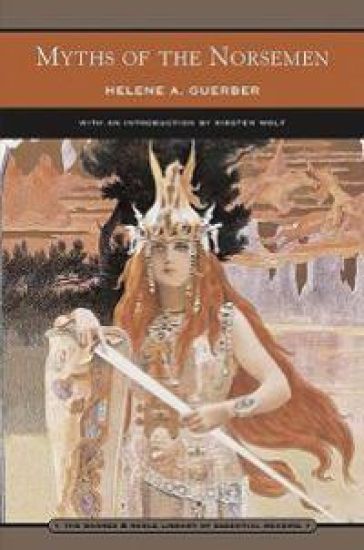
Myths of the Norsemen (Barnes & Noble Library of Essential Reading)
H.A. Guerber
BARNES NOBLE INC
2007
pokkari
Scandinavians of the Viking Age answered the mysteries of life in their myths and legends. Folklorist Helene Adeline Guerber brings to life the gods and goddesses, giants and dwarves, and warriors and monsters of these tales in "Myths of the Norsemen". Ranging from the comic to the tragic, the myths tell of passion, love, friendship, pride, courage, and betrayal.
First Published in 2005. This classic work presents sixteen key myths and legends of the Arthurian, Carolingian, Teutonic and Scandinavian cycles which embody the chivalric code and which inspired the greatest works of romance literature and art. Some, like Tristan and Isolde, Merlin and the Niebelungenlied, are well known. Others, such as the tale of the Amelings and the Langobardian Cycle are rarely encountered. All of the tales and the tourneys, quests, vows, battles and betrayals of which they tell have retained their enchanting power through the ages. They illuminate the mystical significance of knighthood and its ethos of self-purification and honour, allowing us to decode many of the allusions found in medieval art, literature and song. Written for the general reader with captivating style, this work makes the lore of the chivalric Middle Ages accessible and enriches our understanding of a magnificent age.



Readable, reliable versions of age-old Germanic and Scandinavian myths that have helped shape Western culture. Creation of world, deeds of gods and heroes such as Odin and Thor, machinations of Loki, more. 64 illus.
Ancient Greek history is full of fascinating events and adventures, with the refined culture and many Gods of olden Greece a highlight - this history, aimed at younger readers, summarizes the great civilization. Experienced historian and author Helene Guerber tells her history as a series of short and poignant stories. We hear of the founding of early cities such as Athens and Thebes, and the famous myths that would gradually grow to form the pantheon of Greek Gods and legends. The artistic and cultural styles introduced by ancient Greek artisans and craftsmen, the pioneering philosophies of Plato and Socrates, and the settlers who colonized southern Italy are all mentioned. We also hear about the wars and conflicts which were frequent in ancient Greece, becoming part of its literature and mythos. The siege and conquest of Troy, the Peloponnesian War, and the battles between the rival Athenian city states and the Spartans are described. Greece was innovative in war, being among the first civilizations to have organized units such as the hoplites and companion cavalry, and bringing the earliest artillery to the battlefield.
From the earliest hill tribes to the cultural peak of the Pax Romana, and finally to the Western Empire's chaotic decline - H. A. Guerber's history of Rome is superb for young readers. The legends that accompanied the founding of the Roman Republic were part of the popular consciousness; the twin boys Romulus and Remus, raised by a wolf, going on to found Rome. First ruled by kings, Rome transitioned to a republic, with a ruling Senate and offices. The author mixes legend with the known facts of the era; that Italy was divided into tribes such as the Etruscans and the Latins. The feuds between these groups were gradually consigned to the past, as all of Italy united under a single, Roman culture. Yet there were threats to the young nation; to the South, across the Meditteranean Sea, was the prosperous Carthage. To the north were the Gallic tribes. Overcoming these established Rome as the strongest power of Europe. However, political infighting led to the end of the Republic's government: beginning with Augustus, Rome was an Empire - with very much political power concentrated in the hands of the Emperor. In this illustrated and well-written history, H. A. Guerber successfully summarizes the feats and accomplishments of classical Rome.
Ancient Greek history is full of fascinating events and adventures, with the refined culture and many Gods of olden Greece a highlight - this history, aimed at younger readers, summarizes the great civilization. Experienced historian and author Helene Guerber tells her history as a series of short and poignant stories. We hear of the founding of early cities such as Athens and Thebes, and the famous myths that would gradually grow to form the pantheon of Greek Gods and legends. The artistic and cultural styles introduced by ancient Greek artisans and craftsmen, the pioneering philosophies of Plato and Socrates, and the settlers who colonized southern Italy are all mentioned. We also hear about the wars and conflicts which were frequent in ancient Greece, becoming part of its literature and mythos. The siege and conquest of Troy, the Peloponnesian War, and the battles between the rival Athenian city states and the Spartans are described. Greece was innovative in war, being among the first civilizations to have organized units such as the hoplites and companion cavalry, and bringing the earliest artillery to the battlefield.
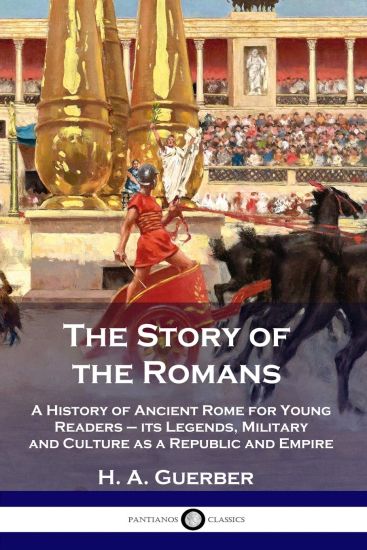
From the earliest hill tribes to the cultural peak of the Pax Romana, and finally to the Western Empire's chaotic decline - H. A. Guerber's history of Rome is superb for young readers. The legends that accompanied the founding of the Roman Republic were part of the popular consciousness; the twin boys Romulus and Remus, raised by a wolf, going on to found Rome. First ruled by kings, Rome transitioned to a republic, with a ruling Senate and offices. The author mixes legend with the known facts of the era; that Italy was divided into tribes such as the Etruscans and the Latins. The feuds between these groups were gradually consigned to the past, as all of Italy united under a single, Roman culture. Yet there were threats to the young nation; to the South, across the Meditteranean Sea, was the prosperous Carthage. To the north were the Gallic tribes. Overcoming these established Rome as the strongest power of Europe. However, political infighting led to the end of the Republic's government: beginning with Augustus, Rome was an Empire - with very much political power concentrated in the hands of the Emperor. In this illustrated and well-written history, H. A. Guerber successfully summarizes the feats and accomplishments of classical Rome.