
Kirjailija
H. G. Wells
Kirjat ja teokset yhdessä paikassa: 1 483 kirjaa, julkaisuja vuosilta 1895–2027, suosituimpiin kuuluu Maailmojen sota. Vertaile teosten hintoja ja tarkista saatavuus suomalaisista kirjakaupoista.
Nimi esiintyy myös muodoissa: H G Wells, H.G. Wells, H.G Wells, H. G Wells
1 483 kirjaa
Kirjojen julkaisuvuodet: 1895–2027.

The Invisible Man is an unchanged, high-quality reprint of the original edition of 1897. Hansebooks is editor of the literature on different topic areas such as research and science, travel and expeditions, cooking and nutrition, medicine, and other genres. As a publisher we focus on the preservation of historical literature. Many works of historical writers and scientists are available today as antiques only. Hansebooks newly publishes these books and contributes to the preservation of literature which has become rare and historical knowledge for the future.

H. G. Wells' classic alien invasion tale, The War of the Worlds, is one of science fiction's most important novels. Humans are unprepared when an armada of warring Martians land in southeast England in gigantic cylinders and wreak havoc as they close in on London. The Martians use huge three-legged fighting machines armed with deadly heat rays, which Wells describes as "this flaming death, this invisible, inevitable sword of heat." Humans eventually mount a jumbled defense against what appears to be an implacable and unbeatable enemy. The story reads almost like dispatches from a war zone told by ordinary, frightened humans whose fate is determined by a freak turn of events. Wells' wild, harrowing story can be appreciated as much for its prescience and inventiveness as for its astute social commentary. This Warbler Classics edition includes a detailed biographical timeline.

The enterprise of Messrs. T. Nelson & Sons and the friendly accommodation of Messrs. Macmillan render possible this collection in one cover of all the short stories by me that I care for any one to read again. Except for the two series of linked incidents that make up the bulk of the book called Tales of Space and Time, no short story of mine of the slightest merit is excluded from this volume. Many of very questionable merit find a place; it is an inclusive and not an exclusive gathering. And the task of selection and revision brings home to me with something of the effect of discovery that I was once an industrious writer of short stories, and that I am no longer anything of the kind. I have not written one now for quite a long time, and in the past five or six years I have made scarcely one a year. The bulk of the fifty or sixty tales from which this present three-and-thirty have been chosen dates from the last century. This edition is more definitive than I supposed when first I arranged for it. In the presence of so conclusive an ebb and cessation an almost obituary manner seems justifiable. I find it a little difficult to disentangle the causes that have restricted the flow of these inventions. It has happened, I remark, to others as well as to myself, and in spite of the kindliest encouragement to continue from editors and readers. There was a time when life bubbled with short stories; they were always coming to the surface of my mind, and it is no deliberate change of will that has thus restricted my production. It is rather, I think, a diversion of attention to more sustained and more exacting forms. It was my friend Mr. C. L. Hind who set that spring going. He urged me to write short stories for the Pall Mall Budget, and persuaded me by his simple and buoyant conviction that I could do what he desired. There existed at the time only the little sketch, "The Jilting of Jane," included in this volume-at least, that is the only tolerable fragment of fiction I find surviving from my pre-Lewis-Hind period. But I set myself, so encouraged, to the experiment of inventing moving and interesting things that could be given vividly in the little space of eight or ten such pages as this, and for a time I found it a very entertaining pursuit indeed. Mr. Hind's indicating finger had shown me an amusing possibility of the mind. I found that, taking almost anything as a starting-point and letting my thoughts play about it, there would presently come out of the darkness, in a manner quite inexplicable, some absurd or vivid little incident more or less relevant to that initial nucleus. Little men in canoes upon sunlit oceans would come floating out of nothingness, incubating the eggs of prehistoric monsters unawares; violent conflicts would break out amidst the flower-beds of suburban gardens; I would discover I was peering into remote and mysterious worlds ruled by an order logical indeed but other than our common sanity.

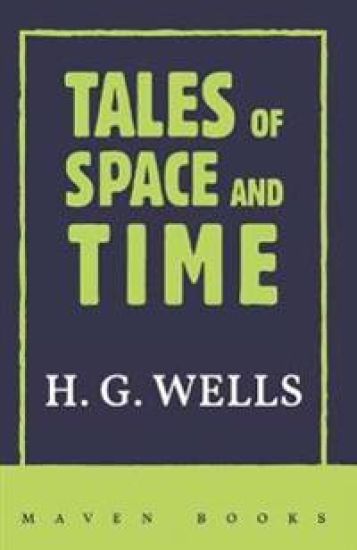
1. The Crystal Egg, 2. The Star, 3. A Story of the Stone Age, 4. A Story of the Days to Come, 5. The Man Who Could Work Miracles.


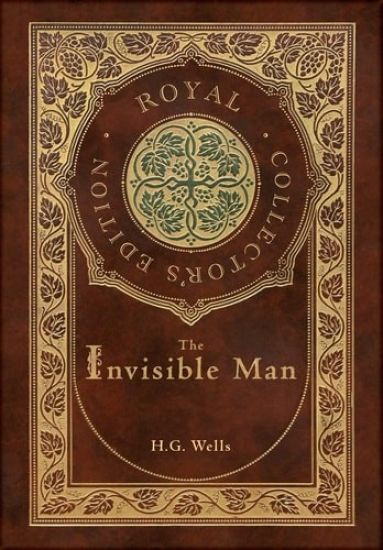
The Invisible Man (Royal Collector's Edition) (Case Laminate Hardcover with Jacket)
H G Wells
Royal Classics
2021
sidottu
When a mysterious stranger arrives at a local inn with his face hidden behind bandages, he soon becomes the talk of the village. Locking himself in his room, he spends most of his time mixing chemicals, desperately trying to reverse the affects of invisibility. But when his money runs out, the invisible man soon discovers that he is ill-equipped on his own, and that he must place his trust in others if he is to survive. H. G. Wells is credited with the popularisation of time travel in 1895 with The Time Machine, introducing the idea of time being the "fourth dimension" a decade before the publication of Einstein's first Relativity papers. In 1896, he imagined a mad scientist creating human-like beings from animals in The Island of Doctor Moreau, which created a growing interest in animal welfare throughout Europe. In 1897 with The Invisible Man, Wells shows how a formula could render one invisible, recognizing that an invisible eye would not be able to focus, thus rendering the invisible man blind. With The War of the Worlds in 1898, Wells established the idea that an advanced civilization could live on Mars, popularising the term 'martian' and the idea that aliens could invade Earth. This case laminate collector's edition includes a Victorian inspired dust-jacket.
The narrator of Invisible Man is a nameless young black man who moves in a 20th-century United States where reality is surreal and who can survive only through pretense. Because the people he encounters "see only my surroundings, themselves, or figments of their imagination," he is effectively invisible. He leaves the racist South for New York City, but his encounters continue to disgust him. Ultimately, he retreats to a hole in the ground, which he furnishes and makes his home. There, brilliantly illuminated by stolen electricity, he can seek his identity.

Alone-it is wonderful how little a man can do alone To rob a little, to hurt a little, and there is the end. A curious man, wearing a long coat, a wide-brimmed hat, and whose face is entirely swathe in bandages save for an obvious fake pink nose, walks into an English inn to the shock of many of the townspeople. Beakers and chemicals in tow, the man demands his solitude. It's strange enough as it is until his money begins to run out and mysterious burglaries occur within the town. The Invisible Man, written in 1897, chronicles the bizarre interaction between the citizens of a small town and a man who had discovered how to turn himself invisible.
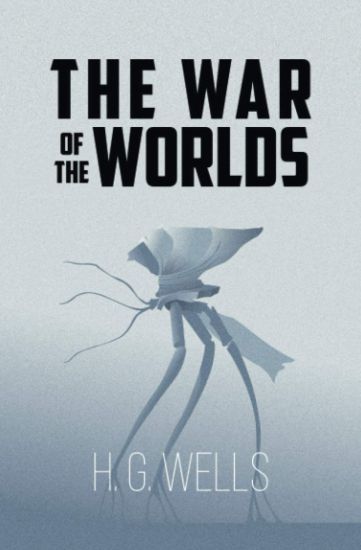
It never was a war, any more than there's war between man and ants. Humans vs. Martians. Conventional weapons vs. the dreaded Heat-Ray and poisonous black smoke. It's not the survival of one person at stake. It is the survival of all humanity. A classic unlike anything the world had yet to see, The War of the Worlds takes you into late 19th century England where a full-scale Martian invasion has begun.
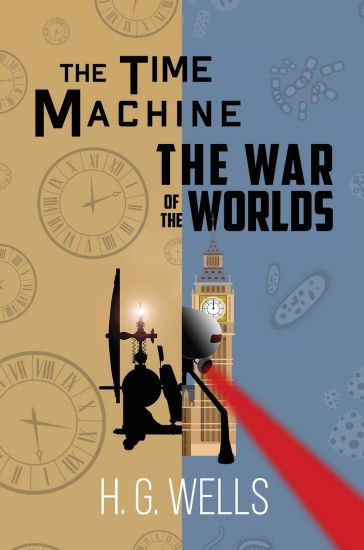
The Time Machine and The War of the Worlds (A Reader's Library Classic Hardcover)
H G Wells
Reader's Library Classics
2021
sidottu
It never was a war, any more than there's war between man and ants. Considered one of the father's of Science Fiction, H. G. Wells was a prominent and influential author of the late 19th century and early 20th century. Two of his greatest novels come together in this beautiful hardcover edition of The Time Machine and The War of the Worlds. The Time Machine: When an English Scientist, known only as the Time Traveller, invents a machine that can travel through time, the most logical outcome would be to test such a machine. After a trial run that saw him travel three hours into the future, the Time Traveller pushes further into the future to year 802,701, where he meets a mellow race of humans called the Eloi. Soon he discovers that the Eloi are not the only human race left on earth... The War of the Worlds: Humans vs. Martians. Conventional weapons vs. the dreaded Heat-Ray and poisonous black smoke. It's not the survival of one person at stake. It is the survival of all humanity. A classic unlike anything the world had yet to see, The War of the Worlds takes you into late 19th century England where a full-scale Martian invasion has begun.

The Invisible Man and The Island of Dr. Moreau (A Reader's Library Classic Hardcover)
H G Wells
Reader's Library Classics
2021
sidottu
The crying sounded even louder out of doors. It was as if all the pain in the world had found a voice. Considered one of the father's of Science Fiction, H. G. Wells was a prominent and influential author of the late 19th century and early 20th century. Two of his greatest novels come together in this beautiful hardcover edition of The Invisible Man and The Island of Dr. Moreau. This Invisible Man: A curious man, wearing a long coat, a wide-brimmed hat, and whose face is entirely swathed in bandages save for an obvious fake pink nose, walks into an English inn to the shock of many of the townspeople. Beakers and chemicals in tow, the man demands his solitude. It's strange enough as it is until his money begins to run out and mysterious burglaries occur within the town. The Invisible Man, written in 1897, chronicles the bizarre interaction between the citizens of a small town and a man who had discovered how to turn himself invisible. The Island of Dr. Moreau: Shipwrecked in the south Pacific Ocean, Englishman Edward Prendick awakens aboard a ship where a man named Montgomery and his beastly looking servant were transporting animal cargo. Soon, together they arrive on an island and more and more of these bizarre humanlike creatures appear. Prendick senses a sinister secret to the island after he meets with the owner, a one Dr. Moreau... Ahead of its time, The Island of Dr. Moreau features the ideas of genetic manipulation half a century before the discovery of DNA.
A scientist whose experiments have rendered him invisible veers into madness when he cannot change back in this thrilling and influential cornerstone of science fiction. A mysterious visitor to an inn, bundled up from head to toe and with his face covered in bandages, draws the attention and gossip of locals, but their wildest speculations come nowhere near the bizarre truth. This is the rogue scientist Griffin, who has made himself invisible and will shortly learn he can’t return to normal. Brilliant, unhinged and full of undirected rage at his fate, what outrageous crimes might an invisible man commit? The Invisible Man first appeared in 1897 and has resonated in pop culture ever since, with its title character portrayed as both hero and villain in film, television and graphic novels. The author’s most celebrated contributions to the fledgling literature of science fiction, The Time Machine, The Island of Dr. Moreau, The Invisible Man and The War of the Worlds, appeared over the course of less than five years and mark an extraordinary outpouring of the imagination. With an eye-catching new cover, and professionally typeset manuscript, this edition of The Invisible Man is both modern and readable.
A scientist whose experiments have rendered him invisible veers into madness when he cannot change back in this thrilling and influential cornerstone of science fiction. A mysterious visitor to an inn, bundled up from head to toe and with his face covered in bandages, draws the attention and gossip of locals, but their wildest speculations come nowhere near the bizarre truth. This is the rogue scientist Griffin, who has made himself invisible and will shortly learn he can’t return to normal. Brilliant, unhinged and full of undirected rage at his fate, what outrageous crimes might an invisible man commit? The Invisible Man first appeared in 1897 and has resonated in pop culture ever since, with its title character portrayed as both hero and villain in film, television and graphic novels. The author’s most celebrated contributions to the fledgling literature of science fiction, The Time Machine, The Island of Dr. Moreau, The Invisible Man and The War of the Worlds, appeared over the course of less than five years and mark an extraordinary outpouring of the imagination. With an eye-catching new cover, and professionally typeset manuscript, this edition of The Invisible Man is both modern and readable.