Kirjailija
H. G. Wells
Kirjat ja teokset yhdessä paikassa: 1 483 kirjaa, julkaisuja vuosilta 1895–2027, suosituimpiin kuuluu Maailmojen sota. Vertaile teosten hintoja ja tarkista saatavuus suomalaisista kirjakaupoista.
Nimi esiintyy myös muodoissa: H G Wells, H.G. Wells, H.G Wells, H. G Wells
1 483 kirjaa
Kirjojen julkaisuvuodet: 1895–2027.

Lionel Wallace is a successful politician. He tells his friend Redmond about an even that changed his life forever. As a lonely child of five, he wandered out of his home into the streets of West Kensington in London, where he noticed a green door set in a white wall. Entering the door, he finds himself in an enchanted garden. The garden is filled with happiness and exotic creatures, and here he meets a strange girl.
A compelling science fiction, the Time Machine is a first-hand account of a Time Traveler's journey into the future. A pull of the lever and the machine sends him to the year 802,701, when humanity has split into two bizarre races-the ethereal Eloi and the subterranean Morlocks. Here, his machine is stolen and with the help of Weena, an Eloi he saved from drowning, the traveler is able to retrieve it. Whizzing thirty million years further into the future, he finds a slowly dying earth, where the bloated red sun sits motionless in the sky and the only sign of life is a black blob with tentacles. He returns to the Victorian time, overwhelmed, just three hours after he originally left... Credited with inventing the time machine in this masterpiece, the provocative insight of H. G. Wells continues to enthrall the readers. the Time Machine has since been adapted into many feature films and television series and has inspired many more works of fiction.
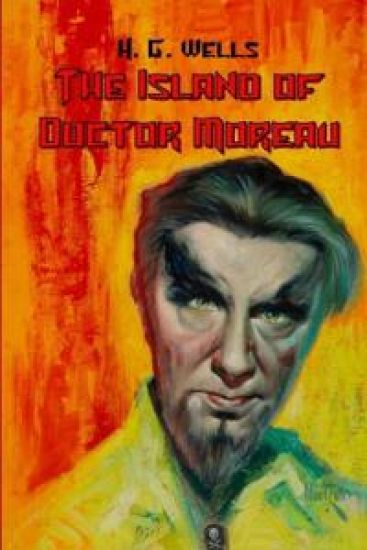
"The Island of Doctor Moreau" professes to be the narrative of one Charles Edward Prendick, whose uncle, Edward Prendick, was reported lost in the vessel Lady Vain, from the port of Callao. When he was picked up, however, "He gave such an account of himself" (says his nephew), "that he was supposed demented. Subsequently he alleged that his mind was a blank from the moment of his escape from the Lady Vain. HIs case was discussed among psychologists at the time as a curious instance of the lapse of memory consequent upon physical and mental stress." This edition is a photographic facsimile of the 1896 first American edition.
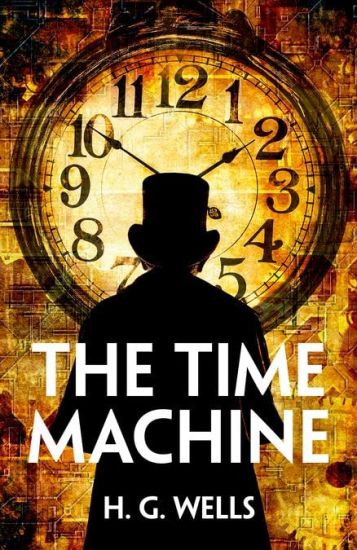
When the Time Traveller explains his theory about travelling through time to his dinner guests, they are initially sceptical. He returns a week later with an astonishing tale about encountering strange new worlds and different species. The guests are left wondering if he sets foot in his Time Machine again, will he ever return?
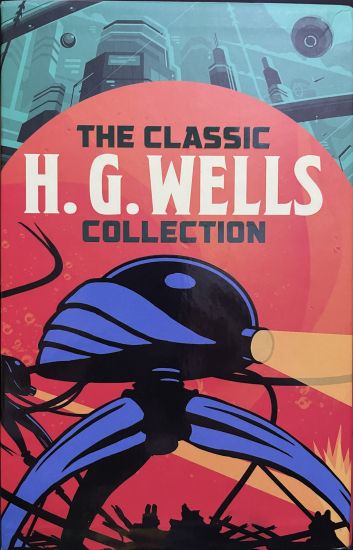
The Classic H. G. Wells Collection
H. G. Wells
Arcturus
2021
tuotepaketti
Halvin toimitettuna 37,20 €
This handsome box set brings together the most celebrated works of H. G. Wells, presented in five paperback volumes with striking contemporary cover designs. H. G. Wells was a pioneer of the science fiction genre and a man of boundless imagination. Whether describing marvelous new technologies, the vagaries of space flight or the risks of scientific development, his writings have continually captivated readers across the globe. Complete and unabridged, each of these stories marries exciting adventure with a poignant probing of scientific progress and its dangers - a signature combination of H. G. Wells which marks him as a true master of science-fiction. Contains: • The War of the Worlds• The Time Machine & Other Stories • The Invisible Man• The Island of Doctor Moreau• First Men in the Moon This handsome boxed set with graphic cover designs makes the perfect gift or collectable for science fiction lover. ABOUT THE SERIES: The Arcturus Classic Collections series features delightful, high-quality paperback box sets of classic works of literature with striking contemporary cover designs.
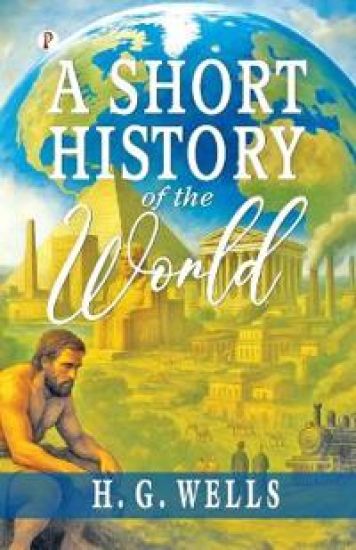
H. G. Wells, who is otherwise popular as a prolific writer of science fiction, was also a keen historian and social commentator. This brilliant book by him is a detailed rendering of Earth's history spanning from the origins of the Earth to the outcome of the First World War. From the evolution of life and the development of the human race to covering different ages: Neolithic era, the rise of Judaism, the Golden Age of Athens, the life of Christ, the rise of Islam, the discovery of America, and the Industrial Revolution, this book leaves no stone unturned.

Edward Prendick is rescued from a damaged ship and brought to a small island where an infamous doctor performs a series of experiments on animals. Once exposed, Prendick becomes disturbed by his cruel and unethical methods. When Edward Prendick arrives on a mysterious island, he’s introduced to its leader, the elusive Dr. Moreau. He’s a disgraced vivisectionist who was forced to flee after his experiments were exposed. On the island he’s created a human-animal-hybrid race called Beast Folk. As Prendick encounters these creatures, he begins to fear for his life. He attempts to escape the horrors of the land but is haunted by its ugly truth. Initially, The Island of Doctor Moreau, was met with controversy due to its twisted take on evolution. Wells’ unflinching detail paints an unforgettable picture in the reader’s mind. It’s one of his most popular and adapted works, including three feature films from 1933, 1977 and 1996. With an eye-catching new cover, and professionally typeset manuscript, this edition of The Island of Doctor Moreau is both modern and readable.

The Night Land: A Dark Fantasy Collection
H. G. Wells; Ayn Rand; Mark Twain
OK Publishing
2021
nidottu
The Night Land presents a fascinating tapestry of speculative fiction, deftly weaving elements of science fiction, fantasy, and philosophical inquiry. This anthology navigates a variety of themes such as futurism, societal progression, and existential contemplation. The collection features a broad spectrum of narrative techniques, from the richly imaginative worlds reminiscent of dark fantasy to sharper societal critiques that challenge human ideologies and aspirations. Each work, while distinct in its stylistic flair, contributes to a comprehensive exploration of humanity's trajectory and ethical foundations. Within the pages of The Night Land, readers will encounter provocative scenarios that compel reflection and introspection. The assembly of authors--ranging from classic visionaries like H. G. Wells and Mark Twain to pioneering voices such as Ayn Rand and Philip K. Dick--creates a rich dialogue shaped by diverse historical and literary contexts. These contributors, heralding from various cultural backgrounds and literary movements, bring nuanced perspectives enriched by their unique experiences. Collectively, they probe the implications of technological advancement, individualism, and collective morality, demonstrating the enduring relevance of speculative fiction. Their works resonate with the urgency of an evolving society while offering a window into the past, seamlessly connecting the threads of literary innovation. The Night Land is an essential experience for readers eager to traverse the myriad landscapes of thought-provoking fiction. It offers an unparalleled opportunity to appreciate the depth and diversity of speculative storytelling within a single volume. This anthology not only entertains but also sparks intellectual curiosity and conversation, serving as a portal into the complexities of futuristic imagination and philosophical discourse. Whether for academic exploration or personal enlightenment, the collection invites readers to embark on a journey through a prism of visionary narratives, each story a reflection of the multifaceted human condition.
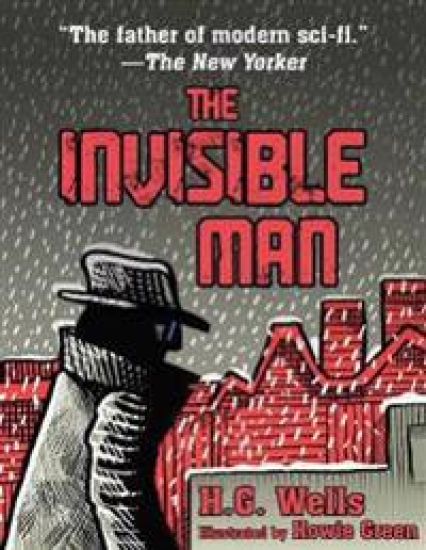
With an all-new illustrations, experience this classic pioneering tale of science fiction by H. G. Wells. West Sussex. A mysterious man in a long-sleeved trench coat, gloves, and a wide-brimmed hat arrives at Mr. and Mrs. Hall's inn. His face is almost entirely concealed (much like most of his personality and identity), except for a fake pink nose. He keeps to himself, working in his rooms during the day, only leaving at night. Griffin's peculiar habits quickly make him the talk of the town. After his landlady demands he pay his rent, he reveals his invisibility to her. In an altercation, the invisible man is forced out of the inn without his scientific equipment and notebooks. He sheds his clothing, but arms himself with an iron pipe. After being trailed by a stranger who accidentally pushes him into the bushes, the invisible man commits his first murder. Soon he meets Thomas Marvel and recruits him to be his assistant. But Marvel has other plans and reports Griffin to the police. Outcast and deranged, the invisible man takes shelter in the house of Dr. Kemp, a former acquaintance from medical school. There, he reveals his true identity, the origins of his invisibility, and his plot for revenge. Meanwhile, Kemp has already reported Griffin to the authorities, and tragedy ensues. Originally published in 1897, The Invisible Man is considered a landmark work of H. G. Wells and helped established him as the father of science fiction. Prepare to be captivated by the stunning new art by renowned illustrator, Howie Green, in this handsome new edition of a time-honored tale.


The Invisible Man is a science fiction novel by H. G. Wells. Originally serialized in Pearson's Weekly in 1897, it was published as a novel the same year. The Invisible Man to whom the title refers is Griffin, a scientist who has devoted himself to research into optics and who invents a way to change a body's refractive index to that of air so that it neither absorbs nor reflects light. He carries out this procedure on himself and renders himself invisible, but fails in his attempt to reverse it. A practitioner of random and irresponsible violence, Griffin has become an iconic character in horror fiction.

A Short History of the World summarises the scientific knowledge of the time regarding the history of Earth and life. It starts with its origins, goes on to explain the development of the Earth and life on Earth, reaching primitive thought and the development of humankind from the Cradle of Civilisation. The book ends with the outcome of the First World War, the Russian famine of 1921, and the League of Nations in 1922.

The War of the Worlds is a science fiction novel by English author H. G. Wells. It is one of the earliest stories to detail a conflict between mankind and an extra-terrestrial race. The novel is the first-person narrative of both an unnamed protagonist in Surrey and of his younger brother in London as southern England is invaded by Martians. The novel is one of the most commented-on works in the science fiction canon. The story has been related to invasion literature of the time. The novel has been variously interpreted as a commentary on evolutionary theory, British imperialism, and generally Victorian superstitions, fears, and prejudices.
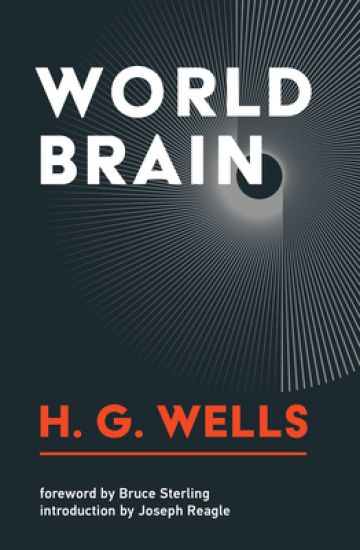
In 1937, H. G. Wells proposed a predigital, freely available World Encyclopedia to represent a civilization-saving World Brain. In a series of talks and essays in 1937, H. G. Wells proselytized for what he called a World Brain, as manifested in a World Encyclopedia--a repository of scientifically established knowledge--that would spread enlightenment around the world and lead to world peace. Wells, known to readers today as the author of The War of the Worlds and other science fiction classics, was imagining something like a predigital Wikipedia. The World Encyclopedia would provide a summary of verified reality (in about forty volumes); it would be widely available, free of copyright, and utilize the latest technology. Of course, as Bruce Sterling points out in the foreword to this edition of Wells's work, the World Brain didn't happen; the internet did. And yet, Wells anticipated aspects of the internet, envisioning the World Brain as a technical system of networked knowledge (in Sterling's words, a hypothetical super-gadget). Wells's optimism about the power of information might strike readers today as na vely utopian, but possibly also inspirational.