Kirjailija
H. G. Wells
Kirjat ja teokset yhdessä paikassa: 1 483 kirjaa, julkaisuja vuosilta 1895–2027, suosituimpiin kuuluu Maailmojen sota. Vertaile teosten hintoja ja tarkista saatavuus suomalaisista kirjakaupoista.
Nimi esiintyy myös muodoissa: H G Wells, H.G. Wells, H.G Wells, H. G Wells
1 483 kirjaa
Kirjojen julkaisuvuodet: 1895–2027.

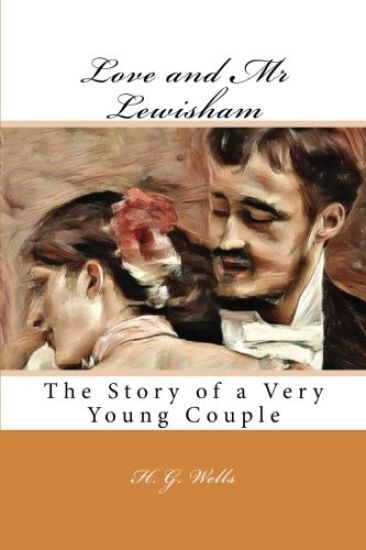
Love and Mr Lewisham: The Story of a Very Young Couple
H. G. Wells
Createspace Independent Publishing Platform
2017
nidottu
At the beginning of the novel, Mr Lewisham is an 18-year-old teacher at a boys' school in Sussex, earning forty pounds a year. He meets and falls in love with Ethel Henderson, who is paying a visit to relatives. His involvement with her makes him lose his position, but he is unable to find her when he moves to London. After a two-and-a-half-year break in the action, Mr Lewisham is in his third year of study at the Normal School of Science in South Kensington. He has become a socialist, declaring his politics with a red tie, and is an object of interest to Alice Heydinger, an older student. However, chance brings him together again with his first love at a s ance. Ethel's stepfather, Mr Chaffery, is a spiritualist charlatan, and Mr Lewisham is determined to extricate her from association with Chaffery's dishonesty. They marry, and Mr Lewisham is forced to abandon his plans for a brilliant scientific career followed by a political ascent. When Chaffrey absconds to the Continent with money he has embezzled from his clients, Lewisham agrees to move into his shabby Clapham house to look after Ethel, their child, and Ethel's elderly mother (Chaffrey's abandoned wife). Wells's friends Richard Gregory wrote to him after reading the novel: "I cannot get that poor devil Lewisham out of my mind head, and I wish I had an address, for I would go to him and rescue him from the miserable life in which you leave him."
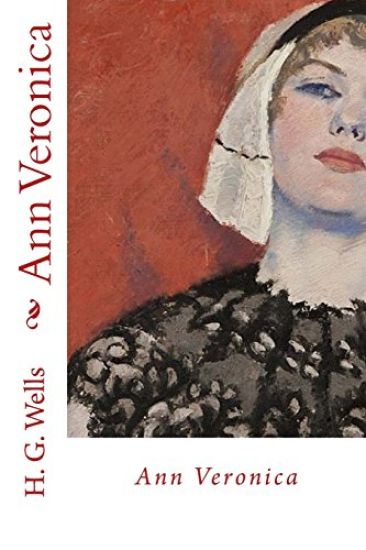
Mr. Stanley forbids his adult daughter, a biology student at Tredgold Women's College and the youngest of his five children, to attend a fancy dress ball in London, causing a crisis. Ann Veronica is planning to attend the dance with friends of a down-at-heel artistic family living nearby and has been chafing at other restrictions imposed for no apparent reason on her. After her father resorts to force to stop her from attending the ball, she leaves her home in the fictional south London suburb of Morningside Park in order to live independently in an apartment "in a street near the Hampstead Road" in North London. Unable to find appropriate employment, she borrows forty pounds from Mr. Ramage, an older man, without realizing she is compromising herself...

In A Modern Utopia, two travelers fall into a space-warp and suddenly find themselves upon a Utopian Earth controlled by a single World Government.

Mr. Britling Sees It Through By H. G. Wells
H. G. Wells Non-Fiction TRIO v.3: New Worlds for Old, The Fate of Man, Russia in the Shadows
H. G. Wells
Createspace Independent Publishing Platform
2017
nidottu
H. G. Wells, a prolific science fiction writer, also wrote many non-fiction works that may be found interesting and/or pertinent for our current times. Could world events be following a script? TRIO Volume 2 contains: The Fate of Man -originally published 1939"I forget when it was I began to realize that the world as it had been presented to me was not a trustworthy picture of reality, that in effect I was being lied to about life. I began doubting quite early in life. I knew the world was round because everybody told me so. If they had told me the world was cone-shaped or flat, I should have known that with equal conviction-and it was only years afterwards that I realized how difficult it is to prove that the world is a globe. Plainly, it is high time we looked more closely into the causes of these disconcerting frustrations of our recent large, bright anticipations of a world of plenty and expansion. What is the real position of Homo sapiens in relation to his environment? Has he the mastery we assumed he had, or did we make a profound miscalculation of his outlook? Have we been indulging in hopeful assumptions rather than facing the realities of his case?" CONTENTS: INTRODUCTIONPreliminary StatementBiology Invades HistoryHow Species SurviveHistory Becomes EcologyUnion Now? What Is Democracy? Where Is Democracy? What Man Has To LearnSample Of A GenerationEstimating HopeSurvey Of Existing ForcesThe Jewish InfluenceChristendomWhat Is Protestantism? The Nazi ReligionTotalitarianismThe British OligarchyShintoismThe Chinese OutlookSubject PeoplesCommunism And RussiaAmerican MentalityThree Factors In EveryoneSummaryImpossibility Of UtopianismDecadent WorldNotesNew Worlds for Old -originally published 1908Wells advocates the taking over by the government of all public utilities, the heavy taxation of large fortunes, the establishment of a minimum wage, and the assumption by the state of full responsibility for the care of children, including education, and vocational training, for the support of expectant mothers, and aged persons, for attendance upon the sick. Yet he would not do away with the family or with private property, and he believes that the advantages of both these institutions would be much more widely and equally distributed under the system that he proposes than at present... CONTENTS: Introductory RemarksThe Good Will in ManThe Fundamental Idea of SocialismThe First Main Generalization of SocialismThe Second Main Generalization of SocialismThe Spirit of Gain and the Spirit of ServiceWould Socialism Destroy the Home? Would Modern Socialism Abolish All Property? The Middle-Class Man, the Business Man, and SocialismSome Common Objections to SocialismSocialism a Developing DoctrineRevolutionary SocialismAdministrative SocialismConstructive SocialismSome Arguments Ad HominemThe Advancement of SocialismRussia in the Shadows -originally published 1920A series of articles previously printed in The Sunday Express in connection with Wells's second visit to Russia in September and October 1920. Portraying a vivid account of Russian chaos following the first world war, its portrait of Lenin, and its insights into Wells' early opinions of Marx and the future of Russia. Wells portrayed Russia as recovering from a total social collapse, "the completest that has ever happened to any modern social organisation." He minimized the role of the Bolsheviks in the fall of the Russian state, and presented this explanation of their success: "While all the rest of Russia was either apathetic like the peasantry or garrulously at sixes and sevens or given over to violence or fear, the Communists were prepared to act." In an interview with Lenin, the leader and founder of Russian communism. Wells portrays Lenin as a pragmatic leader who "has recently stripped off the last pretence that the Russian revolution is anything more than the inauguration of an age of limitless experiment."
H. G. Wells Non-Fiction TRIO v.1: Anticipations, The Open Conspiracy, The New World Order
H. G. Wells
Createspace Independent Publishing Platform
2017
nidottu
H. G. Wells, a prolific science fiction writer, also wrote many non-fiction works that may be found interesting and/or pertinent for our current times. Could world events be following a script? Volume 1 of this TRIO contains: Anticipations - First serialized in The North American Review, June 1901 with the subtitle: "An Experiment in Prophecy"The Open Conspiracy: Blue Prints for a World Revolution was published in 1928 by H. G. Wells, when he was 62 years old. It was revised and expanded in 1930 with the additional subtitle A Second Version of This Faith of a Modern Man Made More Explicit and Plain. In 1931 a further revised edition appeared titled What Are We to To Do With Our Lives? The final version appeared in 1933 under its original title. Many of its ideas are anticipated in Wells's 1926 novel The World of William Clissold. The book is, in Wells's words, a "scheme to thrust forward and establish a human control over the destinies of life and liberate it from its present dangers, uncertainties and miseries." It proposes that largely as the result of scientific progress, a common vision of a world "politically, socially and economically unified" is emerging among educated and influential people, and that this can be the basis of "a world revolution aiming at universal peace, welfare and happy activity" that can result in the establishment of a "world commonweal." This is to be achieved by "drawing together a proportion of all or nearly all the functional classes in contemporary communities in order to weave the beginnings of a world community out of their selection." This will ultimately "be a world religion." - WikipediaTHE OPEN CONSPIRACY - TABLE OF CONTENTSIntroductionChapter 1> The Present Crisis in Human AffairsChapter 2> The Idea of the Open ConspiracyChapter 3> We Have to Clear and Clean Up Our MindsChapter 4> The Revolution in EducationChapter 5> Religion in the New WorldChapter 6> Modern Religion is ObjectiveChapter 7> What Mankind Has to DoChapter 8> Broad Characteristics Of a Scientific World CommonwealChapter 9> No Stable Utopia Is Now ConceivableChapter 10> The open conspiracy is not to be thought of as a single organization; it is a conception of life out of which efforts, organizations, and new orientations will ariseChapter 11> Forces and Resistances in the Great Modern Communities Now Prevalent, Which Are Antagonistic to The Open Conspiracy. The war with TraditionChapter 12> The Resistances of the Less Industrialized Peoples to the Drive of the Open ConspiracyChapter 13> Resistances and Antagonistic Forces in our Conscious and Unconscious SelvesChapter 14> The Open Conspiracy Begins as a Movement of Discussion, Explanation, and PropagandaChapter 15> Early Constructive Work of the Open ConspiracyChapter 16> Existing and Developing Movements Which Are Contributory to the Open Conspiracy and Which Must Develop a Common Consciousness. The Parable of Provinder IslandChapter 17> The Creative Home, Social Group, and School. The Present Waste of Idealistic WillChapter 18> Progressive Development of the Activities of the Open Conspiracy Into a World Control and Commonweal. The Hazards of the AttemptChapter 19> Human Life in the Coming World CommunityThe New World Order was published in 1940. Wells was 74 years old and wondered whether this New World Order was attainable, how it could be attained, and what sort of world a world at peace will have to be. This masterpiece of speculative theory will appeal to those with an interest in the future of humanity and our roles in society. In this Non-Fiction TRIO, H. G. Wells vision and forethought stand out as an important message for future events as well as current times.
The Island of Dr Moreau is the fourth of six full-cast adaptations in 2017 of the works of British Sci-Fi writer extraordinaire Herbert George Wells.


The Invisible Man By H. G. WellsFirst published in 1897, The Invisible Man ranks as one of the most famous scientific fantasies ever written. Part of a series of pseudoscientific romances written by H. G. Wells (1866