Kirjojen hintavertailu – 12 859 828 kirjaa ja 27 kauppaa

Kirjailija

Hans A. Baer

Kirjat ja teokset yhdessä paikassa: 25 kirjaa, julkaisuja vuosilta 2001–2025, suosituimpiin kuuluu Biomedicine and Alternative Healing Systems in America. Vertaile teosten hintoja ja tarkista saatavuus suomalaisista kirjakaupoista.

Nimi esiintyy myös muodoissa: Hans A Baer

25 kirjaa

Kirjojen julkaisuvuodet: 2001–2025.

Introducing Health Anthropology

Introducing Health Anthropology

Merrill Singer; Hans A. Baer; Debbi Long; Alex Pavlotski

BLOOMSBURY PUBLISHING PLC
2025
sidottu
Introducing Medical Anthropology: A Discipline in Action, provides students with a first look at the growing field of medical and health anthropology. The narrative is guided by three unifying themes. First, health-oriented anthropologists are involved in the process of helping to change the world around them through their work in applied projects, policy initiatives, and advocacy. Second, the authors present the fundamental importance of culture and social relationships in health and illness by demonstrating that illness and disease involve complex biosocial processes and that resolving them requires attention to a range of factors beyond biology. Third, through an examination of the issue of health inequality, this book underlines the need for an analysis that moves beyond cultural or even ecological models of health toward a comprehensive biosocial approach. Such an approach integrates biological, cultural, and social factors in building unified theoretical understandings of the origin of ill health, while contributing to the building of effective and equitable national health-care systems.

Introducing Health Anthropology

Introducing Health Anthropology

Merrill Singer; Hans A. Baer; Debbi Long; Alex Pavlotski

BLOOMSBURY PUBLISHING PLC
2025
nidottu
Introducing Medical Anthropology: A Discipline in Action, provides students with a first look at the growing field of medical and health anthropology. The narrative is guided by three unifying themes. First, health-oriented anthropologists are involved in the process of helping to change the world around them through their work in applied projects, policy initiatives, and advocacy. Second, the authors present the fundamental importance of culture and social relationships in health and illness by demonstrating that illness and disease involve complex biosocial processes and that resolving them requires attention to a range of factors beyond biology. Third, through an examination of the issue of health inequality, this book underlines the need for an analysis that moves beyond cultural or even ecological models of health toward a comprehensive biosocial approach. Such an approach integrates biological, cultural, and social factors in building unified theoretical understandings of the origin of ill health, while contributing to the building of effective and equitable national health-care systems.

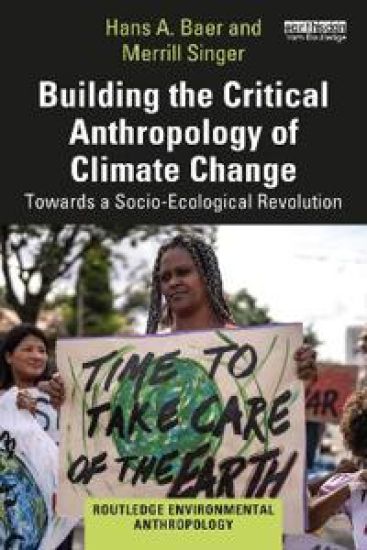
Building the Critical Anthropology of Climate Change

Building the Critical Anthropology of Climate Change

Hans A. Baer; Merrill Singer

TAYLOR FRANCIS LTD
2024
sidottu
This book applies a critical perspective to anthropogenic climate change and the global socio-ecological crisis. The book focuses on the critical anthropology of climate change by opening up a dialogue with the two main contending perspectives in the field, namely the cultural ecological and the cultural interpretive perspectives. Guided by these, the authors take a firm stance on the types of changes that are needed to sustain life on Earth as we know it. Within this framework, they explore issues of climate and social equity, the nature of the current era in Earth’s geohistory, the perspectives of the elite polluters driving climate change, and the regrettable contributions of anthropologists and other scholars to climate change. Engaging with perspectives from sociology, political science, and the geography of climate change, the book explores various approaches to thinking about and responding to the existential threat of an ever-warming climate. In doing so, it lays the foundation for a brave new sustainable world that is socially just, highly democratic, and climatically safe for humans and other species. This book will be of interest to researchers and students studying environmental anthropology, climate change, human geography, sociology, and political science.
Building the Critical Anthropology of Climate Change

Building the Critical Anthropology of Climate Change

Hans A. Baer; Merrill Singer

TAYLOR FRANCIS LTD
2024
nidottu
This book applies a critical perspective to anthropogenic climate change and the global socio-ecological crisis. The book focuses on the critical anthropology of climate change by opening up a dialogue with the two main contending perspectives in the field, namely the cultural ecological and the cultural interpretive perspectives. Guided by these, the authors take a firm stance on the types of changes that are needed to sustain life on Earth as we know it. Within this framework, they explore issues of climate and social equity, the nature of the current era in Earth’s geohistory, the perspectives of the elite polluters driving climate change, and the regrettable contributions of anthropologists and other scholars to climate change. Engaging with perspectives from sociology, political science, and the geography of climate change, the book explores various approaches to thinking about and responding to the existential threat of an ever-warming climate. In doing so, it lays the foundation for a brave new sustainable world that is socially just, highly democratic, and climatically safe for humans and other species. This book will be of interest to researchers and students studying environmental anthropology, climate change, human geography, sociology, and political science.
Motor Vehicles, the Environment, and the Human Condition

Motor Vehicles, the Environment, and the Human Condition

Hans A. Baer

BLOOMSBURY PUBLISHING PLC
2023
nidottu
The world now has more than a billion motor vehicles, and this number continues to increase as developing countries imitate developed societies in their adoption of the culture of automobility. This book explores the political ecology of motor vehicles in an era of growing social disparities and environmental crises, the latter of which are most manifest in anthropogenic climate change to which motor vehicles constitute a major contributor. A political ecological perspective recognizes that motor vehicles, perhaps more than any other machine, embody the social, structural, cultural, and environmental contradictions of the capitalist world system. In addition to highlighting many of the environmental, social, and health, environmental consequences of humanity’s increasing reliance on motor vehicles, particularly private automobiles, this book argues that ultimately we need as a species to move beyond motor vehicles as much as possible but that such an effort will have be part and parcel of creating an alternative world system based on social justice, democratic processes, environmental sustainability, and a safe climate, one termed democratic eco-socialism.
Global Capitalism and Climate Change

Global Capitalism and Climate Change

Hans A. Baer

BLOOMSBURY PUBLISHING PLC
2021
sidottu
Now in its second edition, Global Capitalism and Climate Change: The Need for an Alternative World System examines anthropogenic climate change in the context of global capitalism, a political economy that emphasizes profit-making, is committed to on-going economic growth, results in massive social inequality, fosters a treadmill of production and consumption, and is heavily reliant on fossil fuels. Looking ahead, Hans A. Baer explores the systemic changes necessary to create a more socially just, democratic, and environmentally sustainable world system capable of moving humanity toward a safer climate. This book is recommended for readers interested in anti-systemic efforts, including eco-anarchism, eco-feminism, the de-growth perspective, Indigenous voices, and the climate justice movement.
Climate Change and Capitalism in Australia

Climate Change and Capitalism in Australia

Hans A. Baer

Taylor Francis Ltd
2021
nidottu
Recognizing that climate politics has been an increasingly contentious and heated topic in Australia over the past two decades, this book examines Australian capitalism as a driver of climate change and the nexus between the corporations and Coalition and Australian Labor parties. As a highly developed country, Australia is punching above its weight in terms of contributing to greenhouse gas emissions despite rising temperatures, droughts, water shortages and raging bushfires, storm surges and flooding, and the bleaching of the Great Barrier Reef. Drawing upon both archival and ethnographic research, Hans Baer examines Australian climate politics at the margins, namely the Greens, the labour union, the environmental NGOs, and the grass-roots climate movement. Adopting a climate justice perspective which calls for "system change, not climate change" as opposed to the conventional approach of seeking to mitigate emissions through market mechanisms and techno-fixes, particularly renewable energy sources, this book posits system-challenging transitional steps to shift Australia toward an eco-socialist vision in keeping with a burgeoning global socio-ecological revolution. Accessibly written and including an interview with renowned comedian and climate activist Rod Quantock OAM, this book is essential reading for academics, students and general readers with an interest in climate change and climate activism.
Climate Change and Capitalism in Australia

Climate Change and Capitalism in Australia

Hans A. Baer

Taylor Francis Ltd
2021
sidottu
Recognizing that climate politics has been an increasingly contentious and heated topic in Australia over the past two decades, this book examines Australian capitalism as a driver of climate change and the nexus between the corporations and Coalition and Australian Labor parties. As a highly developed country, Australia is punching above its weight in terms of contributing to greenhouse gas emissions despite rising temperatures, droughts, water shortages and raging bushfires, storm surges and flooding, and the bleaching of the Great Barrier Reef. Drawing upon both archival and ethnographic research, Hans Baer examines Australian climate politics at the margins, namely the Greens, the labour union, the environmental NGOs, and the grass-roots climate movement. Adopting a climate justice perspective which calls for "system change, not climate change" as opposed to the conventional approach of seeking to mitigate emissions through market mechanisms and techno-fixes, particularly renewable energy sources, this book posits system-challenging transitional steps to shift Australia toward an eco-socialist vision in keeping with a burgeoning global socio-ecological revolution. Accessibly written and including an interview with renowned comedian and climate activist Rod Quantock OAM, this book is essential reading for academics, students and general readers with an interest in climate change and climate activism.
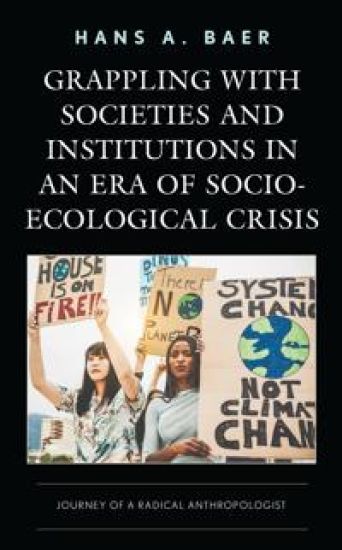
Grappling with Societies and Institutions in an Era of Socio-Ecological Crisis
Grappling with Societies and Institutions in an Era of Socio-Ecological Crisis is an autoethnography of the journey through various societies and institutions and how they function in the midst of an era of socio-ecological crises. The volume traces the steps of the author in becoming a radical anthropologist, namely through the experience of immigration and naturalization from Peru to the United States and then to Australia, politicization while working as an engineer in the aircraft industry during the late 1960s, socialization in and subsequent exit from Roman Catholicism, and experiences as an academic working in the corporate university. As well, the author illuminates the practices of research and engagement as a scholar-activist on various topics, such as the Levites of Utah and African American Spiritual churches, socio-political and religious life in East Germany, complementary and alternative medicine, the Australian climate movement, and democratic eco-socialism.
Democratic Eco-Socialism as a Real Utopia
As global economic and population growth continues to skyrocket, increasingly strained resources have made one thing clear: the desperate need for an alternative to capitalism. In Democratic Eco-Socialism as a Real Utopia, Hans Baer outlines the urgent need to reevaluate historical definitions of socialism, commit to social equality and justice, and prioritize environmental sustainability. Democatic eco-socialism, as he terms it, is a system capable of mobilizing people around the world, albeit in different ways, to prevent on-going human socio-economic and environmental degradation, and anthropogenic climate change.
Motor Vehicles, the Environment, and the Human Condition
The world now has more than a billion motor vehicles, and this number continues to increase as developing countries imitate developed societies in their adoption of the culture of automobility. This book explores the political ecology of motor vehicles in an era of growing social disparities and environmental crises, the latter of which are most manifest in anthropogenic climate change to which motor vehicles constitute a major contributor. A political ecological perspective recognizes that motor vehicles, perhaps more than any other machine, embody the social, structural, cultural, and environmental contradictions of the capitalist world system. In addition to highlighting many of the environmental, social, and health, environmental consequences of humanity’s increasing reliance on motor vehicles, particularly private automobiles, this book argues that ultimately we need as a species to move beyond motor vehicles as much as possible but that such an effort will have be part and parcel of creating an alternative world system based on social justice, democratic processes, environmental sustainability, and a safe climate, one termed democratic eco-socialism.
Airplanes, the Environment, and the Human Condition
The number of airplane flights worldwide continues to grow and is one of the many drivers of climate change. This book examines the aviation industry from an anthropological perspective, focusing on the sector’s environmental impact and the challenges facing attempts to shift to more sustainable solutions. Hans Baer outlines how airplanes have become a key component of modern cultural and social life, and how the world system has become increasingly dependent on them to function. He critically examines current efforts to mitigate the climatic impact of the air travel and argues for a significant move away from air transport, suggesting that such a shift may only be achieved through a more fundamental change in the world system.
Urban Eco-Communities in Australia

Urban Eco-Communities in Australia

Liam Cooper; Hans A. Baer

Springer Verlag, Singapore
2018
nidottu
This book offers one of the first detailed anthropological studies of emergent ecotopianism in urban contexts. Engaging directly with debates on urbanisation, sustainability and utopia, it presents two detailed ethnographic case studies of inner urban Australian eco-communities in Adelaide and Melbourne. These novel responses to the ecological crisis – real social laboratories that attempt to manifest a vision of the ‘eco-city’ in microcosm – offer substantial new insights into the concept and creation of sustainable urban communities, their attempts to cultivate ways of living that are socially and ecologically nourishing, and their often fraught relationship to the capitalist city beyond. These studies also suggest the opportunities and limitations of moving beyond demonstration projects towards wider urban transformation, as well as exposing the problems of accessibility and affordability that thwart further urban eco-interventions and the ways that existing projects can exacerbate issues of gentrification and privilege in a socially polarised city. Amidst the challenges of the capitalist city, climate change and ecological crisis, this book offers vital lessons on the potential of urban sustainability in future cities.
Urban Eco-Communities in Australia

Urban Eco-Communities in Australia

Liam Cooper; Hans A. Baer

Springer Verlag, Singapore
2018
sidottu
This book offers one of the first detailed anthropological studies of emergent ecotopianism in urban contexts. Engaging directly with debates on urbanisation, sustainability and utopia, it presents two detailed ethnographic case studies of inner urban Australian eco-communities in Adelaide and Melbourne. These novel responses to the ecological crisis – real social laboratories that attempt to manifest a vision of the ‘eco-city’ in microcosm – offer substantial new insights into the concept and creation of sustainable urban communities, their attempts to cultivate ways of living that are socially and ecologically nourishing, and their often fraught relationship to the capitalist city beyond. These studies also suggest the opportunities and limitations of moving beyond demonstration projects towards wider urban transformation, as well as exposing the problems of accessibility and affordability that thwart further urban eco-interventions and the ways that existing projects can exacerbate issues of gentrification and privilege in a socially polarised city. Amidst the challenges of the capitalist city, climate change and ecological crisis, this book offers vital lessons on the potential of urban sustainability in future cities.
The Anthropology of Climate Change

The Anthropology of Climate Change

Hans A. Baer; Merrill Singer

Routledge
2018
nidottu
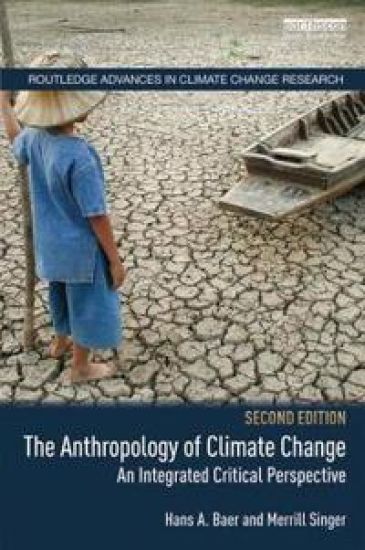
In addressing the urgent questions raised by climate change, this book provides a comprehensive overview of the anthropology of climate change, guided by a critical political ecological framework. It examines the emergence and slow maturation of the anthropology of climate change, reviews the historic foundations for this work in the archaeology of climate change, and presents three alternative contemporary theoretical perspectives in the anthropology of climate change. This second edition is fully updated to include the most recent literature published since the first edition in 2014. It also examines a number of new topics, including an analysis of the 2014 American Anthropological Association’s Global Climate Change Task Force report, a new case study on responses to climate change in developed societies, and reference to the stance of the Trump administration on climate change. Not only does this book provide a valuable overview of the field and the key literature, but it also gives researchers and students in Environmental Anthropology, Climate Change, Human Geography, Sociology, and Political Science a novel framework for understanding climate change that emphasizes human socioecological interactions.
The Anthropology of Climate Change

The Anthropology of Climate Change

Hans A. Baer; Merrill Singer

Routledge
2018
sidottu
In addressing the urgent questions raised by climate change, this book provides a comprehensive overview of the anthropology of climate change, guided by a critical political ecological framework. It examines the emergence and slow maturation of the anthropology of climate change, reviews the historic foundations for this work in the archaeology of climate change, and presents three alternative contemporary theoretical perspectives in the anthropology of climate change. This second edition is fully updated to include the most recent literature published since the first edition in 2014. It also examines a number of new topics, including an analysis of the 2014 American Anthropological Association’s Global Climate Change Task Force report, a new case study on responses to climate change in developed societies, and reference to the stance of the Trump administration on climate change. Not only does this book provide a valuable overview of the field and the key literature, but it also gives researchers and students in Environmental Anthropology, Climate Change, Human Geography, Sociology, and Political Science a novel framework for understanding climate change that emphasizes human socioecological interactions.
Democratic Eco-Socialism as a Real Utopia
As global economic and population growth continues to skyrocket, increasingly strained resources have made one thing clear: the desperate need for an alternative to capitalism. In Democratic Eco-Socialism as a Real Utopia, Hans Baer outlines the urgent need to reevaluate historical definitions of socialism, commit to social equality and justice, and prioritize environmental sustainability. Democatic eco-socialism, as he terms it, is a system capable of mobilizing people around the world, albeit in different ways, to prevent on-going human socio-economic and environmental degradation, and anthropogenic climate change.
Medical Anthropology and the World System

Medical Anthropology and the World System

Hans A. Baer; Merrill Singer; Ida Susser

Praeger Publishers Inc
2013
sidottu
Now in its third edition, this textbook serves to frame understandings of health, health-related behavior, and health care in light of social and health inequality as well as structural violence. It also examines how the exercise of power in the health arena and in society overall impacts human health and well-being. Medical Anthropology and the World System: Critical Perspectives, Third Edition includes updated and expanded information on medical anthropology, resulting in an even more comprehensive resource for undergraduate students, graduate students, and researchers worldwide. As in the previous versions of this text, the authors provide insights from the perspective of critical medical anthropology, a well-established theoretical viewpoint from which faculty, researchers, and students study medical anthropology. It addresses the nature and scope of medical anthropology; the biosocial and political ecological origins of disease, health inequities, and social suffering; and the nature of medical systems in indigenous and pre-capitalist state societies and modern societies. The third edition also includes new material on the relationship between climate change and health. Finally, this textbook explores health praxis and the struggle for a healthy world.
Medical Anthropology and the World System

Medical Anthropology and the World System

Hans A. Baer; Merrill Singer; Ida Susser

Praeger Publishers Inc
2013
nidottu
Now in its third edition, this textbook serves to frame understandings of health, health-related behavior, and health care in light of social and health inequality as well as structural violence. It also examines how the exercise of power in the health arena and in society overall impacts human health and well-being. Medical Anthropology and the World System: Critical Perspectives, Third Edition includes updated and expanded information on medical anthropology, resulting in an even more comprehensive resource for undergraduate students, graduate students, and researchers worldwide. As in the previous versions of this text, the authors provide insights from the perspective of critical medical anthropology, a well-established theoretical viewpoint from which faculty, researchers, and students study medical anthropology. It addresses the nature and scope of medical anthropology; the biosocial and political ecological origins of disease, health inequities, and social suffering; and the nature of medical systems in indigenous and pre-capitalist state societies and modern societies. The third edition also includes new material on the relationship between climate change and health. Finally, this textbook explores health praxis and the struggle for a healthy world.