Kirjojen hintavertailu – 12 903 724 kirjaa ja 27 kauppaa

Kirjailija

Hans Joas

Kirjat ja teokset yhdessä paikassa: 35 kirjaa, julkaisuja vuosilta 1992–2025, suosituimpiin kuuluu Was Ist Die Achsenzeit?: Eine Wissenschaftliche Debatte ALS Diskurs Uber Transzendenz. Vertaile teosten hintoja ja tarkista saatavuus suomalaisista kirjakaupoista.

35 kirjaa

Kirjojen julkaisuvuodet: 1992–2025.

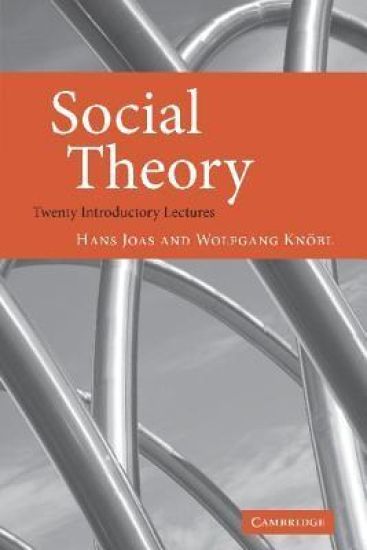
Social Theory

Social Theory

Hans Joas; Wolfgang Knöbl

Cambridge University Press
2009
sidottu
Social theory is the theoretical core of the social sciences, clearly distinguishable from political theory and cultural analysis. This book offers a unique overview of the development of social theory from the end of the Second World War in 1945 to the present day. Spanning the literature in English, French and German, it provides an excellent background to the most important social theorists and theories in contemporary sociological thought, with crisp summaries of the main books, arguments and controversies. It also deals with newly emerging schools from rational choice to symbolic interactionism, with new ambitious approaches (Habermas, Luhmann, Giddens, Bourdieu), structuralism and antistructuralism, critical revisions of modernization theory, feminism and neopragmatism. Written by two of the world's leading sociologists and based on their extensive academic teaching, this unrivalled work is ideal both for students in the social sciences and humanities and for anyone interested in contemporary theoretical debates.
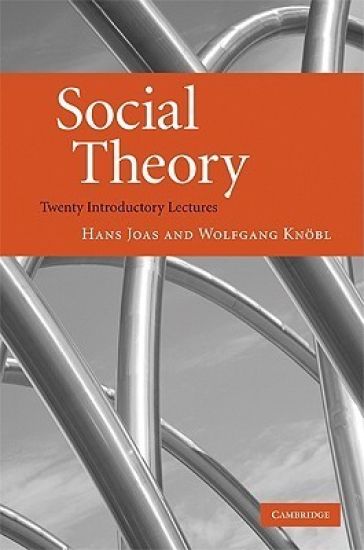
Social Theory

Social Theory

Hans Joas; Wolfgang Knöbl

Cambridge University Press
2009
pokkari

Halvin toimitettuna 55,70 €

Social theory is the theoretical core of the social sciences, clearly distinguishable from political theory and cultural analysis. This book offers a unique overview of the development of social theory from the end of the Second World War in 1945 to the present day. Spanning the literature in English, French and German, it provides an excellent background to the most important social theorists and theories in contemporary sociological thought, with crisp summaries of the main books, arguments and controversies. It also deals with newly emerging schools from rational choice to symbolic interactionism, with new ambitious approaches (Habermas, Luhmann, Giddens, Bourdieu), structuralism and antistructuralism, critical revisions of modernization theory, feminism and neopragmatism. Written by two of the world's leading sociologists and based on their extensive academic teaching, this unrivalled work is ideal both for students in the social sciences and humanities and for anyone interested in contemporary theoretical debates.

Do We Need Religion?

Do We Need Religion?

Hans Joas

Paradigm
2008
nidottu
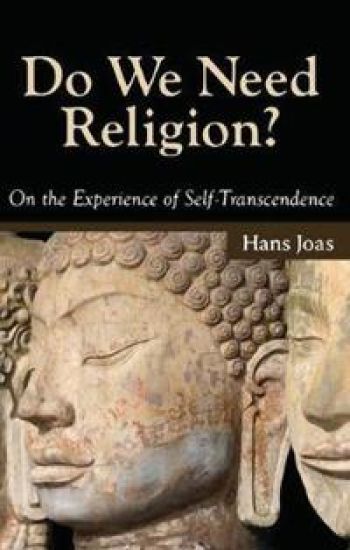
The old assumption that modernization leads to secularization is outdated. Yet the certainty that religion is an anthropological universal that can only be suppressed by governments is also dead. Thus it is now a favorable moment for a new perspective on religion. This book takes human experiences of self-transcendence as its point of departure. Religious faith is seen as an attempt to articulate and interpret such experiences. Faith then is neither useful nor a symptom of weakness or misery, but an opening up of ways of experience. This book develops this basic idea, contrasts it with the thinking of some leading religious thinkers of our time, and relates it to the current debates about human rights and universal human dignity.
Do We Need Religion?

Do We Need Religion?

Hans Joas

Paradigm
2007
sidottu
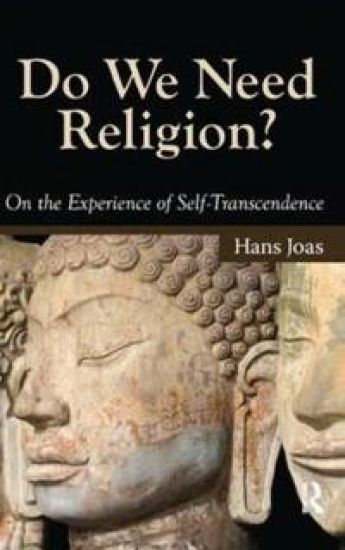
The old assumption that modernization leads to secularization is outdated. Yet the certainty that religion is an anthropological universal that can only be suppressed by governments is also dead. Thus it is now a favorable moment for a new perspective on religion. This book takes human experiences of self-transcendence as its point of departure. Religious faith is seen as an attempt to articulate and interpret such experiences. Faith then is neither useful nor a symptom of weakness or misery, but an opening up of ways of experience. This book develops this basic idea, contrasts it with the thinking of some leading religious thinkers of our time, and relates it to the current debates about human rights and universal human dignity.
Durkheim's Philosophy Lectures

Durkheim's Philosophy Lectures

Emile Durkheim; Hans Joas

Cambridge University Press
2004
sidottu
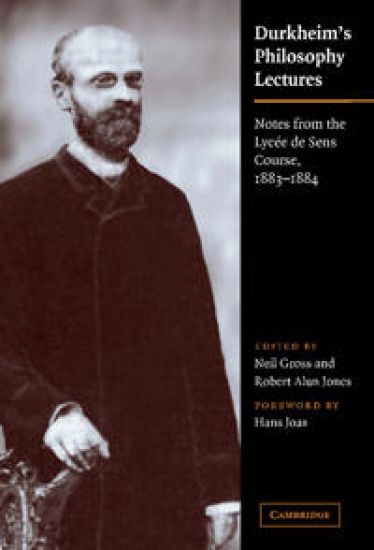
Moving back and forth between the history of philosophy and the contributions of philosophers in his own day, Durkheim takes up topics as diverse as philosophical psychology, logic, ethics, and metaphysics, and seeks to articulate a unified philosophical position. Remarkably, in these lectures, given more than a decade before the publication of his groundbreaking book, The Division of Labour in Society (1893), the 'social realism' that is so characteristic of his later work - where he insists, famously, that social facts cannot be reduced to psychological or economic ones, and that such facts constrain human action in important ways - is totally absent in these early lectures. For this reason, they will be of special interest to students of the history of the social sciences, for they shed important light on the course of Durkheim's intellectual development.
War and Modernity

War and Modernity

Hans Joas

Polity Press
2002
sidottu
Written by one of Europe's leading social theorists, this book takes up the claims of modernity and confronts them with a stark reality: the ongoing proliferation of war. How can contemporary social and political thought come to terms with this apparent failure of modernity? Throughout the 20th century the global struggle of ideologies put paid to the dream that wars were somehow the relic of a bygone, unenlightened age. But now in the aftermath of the Cold War era, how are we to account for the persistence of war and state violence? Drawing on a wide range of material, from World War I and Vietnam to the Gulf War and the conflicts in the Balkans, Joas engages with current debates in the sociology and politics of war and develops his own distinctive line of argument concerning the role of warfare in modern societies. He aligns himself with figures such as Giddens and Mann in the attempt to establish a new and non-functionalist theory of social change. This compelling and timely study confronts one of the great paradoxes of our era, and Joas's book is a substantial contribution towards a new historico-sociological perspectiveon the twentieth century. It will be of particular interest to students and scholars of sociology and politics, and will appeal to anyone who has puzzled over the persistence of modern war, and the limits of enlightenment as an historical force.
War and Modernity

War and Modernity

Hans Joas

Polity Press
2002
nidottu
Written by one of Europe's leading social theorists, this book takes up the claims of modernity and confronts them with a stark reality: the ongoing proliferation of war. How can contemporary social and political thought come to terms with this apparent failure of modernity? Throughout the 20th century the global struggle of ideologies put paid to the dream that wars were somehow the relic of a bygone, unenlightened age. But now in the aftermath of the Cold War era, how are we to account for the persistence of war and state violence? Drawing on a wide range of material, from World War I and Vietnam to the Gulf War and the conflicts in the Balkans, Joas engages with current debates in the sociology and politics of war and develops his own distinctive line of argument concerning the role of warfare in modern societies. He aligns himself with figures such as Giddens and Mann in the attempt to establish a new and non-functionalist theory of social change. This compelling and timely study confronts one of the great paradoxes of our era, and Joas's book is a substantial contribution towards a new historico-sociological perspectiveon the twentieth century. It will be of particular interest to students and scholars of sociology and politics, and will appeal to anyone who has puzzled over the persistence of modern war, and the limits of enlightenment as an historical force.
The Genesis of Values

The Genesis of Values

Hans Joas

University of Chicago Press
2001
nidottu
Public and intellectual debates have long struggled with the concept of values and the difficulties of defining them. With this volume, Hans Joas explores the nature of these difficulties in relation to some of the leading figures of 10th-century philosophy and social theory.
The Genesis of Values

The Genesis of Values

Hans Joas

Polity Press
2000
nidottu
One of the most important issues in public and academic debate is the concept of value and the difficulty in defining it. In this new book, the leading social theorist Hans Joas explores the nature of values in relation to some of the leading figures of twentieth-century philosophy and social theory. Seeking to synthesize utilitarian and normativist approaches, Joas argues that only by appreciating the creative nature of human action can we understand how values and value commitments arise. Values, Joas suggests, arise in experiences of self-formation and self-transcendence. He arrives at this thesis by tracing the tensions in the work of thinkers including Friedrich Nietzsche, William James, Max Scheler and John Dewey. He goes on to explore the work of Charles Taylor, and concludes with an examination of postmodern challenges to the concept of identity and with a provocative critique of Habermas's treatment of the relation between the right and the good. Throughout the book, Joas differentiates between values, norms and desires. He clarifies their respective role in the dynamics of human action, and explores how the ways we acquire values relate to the other ways in which we understand the world and ourselves. This important book will be of great interest to students and scholars of sociology, social theory and philosophy.
The Genesis of Values

The Genesis of Values

Hans Joas

Polity Press
2000
sidottu
One of the most important issues in public and academic debate is the concept of value and the difficulty in defining it. In this new book, the leading social theorist Hans Joas explores the nature of values in relation to some of the leading figures of twentieth-century philosophy and social theory. Seeking to synthesize utilitarian and normativist approaches, Joas argues that only by appreciating the creative nature of human action can we understand how values and value commitments arise. Values, Joas suggests, arise in experiences of self-formation and self-transcendence. He arrives at this thesis by tracing the tensions in the work of thinkers including Friedrich Nietzsche, William James, Max Scheler and John Dewey. He goes on to explore the work of Charles Taylor, and concludes with an examination of postmodern challenges to the concept of identity and with a provocative critique of Habermas's treatment of the relation between the right and the good. Throughout the book, Joas differentiates between values, norms and desires. He clarifies their respective role in the dynamics of human action, and explores how the ways we acquire values relate to the other ways in which we understand the world and ourselves. This important book will be of great interest to students and scholars of sociology, social theory and philosophy.
The Creativity of Action

The Creativity of Action

Hans Joas

JOHN WILEY AND SONS LTD
1996
nidottu
This work outlines the fundamentals of a new theory of action, drawing on philosophical pragmatism. It is based upon the author's study of G. H. Mead, but also establishes direct ties between Mead's work and approaches drawn from German traditions of philosophical anthropology.
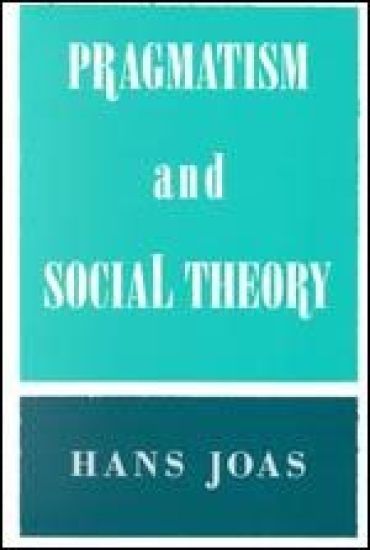
Pragmatism and Social Theory

Pragmatism and Social Theory

Hans Joas

University of Chicago Press
1993
sidottu
Rising concerns among scholars about the intellectual and cultural foundations of democracy have led to a revival of interest in the American philosophical tradition of pragmatism. In this book, Hans Joas shows how pragmatism can link divergent intellectual efforts to understand the social contexts of human knowledge, individual freedom, and democratic culture. Along with pragmatism's impact on American sociology and social research from 1895 to the 1940s, Joas traces its reception by French and German traditions during this century. He explores the influences of pragmatism--often misunderstood--on Emile Durkheim's sociology of knowledge, and on German thought, with particularly enlightening references to its appropriation by Nazism and its rejection by neo-Marxism. He also explores new currents of social theory in the work of Habermas, Castoriadis, Giddens, and Alexander, fashioning a bridge between Continental thought, American philosophy, and contemporary sociology; he shows how the misapprehension and neglect of pragmatism has led to systematic deficiencies in contemporary social theory. From this skillful historical and theoretical analysis, Joas creates a powerful case for the enduring legacy of Peirce, James, Dewey, and Mead for social theorists today.
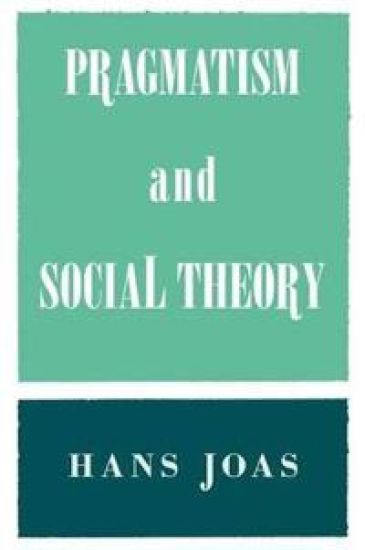
Pragmatism and Social Theory

Pragmatism and Social Theory

Hans Joas

University of Chicago Press
1993
nidottu
Rising concerns among scholars about the intellectual and cultural foundations of democracy have led to a revival of interest in the American philosophical tradition of pragmatism. In this book, Hans Joas shows how pragmatism can link divergent intellectual efforts to understand the social contexts of human knowledge, individual freedom, and democratic culture. Along with pragmatism's impact on American sociology and social research from 1895 to the 1940s, Joas traces its reception by French and German traditions during this century. He explores the influences of pragmatism—often misunderstood—on Emile Durkheim's sociology of knowledge, and on German thought, with particularly enlightening references to its appropriation by Nazism and its rejection by neo-Marxism. He also explores new currents of social theory in the work of Habermas, Castoriadis, Giddens, and Alexander, fashioning a bridge between Continental thought, American philosophy, and contemporary sociology; he shows how the misapprehension and neglect of pragmatism has led to systematic deficiencies in contemporary social theory. From this skillful historical and theoretical analysis, Joas creates a powerful case for the enduring legacy of Peirce, James, Dewey, and Mead for social theorists today.