Kirjojen hintavertailu – 12 903 724 kirjaa ja 27 kauppaa

Kirjailija

Hans Magnus Enzensberger

Kirjat ja teokset yhdessä paikassa: 63 kirjaa, julkaisuja vuosilta 1964–2025, suosituimpiin kuuluu Esterhazy. Vertaile teosten hintoja ja tarkista saatavuus suomalaisista kirjakaupoista.

63 kirjaa

Kirjojen julkaisuvuodet: 1964–2025.

Mr. Zed's Reflections

Mr. Zed's Reflections

Hans Magnus Enzensberger

Seagull Books London Ltd
2015
sidottu
One should always only adhere to what he doesn't say. Any new book by poet, essayist, writer, and translator Hans Magnus Enzensberger, one of the world's most influential and internationally renowned German intellectuals, is cause for notice and reflection, and Mr. Zed's Reflections is no exception. Every afternoon for almost a year, a plump man named Mr. Zed comes to the same spot in the city park and engages passers-by with these quick-witted repartees. Those who pass ask, who is this man? A wisecracker, a clown, a belligerent philosopher? Many shake their heads and move on; others listen to him, engage with him, and, again and again, end up at the same place. He doesn't write anything down but his listeners often take notes. With predilection, subversive energy and masterful brevity, Mr. Zed undermines arrogance, megalomania, and false authority. A determined speaker, who doesn't care for ambitions, he forces topics that others would rather keep to themselves. Reluctant to trust institutions and seeing absolutely nothing as "non-negotiable", he admits mistakes and does away with judgment. He is no mere ventriloquist of his creator - he is too stubborn for that. And at the end of the season, when it becomes too cold and uncomfortable in the park, he disappears, never to be seen again. Collected here in this thought-provoking and unique work are the considerations and provocations of this squat, park-bench philosopher, giving us a volume of truths and conversations that are clear-cut, skeptical, and fiercely illuminating.
Esterhazy

Esterhazy

Irene Dische; Hans Magnus Enzensberger; Michael Sowa

Carl Hanser Verlag
2009
sidottu
Das Hasengeschlecht der Esterhazys ist so alt wie edel, doch es gibt ein Problem: Die Nachkommen sind von Generation zu Generation immer kleiner geworden. Als der jüngste Enkel in den Papierkorb fällt und allein nicht mehr herauskommt, beschließt Fürst Esterhazy zu handeln: Er schickt seine Enkel in die weite Welt. Sie sollen sich Frauen suchen, nicht unbedingt edle - Hauptsache groß. Der Jüngste soll ausgerechnet in Berlin sein Glück suchen, denn dort soll es besonders viele Hasen geben. Wie der Hase dort (noch hinter der Berliner Mauer) die Häsin Mimi findet und die beiden (nach dem Mauerfall) das Glück, davon erzählt dieser ebenso komische wie kluge Kinderbuch-Klassiker.
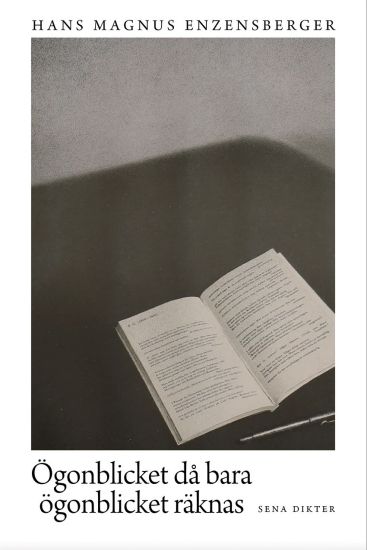
Ögonblicket då bara ögonblicket räknas

Ögonblicket då bara ögonblicket räknas

Hans Magnus Enzensberger

Ellerströms Förlag
2025
nidottu
Hans Magnus Enzensberger var en av de mest betydelsefulla poetiska och politiska rösterna i Tyskland i sin generation, den som växte upp i ruinerna efter andra världskriget. I författaren och översättaren Mats O. Svenssons urval ur hans senare diktning möter vi spänn­vidden i Enzensbergers litterära förmåga. Här samsas vardagsfilosofin runt de mänskliga bestyren med existentiella funderingar över varat och världen, djuren och naturen – allt med den humor och underfundighet som är Enzens­bergers signum. Många av dikterna går att läsa som allegorier över det ohyggliga mänskliga lidande som andra världskriget innebar och den problematik som följde i dess spår. Men det går också att se dem som ett ­blottande av mening i det mest absurda i tillvaron och i dess minsta bestånds­delar; ­växterna, mikroberna, sporerna och ­maskarna.
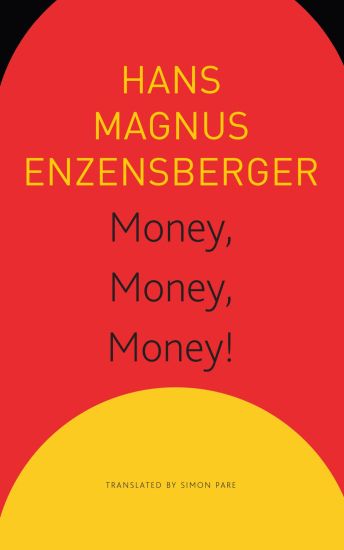
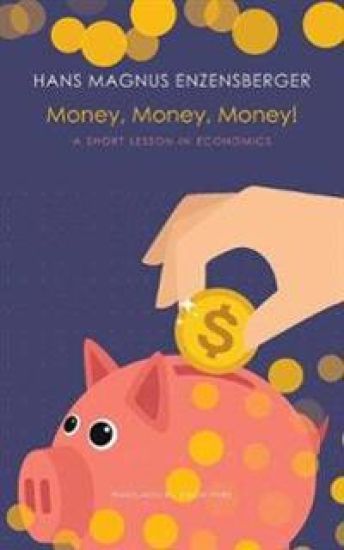
Money, Money, Money! – A Short Lesson in Economics

Money, Money, Money! – A Short Lesson in Economics

Hans Magnus Enzensberger; Simon Pare; Sonaksha Iyengar

SEAGULL BOOKS LONDON LTD
2023
nidottu

Halvin toimitettuna 28,70 €

A unique and modern approach to money, wealth, greed, and financial ignorance presented via a story of a family in the Munich suburbs. The Federmanns live a pleasant but painfully normal life in the Munich suburbs. All that the three children really know about money is that there’s never enough of it in their family. Every so often, their impish Great-Aunt Fé descends on the city. After repeated cycles of boom and bust, profligacy and poverty, the grand old lady has become enormously wealthy and lives alone in a villa on the shore of Lake Geneva. But what does Great-Aunt Fé want from the Federmanns, her only surviving relatives? This time, she invites the children to tea at her luxury hotel where she spoils, flummoxes, and inspires them. Dismayed at their ignorance of the financial ways of the world, she gives them a crash course in economics that piques their curiosity, unsettles their parents, and throws open a whole new world. The young Federmanns are for once taken seriously and together they try to answer burning questions: Where does money come from? Why are millionaires and billionaires never satisfied? And why are those with the most always showered with more? In this rich volume, the renowned poet, translator, and essayist Hans Magnus Enzensberger turns his gimlet eye on the mechanisms and machinations of banks and politicians—the human greed, envy, and fear that fuels the global economy. A modern, but moral-less fable, Money, Money, Money! is shot through with Enzensberger’s trademark erudition, wit, and humanist desire to cut through jargon and forearm his readers against obscurantism.
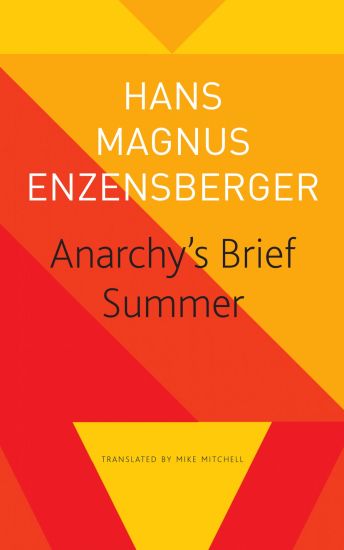
Anarchy's Brief Summer – The Life and Death of Buenaventura Durruti

Anarchy's Brief Summer – The Life and Death of Buenaventura Durruti

Hans Magnus Enzensberger; Mike Mitchell

SEAGULL BOOKS LONDON LTD
2023
nidottu
A unique portrait of a revolutionary movement that is largely unknown outside Spain. Northern Spain is the only part of Western Europe where anarchism played a significant role in the political life of the twentieth century. Enjoying wide-ranging support among both the urban and rural working class, its importance peaked during its “brief summer”—the civil war between the Republic and General Franco’s Falangists, during which anarchists even participated in the government of Catalonia. Anarchy’s Brief Summer brings anarchism to life by focusing on the charismatic leader Buenaventura Durruti (1896–1936), who became a key figure in the Spanish Civil War after a militant and adventurous youth. The basis of the book is a compilation of texts: personal testimony, interviews with survivors, contemporary documents, memoirs, and academic assessments. They are all linked by Enzenberger’s own assessment in a series of glosses—a literary form that is somewhere between retelling and reconstruction—with the contradiction between fiction and fact reflecting the political contradictions of the Spanish Revolution.
Panopticon

Panopticon

Hans Magnus Enzensberger; Tess Lewis

SEAGULL BOOKS LONDON LTD
2022
nidottu
A collection of daring short essays on topical themes, including politics, economics, religion, society. Hans Magnus Enzensberger takes the title for this collection not from Jeremy Bentham’s famous prison but from a mid-1930s Cabinet of Curiosities opened in Germany by Karl Valentin. “There,” writes Enzensberger, “viewers could admire, along with implements of torture, all manner of abnormalities and sensational inventions.” And that’s what he offers here: a wide-ranging, surprising look at all manner of strange aspects of our contemporary world. As masterly with the essay as he is with fiction and poetry, Enzensberger here presents complicated thoughts with a light touch, tying new iterations of old ideas to their antecedents, quoting liberally from his forebears, and presenting himself unapologetically as not an expert but a seeker. Enzensberger the essayist works in the mode of Montaigne, unafraid to take his reader in unexpected directions, knowing that the process of exploration is often in itself sufficient reward for following a line of thought. ? In an era that regularly laments the death of the public intellectual, Enzensberger is the real deal: a towering figure in German literature who refuses to let his mind or work be bound by the narrow world of the poetry or fiction section.
Tumult

Tumult

Hans Magnus Enzensberger; Mike Mitchell

SEAGULL BOOKS LONDON LTD
2022
nidottu
A collection of writings based on Enzensberger’s personal experience as a left-wing sympathizer during the 1960s. Hans Magnus Enzensberger, widely regarded as Germany’s greatest living poet, was already well known in the 1960s, the tempestuous decade of which Tumult is an autobiographical record. Derived from old papers, notes, jottings, photos, and letters that the poet stumbled upon years later in his attic, the volume is not so much about the man, but rather the many places he visited and people whom he met on his travels through the Soviet Union and Cuba during the 1960s. The book is made up of four long-form pieces written from 1963 to 1970, each episode concluding with a poem and postscript written in 2014. Translated by Mike Mitchell, the book is a lively and deftly written travelogue offering a glimpse into the history of leftist thought. Dedicated to “those who disappeared,” Tumult is a document of that which remains one of humanity’s headiest times.
Gone But Not Forgotten

Gone But Not Forgotten

Hans Magnus Enzensberger

SEAGULL BOOKS LONDON LTD
2022
sidottu
One of Germany’s greatest living writers offers up an analysis (and samples) of his failed projects. “My dear fellow artists, whether writers, actors, painters, film-makers, singers, sculptors, or composers, why are you so reluctant to talk about your minor or major failures?” With that question, Hans Magnus Enzensberger—the most senior among Germany’s great writers—begins his amusing ruminations on his favorite projects that never saw the light of day. There is enlightenment in every embarrassing episode, he argues, and while artists tend to forget their successes quickly, the memory of a project that came to nothing stays in the mind for years, if not decades. Triumphs hold no lessons for us, but fiascos can extend our understanding, giving insight into the conditions of production, conventions, and practices of the industries concerned, and helping novices to assess the snares and minefields in the industry of their choice. What’s more, Enzensberger argues, flops have a therapeutic effect: They can cure, or at least alleviate, the vocational illnesses of authors, be it the loss of control or megalomania. In Gone but Not Forgotten, Enzensberger looks back at his uncompleted experiments not just in the world of books but also in cinema, theater, opera, and journal publishing, and shares with us a “store of ideas” teeming with sketches of still-possible projects. He also reflects on the likely reasons for these big and small defeats. Interspersed among his ruminations are excerpts from those experiments, giving readers a taste of what we missed. Together, the pieces in this volume build a remarkable picture of a versatile genius’s range of work over more than half a century and make us reflect on the very nature of success and failure by which we measure our lives.
Mr Zed’s Reflections

Mr Zed’s Reflections

Hans Magnus Enzensberger

Seagull Books London Ltd
2021
nidottu
Any new book by poet, essayist, writer, and translator Hans Magnus Enzensberger, one of the most influential and internationally renowned German intellectuals, is cause for notice, and Mr. Zed’s Reflections is no exception. Every afternoon for almost a year, a plump man named Mr. Zed comes to the same spot in the city park and engages passersby with quick-witted repartee. Those who pass ask, who is this man? A wisecracker, a clown, a belligerent philosopher? Many shake their heads and move on; others listen to him, engage with him, and, again and again, end up at the same place. He doesn’t write anything down, but his listeners often take notes. With subversive energy and masterful brevity, Mr. Zed undermines arrogance, megalomania, and false authority. A determined speaker who doesn’t care for ambitions, he forces topics that others would rather keep to themselves. Reluctant to trust institutions and seeing absolutely nothing as “non-negotiable,” he admits mistakes and does away with judgment. He is no mere ventriloquist dummy for his creator—he is too stubborn for that. And at the end of the season, when it becomes too cold and uncomfortable in the park, he disappears, never to be seen again. Collected in this thought-provoking and unique work are the considerations and provocations of this squat, park-bench philosopher, giving us a volume of truths and conversations that are clear-cut, skeptical, and fiercely illuminating.
Money, Money, Money!

Money, Money, Money!

Hans Magnus Enzensberger

Seagull Books London Ltd
2020
sidottu

Halvin toimitettuna 30,90 €

A unique and modern approach to money, wealth, greed, and financial ignorance presented via a story of a family in the Munich suburbs. The Federmanns live a pleasant but painfully normal life in the Munich suburbs. All that the three children really know about money is that there’s never enough of it in their family. Every so often, their impish Great-Aunt Fé descends on the city. After repeated cycles of boom and bust, profligacy and poverty, the grand old lady has become enormously wealthy and lives alone in a villa on the shore of Lake Geneva. But what does Great-Aunt Fé want from the Federmanns, her only surviving relatives? This time, she invites the children to tea at her luxury hotel where she spoils, flummoxes, and inspires them. Dismayed at their ignorance of the financial ways of the world, she gives them a crash course in economics that piques their curiosity, unsettles their parents, and throws open a whole new world. The young Federmanns are for once taken seriously and together they try to answer burning questions: Where does money come from? Why are millionaires and billionaires never satisfied? And why are those with the most always showered with more? In this rich volume, the renowned poet, translator, and essayist Hans Magnus Enzensberger turns his gimlet eye on the mechanisms and machinations of banks and politicians—the human greed, envy, and fear that fuels the global economy. A modern, but moral-less fable, Money, Money, Money! is shot through with Enzensberger’s trademark erudition, wit, and humanist desire to cut through jargon and forearm his readers against obscurantism.
The Silences of Hammerstein

The Silences of Hammerstein

Hans Magnus Enzensberger

Seagull Books London Ltd
2019
pokkari
The Silences of Hammerstein engages readers with a blend of a documentary, collage, narration, and fictional interviews. The gripping plot revolves around the experiences of real-life German General Kurt von Hammerstein and his wife and children. A member of an old military family, a brilliant staff officer, and the last commander of the German army before Hitler seized power, Hammerstein, who died in 1943 before Hitler’s defeat, was nevertheless an idiosyncratic character. Too old to be a resister, he retained an independence of mind that was shared by his children: three of his daughters joined the Communist Party, and two of his sons risked their lives in the July 1944 Plot against Hitler and were subsequently on the run till the end of the war. Hammerstein never criticized his children for their activities, and he maintained contacts with the Communists himself and foresaw the disastrous end of Hitler’s dictatorship. In The Silences of Hammerstein, Hans Magnus Enzensberger offers a brilliant and unorthodox account of the military milieu whose acquiescence to Nazism consolidated Hitler’s power and of the heroic few who refused to share in the spoils.