Kirjojen hintavertailu – 12 859 819 kirjaa ja 27 kauppaa
Kirjailija
Harriet Beecher Stowe
Kirjat ja teokset yhdessä paikassa: 848 kirjaa, julkaisuja vuosilta 1800–2026, suosituimpiin kuuluu Sam Lawson's Oldtown Fireside Stories. Vertaile teosten hintoja ja tarkista saatavuus suomalaisista kirjakaupoista.
Nimi esiintyy myös muodoissa: Harriet Beecher-Stowe
Harriet Elisabeth Beecher Stowe ( June 14, 1811 - July 1, 1896) was an American abolitionist and author. She came from the Beecher family, a famous religious family, and is best known for her novel Uncle Tom's Cabin (1852), which depicts the harsh conditions for enslaved African Americans. The book reached millions as a novel and play, and became influential in the United States and Great Britain, energizing anti-slavery forces in the American North, while provoking widespread anger in the South. Stowe wrote 30 books, including novels, three travel memoirs, and collections of articles and letters. She was influential for both her writings and her public stances on social issues of the day. Life and work: Harriet Elisabeth Beecher was born in Litchfield, Connecticut, on June 14, 1811. She was the seventh of 13 children born to outspoken Calvinist preacher Lyman Beecher and Roxana (Foote), a deeply religious woman who died when Stowe was only five years old. Roxana's maternal grandfather was General Andrew Ward of the Revolutionary War. Her notable siblings included a sister, Catharine Beecher, who became an educator and author, as well as brothers who became ministers: including Henry Ward Beecher, who became a famous preacher and abolitionist, Charles Beecher, and Edward Beecher. Harriet enrolled in the Hartford Female Seminary run by her older sister Catharine, where she received a traditional academic education usually reserved for males at the time with a focus in the classics, including studies of languages and mathematics. Among her classmates was Sarah P. Willis, who later wrote under the pseudonym Fanny Fern. In 1832, at the age of 21, Harriet Beecher moved to Cincinnati, Ohio to join her father, who had become the president of Lane Theological Seminary. There, she also joined the Semi-Colon Club, a literary salon and social club whose members included the Beecher sisters, Caroline Lee Hentz, Salmon P. Chase (future governor of the state and Secretary of Treasury under President Lincoln), Emily Blackwell and others. Cincinnati's trade and shipping business on the Ohio River was booming, drawing numerous migrants from different parts of the country, including many free blacks, as well as Irish immigrants who worked on the state's canals and railroads. Areas of the city had been wrecked in the Cincinnati riots of 1829, when ethnic Irish attacked blacks, trying to push competitors out of the city. Beecher met a number of African Americans who had suffered in those attacks, and their experience contributed to her later writing about slavery. Riots took place again in 1836 and 1841, driven also by native-born anti-abolitionists. It was in the literary club that she met Calvin Ellis Stowe, a widower who was a professor at the seminary. The two married on January 6, 1836. He was an ardent critic of slavery, and the Stowes supported the Underground Railroad, temporarily housing several fugitive slaves in their home. Most slaves continued north to secure freedom in Canada. The Stowes had seven children together, including twin daughters......................
This collection of literature attempts to compile many of the classic works that have stood the test of time and offer them at a reduced, affordable price, in an attractive volume so that everyone can enjoy them.
For my part I don't care so very much for these 'ere town-hill aristocracy, said Tim Hawkins. "They live here in their gret houses and are so proud they think it's a favor to speak to a farmer in his blue linsey shirt a drivin' his team. I don't want none on 'em lookin' down on me. I am as good as they be; and I guess you make as much in your trade by the farmers out on the hills as you do by the rich folks here in town."..... Harriet Elisabeth Beecher Stowe ( June 14, 1811 - July 1, 1896) was an American abolitionist and author. She came from the Beecher family, a famous religious family, and is best known for her novel Uncle Tom's Cabin (1852), which depicts the harsh conditions for enslaved African Americans. The book reached millions as a novel and play, and became influential in the United States and Great Britain, energizing anti-slavery forces in the American North, while provoking widespread anger in the South. Stowe wrote 30 books, including novels, three travel memoirs, and collections of articles and letters. She was influential for both her writings and her public stances on social issues of the day. Life and work: Harriet Elisabeth Beecher was born in Litchfield, Connecticut, on June 14, 1811. She was the seventh of 13 children born to outspoken Calvinist preacher Lyman Beecher and Roxana (Foote), a deeply religious woman who died when Stowe was only five years old. Roxana's maternal grandfather was General Andrew Ward of the Revolutionary War. Her notable siblings included a sister, Catharine Beecher, who became an educator and author, as well as brothers who became ministers: including Henry Ward Beecher, who became a famous preacher and abolitionist, Charles Beecher, and Edward Beecher. Harriet enrolled in the Hartford Female Seminary run by her older sister Catharine, where she received a traditional academic education usually reserved for males at the time with a focus in the classics, including studies of languages and mathematics. Among her classmates was Sarah P. Willis, who later wrote under the pseudonym Fanny Fern. In 1832, at the age of 21, Harriet Beecher moved to Cincinnati, Ohio to join her father, who had become the president of Lane Theological Seminary. There, she also joined the Semi-Colon Club, a literary salon and social club whose members included the Beecher sisters, Caroline Lee Hentz, Salmon P. Chase (future governor of the state and Secretary of Treasury under President Lincoln), Emily Blackwell and others. Cincinnati's trade and shipping business on the Ohio River was booming, drawing numerous migrants from different parts of the country, including many free blacks, as well as Irish immigrants who worked on the state's canals and railroads. Areas of the city had been wrecked in the Cincinnati riots of 1829, when ethnic Irish attacked blacks, trying to push competitors out of the city. Beecher met a number of African Americans who had suffered in those attacks, and their experience contributed to her later writing about slavery. Riots took place again in 1836 and 1841, driven also by native-born anti-abolitionists. It was in the literary club that she met Calvin Ellis Stowe, a widower who was a professor at the seminary. The two married on January 6, 1836. He was an ardent critic of slavery, and the Stowes supported the Underground Railroad, temporarily housing several fugitive slaves in their home. Most slaves continued north to secure freedom in Canada. The Stowes had seven children together, including twin daughters..................
Harriet Elisabeth Beecher Stowe ( June 14, 1811 - July 1, 1896) was an American abolitionist and author. She came from the Beecher family, a famous religious family, and is best known for her novel Uncle Tom's Cabin (1852), which depicts the harsh conditions for enslaved African Americans. The book reached millions as a novel and play, and became influential in the United States and Great Britain, energizing anti-slavery forces in the American North, while provoking widespread anger in the South. Stowe wrote 30 books, including novels, three travel memoirs, and collections of articles and letters. She was influential for both her writings and her public stances on social issues of the day. Life and work: Harriet Elisabeth Beecher was born in Litchfield, Connecticut, on June 14, 1811. She was the seventh of 13 children born to outspoken Calvinist preacher Lyman Beecher and Roxana (Foote), a deeply religious woman who died when Stowe was only five years old. Roxana's maternal grandfather was General Andrew Ward of the Revolutionary War. Her notable siblings included a sister, Catharine Beecher, who became an educator and author, as well as brothers who became ministers: including Henry Ward Beecher, who became a famous preacher and abolitionist, Charles Beecher, and Edward Beecher. Harriet enrolled in the Hartford Female Seminary run by her older sister Catharine, where she received a traditional academic education usually reserved for males at the time with a focus in the classics, including studies of languages and mathematics. Among her classmates was Sarah P. Willis, who later wrote under the pseudonym Fanny Fern. In 1832, at the age of 21, Harriet Beecher moved to Cincinnati, Ohio to join her father, who had become the president of Lane Theological Seminary. There, she also joined the Semi-Colon Club, a literary salon and social club whose members included the Beecher sisters, Caroline Lee Hentz, Salmon P. Chase (future governor of the state and Secretary of Treasury under President Lincoln), Emily Blackwell and others. Cincinnati's trade and shipping business on the Ohio River was booming, drawing numerous migrants from different parts of the country, including many free blacks, as well as Irish immigrants who worked on the state's canals and railroads. Areas of the city had been wrecked in the Cincinnati riots of 1829, when ethnic Irish attacked blacks, trying to push competitors out of the city. Beecher met a number of African Americans who had suffered in those attacks, and their experience contributed to her later writing about slavery. Riots took place again in 1836 and 1841, driven also by native-born anti-abolitionists. It was in the literary club that she met Calvin Ellis Stowe, a widower who was a professor at the seminary. The two married on January 6, 1836. He was an ardent critic of slavery, and the Stowes supported the Underground Railroad, temporarily housing several fugitive slaves in their home. Most slaves continued north to secure freedom in Canada. The Stowes had seven children together, including twin daughters.....................
Catharine Esther Beecher (September 6, 1800 - May 12, 1878) was an American educator known for her forthright opinions on female education as well as her vehement support of the many benefits of the incorporation of kindergarten into children's education... Harriet Elisabeth Beecher Stowe ( June 14, 1811 - July 1, 1896) was an American abolitionist and author. She came from the Beecher family, a famous religious family, and is best known for her novel Uncle Tom's Cabin (1852), which depicts the harsh conditions for enslaved African Americans. The book reached millions as a novel and play, and became influential in the United States and Great Britain, energizing anti-slavery forces in the American North, while provoking widespread anger in the South. Stowe wrote 30 books, including novels, three travel memoirs, and collections of articles and letters. She was influential for both her writings and her public stances on social issues of the day. Life and work: Harriet Elisabeth Beecher was born in Litchfield, Connecticut, on June 14, 1811. She was the seventh of 13 children born to outspoken Calvinist preacher Lyman Beecher and Roxana (Foote), a deeply religious woman who died when Stowe was only five years old. Roxana's maternal grandfather was General Andrew Ward of the Revolutionary War. Her notable siblings included a sister, Catharine Beecher, who became an educator and author, as well as brothers who became ministers: including Henry Ward Beecher, who became a famous preacher and abolitionist, Charles Beecher, and Edward Beecher. Harriet enrolled in the Hartford Female Seminary run by her older sister Catharine, where she received a traditional academic education usually reserved for males at the time with a focus in the classics, including studies of languages and mathematics. Among her classmates was Sarah P. Willis, who later wrote under the pseudonym Fanny Fern. In 1832, at the age of 21, Harriet Beecher moved to Cincinnati, Ohio to join her father, who had become the president of Lane Theological Seminary. There, she also joined the Semi-Colon Club, a literary salon and social club whose members included the Beecher sisters, Caroline Lee Hentz, Salmon P. Chase (future governor of the state and Secretary of Treasury under President Lincoln), Emily Blackwell and others. Cincinnati's trade and shipping business on the Ohio River was booming, drawing numerous migrants from different parts of the country, including many free blacks, as well as Irish immigrants who worked on the state's canals and railroads. Areas of the city had been wrecked in the Cincinnati riots of 1829, when ethnic Irish attacked blacks, trying to push competitors out of the city. Beecher met a number of African Americans who had suffered in those attacks, and their experience contributed to her later writing about slavery. Riots took place again in 1836 and 1841, driven also by native-born anti-abolitionists. It was in the literary club that she met Calvin Ellis Stowe, a widower who was a professor at the seminary. The two married on January 6, 1836. He was an ardent critic of slavery, and the Stowes supported the Underground Railroad, temporarily housing several fugitive slaves in their home. Most slaves continued north to secure freedom in Canada. The Stowes had seven children together, including twin daughters............
The rural tranquillity of the lonely, pine-girthed shores of the Maine coast is the setting for this beautiful novel of conflicting aspirations written by one of the most prolific and influential writers in American history. Here is the heartwarming story of a young girl's struggle to belong and fit in, in the face of adversity, and of her upbringing among strong women, grumpy fishermen, annoying gossips, sea captains, and the dreamlike, temptestuous landscape of Orr's Island. THE PEARL OF ORR'S ISLAND is one of the forgotten -- but not lost -- masterpieces of American literature. It reflects Harriet Beecher Stowe's awareness of the complexity of small-town society, her commitment to realism, and her fluency in the local language........ Harriet Elisabeth Beecher Stowe ( June 14, 1811 - July 1, 1896) was an American abolitionist and author. She came from the Beecher family, a famous religious family, and is best known for her novel Uncle Tom's Cabin (1852), which depicts the harsh conditions for enslaved African Americans. The book reached millions as a novel and play, and became influential in the United States and Great Britain, energizing anti-slavery forces in the American North, while provoking widespread anger in the South. Stowe wrote 30 books, including novels, three travel memoirs, and collections of articles and letters. She was influential for both her writings and her public stances on social issues of the day. Life and work: Harriet Elisabeth Beecher was born in Litchfield, Connecticut, on June 14, 1811. She was the seventh of 13 children born to outspoken Calvinist preacher Lyman Beecher and Roxana (Foote), a deeply religious woman who died when Stowe was only five years old. Roxana's maternal grandfather was General Andrew Ward of the Revolutionary War. Her notable siblings included a sister, Catharine Beecher, who became an educator and author, as well as brothers who became ministers: including Henry Ward Beecher, who became a famous preacher and abolitionist, Charles Beecher, and Edward Beecher. Harriet enrolled in the Hartford Female Seminary run by her older sister Catharine, where she received a traditional academic education usually reserved for males at the time with a focus in the classics, including studies of languages and mathematics. Among her classmates was Sarah P. Willis, who later wrote under the pseudonym Fanny Fern. In 1832, at the age of 21, Harriet Beecher moved to Cincinnati, Ohio to join her father, who had become the president of Lane Theological Seminary. There, she also joined the Semi-Colon Club, a literary salon and social club whose members included the Beecher sisters, Caroline Lee Hentz, Salmon P. Chase (future governor of the state and Secretary of Treasury under President Lincoln), Emily Blackwell and others. Cincinnati's trade and shipping business on the Ohio River was booming, drawing numerous migrants from different parts of the country, including many free blacks, as well as Irish immigrants who worked on the state's canals and railroads. Areas of the city had been wrecked in the Cincinnati riots of 1829, when ethnic Irish attacked blacks, trying to push competitors out of the city. Beecher met a number of African Americans who had suffered in those attacks, and their experience contributed to her later writing about slavery. Riots took place again in 1836 and 1841, driven also by native-born anti-abolitionists. It was in the literary club that she met Calvin Ellis Stowe, a widower who was a professor at the seminary. The two married on January 6, 1836. He was an ardent critic of slavery, and the Stowes supported the Underground Railroad, temporarily housing several fugitive slaves in their home. Most slaves continued north to secure freedom in Canada. The Stowes had seven children together, including twin daughters..............
Queer Little People is an unchanged, high-quality reprint of the original edition of 1881. Hansebooks is editor of the literature on different topic areas such as research and science, travel and expeditions, cooking and nutrition, medicine, and other genres. As a publisher we focus on the preservation of historical literature. Many works of historical writers and scientists are available today as antiques only. Hansebooks newly publishes these books and contributes to the preservation of literature which has become rare and historical knowledge for the future.
Queer Little Folks was written by Harriet Beecher Stowe and first published in 1897. Once there was a nice young hen that we will call Mrs. Feathertop. She was a hen of most excellent family, being a direct descendant of the Bolton Grays, and as pretty a young fowl as you could wish to see of a summer's day. She was, moreover, as fortunately situated in life as it was possible for a hen to be. She was bought by young Master Fred Little John, with four or five family connections of hers, and a lively young cock, who was held to be as brisk a scratcher and as capable a head of a family as any half-dozen sensible hens could desire.
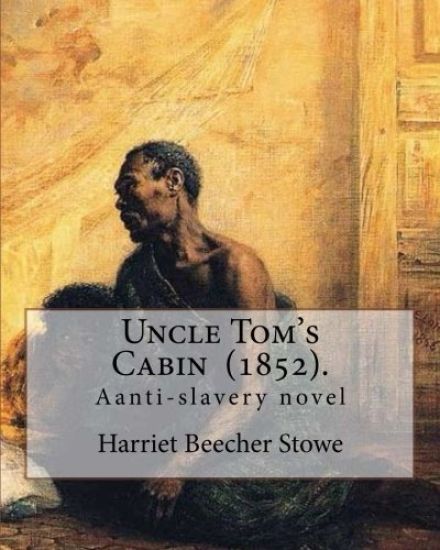
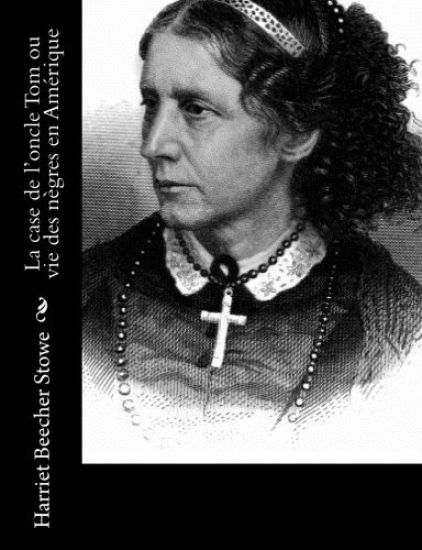
Uncle Tom's Cabin; or, Life Among the Lowly, is an anti-slavery novel by American author Harriet Beecher Stowe. Published in 1852, the novel "helped lay the groundwork for the Civil War", according to Will Kaufman. Stowe, a Connecticut-born teacher at the Hartford Female Seminary and an active abolitionist, featured the character of Uncle Tom, a long-suffering black slave around whom the stories of other characters revolve. The sentimental novel depicts the reality of slavery while also asserting that Christian love can overcome something as destructive as enslavement of fellow human beings. Uncle Tom's Cabin was the best-selling novel of the 19th century and the second best-selling book of that century, following the Bible. It is credited with helping fuel the abolitionist cause in the 1850s. In the first year after it was published, 300,000 copies of the book were sold in the United States; one million copies in Great Britain. In 1855, three years after it was published, it was called "the most popular novel of our day." The impact attributed to the book is great, reinforced by a story that when Abraham Lincoln met Stowe at the start of the Civil War, Lincoln declared, "So this is the little lady who started this great war." The quote is apocryphal; it did not appear in print until 1896, and it has been argued that "The long-term durability of Lincoln's greeting as an anecdote in literary studies and Stowe scholarship can perhaps be explained in part by the desire among many contemporary intellectuals ... to affirm the role of literature as an agent of social change." The book and the plays it inspired helped popularize a number of stereotypes about black people. These include the affectionate, dark-skinned "mammy"; the "pickaninny" stereotype of black children; and the "Uncle Tom", or dutiful, long-suffering servant faithful to his white master or mistress. In recent years, the negative associations with Uncle Tom's Cabin have, to an extent, overshadowed the historical impact of the book as a "vital antislavery tool." The book opens with a Kentucky farmer named Arthur Shelby facing the loss of his farm because of debts. Even though he and his wife Emily Shelby believe that they have a benevolent relationship with their slaves, Shelby decides to raise the needed funds by selling two of them-Uncle Tom, a middle-aged man with a wife and children, and Harry, the son of Emily Shelby's maid Eliza-to a slave trader. Emily Shelby is averse to this idea because she had promised her maid that her child would never be sold; Emily's son, George Shelby, hates to see Tom go because he sees the man as his friend and mentor. When Eliza overhears Mr. and Mrs. Shelby discussing plans to sell Tom and Harry, Eliza determines to run away with her son. The novel states that Eliza made this decision because she fears losing her only surviving child (she had already miscarried two children). Eliza departs that night, leaving a note of apology to her mistress. Tom is sold and placed on a riverboat which sets sail down the Mississippi River. While on board, Tom meets and befriends a young white girl named Eva. Eva's father Augustine St. Clare buys Tom from the slave trader and takes him with the family to their home in New Orleans. Tom and Eva begin to relate to one another because of the deep Christian faith they both share.... Harriet Elisabeth Beecher Stowe ( June 14, 1811 - July 1, 1896) was an American abolitionist and author. She came from the Beecher family, a famous religious family, and is best known for her novel Uncle Tom's Cabin (1852), which depicts the harsh conditions for enslaved African Americans. The book reached millions as a novel and play, and became influential in the United States and Great Britain, energizing anti-slavery forces in the American North, while provoking widespread anger in the South........
Harriet Beecher Stowe, preeminent author of Uncle Tom's Cabin, based this book on her own experience growing up in Litchfield Connecticut. Set in the fictional village of Poganuc, the book is a beautiful and poetic description of the people, including their views on everything from religion to politics, and the geography of a small Puritanical New England town of the early nineteenth century.
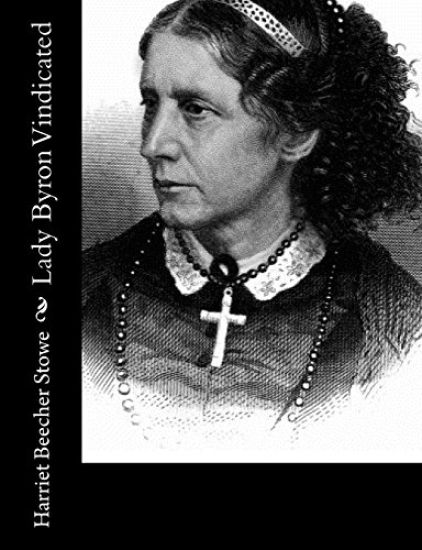
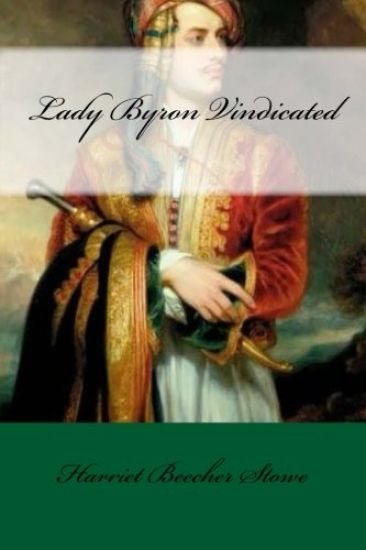
An impassioned defense of Lady Byron for having left her husband, this work helped stir up the posthumous controversy between the supporters of Lord Byron & those of his wife. George Gordon Byron (later Noel), 6th Baron Byron, FRS (22 January 1788 - 19 April 1824), commonly known simply as Lord Byron, was an English poet and a leading figure in the Romantic movement. Among his best-known works are the lengthy narrative poems Don Juan and Childe Harold's Pilgrimage, and the short lyric "She Walks in Beauty". Anne Isabella Noel Byron, 11th Baroness Wentworth and Baroness Byron (17 May 1792 - 16 May 1860), nicknamed Annabella, was the wife of poet George Gordon Byron, more commonly known as Lord Byron.
This work has been selected by scholars as being culturally important, and is part of the knowledge base of civilization as we know it. This work was reproduced from the original artifact, and remains as true to the original work as possible. Therefore, you will see the original copyright references, library stamps (as most of these works have been housed in our most important libraries around the world), and other notations in the work. This work is in the public domain in the United States of America, and possibly other nations. Within the United States, you may freely copy and distribute this work, as no entity (individual or corporate) has a copyright on the body of the work. As a reproduction of a historical artifact, this work may contain missing or blurred pages, poor pictures, errant marks, etc. Scholars believe, and we concur, that this work is important enough to be preserved, reproduced, and made generally available to the public. We appreciate your support of the preservation process, and thank you for being an important part of keeping this knowledge alive and relevant.