Kirjojen hintavertailu – 12 859 818 kirjaa ja 27 kauppaa
Kirjailija
Havelock Ellis
Kirjat ja teokset yhdessä paikassa: 304 kirjaa, julkaisuja vuosilta 1973–2026, suosituimpiin kuuluu Three modern seers: James Hinton, Nietzsche, Edward Carpenter (1910). By: Mrs. Havelock Ellis: Edith Mary Oldham Ellis (née Lees; 1861, Ma. Vertaile teosten hintoja ja tarkista saatavuus suomalaisista kirjakaupoista.
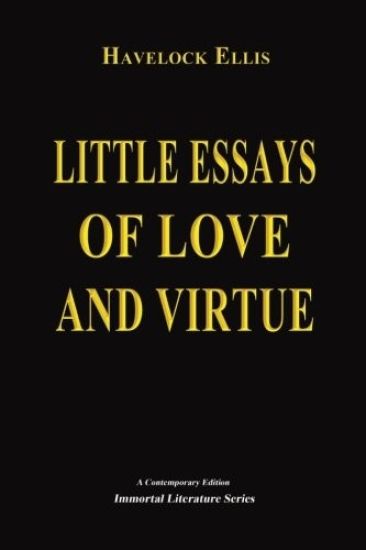
This is a new edition of "Little Essays of Love and Virtue," originally published in 1922 by George H. Doran Company, of New York. Part of the project Immortal Literature Series of classic literature, this is a new edition of the classic work published in 1922-not a facsimile reprint. Obvious typographical errors have been carefully corrected and the entire text has been reset and redesigned by Pen House Editions to enhance readability, while respecting the original edition. In "Little Essays of Love and Virtue," Havelock Ellis set forth certain fundamental principles, together with their practical application to the life of the early twentieth century. Many principles are stated, some technically; others were therein implied but only to be read between the lines. Here, the author expressed them in simple language and with some rich detail. The book touches on important topics such as Children and Parents, The Meaning of Purity, The Objects of Marriage, Husbands and Wives, The Love-Rights of Women, The Play-Function of Sex, and The Individual and the Race. "Little Essays of Love and Virtue" is aimed primarily at young people, youths and girls at the period of adolescence "who were in the author's thoughts in all the studies he wrote of sex because he was of that age when he first vaguely planned them." About the Author: Born in Surrey, England, in 1859, Havelock Ellis was considered by the overwhelming majority of critics as the best translator of "Germinal," mile Zola s masterpiece. Ellis was a social activist, a physician and a psychologist, whose best-known works concern sexuality and criminology. In 1890 he published "The Criminal," a remarkable work on criminal anthropology; in the same year he wrote "A New Spirit," a collection of literary essays on Diderot, Heine, Whitman, Ibsen, and Tolstoi, and Ellis's attempt to synthesize science and religious mysticism; and in 1898 he wrote "Affirmations," which contains essays on Nietzsche, Casanova, Zola, Huysmans, and St. Francis. In 1897, he published "Sexual Inversion," the first medical text in English about homosexuality, which he had co-authored with John Addington Symonds in an earlier edition, and which became a part of Ellis's six-volume "Studies in the Psychology of Sex." Havelock Ellis died in Suffolk, England, in 1939.
This is a new edition of "The Criminal," originally published in 1890 by Scribner & Welford, of New York. Part of the project Immortal Literature Series of classic literature, this is a new edition of the classic work published in 1890-not a facsimile reprint. Obvious typographical errors have been carefully corrected and the entire text has been reset and redesigned by Pen House Editions to enhance readability, while respecting the original edition. "The Criminal" is a remarkable work on criminal anthropology-a new science which arose in Italy in the nineteenth century. Full of fascinating interest, it is one of the very first works on criminology written in English about the scientific study of the criminal. In 1902, the Westminster Review recommended the book saying that "as a handbook for legislators, jurists, and prison officials it is of paramount value." In "The Criminal," Havelock Ellis arrays his facts in order, providing plenty of data and stating his findings with accuracy when describing the physical, moral, social, emotional and religious aspects, among many others, related to what Cesare Lombroso termed the "born criminal," and what Ellis preferred to call the "instinctive criminal." "The Criminal" became one of the main sources researchers seek for information on "born" or "instinctive criminals." About the Author: Born in Surrey, England, in 1859, Havelock Ellis was considered by the overwhelming majority of critics as the best translator of "Germinal," mile Zola s masterpiece. Ellis was a social activist, a physician and a psychologist, whose best-known works concern sexuality and criminology. In 1890 he wrote "A New Spirit," a collection of literary essays on Diderot, Heine, Whitman, Ibsen, and Tolstoi, and Ellis's attempt to synthesize science and religious mysticism; and in 1898 he wrote "Affirmations," which contains essays on Nietzsche, Casanova, Zola, Huysmans, and St. Francis. In 1897, he published "Sexual Inversion," the first medical text in English about homosexuality, which he had co-authored with John Addington Symonds in an earlier edition, and which became a part of Ellis's six-volume "Studies in the Psychology of Sex." Havelock Ellis died in Suffolk, England, in 1939.