Kirjojen hintavertailu – 12 859 818 kirjaa ja 27 kauppaa

Kirjailija

Havelock Ellis

Kirjat ja teokset yhdessä paikassa: 304 kirjaa, julkaisuja vuosilta 1973–2026, suosituimpiin kuuluu Three modern seers: James Hinton, Nietzsche, Edward Carpenter (1910). By: Mrs. Havelock Ellis: Edith Mary Oldham Ellis (née Lees; 1861, Ma. Vertaile teosten hintoja ja tarkista saatavuus suomalaisista kirjakaupoista.

304 kirjaa

Kirjojen julkaisuvuodet: 1973–2026.

The Criminal - Illustrated

The Criminal - Illustrated

Havelock Ellis

Createspace Independent Publishing Platform
2017
nidottu
This is a new edition of "The Criminal," originally published in 1890 by Scribner & Welford, of New York. Part of the project Immortal Literature Series of classic literature, this is a new edition of the classic work published in 1890-not a facsimile reprint. Obvious typographical errors have been carefully corrected and the entire text has been reset and redesigned by Pen House Editions to enhance readability, while respecting the original edition. "The Criminal" is a remarkable work on criminal anthropology-a new science which arose in Italy in the nineteenth century. Full of fascinating interest, it is one of the very first works on criminology written in English about the scientific study of the criminal. In 1902, the Westminster Review recommended the book saying that "as a handbook for legislators, jurists, and prison officials it is of paramount value." In "The Criminal," Havelock Ellis arrays his facts in order, providing plenty of data and stating his findings with accuracy when describing the physical, moral, social, emotional and religious aspects, among many others, related to what Cesare Lombroso termed the "born criminal," and what Ellis preferred to call the "instinctive criminal." "The Criminal" became one of the main sources researchers seek for information on "born" or "instinctive criminals." About the Author: Born in Surrey, England, in 1859, Havelock Ellis was considered by the overwhelming majority of critics as the best translator of "Germinal," mile Zola s masterpiece. Ellis was a social activist, a physician and a psychologist, whose best-known works concern sexuality and criminology. In 1890 he wrote "A New Spirit," a collection of literary essays on Diderot, Heine, Whitman, Ibsen, and Tolstoi, and Ellis's attempt to synthesize science and religious mysticism; and in 1898 he wrote "Affirmations," which contains essays on Nietzsche, Casanova, Zola, Huysmans, and St. Francis. In 1897, he published "Sexual Inversion," the first medical text in English about homosexuality, which he had co-authored with John Addington Symonds in an earlier edition, and which became a part of Ellis's six-volume "Studies in the Psychology of Sex." Havelock Ellis died in Suffolk, England, in 1939.

Christopher Marlowe

Christopher Marlowe

Havelock Ellis; Christopher Marlowe

Hansebooks
2017
pokkari
Christopher Marlowe is an unchanged, high-quality reprint of the original edition of 1887. Hansebooks is editor of the literature on different topic areas such as research and science, travel and expeditions, cooking and nutrition, medicine, and other genres. As a publisher we focus on the preservation of historical literature. Many works of historical writers and scientists are available today as antiques only. Hansebooks newly publishes these books and contributes to the preservation of literature which has become rare and historical knowledge for the future.
Man and Woman: A Study of Human Secondary Sexual Characters
Complete digitally restored reprint (facsimile handmade reproduction) of the original edition of 1904 (fourth edition, revised and enlarged) with excellent resolution and outstanding readability. Illustrated with over 11 pictures and a lot of diagrams. The layout is +70% larger as the original for a better readability. With a digital original autograph by Havelock Ellis.
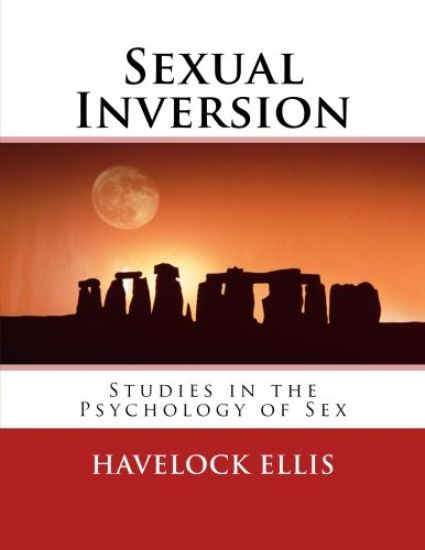
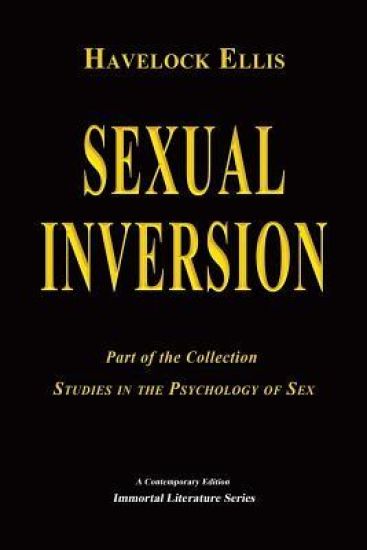
Sexual Inversion

Sexual Inversion

Havelock Ellis

Createspace Independent Publishing Platform
2017
nidottu
This is a new edition of "Sexual Inversion," originally published in 1915 by F. A. Davis Company, Publishers, of Philadelphia. Part of the project Immortal Literature Series of classic literature, this is a new edition of the classic work published in 1915-not a facsimile reprint. Obvious typographical errors have been carefully corrected and the entire text has been reset and redesigned by Pen House Editions to enhance readability, while respecting the original edition. "Sexual Inversion" was the first English medical textbook on the topic of homosexuality. The book became a part of Ellis's six-volume "Studies in the Psychology of Sex." Havelock Ellis and John Addington Symonds agreed to collaborate on a new study that would combine Symonds's historical analysis on homosexuality with Ellis's experience with medical and scientific theory. Symonds died in 1893 before the book was concluded. "Sexual Inversion" was first published in German in 1896 (Leipzig, by Georg H. Wigand's Verlag) entitled "Das Kontr re Geschlechtsgef hl," under Havelock Ellis and John Addington Symonds. Ellis further revised the text and edited several of Symonds's contributions, with almost every page being rewritten or enlarged. This is the third edition. About the Author: Born in Surrey, England, in 1859, Havelock Ellis was considered by the overwhelming majority of critics as the best translator of "Germinal," mile Zola s masterpiece. Ellis was a social activist, a physician and a psychologist, whose best-known works concern sexuality and criminology. In 1890 he published "The Criminal," a remarkable work on criminal anthropology; in the same year he wrote "The New Spirit," a collection of literary essays on Diderot, Heine, Whitman, Ibsen, and Tolstoi, and Ellis's attempt to synthesize science and religious mysticism; and in 1898 he wrote "Affirmations," which contains essays on Nietzsche, Casanova, Zola, Huysmans, and St. Francis. In 1897, he published "Sexual Inversion," the first medical text in English about homosexuality, which he had co-authored with John Addington Symonds (see short bio below) in an earlier edition, and which became a part of Ellis's six-volume "Studies in the Psychology of Sex." Havelock Ellis died in Suffolk, England, in 1939. About John Addington Symonds: John Addington Symonds was born in Bristol, England, in 1840. He was an English poet, an author of several works, and a literary critic. In 1873 he wrote "A Problem in Greek Ethics" (also published in the Immortal Literature Series), which discussed homosexuality between men. He printed ten copies in 1883, before effectively publishing the book in 1901. He was also known for his work on the Renaissance, as well as for his translations and biographies. He wrote "Our Life in the Swiss Highlands" (1891), biographies of Philip Sidney (1886), Ben Jonson (1886) and Michelangelo (1893), several volumes of poetry and essays, and a translation of the "Autobiography of Benvenuto Cellini" (1887). John Addington Symonds died in Rome in 1893. In 1896, Havelock Ellis published, in German, prepared with the collaboration of Dr. Hans Kurella, "Das kontr re Geschlechtsgef hl" (Leipzig, by Georg H. Wigand's Verlag), later revised and published by Ellis as Sexual Inversion-the first medical text in English about homosexuality, which he had co-authored with Symonds, and which would become a part of Ellis's six-volume "Studies in the Psychology of Sex."

The New Spirit

The New Spirit

Havelock Ellis

Createspace Independent Publishing Platform
2017
nidottu
This is a new edition of "The New Spirit," originally published in 1892 by Walter Scott, Ltd., of London. Part of the project Immortal Literature Series of classic literature, this is a new edition of the classic work published in 1892-not a facsimile reprint. Obvious typographical errors have been carefully corrected and the entire text has been reset and redesigned by Pen House Editions to enhance readability, while respecting the original edition. "The New Spirit" was Havelock Ellis' first book, a collection of literary essays on Diderot, Heine, Whitman, Ibsen, and Tolstoi, originally published in 1890. The book explores "the new spirit" that has come into the world. Showing deep understanding of his times, Ellis discusses the sciences of anthropology, sociology, and political science; the increasing importance of women-which he believed to be the most significant movement of his time-the approaching disappearance of war, and art and religion as a means to seek rest. This is the original third edition. About the Author: Born in Surrey, England, in 1859, Havelock Ellis was considered by the overwhelming majority of critics as the best translator of "Germinal," mile Zola s masterpiece. Ellis was a social activist, a physician and a psychologist, whose best-known works concern sexuality and criminology. In 1890 he published "The Criminal," a remarkable work on criminal anthropology; in the same year he wrote "The New Spirit," and in 1898 he wrote "Affirmations," which contains essays on Nietzsche, Casanova, Zola, Huysmans, and St. Francis. In 1897, he published "Sexual Inversion," the first medical text in English about homosexuality, which he had co-authored with John Addington Symonds in an earlier edition, and which became a part of Ellis's six-volume "Studies in the Psychology of Sex." Havelock Ellis died in Suffolk, England, in 1939.