Kirjojen hintavertailu – 12 859 828 kirjaa ja 27 kauppaa
Kirjailija
Henri Poincaré
Kirjat ja teokset yhdessä paikassa: 112 kirjaa, julkaisuja vuosilta 1894–2026, suosituimpiin kuuluu Mathematische Theorie des Lichtes. Vertaile teosten hintoja ja tarkista saatavuus suomalaisista kirjakaupoista.
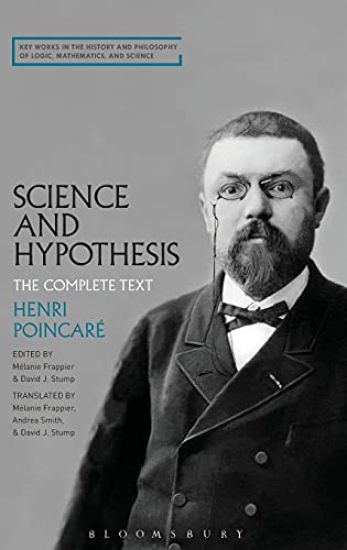
Science and Hypothesis is a classic text in history and philosophy of science. Widely popular since its original publication in 1902, this first new translation of the work in over a century features unpublished material missing from earlier editions. Addressing errors introduced by Greenstreet and Halsted in their early 20th-century translations, it incorporates all the changes, corrections and additions Poincaré made over the years. Taking care to update the writing for a modern audience, Poincaré’s ideas and arguments on the role of hypotheses in mathematics and in science become clearer and closer to his original meaning, while David J. Stump’s introduction gives fresh insights into Poincaré’s philosophy of science. By approaching Science and Hypothesis from a contemporary perspective, it presents a better understanding of Poincare’s hierarchy of the sciences, with arithmetic as the foundation, geometry as the science of space, then mechanics and the rest of physics. For philosophers of science and scientists working on problems of space, time and relativity, this is a much needed translation of a ground-breaking work which demonstrates why Poincaré is still relevant today.
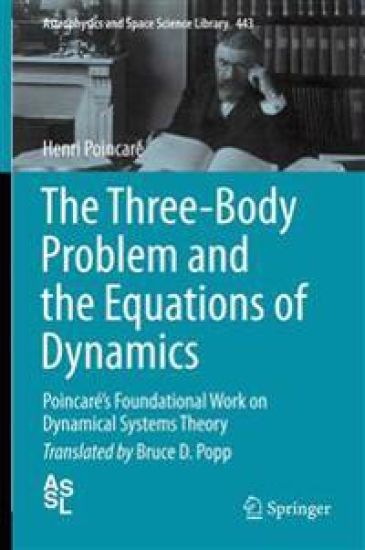
Here is an accurate and readable translation of a seminal article by Henri Poincaré that is a classic in the study of dynamical systems popularly called chaos theory. In an effort to understand the stability of orbits in the solar system, Poincaré applied a Hamiltonian formulation to the equations of planetary motion and studied these differential equations in the limited case of three bodies to arrive at properties of the equations’ solutions, such as orbital resonances and horseshoe orbits. Poincaré wrote for professional mathematicians and astronomers interested in celestial mechanics and differential equations. Contemporary historians of math or science and researchers in dynamical systems and planetary motion with an interest in the origin or history of their field will find his work fascinating.
Science and MethodHenri Poincar Translated by George Bruce HalstedJules Henri Poincar 29 April 1854 - 17 July 1912, was a French mathematician, theoretical physicist, engineer, and a philosopher of science. He is often described as a polymath, and in mathematics as The Last Universalist by Eric Temple Bell, since he excelled in all fields of the discipline as it existed during his lifetime. I bring together here different studies relating more or less directly to questions of scientific methodology. The scientific method consists in observing and experimenting; if the scientist had at his disposal infinite time, it would only be necessary to say to him: 'Look and notice well'; but, as there is not time to see everything, and as it is better not to see than to see wrongly, it is necessary for him to make choice. The first question, therefore, is how he should make this choice. This question presents itself as well to the physicist as to the historian; it presents itself equally to the mathematician, and the principles which should guide each are not without analogy. The scientist conforms to them instinctively, and one can, reflecting on these principles, foretell the future of mathematics. We shall understand them better yet if we observe the scientist at work, and first of all it is necessary to know the psychologic mechanism of invention and, in particular, that of mathematical creation. Observation of the processes of the work of the mathematician is particularly instructive for the psychologist. IntroductionBook I. Science and the Scientist The Choice of FactsThe Future of MathematicsMathematical CreationChanceBook II. Mathematical Reasoning The Relativity of SpaceMathematical Definitions and TeachingMathematics and LogicThe New LogicsThe Latest Efforts of the LogisticiansBook III. The New Mechanics Mechanics and RadiumMechanics and OpticsThe New Mechanics and AstronomyBook IV. Astronomic Science The Milky Way and the Theory of GasesFrench GeodesyGeneral Conclusions
Henri Poincar was a famous mathematician, theoretical physicist, and philosopher. "Think of two consciousnesses, which are like two worlds impenetrable one to the other. By what right do we strive to put them into the same mold, to measure them by the same standard? Is it not as if one strove to measure length with a gram or weight with a meter? And besides, why do we speak of measuring? We know perhaps that some fact is anterior to some other, but not by how much it is anterior. Therefore two difficulties: (1) Can we transform psychologic time, which is qualitative, into a quantitative time? (2) Can we reduce to one and the same measure facts which transpire in different worlds?..."
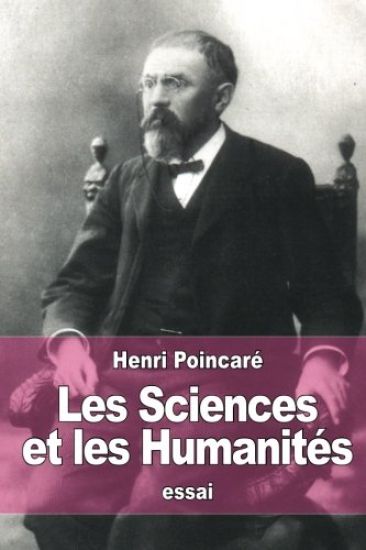
" Parmi les hommes qui ont, tous utilement, mais plus ou moins brillamment servi la science, les uns avaient re u dans leur jeunesse une ducation classique solide, parfois raffin e, tandis que les autres n'avaient eu qu'une formation litt raire h tive, incompl te et sommaire. On serait tent d'en conclure que l' tude des lettres est inutile aux savants, puisque beaucoup d'entre eux ont pu s'en passer. Ce serait aller un peu vite en besogne. Est-il certain qu'on ne saurait faire de diff rence entre les oeuvres des uns et des autres et y reconna tre une sorte de marque d'origine. C'est l une comparaison que je ne veux pas faire ici, il faudrait citer des noms propres, et je ne voudrais d sobliger personne, m me les morts. En pareille mati re, les appr ciations sont difficiles, mais quand m me on aurait d montr que les uns ont t aussi bons savants que les autres, qu'est-ce que cela prouverait ? Le fait s'expliquerait tout naturellement. Il y a eu de longues ann es o il tait difficile de percer sans avoir fait ses classes, et en g n ral de sortir de son rang. Ceux qui y sont parvenus n'ont pu le faire que gr ce une nergie exceptionnelle qui leur tenait lieu de bien d'autres avantages, et qui pouvait les mettre de pair avec des esprits plus cultiv s, mais servis par des caract res moins bien tremp s..."