
Kirjailija
Henrik Ibsen
Kirjat ja teokset yhdessä paikassa: 1 079 kirjaa, julkaisuja vuosilta 1856–2026, suosituimpiin kuuluu Nora. Vertaile teosten hintoja ja tarkista saatavuus suomalaisista kirjakaupoista.
1 079 kirjaa
Kirjojen julkaisuvuodet: 1856–2026.

A Doll's House, written two years after The Pillars of Society, was the first of Ibsen's plays to create a sensation and is now perhaps his most famous play, and required reading in many secondary schools and universities. The play was highly controversial when first published, as it is sharply critical of 19th Century marriage norms. It follows the formula of well-made play up until the final act, when it breaks convention by ending with a discussion, not an unravelling. It is often called the first true feminist play, although Ibsen denied this. A Doll's House was based on the life of Laura Kieler (maiden name Laura Smith Petersen), a good friend of Ibsen. Much that happened between Nora and Torvald happened to Laura and her husband, Victor. Similar to the events in the play, Laura signed an illegal loan to save her husband. She wanted the money to find a cure for her husband's tuberculosis. 10] She wrote to Ibsen, asking for his recommendation of her work to his publisher, thinking that the sales of her book would repay her debt. At his refusal, she forged a check for the money. At this point she was found out. In real life, when Victor discovered about Laura's secret loan, he divorced her and had her committed to an asylum. Two years later, she returned to her husband and children at his urging, and she went on to become a well-known Danish author, living to the age of 83. Ibsen wrote A Doll's House at the point when Laura Kieler had been committed to the asylum, and the fate of this friend of the family shook him deeply, perhaps also because Laura had asked him to intervene at a crucial point in the scandal, which he did not feel able or willing to do. Instead, he turned this life situation into an aesthetically shaped, successful drama. In the play, Nora leaves Torvald with head held high, though facing an uncertain future given the limitations single women faced in the society of the time. Kieler eventually rebounded from the shame of the scandal and had her own successful writing career while remaining discontented with sole recognition as "Ibsen's Nora" years afterwards.
The Vikings of Helgeland: A Play in Four Acts
Henrik Ibsen
Createspace Independent Publishing Platform
2015
nidottu
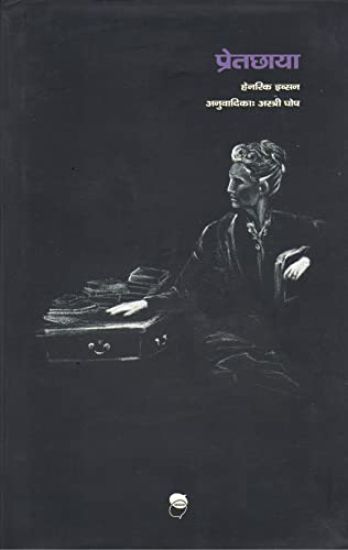
The winter of 1879-80 Ibsen spent in Munich, and the greater part of the summer of 1880 at Berchtesgaden. November 1880 saw him back in Rome, and he passed the summer of 1881 at Sorrento. There, fourteen years earlier, he had written the last acts of Peer Gynt; there he now wrote, or at any rate completed, Gengangere. It was published in December 1881, after he had returned to Rome. On December 22 he wrote to Ludwig Passarge, one of his German translators, "My new play has now appeared, and has occasioned a terrible uproar in the Scandinavian press; every day I receive letters and newspaper articles decrying or praising it.... I consider it utterly impossible that any German theatre will accept the play at present. I hardly believe that they will dare to play it in the Scandinavian countries for some time to come." How rightly he judged we shall see anon. In the newspapers there was far more obloquy than praise. Two men, however, stood by him from the first: Bj rnson, from whom he had been practically estranged ever since The League of Youth, and Georg Brandes. The latter published an article in which he declared (I quote from memory) that the play might or might not be Ibsen's greatest work, but that it was certainly his noblest deed. It was, doubtless, in acknowledgment of this article that Ibsen wrote to Brandes on January 3, 1882: "Yesterday I had the great pleasure of receiving your brilliantly clear and so warmly appreciative review of Ghosts.... All who read your article must, it seems to me, have their eyes opened to what I meant by my new book-assuming, that is, that they have any wish to see. For I cannot get rid of the impression that a very large number of the false interpretations which have appeared in the newspapers are the work of people who know better. In Norway, however, I am willing to believe that the stultification has in most cases been unintentional; and the reason is not far to seek. In that country a great many of the critics are theologians, more or less disguised; and these gentlemen are, as a rule, quite unable to write rationally about creative literature. That enfeeblement of judgment which, at least in the case of the average man, is an inevitable consequence of prolonged occupation with theological studies, betrays itself more especially in the judging of human character, human actions, and human motives. Practical business judgment, on the other hand, does not suffer so much from studies of this order. Therefore the reverend gentlemen are very often excellent members of local boards; but they are unquestionably our worst critics." This passage is interesting as showing clearly the point of view from which Ibsen conceived the character of Manders. In the next paragraph of the same letter he discusses the attitude of "the so-called Liberal press"; but as the paragraph contains the germ of An Enemy of the People, it may most fittingly be quoted in the introduction to that play.
Thirteen Plays by Ibsen, including (complete and unabridged)
Henrik Ibsen
Benediction Classics
2015
sidottu



"Baumeister Solne " from Henrik Ibsen. Norwegischer Schriftsteller und Dramatiker (1828-1906).




A wife, a muse, a coward, a heretic. Hedda Gabler is something to everyone, yet has no idea who she is to herself. Trapped by convention and by her own irreconcilable nature, will she have the courage to shape her own destiny? Mark O'Rowe's fluid yet faithful adaptation of Henrik Ibsen's masterpiece Hedda Gabler was premiered at the Abbey Theatre, Dublin, in April 2015.


This new edition of Peer Gynt presents the Ibsen classic in combination with the reduced full score by Edvard Grieg.
Boken är en klassisk norsk pjäs som utforskar komplexiteterna i familj, samhälle och moral. Den avslöjar dolda hemligheter och konsekvenserna av tidigare handlingar, utmanar samhällets normer och värderingar genom kraftfull dramatik.

Et Dukkehjem: Skuespil i tre akter
Henrik Ibsen
Createspace Independent Publishing Platform
2015
nidottu
Et Dukkehjem er et af den norske forfatter og dramatiker Henrik Ibsens hovedv rker. Det er et skuespil i tre akter udgivet og opf rt f rste gang i K benhavn i 1879. Det beskriver Nora og Torvalds samliv i et viktoriansk borgerhjem. Nora ender med at forlade sin mand og b rn for at finde sig selv, noget der var uh rt p den tid og medf rte at der blev skabt bl st omkring v rket i samtiden. V rket er en absolut milep l i klassisk, norsk litteratur. Henrik Ibsen (1828-1906) blev f dt i Skien i Norge. Han regnes som en af hovedforfatterne i Det Moderne Gennembrud, en af de vigtigste forfattere i anden halvdel af det 19. rhundrede og en af de vigtigste dramatikere i den europ iske teaterhistorie. Med de realistiske samtidsdramaer Samfundets st tter (1877), Et dukkehjem (1879), Gengangere (1881) og En folkefiende (1882) opfyldte Ibsen den indflydelsesrige danske kritiker Georg Brandes' krav om at s tte problemer under debat. Et dukkehjem blev det internationale gennembrud for Ibsen. Det fik enorm betydning for kvindesagskampen overalt i verden og er sandsynligvis verdens mest spillede drama i moderne tid.