Kirjailija
Henrik Ibsen
Kirjat ja teokset yhdessä paikassa: 1 079 kirjaa, julkaisuja vuosilta 1856–2026, suosituimpiin kuuluu Nora. Vertaile teosten hintoja ja tarkista saatavuus suomalaisista kirjakaupoista.
1 079 kirjaa
Kirjojen julkaisuvuodet: 1856–2026.
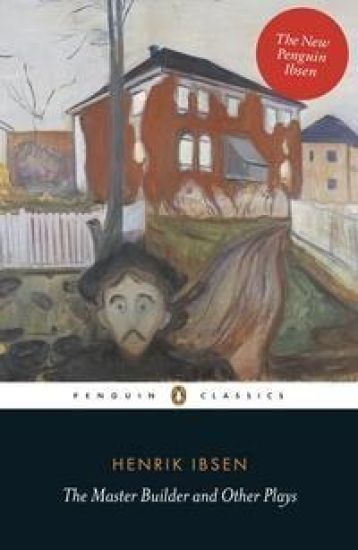
The Master Builder and Other Plays
Henrik Ibsen
Penguin Classics
2014
pokkari
Halvin toimitettuna 21,80 €
Ibsen's greatest late plays in superb modern translations, part of the new Penguin Ibsen series. This volume includes The Master Builder, Little Eyolf, John Gabriel Borkman and When We Dead Awaken - Ibsen's last four plays, written in his old age in Oslo. In The Master Builder, a married, middle-aged architect becomes bewitched by a strange young woman who claims to have known him for years. A sudden death in Little Eyolf is the catalyst that drives a couple into a greater understanding of themselves. In John Gabriel Borkman, a banker recently released from prison must choose between his wife and her sister, while a sculptor on holiday is reunited with the woman who inspired his greatest art in When We Dead Awaken. The new Penguin series of Ibsen's major plays offer the best available editions in English, under the general editorship of Tore Rem. All the plays have been freshly translated by leading translators and are based on the definitive Norwegian edition of Ibsen's works. This volume includes an introduction by Toril Moi on the themes of death and human limitation in the plays, and additional editorial apparatus by Tore Rem. Henrik Ibsen (1828-1906) is often called 'the Father of Modern Drama'. Born in the small Norwegian town of Skien, he left Norway in 1864 for a twenty-one-year long voluntary exile in Italy and Germany. After successes with the verse dramas Brand and Peer Gynt, he turned to prose, writing his great twelve-play cycle of society dramas between 1877 and 1899. This included The Pillars of Society, A Doll's House, Ghosts, An Enemy of the People, The Wild Duck, Rosmersholm, The Lady from the Sea, Hedda Gabler, The Master Builder, Little Eyolf, John Gabriel Borkman, and, finally, When We Dead Awaken. Ibsen returned to Norway in 1891 and died there at the age of seventy-eight. Barbara J. Haveland and Anne-Marie Stanton-Ife are both freelance literary translators. Toril Moi is Professor of English, Theater Studies and Philosophy at Duke University. Her books include Henrik Ibsen and the Birth of Modernism (2006). Tore Rem is Professor of British literature at the University of Oslo and author of Henry Gibson/Henrik Ibsen (2006).
Love's Comedy is a comedy by Henrik Ibsen. It was first published on 31 December 1862. 1] As a result of being branded an "immoral" work in the press, the Christiania Theatre would not dare to stage it at first. 2] "The play aroused a storm of hostility," Ibsen wrote in its preface three years later, "more violent and more widespread than most books could boast of having evoked in a community the vast majority of whose members commonly regard matters of literature as being of small concern." 3] The only person who approved of it at the time, Ibsen later said, was his wife. 4] He revised the play in 1866, in preparation for its publication "as a Christmas book," as he put it. His decision to make it more appealing to Danish readers by removing many of its specifically Norwegian words has been taken as an early instance of the expression of his contempt for the contemporary Norwegian campaign to purge the language of its foreign influences. The play received its first theatrical production in 1873 (eleven years after publication), opening on 24 November at the Christiania Theatre, with Sigvard Gundersen as Falk, Laura Gundersen as Svanhild, Johannes Brun as Pastor Strawman, and Andreas Isachsen as Guldstad. 6] It became a regular part of the theatre's repertory, playing 77 times over the next 25 years. 7] Its first Broadway production opened at the Hudson Theatre on 23 March 1908. The London premiere of the play took place in 2012, when the Orange Tree Theatre staged a production directed by David Antrobus and using a text translated and adapted by Don Carleton. The production was praised by critics. Ibsen adopted a contemporary setting (for the first time since his St. John's Night of 1853) and a rhymed verse form for the play. 10] Its language is loaded with vivid imagery and Ibsen gives the characters arias full of passion and poetry. It dramatises the bourgeois world seen in Ibsen's later naturalistic prose problem plays but Love's Comedy elevates its characters to an emblematic status, more akin to Emperor and Galilean, Brand or Peer Gynt; characters appear to be contemporary types but are given emblematic names such as Falcon, Swan, Strawman and Gold. Ibsen called Love's Comedy an extension of his poem "On the Heights" ("Paa Vidurne"), insofar as both works explore a need for liberation; both, he suggested, were based on his relationship with his wife Suzanna. In 1870 he wrote that the play was "much debated in Norway, where people related it to the circumstances of my personal life. I lost a great deal of face." Robert Ferguson suggests that it is Ibsen's "greatest love story", adding that "our knowledge that Falk] is lying, that he and Svandhild voluntarily turn to a future with this act of emotional self-mutilation ...] gives Love's Comedy such extraordinary poignancy". 11] As "the brilliant culmination of a long and awkward apprenticeship," the play is, Brian Johnson writes, Ibsen's first "assured masterpiece"
This classic drama collection by the great Norwegian playwright, Henrik Ibsen, contains the following early works: Catiline, The Warrior's Barrow and Olaf Liljekrans.
When We Dead Awaken is the last play written by Norwegian dramatist Henrik Ibsen. Published in December 1899, Ibsen wrote the play between February and November of that year. The first performance was at the Haymarket Theatre in London, a day or two before publication. The first act takes place outside a spa overlooking a fjord. Sculptor Arnold Rubek and his wife Maia have just enjoyed breakfast and are reading newspapers and drinking champagne. They marvel at how quiet the spa is. Their conversation is lighthearted, but Arnold hints at a general unhappiness with his life. Maia also hints at disappointment. Arnold had promised to take her to a mountaintop to see the whole world as it is, but they have never done so. The hotel manager passes by with some guests and inquires if the Rubeks need anything. During their encounter, a mysterious woman dressed in white passes by, followed closely by a nun in black. Arnold is drawn to her for some reason. The manager does not know much about her, and he tries to excuse himself before Squire Ulfheim can spot him. Unable to do so, Ulfheim corners him and requests breakfast for his hunting dogs. Spotting the Rubeks, he introduces himself and mocks their plans to take a cruise, insisting that the water is too contaminated by other people. He is stopping at the spa on his way to a mountain hunt for bears, and he insists that the couple should join him, as the mountains are unpolluted by people. Maia takes Ulfheim up on his offer to watch his dogs eat breakfast, leaving Arnold alone with the mysterious woman. He quickly realizes that she is Irena, his former model. Irena constantly refers to herself as being 'dead'. During their conversation, she explains that posing for Arnold was akin to a kind of 'self murder', where he captured her soul and put it into his masterpiece, a sculpture called Resurrection. He confesses that he has never been the same since working with Irena. Though Resurrection brought him great fame and an abundance of other work, he feels a similar kind of death as Irena feels. Irena mysteriously alludes to killing all of her lovers since posing for Arnold. She claims to always possess a knife, and also admits to murdering every child she has had, sometimes while they are still in the womb. When Irena asks where Arnold is going after his stay at the spa, she dismisses the idea of the cruise and asks him to meet her up in the high mountains. Maia returns with Ulfheim, asking Arnold if they can abandon the cruise and join Ulfheim on his mountain hunt. Arnold tells her that she is free to do so and says that he is thinking of going that way himself. The second act takes place outside a health resort in the mountains. Maia finds Arnold beside a brook. She has spent the morning with Ulfheim. The couple return to their discussion of Arnold's unhappiness, and he confesses that he has grown tired of Maia. He wants to live with Irena because she had the key to the lock which holds his artistic inspiration. Their relationship was never sexual, because Arnold felt it would have ruined Resurrection. Maia is hurt but insists that Arnold should do as he pleases. She even suggests that perhaps the three of them could live together if she cannot find a new place to live. Irena enters, and Maia urges Arnold to speak with her. The pair cast flower petals into the brook and reminisce sentimentally about their long-ago collaboration. At one point, Arnold refers to their 'episode', and Irena draws her knife, preparing to stab him in the back. When he turns around, she hides the knife. Arnold asks Irena to come live with him and work with him again, explaining that she can unlock his artistic vision once more. She insists that there is no way to resurrect a partnership like theirs, but they agree to pretend they can. Maia returns with Ulfheim, on their way to a hunt. She is happy and explains that she feels like she is finally awake.
John Gabriel Borkman is a classic Norwegian play by Henrik Ibsen. The Borkman family fortunes have been brought low by the imprisonment of John Gabriel who used his position as a bank manager to speculate with his investors' money. The action of the play takes place eight years after Borkman's release when John Gabriel Borkman, Mrs. Borkman, and her twin sister Ella Rentheim fight over young Erhart Borkman's future. Though John Gabriel Borkman continues the line of naturalism and social commentary that marks Ibsen's middle period, the final act suggests a new phase for the playwright, a phase brought to fruition in his final more symbolic work When We Dead Awaken.
Oswald returns home from Paris to honour his dead father. As his mother begins to feel the presence of ghosts from the past around her, Oswald discovers that there is more to his mystery illness than he first thought. Only by uncovering the truth can they both be set free.

A Doll's House: A Critical Edition
Will Jonson; Henrik Ibsen
Createspace Independent Publishing Platform
2014
nidottu