Kirjailija
Henry A. Giroux
Kirjat ja teokset yhdessä paikassa: 97 kirjaa, julkaisuja vuosilta 1987–2026, suosituimpiin kuuluu America at War with Itself. Vertaile teosten hintoja ja tarkista saatavuus suomalaisista kirjakaupoista.
97 kirjaa
Kirjojen julkaisuvuodet: 1987–2026.
At the beginning of the new millennium, educators, parents, and others should reevaluate what it means for adults and young people to grow up in a world that has been radically altered by a hyper capitalism that monopolizes the educational force of culture as it ruthlessly eliminates those public spheres not governed by the logic of the market. Giroux provides new theoretical and political tools for addressing how pedagogy, knowledge, resistance, and power can be analyzed within and across a variety of cultural spheres, including but not limited to the schools. A new introduction adds much to the well received first edition. The time for radical social change has never been so urgent, since the fate of an entire generation of young people, if not democracy itself, is at stake. Giroux argues that challenge gives new meaning to the importance of resistance, the relevance of pedagogy, and the significance of political agency.
Beyond the Corporate University
Henry A. Giroux; Kostas Myrsiades
Rowman Littlefield Publishers
2001
nidottu
A decade of budgetary, policy, and ideological contention has left American universities under the yoke of narrow-minded management models. As corporate culture increasingly invades educational and other public sectors, we as a nation have lost a clear vision of the public good and the necessary components of a vital democracy. Prominent scholars in this book seek to redress these trends. They move boldly beyond critique to show how and why the critical functions of a democratically informed civic education (not merely professional training) must become the core of the university's mission. They show why higher education must address what it means to relate knowledge to public life, and social responsibility to the demands of critical citizenship. Moreover, they show why democratic forms of education and various elements of a critical pedagogy are vital not only to individual students, but also to our economy and our democratic institutions and future leadership. They also suggest how we can move beyond the stagnation of current debates to more fully embrace the democratic possibilities of public education.
Henry A. Giroux challenges the contemporary politics of cynicism by addressing a number of issues including the various attacks on cultural politics, the multicultural discourses of academia, the corporate attack on higher education, and the cultural politics of the Disney empire.
Critical Education in the New Information Age
Manuel Castells; Ramón Flecha; Paulo Freire; Henry A. Giroux; Donaldo Macedo
Rowman Littlefield
1999
nidottu
Essays by some of the world's leading educators provide a revolutionary portrait of new ideas and developments in education that can influence the possibility of social and political change. The authors take into account such diverse terrain as feminism, ecology, media, and individual liberty in their pursuit of new ideas that can inform the fundamental practice of education and promote a more humane civil society. The book consolidates recent thinking just as it reflects on emerging new lines of critical theory.
Channel Surfing: Racism, the Media, and the Destruction of Today's Youth
Henry A. Giroux
St. Martin's Griffin
1998
nidottu
Looks at the images presented in various forms of media and argues that American society needs a more ethical approach to its children's future
Counternarratives
Henry A. Giroux; Colin Lankshear; Peter McLaren; Michael Peters
Routledge
1996
nidottu
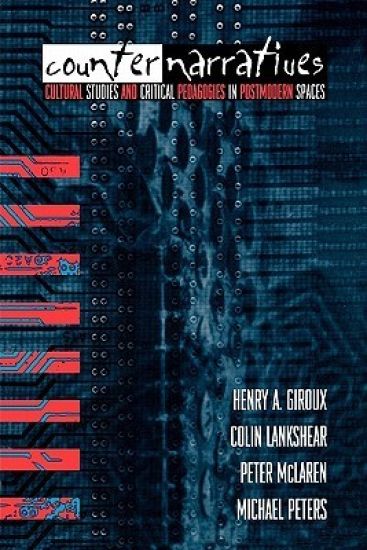
To understand contemporary times, we must appreciate the extent to which our lives are affected by the cultural and political struggle between "official" narratives and the counternarratives which emerge as oppositional responses. Counternarratives develops a concept of "postmodern counternarratives" as a frame for exploring the politics of media, technology and education within everyday struggles for human identities and loyalties. The authors identify two forms of counternarratives. One functions as a critique of the modernist propensity for grand narratives. The second concept, which is the focus of the book, builds on the first; the idea of "little stories" addressing cultural and political opposition to the "official" narratives used to manipulate public consciousness. Each marks an important point of contestation within contemporary education and culture: curriculum, pedagogy, literacy, media representations and applications of new technologies.
Counternarratives
Henry A. Giroux; Colin Lankshear; Peter McLaren; Michael Peters
Routledge
1996
sidottu
To understand contemporary times, we must appreciate the extent to which our lives are affected by the cultural and political struggle between "official" narratives and the counternarratives which emerge as oppositional responses. Counternarratives develops a concept of "postmodern counternarratives" as a frame for exploring the politics of media, technology and education within everyday struggles for human identities and loyalties. The authors identify two forms of counternarratives. One functions as a critique of the modernist propensity for grand narratives. The second concept, which is the focus of the book, builds on the first; the idea of "little stories" addressing cultural and political opposition to the "official" narratives used to manipulate public consciousness. Each marks an important point of contestation within contemporary education and culture: curriculum, pedagogy, literacy, media representations and applications of new technologies.
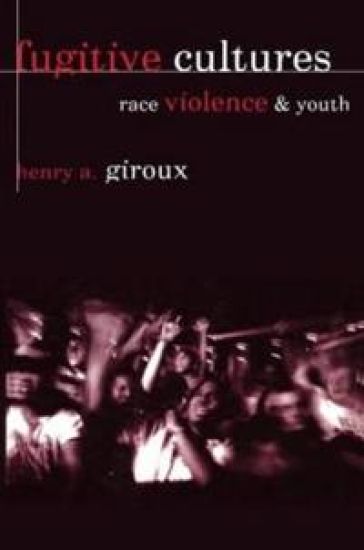
Fugitive Cultures examines how youth are being increasingly subjected to racial stereotyping and violence in various realms of popular culture, especially children's culture. But rather than dismissing popular culture, Henry Giroux addresses its political and pedagogical value as a site of critique and learning and calls for a reinvigorated critical relationship between cultural studies and those diverse cultural workers committed to expanding the possibilities and practices of democratic public life.
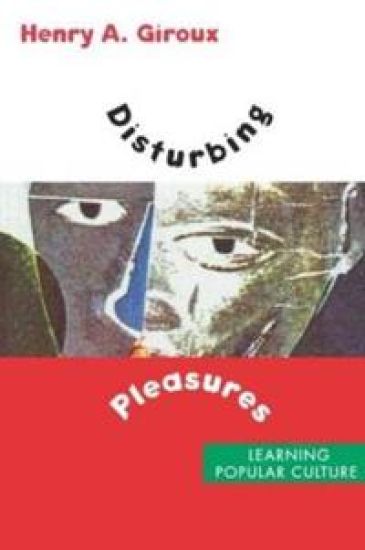
In Disturbing Pleasures Henry Giroux demonstrates how his well-known theories of education, critical pedagogy and popular culture can be put to use in the classroom and in other cultural settings. Adding an entirely new dimension to his thinking about the cultural sites at which pedagogical practice takes place, Giroux illustrates how professors, school teachers and other cultural workers can appropriate what he refers to as a "pedagogy of cultural studies."
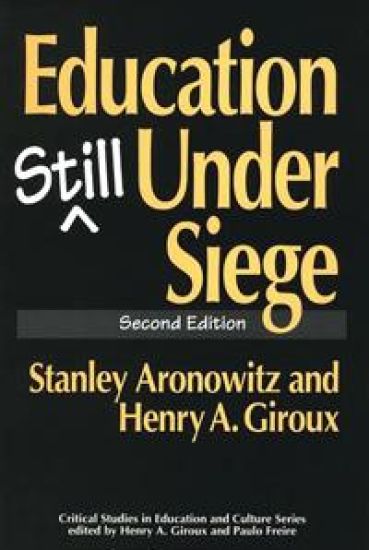
Cultural differences are not asserted through the specificity of dominant notions of race, gender, and class, but through a commitment to expanding dialogue and exchange across cultural lines as part of a wider attempt to deepen and develop democratic public life. This revised edition of the 1985 best-seller speaks eloquently to the need to attend to ever-present inequalities of education in the light of new political correctness, technology, and curricula.
Education Still Under Siege, 2nd Edition
Stanley Aronowitz; Henry A. Giroux
Praeger Publishers Inc
1993
sidottu
Cultural differences are not asserted through the specificity of dominant notions of race, gender, and class, but through a commitment to expanding dialogue and exchange across cultural lines as part of a wider attempt to deepen and develop democratic public life. This revised edition of the 1985 best-seller speaks eloquently to the need to attend to ever-present inequalities of education in the light of new political correctness, technology, and curricula.
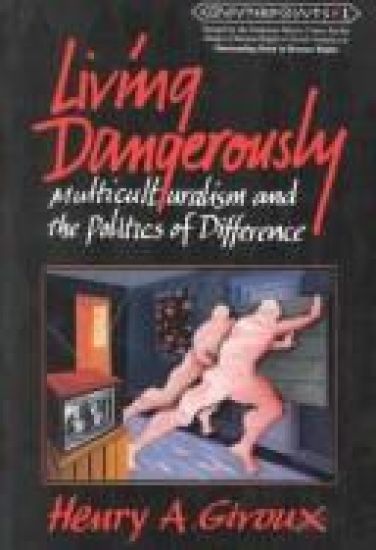
Winner of the award -Outstanding Book on the Subject of Human Rights in North America- (Gustavus Myers Center for Human Rights in North America) In "Living Dangerously," Henry Giroux confronts one of the most important questions facing our educational system today: -How do we bring our children together as members of a democratic society that respects cultural difference?- Employing film criticism, political theory and an acute sense of contemporary culture, Giroux forces the reader to confront the walls of prejudice that divide us. He compels all readers, but especially educators, to forego a life of indifference and to live dangerously in order to tear those walls down and create a more just and democratic society. "Living Dangerously" will be of interest to anyone who believes that we can reform our educational system in order to create a society that celebrates the multifaceted possibilities existing within our culture today."
a book for all practitioners and all members of the greater community. Giroux demands reader involvement, transformation, and empowerment. He helps us understand that the political relationship between schools and society is neither artificial nor neutral nor necessarily negative. Rather, school personnel have a positive and dynamic political role to play. Educational Leadership We are fortunate to have these ideas expressed so clearly and in one place. It is a very useful book. . . . Choice Offers educators ways for reflecting critically on their own practices and the relationship between schools and society. The Educational Digest
Public spending on education is under attack. In this challenging book Aronowitz and Giroux examine the thinking behind that attack, in the USA and in other industrialized countries.