Kirjojen hintavertailu – 12 859 819 kirjaa ja 27 kauppaa
Kirjailija
Henry David Thoreau
Kirjat ja teokset yhdessä paikassa: 873 kirjaa, julkaisuja vuosilta 1849–2026, suosituimpiin kuuluu Viikko virran vietävänä. Vertaile teosten hintoja ja tarkista saatavuus suomalaisista kirjakaupoista.
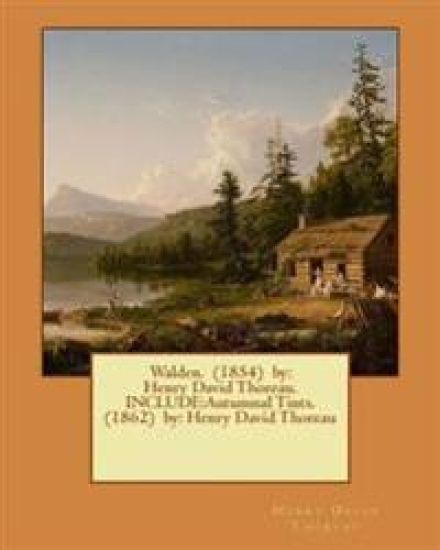
Walden (originalmente Walden, la vida en los bosques) es un ensayo, publicado en 1854, cuyo autor es Henry David Thoreau (12 de julio de 1817 - 6 de mayo de 1862; nacido David Henry Thoreau), y constituye uno de los textos de no ficci n m s famosos escritos por un estadounidense.
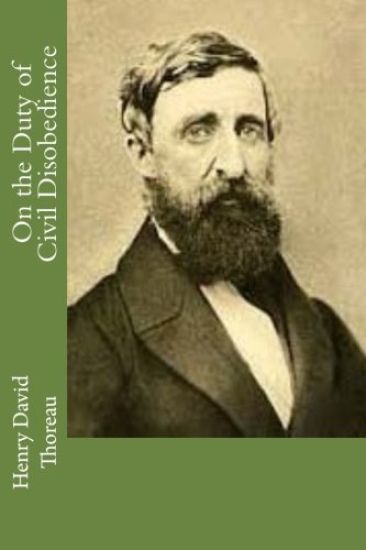
Resistance to Civil Government (Civil Disobedience) is an essay by American transcendentalist Henry David Thoreau that was first published in 1849. In it, Thoreau argues that individuals should not permit governments to overrule or atrophy their consciences, and that they have a duty to avoid allowing such acquiescence to enable the government to make them the agents of injustice. Thoreau was motivated in part by his disgust with slavery and the Mexican-American War (1846-1848).
I heartily accept the motto, -"That government is best which governs least"; and I should like to see it acted up to more rapidly and systematically. Carried out, it finally amounts to this, which also I believe, -"That government is best which governs not at all"; and when men are prepared for it, that will be the kind of government which they will have. Government is at best but an expedient; but most governments are usually, and all governments are sometimes, inexpedient. The objections which have been brought against a standing army, and they are many and weighty, and deserve to prevail, may also at last be brought against a standing government. The standing army is only an arm of the standing government. The government itself, which is only the mode which the people have chosen to execute their will, is equally liable to be abused and perverted before the people can act through i
Walden (also known as Life in the Woods) by Henry David Thoreau is one of the best-known non-fiction books written by an American. Published in 1854, it details Thoreau's life for two years and two months in second-growth forest around the shores of Walden Pond, not far from his friends and family in Concord, Massachusetts. Walden was written so that the stay appears to be a year, with expressed seasonal divisions. Thoreau called it an experiment in simple living. Walden is neither a novel nor a true autobiography, but a social critique of the Western World, with each chapter heralding some aspect of humanity that needed to be either renounced or praised. The work is part personal declaration of independence, social experiment, voyage of spiritual discovery, and manual for self reliance.
Life without Principle se llam originalmente What Shall it Profit, y fue una conferencia dictada por Thoreau el 6 de diciembre de 1854 en el Hall del Ferrocarril de Rhode Island. Posteriormente, dict la conferencia cuatro veces m s en Massachusetts durante 1855, y una vez m s en Nueva Jersey al a o siguiente. La versi n que tradujimos fue editada por el mismo Thoreau para su publicaci n en formato impreso, que realiz Atlantic Monthly en 1863, donde recibi su t tulo actual.
In 1854, Thoreau published the book by which he will always be best known, Walden, or Life in the Woods. It is by far the deepest, richest, and most closely jointed of his books. It shows Thoreau at his best, and contains all that he had to say to the world. In fact, he is a man of one book, and that book is Walden. In plan, it is open to the same objection as "A Week", and might almost plead guilty to the charge of obtaining a hearing under false pretences. "Life in the woods" suggests the atmosphere of As You Like It and the Robin Hood ballads, but not moralizings on economy and the duty of being yourself. The reader who takes up the book with the idea that he is going to enjoy another Robinson Crusoe will not be pleased to find that every now and then he will have to listen to a lay sermon, or a lyceum lecture.
In 1848 and again in 1849, Henry David Thoreau delivered a lecture in Concord, Massachusetts on "the relationship of the individual to the state." The essay now known as Civil Disobedience is a significant and widely admired contribution to abolitionist literature, as well as an anti-war tract, but Thoreau's focus is less on political organization and solidarity than it is on personal choice and individual responsibility. Cultivating personal integrity in the face of political injustice is the project Thoreau defends in Civil Disobedience; this focus has made the work highly influential to 20th- and 21st-century political movements. Robert Pepperman Taylor's new Introduction explains the work's specific political context, helping readers to understand the text as Thoreau wrote it. The edition also offers a number of historical documents on Thoreau's abolitionism; the United States' war with Mexico; and Thoreau's philosophical development in relation to other thinkers.