

Kirjailija
Henry James
Kirjat ja teokset yhdessä paikassa: 3 438 kirjaa, julkaisuja vuosilta 1879–2027, suosituimpiin kuuluu The Wings of the Dove. Vertaile teosten hintoja ja tarkista saatavuus suomalaisista kirjakaupoista.
3 438 kirjaa
Kirjojen julkaisuvuodet: 1879–2027.

John Marcher is reacquainted with May Bartram, a woman he knew ten years earlier, who remembers his odd secret: Marcher is seized with the belief that his life is to be defined by some catastrophic or spectacular event, lying in wait for him like a "beast in the jungle." May decides to buy a house in London with the money she inherited from a great aunt, and to spend her days with Marcher, curiously awaiting what fate has in store for him. Marcher is a hopeless egoist, who believes that he is precluded from marrying so that he does not subject his wife to his "spectacular fate". He takes May to the theater and invites her to an occasional dinner, but does not allow her to get close to him. As he sits idly by and allows the best years of his life to pass, he takes May down as well, until the denouement where he learns that the great misfortune of his life was to throw it away, and to ignore the love of a good woman, based upon his preposterous sense of foreboding.

Four years ago-in 1874-two young Englishmen had occasion to go to the United States. They crossed the ocean at midsummer, and, arriving in New York on the first day of August, were much struck with the fervid temperature of that city. Disembarking upon the wharf, they climbed into one of those huge high-hung coaches which convey passengers to the hotels, and with a great deal of bouncing and bumping, took their course through Broadway. The midsummer aspect of New York is not, perhaps, the most favorable one; still, it is not without its picturesque and even brilliant side. Nothing could well resemble less a typical English street than the interminable avenue, rich in incongruities, through which our two travelers advanced-looking out on each side of them at the comfortable animation of the sidewalks, the high-colored, heterogeneous architecture, the huge white marble facades glittering in the strong, crude light, and bedizened with gilded lettering, the multifarious awnings, banners, and streamers, the extraordinary number of omnibuses, horsecars, and other democratic vehicles, the vendors of cooling fluids, the white trousers and big straw hats of the policemen, the tripping gait of the modish young persons on the pavement, the general brightness, newness, juvenility, both of people and things. The young men had exchanged few observations; but in crossing Union Square, in front of the monument to Washington- in the very shadow, indeed, projected by the image of the -one of them remarked to the other, "It seems a rum-looking place." "Ah, very odd, very odd," said the other, who was the clever man of the two. "Pity it's so beastly hot," resumed the first speaker after a pause. "You know we are in a low latitude," said his friend. "I daresay," remarked the other. "I wonder," said the second speaker presently, "if they can give one a bath?" "I daresay not," rejoined the other. "Oh, I say " cried his comrade. This animated discussion was checked by their arrival at the hotel, which had been recommended to them by an American gentleman whose acquaintance they made-with whom, indeed, they became very intimate-on the steamer, and who had proposed to accompany them to the inn and introduce them, in a friendly way, to the proprietor. This plan, however, had been defeated by their friend's finding that his "partner" was awaiting him on the wharf and that his commercial associate desired him instantly to come and give his attention to certain telegrams received from St. Louis. But the two Englishmen, with nothing but their national prestige and personal graces to recommend them, were very well received at the hotel, which had an air of capacious hospitality.

The Portrait of a Lady is a novel by Henry James, first published in 1881. It is one of James's most popular long novels and is regarded by critics as one of his finest. The Portrait of a Lady is the story of a spirited young American woman, Isabel Archer, who in "confronting her destiny" finds it overwhelming. She inherits a large amount of money and subsequently becomes the victim of Machiavellian scheming by two American expatriates. Like many of James's novels, it is set in Europe, mostly England and Italy. Generally regarded as the masterpiece of James's early period, this novel reflects James's continuing interest in the differences between the New World and the Old, often to the detriment of the former. It also treats in a profound way the themes of personal freedom, responsibility, and betrayal.

Classics for Your Collection: goo.gl/U80LCr --------- The Beast in the Jungle is a 1903 novella by Henry James, first published as part of the collection, The Better Sort. Almost universally considered one of James' finest short narratives, this story treats appropriately universal themes: loneliness, fate, love and death. The parable of John Marcher and his peculiar destiny has spoken to many readers who have speculated on the worth and meaning of human life. John Marcher, the protagonist, is reacquainted with May Bartram, a woman he knew ten years earlier, who remembers his odd secret: Marcher is seized with the belief that his life is to be defined by some catastrophic or spectacular event, lying in wait for him like a "beast in the jungle." May decides to buy a house in London with the money she inherited from a great aunt, and to spend her days with Marcher, curiously awaiting what fate has in store for him. Marcher is a hopeless egoist, who believes that he is precluded from marrying so that he does not subject his wife to his "spectacular fate". He takes May to the theater and invites her to an occasional dinner, but does not allow her to get close to him. As he sits idly by and allows the best years of his life to pass, he takes May down as well, until the denouement where he learns that the great misfortune of his life was to throw it away, and to ignore the love of a good woman, based upon his preposterous sense of foreboding. Scroll Up and Grab Your Copy


At the little town of Vevey, in Switzerland, there is a particularly comfortable hotel. There are, indeed, many hotels, for the entertainment of tourists is the business of the place, which, as many travelers will remember, is seated upon the edge of a remarkably blue lake-a lake that it behooves every tourist to visit. The shore of the lake presents an unbroken array of establishments of this order, of every category, from the "grand hotel" of the newest fashion, with a chalk-white front, a hundred balconies, and a dozen flags flying from its roof, to the little Swiss pension of an elder day, with its name inscribed in German-looking lettering upon a pink or yellow wall and an awkward summerhouse in the angle of the garden. One of the hotels at Vevey, however, is famous, even classical, being distinguished from many of its upstart neighbors by an air both of luxury and of maturity. In this region, in the month of June, American travelers are extremely numerous; it may be said, indeed, that Vevey assumes at this period some of the characteristics of an American watering place. There are sights and sounds which evoke a vision, an echo, of Newport and Saratoga. There is a flitting hither and thither of "stylish" young girls, a rustling of muslin flounces, a rattle of dance music in the morning hours, a sound of high-pitched voices at all times. You receive an impression of these things at the excellent inn of the "Trois Couronnes" and are transported in fancy to the Ocean House or to Congress Hall. But at the "Trois Couronnes," it must be added, there are other features that are much at variance with these suggestions: neat German waiters, who look like secretaries of legation; Russian princesses sitting in the garden; little Polish boys walking about held by the hand, with their governors; a view of the sunny crest of the Dent du Midi and the picturesque towers of the Castle of Chillon. I hardly know whether it was the analogies or the differences that were uppermost in the mind of a young American, who, two or three years ago, sat in the garden of the "Trois Couronnes," looking about him, rather idly, at some of the graceful objects I have mentioned. It was a beautiful summer morning, and in whatever fashion the young American looked at things, they must have seemed to him charming. He had come from Geneva the day before by the little steamer, to see his aunt, who was staying at the hotel-Geneva having been for a long time his place of residence. But his aunt had a headache- his aunt had almost always a headache-and now she was shut up in her room, smelling camphor, so that he was at liberty to wander about. He was some seven-and-twenty years of age; when his friends spoke of him, they usually said that he was at Geneva "studying." When his enemies spoke of him, they said-but, after all, he had no enemies; he was an extremely amiable fellow, and universally liked.

Widow Adela Gereth tells the sensitive and tasteful Fleda Vetch that she's afraid her son Owen will marry the coarse Mona Brigstock. Owen soon becomes engaged to Mona and wants to take over Poynton, the family home filled with Mrs. Gereth's carefully collected furniture and other art objects. He would like Fleda to help get his mother to leave the house with a minimum of fuss. Mrs. Gereth moves to Ricks, the smaller family house. Fleda visits the house and is unhappy that Mrs. Gereth has furnished it with the best pieces from Poynton. Owen says that Mona is angry with the "theft" of the valuable heirlooms. Meanwhile, Owen is becoming more attracted to Fleda instead of the crude Mona and eventually declares his love for her. Fleda insists that he honor his engagement to Mona unless she breaks it off. Mrs. Gereth finally returns the fine furniture to Poynton. After a few days Owen and Mona are reported to be married, and they go abroad. Fleda gets a letter from Owen asking her to select any one piece from Poynton as hers to keep. Fleda goes to Poynton but finds it completely consumed by fire.
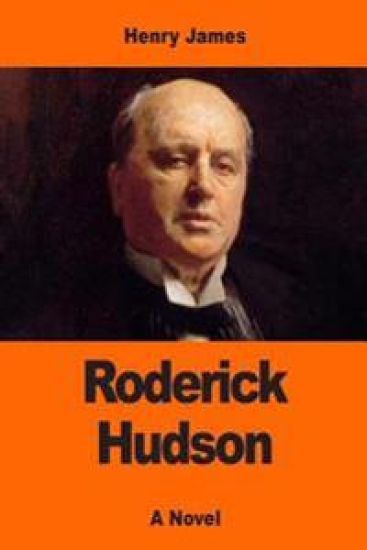
First published in 1875, this novel by best-selling author Henry James tells the story of a rich man who recognizes the talent in a small-town sculptor and takes him to Rome where he expects his prot g e to flourish under the influence of the Italian masters, which is indeed what he does, until the undermining appearance of beautiful but troublesome Christina Light turns the head of the young artist, who was engaged just prior to his departure for the continent, to the plain but interesting Mary Garland, to whom Rowland has also taken a shine, but remains silent as he is an honorable gentleman, and wonders how he can get Roderick to focus on his art once more, which works for a time but then things take a turn for the worse and off they go to Switzerland where there is some inclement weather...

If in Gramercy Park already, three hours after his arrival, he had felt himself, this victim, up to his neck in what I have called his "subject," the matter was quite beyond calculation by the time he had tumbled, in such a glorified "four-wheeler," and with such an odd consciousness of roughness superimposed upon smoothness, far down-town again, and, on the deck of a shining steamer bound for the Jersey shore, was taking all the breeze of the Bay.


The Turn of the Screw: Large Print Edition
Henry James
Createspace Independent Publishing Platform
2017
nidottu





"Olive will come down in about ten minutes; she told me to tell you that. About ten; that is exactly like Olive. Neither five nor fifteen, and yet not ten exactly, but either nine or eleven. She didn't tell me to say she was glad to see you, because she doesn't know whether she is or not, and she wouldn't for the world expose herself to telling a fib. She is very honest, is Olive Chancellor; she is full of rectitude. Nobody tells fibs in Boston; I don't know what to make of them all. Well, I am very glad to see you, at any rate." These words were spoken with much volubility by a fair, plump, smiling woman who entered a narrow drawing-room in which a visitor, kept waiting for a few moments, was already absorbed in a book. The gentleman had not even needed to sit down to become interested: apparently he had taken up the volume from a table as soon as he came in, and, standing there, after a single glance round the apartment, had lost himself in its pages. He threw it down at the approach of Mrs. Luna, laughed, shook hands with her, and said in answer to her last remark, "You imply that you do tell fibs. Perhaps that is one." "Oh no; there is nothing wonderful in my being glad to see you," Mrs. Luna rejoined, "when I tell you that I have been three long weeks in this unprevaricating city." "That has an unflattering sound for me," said the young man. "I pretend not to prevaricate."

A nameless narrator goes to Venice to find Juliana Bordereau, an old lover of Jeffrey Aspern, a famous and now dead American poet. The narrator presents himself to the old woman as a prospective lodger and is prepared to court her niece Miss Tita (renamed Miss Tina in later editions), a plain, somewhat naive spinster, in hopes of getting a look at some of Aspern's letters and other papers kept by Juliana. Miss Tita had denied the existence of any such papers in a letter to the narrator and his publishing partner, but he believes she was dissembling on instructions from Juliana. The narrator eventually discloses his intentions to Miss Tita, who promises to help him. Later, Juliana offers to sell a portrait miniature of Aspern to the narrator for an exorbitant price. She doesn't mention Jeffrey Aspern's name, but the narrator still believes she possesses some of his letters. When the old woman falls ill, the narrator ventures into her room and gets caught by Juliana as he is about to rifle her desk for the letters. Juliana calls the narrator a "publishing scoundrel" and collapses. The narrator flees, and when he returns some days later, he discovers that Juliana has died. Miss Tita hints that he can have the Aspern letters if he marries her. Again, the narrator flees. At first he feels he can never accept the proposal, but gradually he begins to change his mind. When he returns to see Miss Tita, she bids him farewell and tells him that she has burned all the letters one by one. The narrator never sees the precious papers, but he does send Miss Tita some money for the miniature portrait of Aspern that she gives him.


Annie "Daisy" Miller and Frederick Winterbourne first meet in Vevey, Switzerland, in a garden of the grand hotel where Winterbourne is allegedly vacationing from his studies (an attachment to an older lady is rumoured). They are introduced by Randolph Miller, Daisy's 9-year-old brother. Randolph considers their hometown of Schenectady, New York, to be absolutely superior to all of Europe. Daisy, however, is absolutely delighted with the continent, especially the high society she wishes to enter. Winterbourne is at first confused by her attitude, and though greatly impressed by her beauty, he soon determines that she is nothing more than a young flirt. He continues his pursuit of Daisy in spite of the disapproval of his aunt, Mrs. Costello, who spurns any family with so close a relationship to their courier as the Millers have with their Eugenio. She also thinks Daisy is a shameless girl for agreeing to visit the Ch teau de Chillon with Winterbourne after they have known each other for only half an hour. The next day, the two travel to Ch teau de Chillon and although Winterbourne had paid the janitor for privacy, Daisy is not quite impressed. Winterbourne then informs Daisy that he must go to Geneva the next day. Daisy feels disappointment and chaffs him, eventually asking him to visit her in Rome later that year. In Rome, Winterbourne and Daisy meet unexpectedly in the parlor of Mrs. Walker, an American expatriate. Her moral values have adapted to those of Italian society. Rumors about Daisy meeting with young Italian gentlemen make her socially exceptionable under these criteria. Winterbourne learns of Daisy's increasing intimacy with a young Italian of questionable society, Giovanelli, as well as the growing scandal caused by the pair's behavior. Daisy is undeterred by the open disapproval of the other Americans in Rome, and her mother seems quite unaware of the underlying tensions. Winterbourne and Mrs. Walker attempt to persuade Daisy to separate from Giovanelli, but she refuses any help that is offered. One night, Winterbourne takes a walk through the Colosseum and sees a young couple sitting at its center. He realizes that they are Giovanelli and Daisy. Winterbourne, infuriated with Giovanelli, asks him how he could dare to take Daisy to a place where she runs the risk of catching "Roman Fever". Daisy says she does not care and Winterbourne leaves them. Daisy falls ill and dies a few days later.