Kirjailija
Henry James
Kirjat ja teokset yhdessä paikassa: 3 438 kirjaa, julkaisuja vuosilta 1879–2027, suosituimpiin kuuluu The Wings of the Dove. Vertaile teosten hintoja ja tarkista saatavuus suomalaisista kirjakaupoista.
3 438 kirjaa
Kirjojen julkaisuvuodet: 1879–2027.

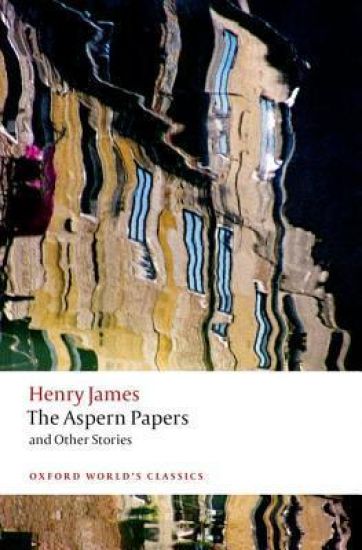
The Aspern Papers and Other Stories
Henry James
Oxford University Press
2013
nidottu
Halvin toimitettuna 17,90 €
'There's no baseness I wouldn't commit for Jeffrey Aspern's sake.' The poet Aspern, long since dead, has left behind some private papers. They are jealously guarded by an old lady, once his mistress and muse, a recluse in an old palazzo in Venice, tended by her ingenuous niece. A predatory critic is determined to seize them. What can he make of the younger woman? What are his motives? What are the papers worth and what is he prepared to pay? In all four stories collected here, including 'The Death of the Lion', 'The Figure in the Carpet', and 'The Birthplace', the figure of the artist is central. Extraordinarily prophetic, James explores the emergent new cult of the writer as celebrity, and asks, who cares about the work for itself? Can the man behind the artist ever truly be known, and does our knowledge explain the act of creativity? This new edition includes extracts from James's Prefaces and Notebooks which shed light on the genesis of the stories. ABOUT THE SERIES: For over 100 years Oxford World's Classics has made available the widest range of literature from around the globe. Each affordable volume reflects Oxford's commitment to scholarship, providing the most accurate text plus a wealth of other valuable features, including expert introductions by leading authorities, helpful notes to clarify the text, up-to-date bibliographies for further study, and much more.

The American Scene - Together with Three Essays from "Portraits of Places"
Henry James
READ BOOKS
2013
pokkari

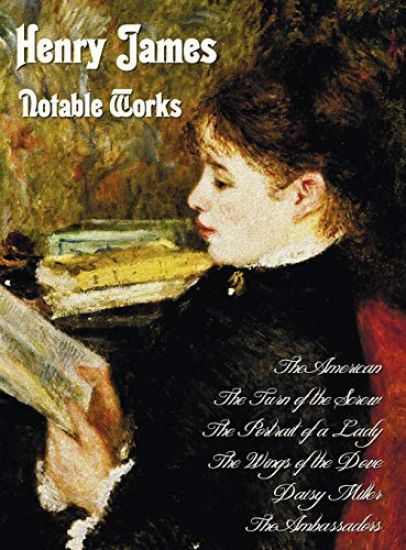
Henry James - Notable Works, Including (complete and Unabridged)
Henry James
BENEDICTION CLASSICS
2013
sidottu


The Sacred Fount byHenry James Writing to his friend William Dean Howells, James characterized The Sacred Fount, the only one of his novels to be told in the first person, as "a fine flight into the high fantastic." While traveling to the country house of Newmarch for a weekend party, the nameless narrator becomes obsessed with the idea that a person may become younger or cleverer by tapping the "sacred fount" of another person. Convinced that Grace Brissenden has become younger by drawing upon her husband, Guy, the narrator seeks to discover the source of the newfound wit of Gilbert Long, previously "a fine piece of human furniture." His perplexing and ambiguous quest, and the varying reactions it provokes from the other guests, calls into question the imaginative inquiry central to James's art of the novel. We are delighted to publish this classic book as part of our extensive Classic Library collection. Many of the books in our collection have been out of print for decades, and therefore have not been accessible to the general public. The aim of our publishing program is to facilitate rapid access to this vast reservoir of literature, and our view is that this is a significant literary work, which deserves to be brought back into print after many decades. The contents of the vast majority of titles in the Classic Library have been scanned from the original works. To ensure a high quality product, each title has been meticulously hand curated by our staff. Our philosophy has been guided by a desire to provide the reader with a book that is as close as possible to ownership of the original work. We hope that you will enjoy this wonderful classic work, and that for you it becomes an enriching experience.

Often overlooked by modern critics, The Reverberator was a departure from Henry James' immediately preceding novels, The Bostonians and The Princess Casamassima, returning to the popular 'international theme' of his earlier fiction. Its comedy of manners explores the conflicting values of American and Europeanized characters in the context of topical cultural concerns. Most notably, in its satire on popular journalism and an emerging mass-media through the scandal sheet 'The Reverberator', the novel dramatizes what James presciently saw as the 'devouring publicity' of modern life. This edition, based on the most reliable of the work's first book appearances (Macmillan, 1888), provides a thorough account of the novel's sources and composition, literary and historical contexts, and extensive revision for the New York Edition (1908), as well as extensive annotation. It will be of interest to James scholars, students of nineteenth-century Anglo-American literature and culture, and historians of journalism and new media.

The Awkward Age is a novel by Henry James, first published as a serial in Harper's Weekly in 1898 to 1899 and then as a book later in 1899. Originally conceived as a brief, light story about the complications created in her family's social set by a young girl coming of age, the novel expanded into a general treatment of decadence and corruption in English fin de si cle life. James presents the novel almost entirely in dialogue, an experiment that adds to the immediacy of the scenes but also creates serious ambiguities about characters and their motives.

What Maisie Knew represents one of James's finest reflections on the rites of passage from wonder to knowledge, and the question of their finality. The child of violently divorced parents, Maisie Farange opens her eyes on a distinctly modern world. Mothers and fathers keep changing their partners and names, while she herself becomes the pretext for all sorts of adult sexual intrigue. In this classic tale of the death of childhood, there is a savage comedy that owes much to Dickens. But for his portrayal of the child's capacity for intelligent wonder', James summons all the subtlety he devotes elsewhere to his most celebrated adult protagonists. Neglected and exploited by everyone around her, Maisie inspires James to dwell with extraordinary acuteness on the things that may pass between adult and child.

Early on the morrow Rowland received a visit from his new friend. Roderick was in a state of extreme exhilaration, tempered, however, by a certain amount of righteous wrath. He had had a domestic struggle, but he had remained master of the situation. He had shaken the dust of Mr. Striker's office from his feet." I had it out last night with my mother," he said. "I dreaded the scene, for she takes things terribly hard. She does n't scold nor storm, and she does n't argue nor insist. She sits with her eyes full of tears that never fall, and looks at me, when I displease her, as if I were a perfect monster of depravity. And the trouble is that I was born to displease her. She does n't trust me; she never has and she never will. I don't know what I have done to set her against me, but ever since I can remember I have been looked at with tears. The trouble is," he went on, giving a twist to his moustache, "I 've been too absurdly docile. I 've been sprawling all my days by the maternal fireside, and my dear mother has grown used to bullying me. I 've made myself cheap If I 'm not in my bed by eleven o'clock, the girl is sent out to explore with a lantern. When I think of it, I fairly despise my amiability. It 's rather a hard fate, to live like a saint and to pass for a sinner I should like for six months to lead Mrs. Hudson the life some fellows lead their mothers "

From one of the greatest novelists in the English language, Poor Richard is an early short story by Henry James exploring one man's growth and success alongside one woman's faithlessness. First published in 1867, Poor Richard is an engaging short story warning about the dangers and unreliability of women. Penniless and orphaned, Richard Maule seeks to make the wealthy Gertrude Whittaker his wife. As he chases the girl, Richard reforms his life and begins to make a success of himself. But will Gertrude see the changes he's making or will she continue to toy with various men's hearts? Henry James wrote this short story with influence from Benjamin Franklin's annual publication, Poor Richard's Almanack. The periodical was published between 1732 and 1758, and it collated various articles and columns, including practical tips, weather forecasts, and industry-related observations.