

Kirjailija
Henry James
Kirjat ja teokset yhdessä paikassa: 3 438 kirjaa, julkaisuja vuosilta 1879–2027, suosituimpiin kuuluu The Wings of the Dove. Vertaile teosten hintoja ja tarkista saatavuus suomalaisista kirjakaupoista.
3 438 kirjaa
Kirjojen julkaisuvuodet: 1879–2027.
It has long been the custom of the North German Lloyd steamers, which convey passengers from Bremen to New York, to anchor for several hours in the pleasant port of Southampton, where their human cargo receives many additions. An intelligent young German, Count Otto Vogelstein, hardly knew a few years ago whether to condemn this custom or approve it. He leaned over the bulwarks of the Donau as the American passengers crossed the plank-the travellers who embark at Southampton are mainly of that nationality-and curiously, indifferently, vaguely, through the smoke of his cigar, saw them absorbed in the huge capacity of the ship, where he had the agreeable consciousness that his own nest was comfortably made. To watch from such a point of vantage the struggles of those less fortunate than ourselves-of the uninformed, the unprovided, the belated, the bewildered-is an occupation not devoid of sweetness, and there was nothing to mitigate the complacency with which our young friend gave himself up to it; nothing, that is, save a natural benevolence which had not yet been extinguished by the consciousness of official greatness. For Count Vogelstein was official, as I think you would have seen from the straightness of his back, the lustre of his light elegant spectacles, and something discreet and diplomatic in the curve of his moustache, which looked as if it might well contribute to the principal function, as cynics say, of the lips-the active concealment of thought. He had been appointed to the secretaryship of the German legation at Washington and in these first days of the autumn was about to take possession of his post. He was a model character for such a purpose-serious civil ceremonious curious stiff, stuffed with knowledge and convinced that, as lately rearranged, the German Empire places in the most striking light the highest of all the possibilities of the greatest of all the peoples. He was quite aware, however, of the claims to economic and other consideration of the United States, and that this quarter of the globe offered a vast field for study.
Washington Square follows the coming-of-age of its plain-faced, kindhearted heroine, Catherine Sloper. Much to her father's vexation, a handsome opportunist named Morris Townsend woos the long-suffering heiress, intent on claiming her fortune. When Catherine stubbornly refuses to call off her engagement, Dr. Sloper forces Catherine to choose between her inheritance and the only man she will ever truly love.
"The Golden Bowl" is a 1904 novel by Henry James. Set in England, this complex, intense study of marriage and adultery completes what some critics have called the "major phase" of James's career. The Golden Bowl explores the tangle of interrelationships between a father and daughter and their respective spouses. The novel focuses deeply and almost exclusively on the consciousness of the central characters, with sometimes obsessive detail but also with powerful insight. Prince Amerigo, an impoverished but charismatic Italian nobleman, is in London for his marriage to Maggie Verver, only child of the widower Adam Verver, the fabulously wealthy American financier and art collector. While there, he re-encounters Charlotte Stant, another young American and a former mistress from his days in Rome; they had met in Mrs. Assingham's drawing room. Charlotte is not wealthy, which is one reason they did not marry. Although Maggie and Charlotte have been dear friends since childhood, Maggie does not know of Charlotte and Amerigo's past relationship. Charlotte and Amerigo go shopping together for a wedding present for Maggie. They find a curiosity shop where the shopkeeper offers them an antique gilded crystal bowl. The Prince declines to purchase it, as he suspects it contains a hidden flaw. After Maggie has married, afraid that her father has become lonely, as they had been close for years, she persuades him to propose to Charlotte, who accepts Adam's proposal. Soon after the wedding, Charlotte and Amerigo are thrown together, because their respective spouses seem more interested in their father-daughter relationship than in their marriages. Amerigo and Charlotte finally consummate an adulterous affair. Maggie begins to suspect the pair. She happens to go to the same shop and buys the golden bowl they had rejected. Regretting the high price he has charged her, the shopkeeper visits Maggie and confesses to overcharging. At her home, he sees photographs of Amerigo and Charlotte. He tells Maggie of the pair's shopping trip on the eve of her marriage and their intimate conversation in his shop. (They had spoken Italian, but he understands the language.) Maggie confronts Amerigo. She begins a secret campaign to separate him and Charlotte while never revealing their affair to her father. Also concealing her knowledge from Charlotte and denying any change to their friendship, she gradually persuades her father to return to America with his wife. After previously regarding Maggie as a na ve, immature American, the Prince seems impressed by his wife's delicate diplomacy. The novel ends with Adam and Charlotte Verver about to depart for the United States. Amerigo says he can "see nothing but" Maggie and embraces her...

After the young woman in the glass cage had held up to him across her counter the pale-pink leaflet bearing his friend's name, which she neatly pronounced, he turned away to find himself, in the hall, facing a lady who met his eyes as with an intention suddenly determined, and whose features-not freshly young, not markedly fine, but on happy terms with each other-came back to him as from a recent vision. For a moment they stood confronted; then the moment placed her: he had noticed her the day before, noticed her at his previous inn, where-again in the hall-she had been briefly engaged with some people of his own ship's company. Nothing had actually passed between them, and he would as little have been able to say what had been the sign of her face for him on the first occasion as to name the ground of his present recognition. Recognition at any rate appeared to prevail on her own side as well-which would only have added to the mystery. All she now began by saying to him nevertheless was that, having chanced to catch his enquiry, she was moved to ask, by his leave, if it were possibly a question of Mr. Waymarsh of Milrose Connecticut-Mr. Waymarsh the American lawyer." Oh yes," he replied, "my very well-known friend. He's to meet me here, coming up from Malvern, and I supposed he'd already have arrived. But he doesn't come till later, and I'm relieved not to have kept him. Do you know him?" Strether wound up.
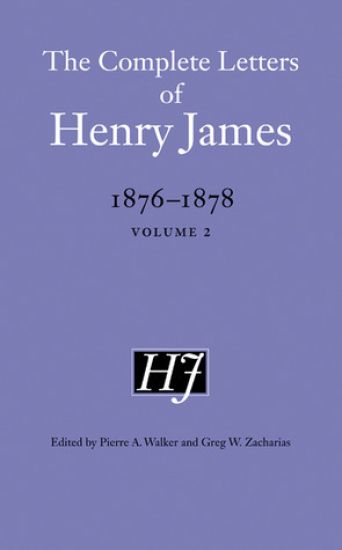
The Complete Letters of Henry James, 1876–1878
Henry James
University of Nebraska Press
2013
sidottu
Recipient of the “Approved Edition” seal from the Modern Language Association’s Committee on Scholarly Editions This critical and scholarly edition presents the complete letters of Henry James, one of the great novelists and letter writers of the English language. Comprising more than ten thousand letters and addressing a remarkably wide range of topics, this edition is an indispensable resource for students and scholars of James, of the European novel and modern literature, and of American and English literature, culture, and criticism. This volume contains letters written from December 21, 1877, to September 29, 1878, when, having settled comfortably into London life, James finished preparing the foundation for the career that would define his reputation as a critic and fiction writer. During this time James published Daisy Miller and The Europeans as well as other fiction, reviews, and cultural criticism.


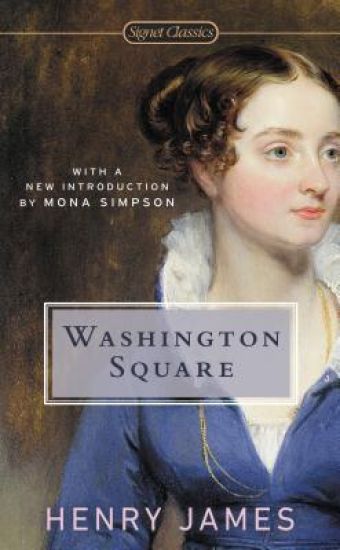
Back when New York was still young, so was heiress Catherine Sloper. A simple, plain girl, she grew up in opulence with a disappointed father and a fluttery aunt in a grand house on Washington Square. Enter Morris Townsend, a handsome charmer who assures Catherine he loves her for herself and not for her money. But Catherine's revered father sees in Townsend what she cannot. Now, with her tearful aunt Penniman as his amusingly melodramatic ally, Townsend will present Catherine with the hardest choice of her young life.... With a New Introduction and an Afterword by Michael Cunningham, Author of The Hours

Washington Square follows the coming-of-age of its plain-faced, kindhearted heroine, Catherine Sloper. Much to her father's vexation, a handsome opportunist named Morris Townsend woos the long-suffering heiress, intent on claiming her fortune. When Catherine stubbornly refuses to call off her engagement, Dr. Sloper forces Catherine to choose between her inheritance and the only man she will ever truly love.

After the young woman in the glass cage had held up to him across her counter the pale-pink leaflet bearing his friend's name, which she neatly pronounced, he turned away to find himself, in the hall, facing a lady who met his eyes as with an intention suddenly determined, and whose features-not freshly young, not markedly fine, but on happy terms with each other-came back to him as from a recent vision. For a moment they stood confronted; then the moment placed her: he had noticed her the day before, noticed her at his previous inn, where-again in the hall-she had been briefly engaged with some people of his own ship's company. Nothing had actually passed between them, and he would as little have been able to say what had been the sign of her face for him on the first occasion as to name the ground of his present recognition. Recognition at any rate appeared to prevail on her own side as well-which would only have added to the mystery. All she now began by saying to him nevertheless was that, having chanced to catch his enquiry, she was moved to ask, by his leave, if it were possibly a question of Mr. Waymarsh of Milrose Connecticut-Mr. Waymarsh the American lawyer." Oh yes," he replied, "my very well-known friend. He's to meet me here, coming up from Malvern, and I supposed he'd already have arrived. But he doesn't come till later, and I'm relieved not to have kept him. Do you know him?" Strether wound up.
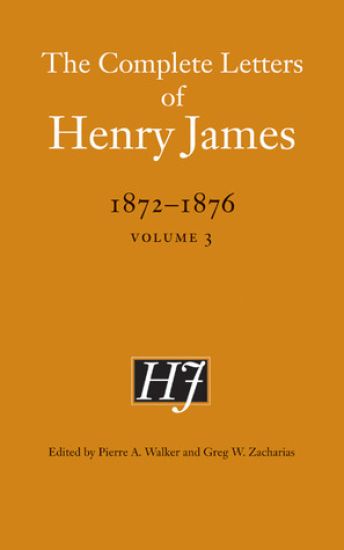
The Complete Letters of Henry James, 1872–1876
Henry James
University of Nebraska Press
2011
sidottu
Recipient of the “Approved Edition” seal from the Modern Language Association’s Committee on Scholarly EditionsThe Complete Letters of Henry James fills a gap in literary studies today by presenting in a critical and scholarly edition the complete letters of one of the great novelists and letter writers of the English language. Comprising more than ten thousand letters and addressing a remarkably wide range of topics, this edition is an indispensable resource for students and scholars of James, the European novel and modern literature, and of American and English literature, culture, and criticism. Written between November 1875 and November 1876, the letters in this volume find James settling in Paris; befriending Ivan Turgenev and mixing company with writers such as Gustave Flaubert, Emile Zola, and Alphonse Daudet; publishing travel essays and critical notices as well as the novels Roderick Hudson and The American; leaving Paris and settling in London, where he would live for much of the rest of his life.
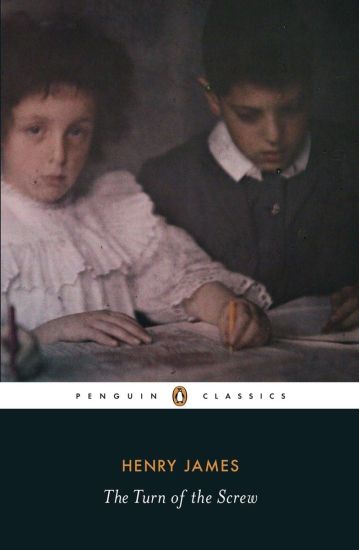
'A most wonderful, lurid, poisonous little tale' Oscar WildeThe Turn of the Screw, James's great masterpiece of haunting atmosphere and unbearable tension, tells of a young governess sent to a country house to take charge of two orphans, Miles and Flora. Unsettled by a dark foreboding of menace within the house, she soon comes to believe that something, or someone, malevolent is stalking the children in her care. Is the threat to her young charges really a malign and ghostly presence, or a manifestation of something else entirely? Edited and with an Introduction and Notes by David Bromwich Series Editor: Philip Horne

This classic novel, originally published as a serial in "Cornhill Magaine" and "Harper's New Monthly Magaine," tells the story of the struggles between a daughter and her intelligent, controlling father from the viewpoint of an unnamed narrator. This book is often compared to Jane Austen's works for the clearness of its prose and its extreme concentration on human troubled relationships. Henry James tells the story of Catherine Sloper, plain and obedient, daughter of the widowed, well-to-do Dr. August Sloper of Washington Square. When a handsome, incompetent man-about-town proposes to Catherine, her father forbids the marriage because he believes the man to be after Catherine's fortune and future inheritance. The conflict between father, daughter, and suitor provokes consequences in the lives of all three that make this story one of James's most piercingly memorable. The inspiration for James's "Washington Square" came from a tale about a jilted heiress, which James heard from the actress Fanny Kemble. The novel provides a social portrait of Washington Square and lower Manhattan during the late nineteenth century and remains a memorable work--one featured in several films. Henry James (1843-1916), American novelist and critic, was an innovator in technique and a distinctive prose stylist. More than any previous writer, James refined the technique of narrating a novel from the point of view of a character, thereby laying the foundations of modern stream-of-consciousness fiction. Among his many acclaimed novels are The Portrait of a Lady, The Ambassadors, The Golden Bowl, and The Wings of the Dove.

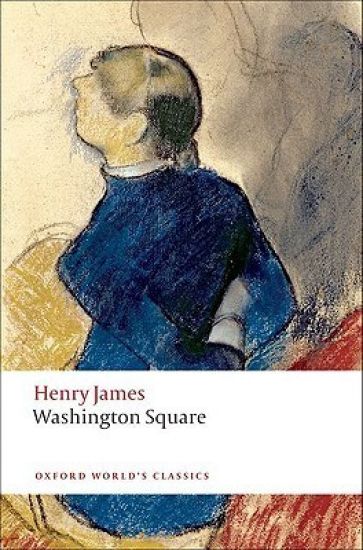
'She will do as I have bidden her.' Catherine Sloper is heiress to a fortune and the social eminence associated with Washington Square. She attracts the attention of a good-looking but penniless young man, Morris Townsend. His suit is encouraged by Catherine's romantically-minded aunt, Mrs Penniman, but her father, a clever physician, is convinced that his motives are merely mercenary. He will not consent to the marriage, regardless of the cost to his daughter. Out of this classic confrontation Henry James fashioned one of his most deftly searching shorter fictions. First published in 1880 but set some forty years earlier in a pre-Civil War New York, the novel reflects ironically on the restricted world in which its heroine is marooned, seating herself at its close 'for life, as it were'. In his introduction Adrian Poole reflects on the book's gestation and influences, the significance of place, and the insight with which the four prinicipal players are drawn. The edition includes an account of the real-life tale that sparked James's imaginative genius. ABOUT THE SERIES: For over 100 years Oxford World's Classics has made available the widest range of literature from around the globe. Each affordable volume reflects Oxford's commitment to scholarship, providing the most accurate text plus a wealth of other valuable features, including expert introductions by leading authorities, helpful notes to clarify the text, up-to-date bibliographies for further study, and much more.