Kirjojen hintavertailu – 12 859 827 kirjaa ja 27 kauppaa
Kirjailija
Henry James
Kirjat ja teokset yhdessä paikassa: 3 438 kirjaa, julkaisuja vuosilta 1879–2027, suosituimpiin kuuluu The Wings of the Dove. Vertaile teosten hintoja ja tarkista saatavuus suomalaisista kirjakaupoista.
This finely crafted novella from fiction master Henry James combines several themes from James' body of work: the clash of cultures between Europe and America, an uncanny encounter with a doppelganger, and a pervasive sense of unease and ambiguity. After living abroad for decades, American Spencer Brydon returns to his native New York to take care of some business dealings, but he soon succumbs to an obsessive preoccupation with his past life.
Like many of Henry James' short stories, The Figure in the Carpet revolves around an artist whose body of work hides a deeper meaning and several other characters who bear the heavy burden of a momentous secret. When a group of friends unlocks the true significance of a misunderstood novelist's oeuvre, the weight of this knowledge bears unforeseen-and terrible-consequences.
In the almost-novella-length short story The Death of the Lion, literary giant Henry James pokes sardonic fun at the vagaries of literary fame. The author at the center of the tale, one Neil Paraday, is gushingly praised by the newspapers and journals-but very few of his admirers seem to have actually read his work. It's a thought-provoking look at the celebrity culture of the turn of the twentieth century.
A short time ago, I was favored with a flying visit from my young friend Eustace Bright, whom I had not before met with since quitting the breezy mountains of Berkshire. It being the winter vacation at his college, Eustace was allowing himself a little relaxation, in the hope, he told me, of repairing the inroads which severe application to study had made upon his health; and I was happy to conclude, from the excellent physical condition in which I saw him, that the remedy had already been attended with very desirable success. He had now run up from Boston by the noon train, partly impelled by the friendly regard with which he is pleased to honor me, and partly, as I soon found, on a matter of literary business. It delighted me to receive Mr. Bright, for the first time, under a roof, though a very humble one, which I could really call my own. Nor did I fail (as is the custom of landed proprietors all about the world) to parade the poor fellow up and down over my half a dozen acres; secretly rejoicing, nevertheless, that the disarray of the inclement season, and particularly the six inches of snow then upon the ground, prevented him from observing the ragged neglect of soil and shrubbery into which the place had lapsed. It was idle, however, to imagine that an airy guest from Monument Mountain, Bald Summit, and old Graylock, shaggy with primeval forests, could see anything to admire in my poor little hillside, with its growth of frail and insect-eaten locust trees. Eustace very frankly called the view from my hill top tame; and so, no doubt, it was, after rough, broken, rugged, headlong Berkshire, and especially the northern parts of the county, with which his college residence had made him familiar. But to me there is a peculiar, quiet charm in these broad meadows and gentle eminences. They are better than mountains, because they do not stamp and stereotype themselves into the brain, and thus grow wearisome with the same strong impression, repeated day after day. A few summer weeks among mountains, a lifetime among green meadows and placid slopes, with outlines forever new, because continually fading out of the memory-such would be my sober choice.
On a brilliant day in May, in the year 1868, a gentleman was reclining at his ease on the great circular divan which at that period occupied the centre of the Salon Carre, in the Museum of the Louvre. This commodious ottoman has since been removed, to the extreme regret of all weak-kneed lovers of the fine arts, but the gentleman in question had taken serene possession of its softest spot, and, with his head thrown back and his legs outstretched, was staring at Murillo's beautiful moon-borne Madonna in profound enjoyment of his posture. He had removed his hat, and flung down beside him a little red guide-book and an opera-glass. The day was warm; he was heated with walking, and he repeatedly passed his handkerchief over his forehead, with a somewhat wearied gesture. And yet he was evidently not a man to whom fatigue was familiar; long, lean, and muscular, he suggested the sort of vigor that is commonly known as "toughness.
The Aspern Papers is a novella written by Henry James, originally published in The Atlantic Monthly in 1888, with its first book publication later in the same year. One of James's best-known and most acclaimed longer tales, The Aspern Papers is based on the letters Percy Bysshe Shelley wrote to Mary Shelley's stepsister, Claire Clairmont, who saved them until she died. Set in Venice, The Aspern Papers demonstrates James's ability to generate suspense while never neglecting the development of his characters.
A Passionate Pilgrim is a novella by Henry James, first published in The Atlantic Monthly in 1871. The story was the earliest fiction that James included in the New York Edition (1907-09) of his works. Set in England, the tale shows James' strong interest in the contrast between the Old World and the New. In fact, the difference between America and Europe erupts into open conflict in the story, which leads to an ironic ending.
Madame de Mauves is a novella by Henry James, originally published in The Galaxy magazine in 1874. The story centers on the troubled marriage of a scrupulous American wife and a far from scrupulous French husband, and is told mostly from the point of view of a male friend of the wife. The tale reflects the intense interest James took in the "international theme," especially early in his career. One of the longest fictions he had yet attempted, the smoothly narrated story shows that James was rapidly maturing in style and technique.
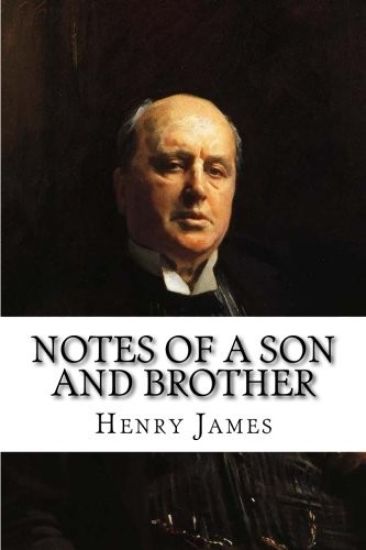
Notes of a Son and Brother is an autobiography by Henry James published in 1914. The book covers James' early manhood and tells of "the obscure hurt" that kept him out of the Civil War, his first efforts at writing fiction, and the early death of his beloved cousin, Minny Temple, from tuberculosis.
The Tragic Muse, novel by Henry James, published serially in The Atlantic Monthly from 1889 to 1890 and in book form in 1890. This study of the conflict between the demands of art and those of the "real world" is set in London and Paris in the 1880s. Nicholas Dormer, an Englishman, gives up a career in Parliament and marriage to a beautiful, wealthy woman to become a portrait painter. He is encouraged by his actress friend Miriam Rooth, the "tragic muse" of the title. Although by the end of the novel Nicholas has still not achieved his goal, James implies that he made the right decision in choosing to live at a higher level of consciousness, whether or not he achieves material success. Written when James himself was suffering setbacks in his career as a playwright, the novel reflects many of the author's concerns about personal sacrifice for the sake of art.
Rose Tramore, the quietly persistent young woman at the center of Henry James' novella The Chaperon, is every bit as memorable a literary creation as James' Daisy Miller, though she is that character's opposite in many ways. In the aftermath of her mother's bitter divorce, Rose helps her shattered family pick up the pieces and carry on.
First published in 1886, The Bostonians is one of James' wittiest social satires. It begins with the arrival in Boston of Basil Ransom, in search of a career. The book turns on the relationship between Ransom, a conservative civil war veteran, his feminist cousin Olive Chancellor, and Verena Tarrant, a newcomer to their circle whose affections are sought by both Olive and Basil. James' ambivalence towards the reformist movement is made plain in this novel, which is crowded with eccentric and colourful characters. The narrative moves us in turns to sneer at the Boston reformers and to sympathise with Olive as she struggles to keep the reformist flame burning in her protege's heart.
Often regarded as one of the most important literary figures of his era, American-born author Henry James possessed a unique knack for describing the idiosyncrasies of dysfunctional families. The Ambient family at the center of the novella The Author of Beltraffio ranks among his most compelling creations. The patriarch Mark Ambient is an acclaimed novelist whose wife strongly disapproves of his work. Will this discordance bring the family to its knees?
Explore timeless questions about spirituality, love, remembrance, and mortality with this tale from the pen of Henry James, a master of psychological suspense fiction. The two protagonists featured in The Altar of the Dead have dedicated their lives to remembering those who have passed on from this world, but find that honoring the dead can make living one's own life to the fullest a challenge.
In this thoughtful collection of essays, published in 1893, James offers his critique on the art of illustration as he pens incisive profiles of several artists. The work is best known for James's influential essay on John Singer Sargent, whose art work James found "astonishing," and for his revealing essay on Honor Daumier, which did much to elevate Daumier's reputation as a serious artist.
The second volume of Henry James's autobiography, Notes of a Son and Brother, was completed just a few months before his death. Here, James covers the time of the Civil War, discusses his early adulthood, his first efforts at writing fiction, and the death of his beloved cousin, Minny Temple. A moving and insightful book.
In this tale from prominent nineteenth-century literary realist Henry James, an effort to resuscitate a foundering theatrical work serves as the backdrop for a burgeoning love triangle between the playwright, the lead actress, and the playwright's married confidante and mentor.
Rich American Longmore has been in Saint Germain for six months when his fellow American acquaintance Mrs Draper introduces him to Madame Euphemia de Mauves.
Because he's ranked among the most important American writers, many readers shy away from Henry James' work, assuming that it will be arduous and overly challenging. If you're in that camp, you'll be pleasantly surprised by this engaging and accessible Confidence, a tale of romantic entanglements that shift over time but ultimately fall into place.
American author Henry James is regarded as one of the foremost figures in the genre that some critics call "trans-Atlantic" literature. His fiction often explores the tension between traditional European values and the brash, assertive national character of America. This epistolary novella captures the impressions of American visitors in Europe in a series of letters.