Kirjojen hintavertailu – 12 859 827 kirjaa ja 27 kauppaa
Kirjailija
Henry James
Kirjat ja teokset yhdessä paikassa: 3 438 kirjaa, julkaisuja vuosilta 1879–2027, suosituimpiin kuuluu The Wings of the Dove. Vertaile teosten hintoja ja tarkista saatavuus suomalaisista kirjakaupoista.
The Portrait of a Lady is perhaps Henry James' greatest novel. It tells the story of Isabel Archer, a young American heiress who "affronts her destiny". Dealing with one of James' recurrent themes, the American in Europe, and the differences between the two cultures, The Portrait of a Lady is a tale of the conspiracy to separate Isabel from her fortune and the value of autonomy and accountability.
Sharing a title with one of his own short stories, The Middle Years is the uncompleted third volume of memoirs from the American master of literary realism Henry James. He had previously published A Small Boy, about his childhood, and Notes of a Son and Brother, about his youth and young adulthood, but ultimately was unable to finish The Middle Years before his death in 1916.
American author Henry James often grappled with weighty topics in his work, and the story The Madonna of the Future-longer than a typical short story, but shorter than a novella-is no exception. Framed as an anecdote related among a group of men engaged in post-dinner chitchat, the story deals with an artist whose outsize ambitions and perfectionism have frozen him in a kind of creative paralysis. It's a profoundly thought-provoking tale that prompts important questions about the role of art in the world.
Young author Paul Overt arrives at a country house weekend summer party hoping to meet the celebrated writer Henry St George. He is slightly shocked by his wife Mrs St George, who announces that she once made her husband burn a 'bad' book. Overt believes he can recognise literary and artistic 'types', and is surprised that St George looks so conventional. St George has also not written anything of merit for quite some time.
Written during his convalescence as James recovered from an illness, the stories collected in The Finer Grain embody the strengths of the author's late period. Though not quite as hauntingly complex as novels such as The Portrait of a Lady or The Wings of the Dove, these shorter pieces stand as a testament to Henry James' significance as a major literary force in the late-nineteenth and early-twentieth centuries.
Henry James, the nineteenth-century American writer who was lauded for his skill with insightful, elegantly styled prose, was fascinated by the differences between Americans and their European counterparts. This theme was a feature of many of his works, including the novella The Europeans. In this text, James takes a comic approach to highlighting the stark contrasts between the two cultures.
Tortured artist and brilliant conversationalist Frank Saltram has made a splash among the fashionable set in Wimbledon, and all of the society matrons are vying for his favor and lining up to offer their guest rooms to him. But is this self-styled philosopher all that he pretends to be?
Henry James, OM was an American author regarded as a key transitional figure between literary realism and literary modernism, and is considered by many to be among the greatest novelists in the English language.
The Aspern Papers is a novella set in Venice. A young man travels to the city and takes lodgings with an old woman-the former lover of the dead American poet Aspern. The man believes the old woman still has some letters from Aspern and he ingratiates himself with her niece in an attempt to find them. Suspense builds around the motives and actions of James' masterfully drawn characters.
The American by renowned novelist Henry James offers readers a fascinating glimpse into the differences - and, though less pronounced - the similarities between American culture and European culture. Regarded as one of the most important American writers of his era, James' deft juxtaposition of these two cultural traditions - set against the backdrop of a subtly nuanced love story - will delight fans of literary fiction.
A down-on-his-luck writer makes an impulsive decision to buy a secondhand desk, and in its nooks and crannies, he finds a cache of secret documents that contain explosive secrets that could besmirch the legacy of a prominent politician. Will he leverage his findings to make an easy buck?
In the spa town of Homburg, an un-named narrator meets Louisa Pallant, a former inamorata, and Linda, her pretty young daughter. Louisa formerly rejected him in favour of Mr Henry Pallant, who has since died, leaving her short of money. Although the narrator claims to be glad to have escaped his commitment to her, he also blames her for his having remained a bachelor ever since.
A narrow grave-yard in the heart of a bustling, indifferent city, seen from the windows of a gloomy-looking inn, is at no time an object of enlivening suggestion; and the spectacle is not at its best when the mouldy tombstones and funereal umbrage have received the ineffectual refreshment of a dull, moist snow-fall. If, while the air is thickened by this frosty drizzle, the calendar should happen to indicate that the blessed vernal season is already six weeks old, it will be admitted that no depressing influence is absent from the scene. This fact was keenly felt on a certain 12th of May, upwards of thirty years since, by a lady who stood looking out of one of the windows of the best hotel in the ancient city of Boston. She had stood there for half an hour-stood there, that is, at intervals; for from time to time she turned back into the room and measured its length with a restless step. In the chimney-place was a red-hot fire which emitted a small blue flame; and in front of the fire, at a table, sat a young man who was busily plying a pencil. He had a number of sheets of paper cut into small equal squares, and he was apparently covering them with pictorial designs-strange-looking figures. He worked rapidly and attentively, sometimes threw back his head and held out his drawing at arm's-length, and kept up a soft, gay-sounding humming and whistling. The lady brushed past him in her walk; her much-trimmed skirts were voluminous. She never dropped her eyes upon his work; she only turned them, occasionally, as she passed, to a mirror suspended above the toilet-table on the other side of the room. Here she paused a moment, gave a pinch to her waist with her two hands, or raised these members-they were very plump and pretty-to the multifold braids of her hair, with a movement half caressing, half corrective. An attentive observer might have fancied that during these periods of desultory self-inspection her face forgot its melancholy; but as soon as she neared the window again it began to proclaim that she was a very ill-pleased woman. And indeed, in what met her eyes there was little to be pleased with. The window-panes were battered by the sleet; the head-stones in the grave-yard beneath seemed to be holding themselves askance to keep it out of their faces.
What is the true function of the artist in society? Do fame and acclaim help or hinder the artist's pursuit of creative expression? These are the timeless questions underpinning this classic novel from American literary legend Henry James. The story follows the parallel career trajectories of two artists: Nick Dormer, who is trying to juggle both a political career and his love of painting, and Miriam Rooth, an ambitious young actress who will do anything to achieve success.
The Europeans: A sketch is a short novel by Henry James, published in 1878. It is essentially a comedy contrasting the behaviour and attitudes of two visitors from Europe with those of their relatives living in the 'new' world of New England. The novel first appeared as a serial in The Atlantic Monthly for July-October 1878. James made numerous minor revisions for the first book publication.
Get acquainted with the work of one of the most accomplished practitioners of literary realism, Henry James, in this collection of tales. In "Flickerbridge," an American recuperating in the home of an English relative falls in love with the unfamiliar cultural setting; In "Mrs. Medwin," a social mover and shaker uses what some might see as a liability to her advantage.
Henry James' final novel, The Outcry is a light comedy that will come as a pleasant surprise to readers who associate the author's name with the dense, philosophically inclined fiction of his middle period. Originally written for the stage, the story focuses on one British family's attempt to get out of debt by selling a treasure trove of historically significant artworks to foreign collectors.
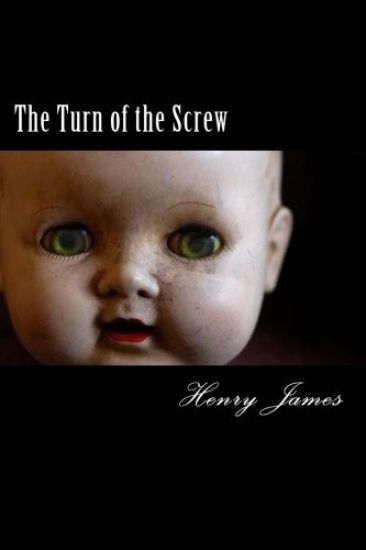
The Turn of the Screw, originally published in 1898, is a novella written by Henry James. An unnamed narrator listens to Douglas, a friend, read a manuscript written by a former governess whom Douglas claims to have known and who is now dead. The manuscript tells the story of how the young governess is hired by a man who has become responsible for his young nephew and niece after the deaths of their parents. He lives mainly in London but also has a country house, Bly. He is uninterested in raising the children.
Madame de Mauves is a novella by Henry James, originally published in The Galaxy magazine in 1874. The story centers on the troubled marriage of a scrupulous American wife and a far from scrupulous French husband, and is told mostly from the point of view of a male friend of the wife. The tale reflects the intense interest James took in the "international theme," especially early in his career.
Elderly Americans Dexter Freer and his wife sit in Hyde Park, discussing the marriage prospects of their fellow countryman Jackson Lemon with a young doctor Sydney Feeder.