
Kirjailija
Herbert Spencer
Kirjat ja teokset yhdessä paikassa: 433 kirjaa, julkaisuja vuosilta 1884–2026, suosituimpiin kuuluu Herbert Spencer. Vertaile teosten hintoja ja tarkista saatavuus suomalaisista kirjakaupoista.
433 kirjaa
Kirjojen julkaisuvuodet: 1884–2026.
The Origin of Music
Waldo S. Pratt; Herbert Spencer
Createspace Independent Publishing Platform
2016
nidottu
- The Origin of Music - "The hypothesis that music had its origin in the amatory sounds made by the male to charm the female, has the support of the popular idea that the singing of birds constitutes a kind of courtship-an idea adopted by Mr. Darwin when he says that "the male pours forth his full volume of song, in rivalry with other males, for the sake of captivating the female."...
The Development of Political Institutions
Herbert Spencer
Createspace Independent Publishing Platform
2016
nidottu
Essais de Morale, de Science Et d'Esthétique. Essais Scientifiques
Herbert Spencer
Hachette Livre - BNF
2016
pokkari
Essais de Morale, de Science Et d'Esthétique. Essais Sur Le Progrès
Herbert Spencer
Hachette Livre - BNF
2016
pokkari
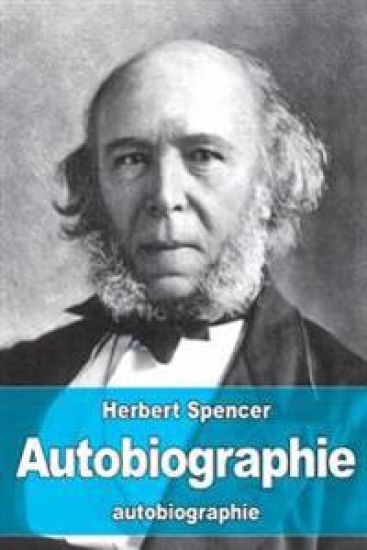
Autobiographie: Naissance de l'évolutionisme libéral
Herbert Spencer
Createspace Independent Publishing Platform
2016
nidottu
Connu comme l'un des principaux d fenseurs de la th orie de l' volution au XIXe si cle, la r putation de Spencer l' poque rivalisait avec celle de Charles Darwin. Darwin n'appr ciait ni le personnage, ni ses id es. Spencer a impos le terme d' volution et est l'auteur de l'expression s lection des plus aptes, qu'il mettait en rapport avec la s lection naturelle de Darwin. Il a notamment tudi l'extension de cette notion des domaines comme la philosophie, la psychologie et la sociologie, dont il est reconnu comme l'un des fondateurs. Sa th orie fut appel e post rieurement darwinisme social, ou encore th orie organiciste . Comme de nombreux auteurs avant et apr s lui, Spencer consid rait la soci t comme un organisme vivant ou une supra-organisation. Cependant, la sociologie va beaucoup plus loin et fait des lois de la nature comme la s lection naturelle une loi de l' volution des soci t s. Ses recherches visaient d couvrir les lois d' volution de la soci t en se basant sur celles des esp ces. Sa pens e se construit ainsi selon des conceptions volutionnistes et r ductionnistes. Spencer fait de l'histoire des soci t s une histoire lin aire (non dialectique) de la nature. Pour lui, la soci t passe en plusieurs tapes d'un stade primitif o tout est homog ne et simple un stade labor , caract ris par la sp cificit , la diff renciation, l'h t rog n it .


" Comment se fait-il que les lib raux aient perdu de vue cette v rit ? Comment se fait-il que le parti lib ral, ayant une part de plus en plus grande au pouvoir, soit devenu de plus en plus coercitif dans ses mesures l gislatives ? Comment se fait-il que, soit directement par ses propres majorit s, soit indirectement par le concours pr t dans certains cas aux majorit s de ses adversaires, le parti lib ral ait, dans une large mesure, adopt la politique de dicter les actions des citoyens et, par cons ¬quent, de diminuer le domaine dans lequel ces actions restaient libres ? Comment pouvons-nous expliquer cette confusion d'id es qui l'a amen , dans la recherche de ce qui semble tre le bien public, renverser la m thode qui l'a aid dans les temps pass s accomplir le bien public?"
Philosophy of style, an essay
Herbert Spencer
Createspace Independent Publishing Platform
2015
nidottu
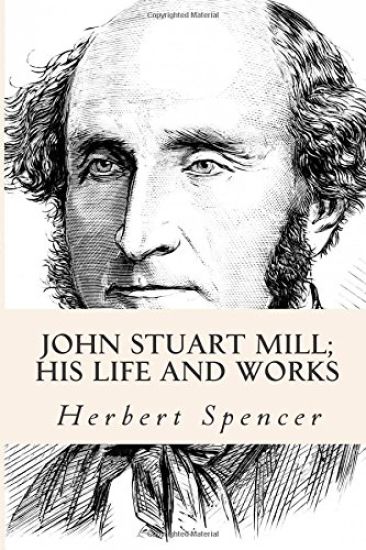
John Stuart Mill; His Life and Works
Herbert Spencer
Createspace Independent Publishing Platform
2015
nidottu
John Stuart Mill; His Life and Works is a classic biography of the great English philosopher by Herbert Spencer. John Stuart Mill (20 May 1806 - 8 May 1873) was a British philosopher, political economist and civil servant. One of the most influential thinkers in the history of liberalism, he contributed widely to social theory, political theory and political economy. Dubbed "the most influential English-speaking philosopher of the nineteenth century", Mill's conception of liberty justified the freedom of the individual in opposition to unlimited state and social control. Mill was a proponent of utilitarianism, an ethical theory developed by his predecessor Jeremy Bentham. He contributed to the investigation of scientific methodology, though his knowledge of the topic was based on the writings of others, notably William Whewell, John Herschel and Auguste Comte, and research carried out for Mill by Alexander Bain. Mill engaged in written debate with Whewell. A member of the Liberal Party, he was also the first Member of Parliament to call for women's suffrage. John Stuart Mill was born at 13 Rodney Street in Pentonville, Middlesex, the eldest son of the Scottish philosopher, historian and economist James Mill, and Harriet Burrow. John Stuart was educated by his father, with the advice and assistance of Jeremy Bentham and Francis Place. He was given an extremely rigorous upbringing, and was deliberately shielded from association with children his own age other than his siblings. His father, a follower of Bentham and an adherent of associationism, had as his explicit aim to create a genius intellect that would carry on the cause of utilitarianism and its implementation after he and Bentham had died. Mill was a notably precocious child. He describes his education in his autobiography. At the age of three he was taught Greek. 11] By the age of eight, he had read Aesop's Fables, Xenophon's Anabasis, 11] and the whole of Herodotus, 11] and was acquainted with Lucian, Diogenes La rtius, Isocrates and six dialogues of Plato. 11] He had also read a great deal of history in English and had been taught arithmetic, physics and astronomy. At the age of eight, Mill began studying Latin, the works of Euclid, and algebra, and was appointed schoolmaster to the younger children of the family. His main reading was still history, but he went through all the commonly taught Latin and Greek authors and by the age of ten could read Plato and Demosthenes with ease. His father also thought that it was important for Mill to study and compose poetry. One of Mill's earliest poetic compositions was a continuation of the Iliad. In his spare time he also enjoyed reading about natural sciences and popular novels, such as Don Quixote and Robinson Crusoe. His father's work, The History of British India was published in 1818; immediately thereafter, at about the age of twelve, Mill began a thorough study of the scholastic logic, at the same time reading Aristotle's logical treatises in the original language. In the following year he was introduced to political economy and studied Adam Smith and David Ricardo with his father, ultimately completing their classical economic view of factors of production. Mill's comptes rendus of his daily economy lessons helped his father in writing Elements of Political Economy in 1821, a textbook to promote the ideas of Ricardian economics; however, the book lacked popular support. 12] Ricardo, who was a close friend of his father, used to invite the young Mill to his house for a walk in order to talk about political economy.
The Factors of Organic Evolution
Herbert Spencer
Createspace Independent Publishing Platform
2015
nidottu


The Right to Ignore the State
Herbert Spencer
Createspace Independent Publishing Platform
2015
nidottu

Scientific Political and Speculative Essays Volume I
Herbert Spencer
Createspace Independent Publishing Platform
2015
nidottu