Kirjojen hintavertailu – 12 859 818 kirjaa ja 27 kauppaa

Kirjailija

Herman Melville

Kirjat ja teokset yhdessä paikassa: 1 182 kirjaa, julkaisuja vuosilta 1851–2026, suosituimpiin kuuluu Pierre. Vertaile teosten hintoja ja tarkista saatavuus suomalaisista kirjakaupoista.

1 182 kirjaa

Kirjojen julkaisuvuodet: 1851–2026.
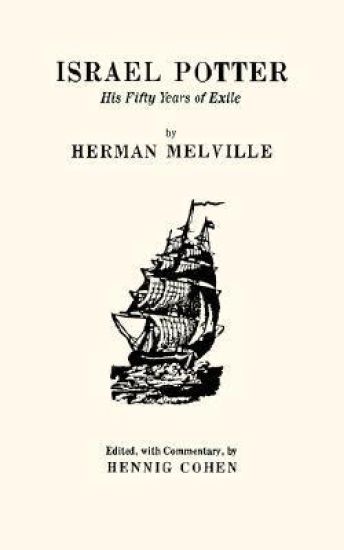
Israel Potter

Israel Potter

Herman Melville

Fordham University Press
1999
pokkari
This facsimile of Melville's historical novel appears in a paperback classroom edition, with a commentary by Hennig Cohen. "Israel Potter" is the story of a neglected hero of the American Revolution.
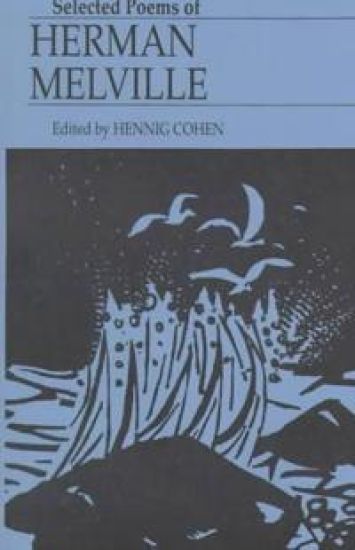
Selected Poems of Herman Melville

Selected Poems of Herman Melville

Herman Melville

Fordham University Press
1999
pokkari
The entries collected in the Selected Poems of Herman Melville were chosen with literary consideration foremost: they encompass a wide variety of nearly 25 years work in verse. Included here are pieces from his most important verse, but poems of lesser regard also appear in the interest of exploring Melville's artistic development and correlation to his novels. Included are selections from "The Battle Pieces", which commemorate the Civil War, "Clarel", an ambitious work of epic length about travellers to the Holy Land, "John Marr and Other Sailors", drawn from his experience as a seaman, and pieces he had in planning such as those about a group called the "Burgundy Club" and a collection of verses dedicated to his wife. This third edition includes a new postscript by Hennig Cohen and his commentary on the poems throughout the volume.
Mardi and a Voyage Thither

Mardi and a Voyage Thither

Herman Melville

Northwestern University Press
1998
nidottu
Presented as narratives of his own South Sea experiences, Melville's first two books had roused incredulity in many readers. Their disbelief, he declared, had been "the main inducement" in altering his plan for his third book, Mardi: and a Voyage Thither (1849). Melville wanted to exploit the "rich poetical material" of Polynesia and also to escape feeling "irked, cramped, & fettered" by a narrative of facts. "I began to feel . . . a longing to plume my pinions for a flight," he told his English publisher. Mardi began as a sequel to Typee (1846) and Omoo (1847), but changed radically while he was writing it and emerged as an altogether independent and original work. In its combination of adventure, allegorical romance, realistic portraits of characters and scenes from nature, philosophical speculation, and travelogue-satire, Mardi was Melville's first attempt to create a great work of fiction. This edition of is an Approved Text of the Center for Editions of American Authors (Modern Language Association of America).
Complete Shorter Fiction

Complete Shorter Fiction

Herman Melville

Random House USA Inc
1997
sidottu
Herman Melville (1819-91) brought as much genius to the smaller-scale literary forms as he did to the full-blown novel: his poems and the short stories and novellas collected in this volume reveal a deftness and a delicacy of touch that is in some ways even more impressive than the massive, tectonic passions of Moby-Dick. In a story like "Bartleby, the Scrivener" -- one of the very few perfect representatives of the form in the English language -- he displayed an unflinching precision and insight and empathy in his depiction of the drastically alienated inner life of the title character. In "Benito Cereno," he addressed the great racial dilemmas of the nineteenth century with a profound, almost surreal imaginative clarity. And in Billy, Budd, Sailor, the masterpiece of his last years, he fused the knowledge and craft gained from a lifetime's magnificent work into a pure, stark, flawlessly composed tale of innocence betrayed and destroyed. Melville is justly honored for the epic sweep of his mind, but his lyricism, his skill in rendering the minute, the particular, the local, was equally sublime.
Moby Dick

Moby Dick

Herman Melville

Hawk Press
1997
pokkari
Herman Melville (1819-1891) was an American novelist, short story writer and poet of the American Renaissance period. Among hisbest-known works are Moby-Dick (1851), a romanticized account of his experiences in Polynesia, and Billy Budd, Sailor. His novels are still considered as one of the chief literary masterpieces of both American and world literature.
Complete Shorter Fiction

Complete Shorter Fiction

Herman Melville

Everyman's Library
1997
sidottu

Halvin toimitettuna 22,00 €

Herman Melville (1819-91) brought as much genius to the smaller-scale literary forms as he did to the full-blown novel: his poems and the short stories and novellas collected in this volume reveal a deftness and a delicacy of touch that is in some ways even more impressive than the massive, tectonic passions of Moby-Dick. In a story like “Bartleby, the Scrivener” — one of the very few perfect representatives of the form in the English language — he displayed an unflinching precision and insight and empathy in his depiction of the drastically alienated inner life of the title character. In “Benito Cereno,” he addressed the great racial dilemmas of the nineteenth century with a profound, almost surreal imaginative clarity. And in Billy, Budd, Sailor, the masterpiece of his last years, he fused the knowledge and craft gained from a lifetime’s magnificent work into a pure, stark, flawlessly composed tale of innocence betrayed and destroyed. Melville is justly honored for the epic sweep of his mind, but his lyricism, his skill in rendering the minute, the particular, the local, was equally sublime. SEE LESS
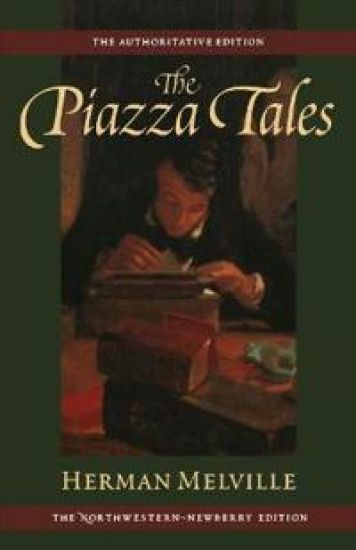
The Piazza Tales

The Piazza Tales

Herman Melville

Northwestern University Press
1996
nidottu
In this new edition of The Piazza Tales, the editors of the acclaimed Northwestern-Newberry Edition of the Writings of Herman Melville have used the original magazine versions for five of the six stories in order to present the most accurate tests of these works. Here, in such famous stories as "Bartleby, the Scrivener" and "The Encantadas, or Enchanted Isles," we find Melville's imagination and style at its best. Of the less well-known tales, the humor in "The Piazza" and "The Lightning-Rod Man," and the gothic horror of "The Bell Tower," command attention as well. Whether in the exotic Galapagos or the more familiar climes of Wall Street or a Massachusetts farmhouse, Melville's power and imagination transport the reader into his unique worlds. This edition is an Approved Text of the Center for Editions of American Authors (Modern Language Association of America).
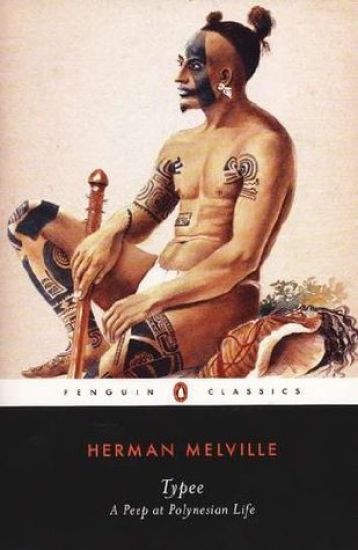
Typee

Typee

Herman Melville

Penguin Putnam Inc
1996
pokkari
Typee is a fast-moving adventure tale, an autobiographical account of the author's Polynesian stay, an examination of the nature of good and evil, and a frank exploration of sensuality and exotic ritual. For more than seventy years, Penguin has been the leading publisher of classic literature in the English-speaking world. With more than 1,700 titles, Penguin Classics represents a global bookshelf of the best works throughout history and across genres and disciplines. Readers trust the series to provide authoritative texts enhanced by introductions and notes by distinguished scholars and contemporary authors, as well as up-to-date translations by award-winning translators.
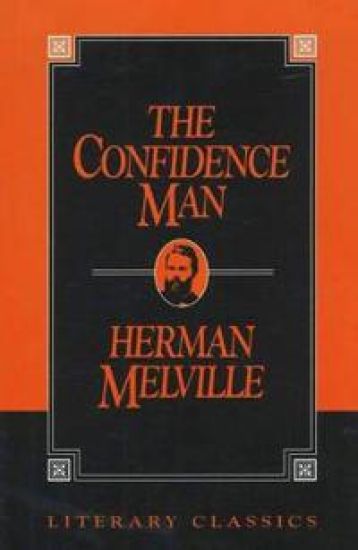
The Confidence Man

The Confidence Man

Herman Melville

Prometheus Books
1995
pokkari
Poorly received when first published in 1857, "The Confidence Man" is now considered Herman Melville's 'most nearly perfect work', and one that occupies a central place in the American literary tradition of masquerade and trickery. Set on April Fool's Day aboard a Mississippi steamer, this powerful and engaging novel, through the conversations of the confidence man (who may be looked on as the Devil or God), explores America and American values. Part satire, part hoax, "The Confidence Man" is also a dark look at the nothingness lurking beneath our beliefs and assumptions - a look at a universe in which neither God nor the Devil exists, and where Christianity is only a comforting fiction little better than an April Fool's prank.
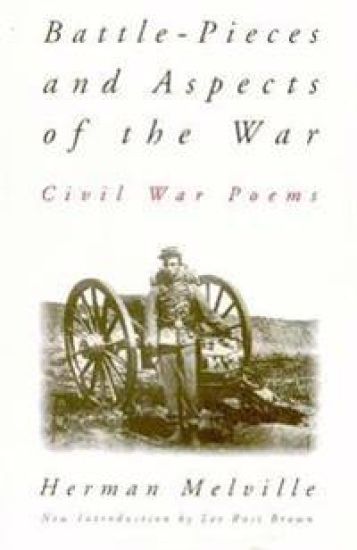
Battle-pieces And Aspects Of The War

Battle-pieces And Aspects Of The War

Herman Melville

Da Capo Press Inc
1995
pokkari
Herman Melville (1819-1891) stopped writing fiction after the publication of The Confidence Man: His Masquerade ] in 1857 as he entered his forties, he turned to poetry as his literary avocation. His first published book of poems was Battle-Pieces and Aspects of the War (1866), a meditation on the Civil War in short lyric and narrative verses, and a work as ambitious and rich as any that issued from his pen. Melville was well acquainted with the war. He made many trips south to visit his cousin Henry Gansevoort, a Union officer- on one such trip, he was active in an unsuccessful pursuit of Confederate raider John Mosby. He had met Abraham Lincoln in Washington, and called upon General Ulysses S. Grant in Virginia in 1864. And his position within his family, whose members were involved in almost every aspect of the war, was close enough to allow him a rare vantage point on this country's greatest conflict. But, Battle-Pieces is anything but epic. Rather than celebratory, the tone of Melville's poem is grievous and disconsolate. "Unmindful, without purposing to be, of consistency" (as Melville puts it in his preface), the poems do not attempt to paint a broad picture of the whole of the war, but rather represent disjoint aspects, each faithful to Melville's impulsive, modern, yet realist view of the tragedy. This facsimile edition of Battle-Pieces includes 72 poems on almost every major campaign, battle, and event Melville's own detailed historical notes and his supplementary essay on Reconstruction and a new introduction by Lee Rust Brown, who teaches English at the University of Utah and is the author of The Emerson Museum. An American classic is thus available once again.
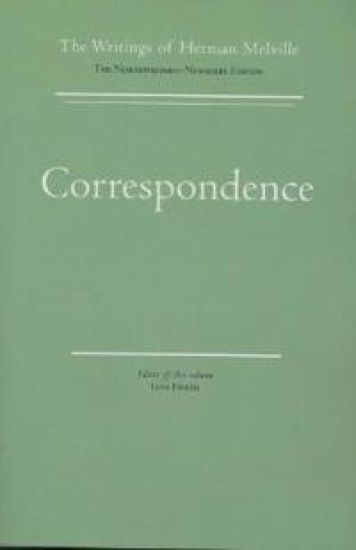
Correspondence

Correspondence

Herman Melville

Northwestern University Press
1993
nidottu
The letters by and to Melville in this volume extend from letters he wrote at the age of nine in 1828 to ones he sent and received during the year before his death at seventy-two in 1891. To fill the gaps within the correspondence, 542 editorial entries are chronologically interspersed for letters both by and to Melville for which no full text has been located but for which some evidence survives. This scholarly edition presents a text as close to the author's intention as his difficult handwriting or other surviving evidence permits. Fifty-two newly discovered letters by Melville, more than half of which are presented here for the first time, are added to those printed in the 1960 edition. This text is an Approved Text of the Center for Editions of American Authors (Modern Language Association of America).
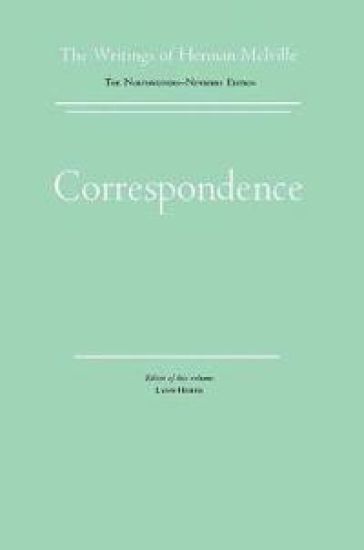
Correspondence

Correspondence

Herman Melville

Northwestern University Press
1993
sidottu
The letters by and to Melville in this volume extend from letters he wrote at the age of nine in 1828 to ones he sent and received during the year before his death at seventy-two in 1891. To fill the gaps within the correspondence, 542 editorial entries are chronologically interspersed for letters both by and to Melville for which no full text has been located but for which some evidence survives. This scholarly edition presents a text as close to the author's intention as his difficult handwriting or other surviving evidence permits. Fifty-two newly discovered letters by Melville, more than half of which are presented here for the first time, are added to those printed in the 1960 edition. This text is an Approved Text of the Center for Editions of American Authors (Modern Language Association of America).
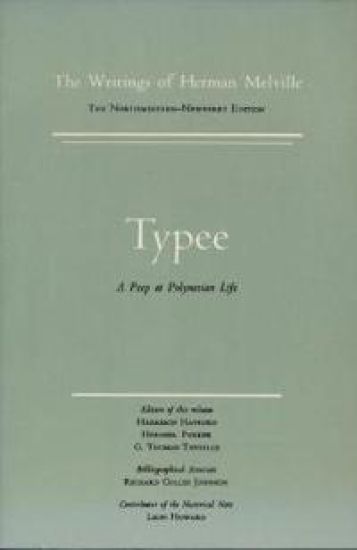
Typee

Typee

Herman Melville

Northwestern University Press
1992
nidottu
Almost from the time of its publication early in 1846, Melville's first book, based on his own travels in the South Seas, has been recognized as a classic in the literature of travel and adventure. From the beginning, however, there have been problems with the text. Due to disparities between the American and English editions, and revisions Melville had to make at his publisher's request concerning its racy style and attitude toward missionaries, the book has circulated in two versions. This scholarly edition is based on collations of all editions published during his lifetime, incorporating many authorial readings that have often been omitted and some that have been misprinted in all previous editions. This edition is an Approved Text of the Center for Editions of American Authors (Modern Language Association of America).
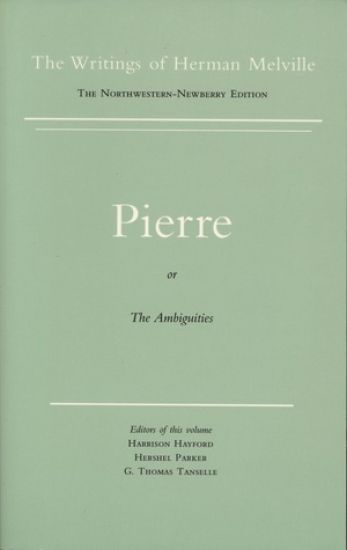
Pierre, or the Ambiguities

Pierre, or the Ambiguities

Herman Melville

Northwestern University Press
1992
nidottu
Initially dismissed as a dead failure and a bad book, and declined by Melville's British publisher, Pierre, or The Ambiguities has since struck critics as modern in its psychological probings and literary technique--fit, as Carl Van Vechten said in 1922, to be ranked with The Golden Bowl, Women in Love, and Ulysses. None of Melville's other secondary works has so regularly been acknowledged by its most thorough critics as a work of genuine grandeur, however flawed. This scholarly edition aims to present a text as close to the author's intention as the surviving evidence permits. Based on collations of the two issues and the two impressions of the single edition publishing in Melville's lifetime, it incorporates necessary emendations made by the series editors. This text of Pierre is an Approved Text of the Center for Editions of American Authors (Modern Language Association of America).
Moby Dick

Moby Dick

Herman Melville

Wordsworth Editions Ltd
1992
nidottu

Halvin toimitettuna 11,90 €

With an Introduction and Notes by David Herd, Lecturer in English and American Literature at the University of Kent at Canterbury and co-editor of ‘Poetry Review’. Moby Dick is the story of Captain Ahab’s quest to avenge the whale that ‘reaped’ his leg. The quest is an obsession and the novel is a diabolical study of how a man becomes a fanatic. But it is also a hymn to democracy. Bent as the crew is on Ahab’s appalling crusade, it is equally the image of a co-operative community at work: all hands dependent on all hands, each individual responsible for the security of each. Among the crew is Ishmael, the novel’s narrator, ordinary sailor, and extraordinary reader. Digressive, allusive, vulgar, transcendent, the story Ishmael tells is above all an education: in the practice of whaling, in the art of writing. Expanding to equal his ‘mighty theme’ – not only the whale but all things sublime – Melville breathes in the world’s great literature. Moby Dick is the greatest novel ever written by an American.
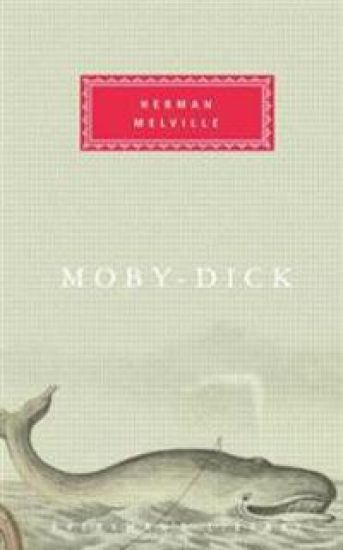
Moby-Dick

Moby-Dick

Herman Melville

Everyman's Library
1991
sidottu
This is about the quest of Captain Ahab, a man consumed by his obsession with a legendary, giant white whale, Moby Dick. As the ship sails into dangerous waters, The captain's hysterical pursuit becomes a symbol for the inherent, often destructive, nature of human ambition. "Moby-Dick" is not merely a tale of daring do; it is a profound meditation on the human condition itself. It can be read as part thriller, part sea adventure and part allegory.