Kirjojen hintavertailu – 12 859 818 kirjaa ja 27 kauppaa

Kirjailija

Herman Melville

Kirjat ja teokset yhdessä paikassa: 1 182 kirjaa, julkaisuja vuosilta 1851–2026, suosituimpiin kuuluu Pierre. Vertaile teosten hintoja ja tarkista saatavuus suomalaisista kirjakaupoista.

1 182 kirjaa

Kirjojen julkaisuvuodet: 1851–2026.

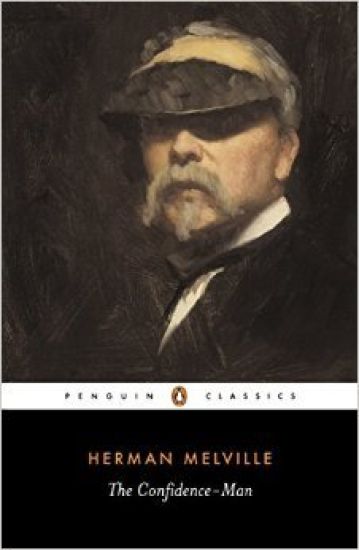
The Confidence-man

The Confidence-man

Herman Melville

Penguin Classics
1991
pokkari

Halvin toimitettuna 18,70 €

Onboard the Fidèle, a steamboat floating down the Mississippi to New Orleans, a confidence man sets out to defraud his fellow passengers. In quick succession he assumes numerous guises - from a legless beggar and a worldly businessman to a collector for charitable causes and a 'cosmopolitan' gentleman, who simply swindles a barber out of the price of a shave. Making very little from his hoaxes, the pleasure of trickery seems an end in itself for this slippery conman. Is he the Devil? Is his chicanery merely intended to expose the mercenary concerns of those around him? Set on April Fool's Day, The Confidence-Man (1857) is an engaging comedy of masquerades, digressions and shifting identity, and a devastating satire on the American dream.
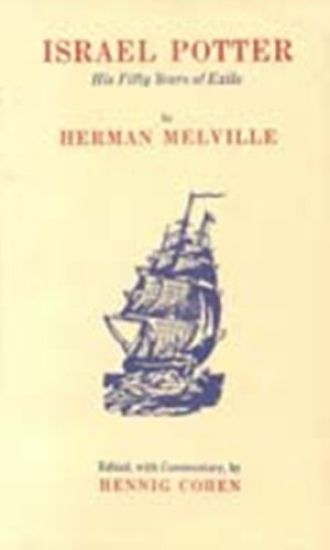
Israel Potter

Israel Potter

Herman Melville

Fordham University Press
1991
sidottu
This facsimile of Melville's historical novel appears in a paperback classroom edition, with a commentary by Hennig Cohen. Israel Potter is the story of a neglected hero of the American Revolution.
The Writings of Herman Melville, Vol. 15

The Writings of Herman Melville, Vol. 15

Herman Melville

Northwestern University Press
1989
nidottu
This volume presents Melville's three known journals. Unlike his contemporaries Emerson, Thoreau, and Hawthorne, Melville kept no habitual record of his days and thoughts; each of his three journals records his actions and observations on trips far from home. In this edition's Historical Note, Howard C. Horsford places each of the journals in the context of Melville's career, discusses its general character, and points out the later literary uses he made of it, notably in Moby-Dick, Clarel, and his magazine pieces. The editors supply full annotations of Melville's allusions and terse entries and an exhaustive index makes available the range of his acquaintance with people, places, and works of art. Also included are related documents, illustrations, maps, and many pages and passages reproduced from the journals. This scholarly edition aims to present a text as close to the author's intention as his difficult handwriting permits. It is an Approved Text of the Center for Editions of American Authors (Modern Language Association of America).
Journals

Journals

Herman Melville

Northwestern University Press
1989
sidottu
This volume presents Melville's three known journals. Unlike his contemporaries Emerson, Thoreau, and Hawthorne, Melville kept no habitual record of his days and thoughts; each of his three journals records his actions and observations on trips far from home. In this edition's Historical Note, Howard C. Horsford places each of the journals in the context of Melville's career, discusses its general character, and points out the later literary uses he made of it, notably in Moby-Dick, Clarel, and his magazine pieces. The editors supply full annotations of Melville's allusions and terse entries and an exhaustive index makes available the range of his acquaintance with people, places, and works of art. Also included are related documents, illustrations, maps, and many pages and passages reproduced from the journals. This scholarly edition aims to present a text as close to the author's intention as his difficult handwriting permits. It is an Approved Text of the Center for Editions of American Authors (Modern Language Association of America).
White-Jacket

White-Jacket

Herman Melville

Naval Institute Press
1988
sidottu
In 1843, after three years of voyaging in the South Seas, Melville signed up as an ordinary seaman on the man-of-war United States , and headed for home. What he observed on that trip formed the basis of White-Jacket , a success both as a story and as an exposé of certain naval practices of which the public was only dimly aware. Melville's subtitle, The World in a Man-of-War, points to its broad theme: the autocratic, male regime aboard the Neversink is perhaps no more than a microcosm of pre-Civil War America. But under his scandalized liberalism, his desire to expose and to reform a barbaric system which reflects badly on the Declaration of Independence, runs an unspoken connection. The treatment meted out to the white men on the man-of-war is the same as that experienced by black slaves in every state. With hindsight, Melville's novel is double-edged.
Billy Budd, Sailor, and Other Stories

Billy Budd, Sailor, and Other Stories

Herman Melville

Bantam USA
1982
pokkari
If Melville had never written Moby Dick, his place in world literature would be assured by his short tales. "Billy Budd, Sailor," his last work, is the masterpiece in which he delivers the final summation in his "quarrel with God." It is a brilliant study of the tragic clash between social authority and individual freedom, human justice and abstract good. Melville also explores this theme in "Bartelby the Scrivener," his famous story about a Wall Street law clerk who takes passive resistance to a comic--and ultimately disastrous--extreme; and in "Benito Cereno," his dazzling account of oppression and rebellion on a nineteenth-century slave ship. Completing this collection of great tales are the eerie "The Encantados," the beautiful, romantic "The Piazza," and Melville's chilling science fiction parable, "The Bell-Tower."
Israel Potter

Israel Potter

Herman Melville

Northwestern University Press
1982
nidottu
Unique among Melville's works, Israel Potter was the author's only historical novel, presuming to offer the life history of Revolutionary War figure Israel Potter--based on Potter's own obscure narrative Life and Remarkable Adventures of Israel R. Potter--and featuring characters such as Benjamin Franklin and Ethan Allen. In offering the manuscript to his publisher, Melville assured him, "I engage that the story shall contain nothing of any sort to shock the fastidious. There will be very little reflective writing in it; nothing weighty. It is adventure." This came as a relief, for his previous novel, Pierre, had shocked readers and brought down universal castigation. This edition is an Approved Text of the Center for Editions of American Authors (Modern Language Association of America).
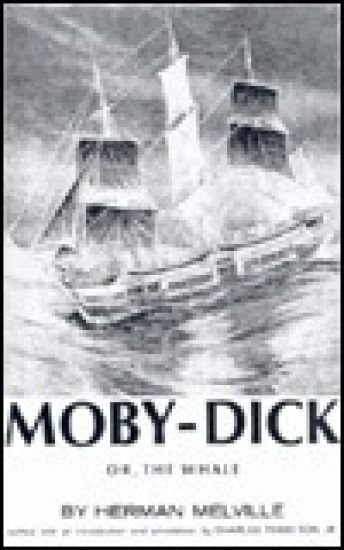
Moby Dick or, The Whale

Moby Dick or, The Whale

Herman Melville

University of California Press
1981
sidottu

Halvin toimitettuna 48,90 €

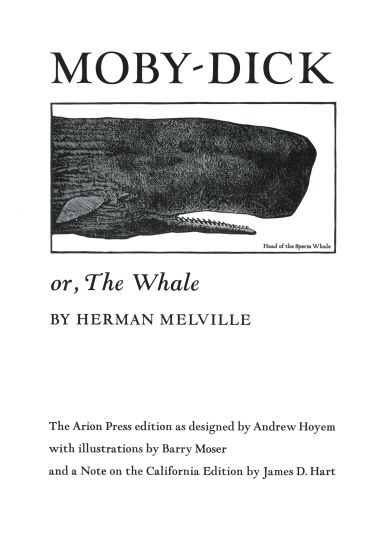
This trade edition of "Moby-Dick" is a reduced version of the Arion Press "Moby-Dick", which was published in 1979 in a limited edition of 250 copies and has been hailed as a modern masterpiece of bookmaking. It was hand set under the supervision of one of America's finest book designers and printers. The initial letters that begin each chapter were designed especially for this book and christened "Leviathan". The illustrations, of places, creatures, objects or tools, and processes connected with nineteenth-century whaling, are original boxwood engravings by Massachusetts artist Barry Moser. The text of "Moby-Dick" used in this edition is based on that used in the critical edition of Melville's works published by the Northwestern University Press and the Newberry Library. This reduced version is smaller in size than the Arion edition and the California deluxe edition, but it includes all of the original pages and illustrations. It is printed in black only throughout, and it is not slipcased.
Moby-Dick

Moby-Dick

Herman Melville

Bantam USA
1981
pokkari

Halvin toimitettuna 12,80 €

No American masterpiece casts quite as awesome a shadow as Melville's monumental Moby Dick. Mad Captain Ahab's quest for the White Whale is a timeless epic--a stirring tragedy of vengeance and obsession, a searing parable about humanity lost in a universe of moral ambiguity. It is the greatest sea story ever told. Far ahead of its own time, Moby Dick was largely misunderstood and unappreciated by Melville's contemporaries. Today, however, it is indisputably a classic. As D. H. Lawrence wrote, Moby Dick "commands a stillness in the soul, an awe . . . [It is] one of the strangest and most wonderful books in the world."
Redburn

Redburn

Herman Melville

Northwestern University Press
1969
nidottu
Redburn is a fictional narrative of a boy's first voyage, based loosely on Melville's own first voyage to and from Liverpool in 1839. Hastily composed and little esteemed by its author, Redburn was more highly thought of by his critics, who saw it regaining the ground of popular sea stories like Typee and Omoo. Melville so disliked the novel that he submitted it to his publisher without polishing it. This scholarly edition corrects a number of errors that have persisted in subsequent editions. Based on collations of the editions published during his lifetime, it incorporates corrections made in the English edition and emendations made by the present editors. As with all the books in the Northwestern-Newberry series, this edition of Redburn is an Approved Text of the Center for Editions of American Authors (Modern Language Association of America).
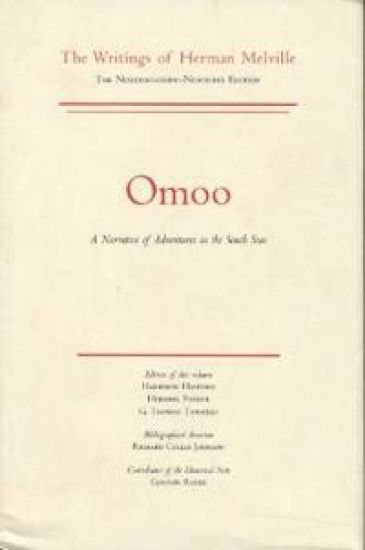
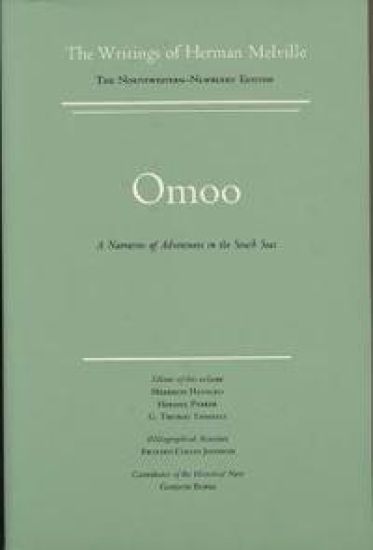
Omoo; a Narrative of Adventures in the South Seas

Omoo; a Narrative of Adventures in the South Seas

Herman Melville

Northwestern University Press
1968
sidottu
Melville's second book, Omoo, begins where his first book, Typee, left off. As the author said, "It embraces adventures in the South Seas (of a totally different character from 'Typee') and includes an eventful cruise in an English Colonial Whaleman (a Sydney Ship) and a comical residence on the island of Tahiti." The popular success of his first novel encouraged Melville to write a sequel, hoping it would be "a fitting successor." Typee describes Polynesian life in its "primitive" state, while Omoo represents it as affected by non-native influences. This scholarly edition aims to present a text as close to the author's intention as surviving evidence permits. Based on collations of all editions publishing during Melville's lifetime, it incorporates author corrections and many emendations made by the present editors. This edition of Omoo is an Approved Text of the Center for Editions of American Authors (Modern Language Association of America).
Omoo

Omoo

Herman Melville

Northwestern University Press
1968
nidottu
Melville's second book, Omoo, begins where his first book, Typee, left off. As the author said, It embraces adventures in the South Seas (of a totally different character from 'Typee') and includes an eventful cruise in an English Colonial Whaleman (a Sydney Ship) and a comical residence on the island of Tahiti. The popular success of his first novel encouraged Melville to write a sequel, hoping it would be a fitting successor. Typee describes Polynesian life in its primitive state, while Omoo represents it as affected by non-native influences. This scholarly edition aims to present a text as close to the author's intention as surviving evidence permits. Based on collations of all editions publishing during Melville's lifetime, it incorporates author corrections and many emendations made by the present editors. This edition of Omoo is an Approved Text of the Center for Editions of American Authors (Modern Language Association of America).
Moby Dick or, the Whale

Moby Dick or, the Whale

Herman Melville

Macmillan USA
1964
nidottu
Herman Melville's Moby Dick is perhaps the greatest of all American novels. The story of Captain Ahab's obsession with destroying the white whale that crippled him in a previous encounter, Moby Dick transcends its subject by exploring the bigger picture of man and his precarious and often contradictory relationship with the universe he inhabits, a universe of the greatest good and the most profound evil. It is a timeless epic parable that is by turns amusing and unsettling, but always fascinating. The vocal performances of a solid cast add to the listening excitement: Charlton Heston is Ahab'tyrannical, God-ridden, and consumed with his quest; Keir Dullea is the laconic and mysterious narrator, Ishmael, and George Rose delivers Father Mapple's tremendous call to the whaling men.
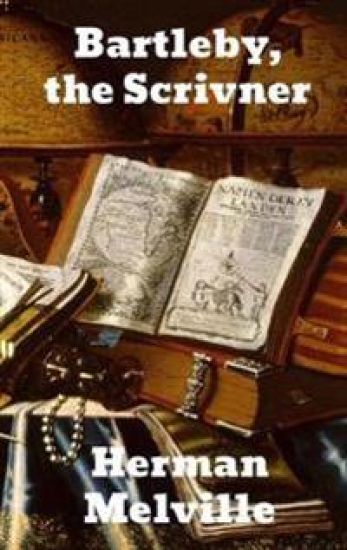
Bartleby, The Scrivener

Bartleby, The Scrivener

Herman Melville

Binker North
1853
sidottu
"Bartleby, the Scrivener: A Story of Wall Street" is a short story by the American writer Herman Melville, first serialized anonymously in two parts in the November and December 1853 issues of Putnam's Magazine, and reprinted with minor textual alterations in his The Piazza Tales in 1856. A Wall Street lawyer hires a new clerk who, after an initial bout of hard work, refuses to make copy and any other task required of him, with the words "I would prefer not to". Numerous essays have been published on what, according to scholar Robert Milder, "is unquestionably the masterpiece of the short fiction" in the Melville canon. Melville's major source for the story was an advertisement for a new book, The Lawyer's Story, printed in both the Tribune and the Times for 18 February 1853. The book was published anonymously later that year but in fact was written by popular novelist James A. Maitland. This advertisement included the complete first chapter, which had the following opening sentence: "In the summer of 1843, having an extraordinary quantity of deeds to copy, I engaged, temporarily, an extra copying clerk, who interested me considerably, in consequence of his modest, quiet, gentlemanly demeanor, and his intense application to his duties". Melville biographer Hershel Parker points out that nothing else in the chapter besides this "remarkably evocative sentence" was "notable". 3] Critic Andrew Knighton notes the debt of the story to an obscure work from 1846, Robert Grant White's Law and Laziness: or, Students at Law of Leisure. This source contains one scene and many characters -- including an idle scrivener -- that appear to have influenced Melville's narrative. 4] Melville may have written the story as an emotional response to the bad reviews garnered by Pierre, his preceding novel. Christopher Sten suggests that Melville found inspiration in Ralph Waldo Emerson's essays, particularly "The Transcendentalist" which shows parallels to "Bartleby". Bartleby is a scrivener--a kind of clerk or a copyist--"who obstinately refuses to go on doing the sort of writing demanded of him". During the spring of 1851, Melville felt similarly about his work on Moby Dick. Thus, Bartleby may represent Melville's frustration with his own situation as a writer, and the story itself is "about a writer who forsakes conventional modes because of an irresistible preoccupation with the most baffling philosophical questions". 7] Bartleby may also be seen to represent Melville's relation to his commercial, democratic society. 8 Melville made an allusion to the John C. Colt case in this short story. The narrator restrains his anger toward Bartleby, his unrelentingly difficult employee, by reflecting upon "the tragedy of the unfortunate Adams and the still more unfortunate Colt and how poor Colt, being dreadfully incensed by Adams ...] was unawares hurled into his fatal act".