Kirjojen hintavertailu – 12 859 827 kirjaa ja 27 kauppaa

Kirjailija

Hichem Karoui

Kirjat ja teokset yhdessä paikassa: 76 kirjaa, julkaisuja vuosilta 2012–2026, suosituimpiin kuuluu Aman and Empire. Vertaile teosten hintoja ja tarkista saatavuus suomalaisista kirjakaupoista.

76 kirjaa

Kirjojen julkaisuvuodet: 2012–2026.

Guardians of the Gulf

Guardians of the Gulf

Gew Intelligence Unit; Hichem Karoui

Global East-West LTD
2024
pokkari
"Guardians of the Gulf: A Deep Dive into the GCC Defence Industry" provides a comprehensive analysis of the evolution of the defence industry in the Gulf Cooperation Council (GCC) countries. This meticulously researched book explores the transition from heavy reliance on imports to the development of robust domestic defence capabilities, shedding light on the geopolitical and strategic implications for the region and beyond. With a focus on key players such as Saudi Arabia, UAE, and Qatar, it delves into the complex interplay between military modernisation, technological advancements, and regional security dynamics. Through meticulous examination and insightful commentary, this book offers a compelling analysis of how these nations have transformed into guardians of their security, shaping the defence landscape in the Gulf and beyond. Guardians of the Gulf is essential for policymakers, scholars, and anyone seeking a deep understanding of contemporary defence developments in this critical region. Key TakeawaysThe GCC states heavily relied on arms imports initially due to limited domestic industrial capabilities and evolving security threats. The United States played a significant role as a primary arms supplier to the GCC states during their early development stages. Over time, concerns about supply chain vulnerabilities and over-dependence on foreign powers led to a strategic shift towards developing indigenous defence industries. The book explores the economic implications of the local defence industry, emphasising its potential to drive economic growth, create job opportunities, and foster technological innovation. It also delves into the security implications of defence industry development, focusing on enhancing military capabilities and strengthening national security. The book's methodology adopts a multidisciplinary approach, integrating historical, economic, geopolitical, and security perspectives through primary and secondary research. The book's structure follows a logical flow, exploring the drivers and challenges of defence indigenisation, economic diversification, technology transfer, and their impact on regional security cooperation.
The Right To Resist

The Right To Resist

Hichem Karoui

Gew Reports Analyses
2023
pokkari
Why do so many outstanding Jewish brains (Einstein, Marx, Freud, Asimov, Arendt, Chomsky, etc.) oppose Zionism and Israel? Because they are aware of the covert alliance between Zionism and fascism. While exploring and analysing the themes of resistance throughout history, this book sheds light on these truths that the Israeli state and its Western patrons have kept hidden. Some of the main topics addressed: The book argues that there was a "secret liaison" and alliance between certain Zionist leaders and fascist regimes, especially Mussolini's Italy, during the pre-World War II period. It contends that pragmatic Zionist leaders like Ze'ev Jabotinsky collaborated with Mussolini out of self-interest despite ideological differences. They sought support for Jewish emigration and colonisation of Palestine. The book particularly highlights the 1933 Haavara Agreement as an example of Zionist-Nazi collaboration. This allowed some Jewish emigration from Germany in exchange for Zionist economic support of the Nazi regime. It argues this represented an "original sin" that compromised the moral foundations of Zionism due to collaboration with fascists and Nazis. The book argues that political Zionism has strong parallels with European colonialism and should be resisted on similar moral grounds. It views Zionism as a form of settler colonialism imposed on the indigenous Palestinian population. It contends that the Zionist movement strategically aligned itself with various imperialist powers to advance its colonial ambitions in Palestine, including Britain and later the United States. The book is highly critical of the collusion between Zionism and imperialism, arguing it undermines the moral legitimacy of the Zionist project in Palestine. It asserts that the Zionist occupation and oppression of Palestinians should be recognised as a grave injustice and condemned, just as South African apartheid eventually was. The book explores the concept of resistance. Here are some topics analysed: Anti-communism was a major form of ideological resistance, especially in the United States. This included McCarthyism and the Red Scare, where individuals and groups suspected of communist ties were targeted. Dissident movements arose within communist countries, pushing back against authoritarian rule and restrictions on civil liberties. Examples include the Prague Spring in Czechoslovakia in 1968 and the Solidarity movement in Poland in the 1980s. Student protest movements in the 1960s opposed both capitalism and communism. Groups like the New Left advocated for a more egalitarian society not defined by the Cold War binary. Decolonisation movements in Asia, Africa and Latin America resisted both superpowers' attempts to exert influence and control over newly independent countries. Leaders like Ho Chi Minh in Vietnam and Fidel Castro in Cuba embraced communism but asserted national autonomy. The civil rights, anti-war, and feminist movements in the U. S. challenged the political and social status quo. Activists resisted forms of oppression and inequality rooted in capitalist systems. Artists, writers, and intellectuals used culture as a form of resistance. Figures like Alexander Solzhenitsyn and V clav Havel criticised totalitarianism and censorship in their writings. Religious groups like the Catholic Church in Poland and Liberation Theology movements in Latin America resisted communist restrictions on religion. The book is the first volume of a collection: "Resistances".
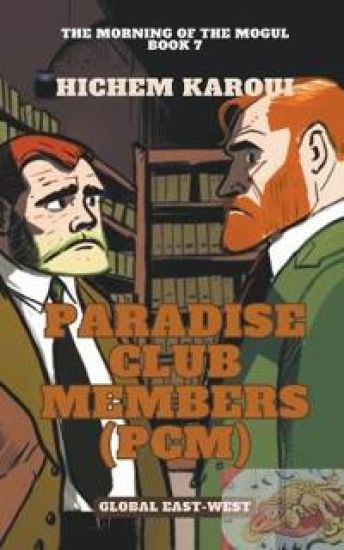
Imbroglio

Imbroglio

Hichem Karoui

Global East-West (London)
2023
pokkari
In "Imbroglio," which begins Part Three (Dolce Vita) of the Morning of the Mogul serialised novel, Bassam Bourasin (BB) learns how far could go the intelligence apparatus' manipulation of people like him, as well as the nation's political leaders and ordinary citizens' aspirations. It turns out that those who wield power in the intelligence services in the country are the clique behind revolutions, counter-revolutions, coups, and counter-coups, and even the rulers themselves are under their control from behind the scenes. Nothing and nobody escaped this scheme, including those who pretended to alter the system and impose an Islamist regime. The only thing that matters in this game is power and the struggle to control society and people, even if doing so results in more crimes, tragedies, and genocides. What would BB do if he was unable to leave the game? Does he still have a choice, he who has repeatedly stated that everything in human existence is predetermined (Mektub)? Imbroglio" is a gripping account of an intelligence apparatus manipulating the political landscape in the Arab countries. It reveals the inner workings of power and intrigue and how the stakes are raised when the truth is hidden. The series will continue with a forthcoming Book 10.
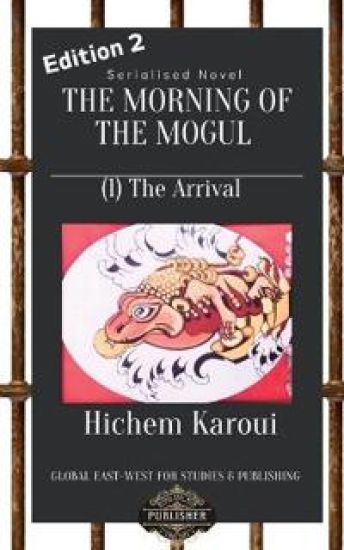
The Arrival

The Arrival

Hichem Karoui

Global East-West (London)
2023
pokkari
This is the story of two successive military coups in an Arab country. The first is accomplished by a republican secularist junta, and the second by Islamists. The narrator, Bassam Bourasin, an eccentric and zealous bank clerk, writes a top-secret report to protest against his incarceration by the new regime. His purpose was to clean up himself from the heavy charges he was facing and prove that he was well devoted to the new masters of the country. As the narrative develops, he unveils many details about his life in his village, 'Ouja, and his new condition in jail. Thus, he tells the reader about his obsessions and secret ambitions, his old mother living in the past with the British settlers, his fiancee Dalila whose hugging or kissing is forbidden to him by social traditions, and his secret archives where he had managed to record for the posterity many details concerning life and people of 'Ouja. That entire world collapsed when a coup overthrew the King, and the big purge started. What happened to him and his boss, Mr Aroussi, was all the more painful that the man for whom he was working as a snitch, the mighty chief of the party's cell, Hamda La'war, was still free. The latter was considered a national hero in the country since he was awarded the Order of High Merit from the former king for cuckolding the village's shoemaker and getting an eye punctured in the brawl. To obtain the same medal, Bassam was ready to do anything, even if he had to convince the new masters of the country of a conspiracy against the security of the state being concocted by the cooks of the prison and their occult allies. That is the second purpose of his top-secret report, which he intends to submit to the authorities. But out of the blue, a second coup led by the Islamists happened; a mutiny burst out in prison, and Bassam was forced to readjust his views to be in the "right" direction of the wind.
Return to 'Ouja

Return to 'Ouja

Hichem Karoui

Global East-West (London)
2023
pokkari
In Book (8), the narrator, Bassam Bourasin, is released from prison following the massacre of 300 people in his hometown, 'Ouja. His mother and his fiancee Dalila were among the victims. The narrator felt out of place and traumatised in his apartment. He barely recognised his hometown and felt he was either the real Bassam Bourasin or 'Ouja was not the real 'Ouja. The trauma had upset him since he arrived, and he was morally and physically exhausted. The survivors suffered indescribable concussions, and a thick cloud of melancholy and sorrow descended over the community. The atmosphere in 'Ouja was one of desolation and grief. The Barbarians have half-destroyed and ravaged the town, and the electric and telephone lines have not yet been restored. Even the countryside is described as a desolate area of rough, magnificent cliffs and harsh, tawny flora scorched by the sour acid sun's smouldering beams. The people of 'Ouja are grieving the loss of their loved ones, and the graveyard is crowded with mourners. The armed militia is patrolling the streets, and sadness and gloom hang over the town. Mr Houssine, Bassam's father-in-law, said the killers came at daybreak or earlier, rushed into the police station and the National Guard Headquarters, killed everyone, and then turned their rage to the stores and shops. They broke the doors with explosives, plundered, looted, and thrashed, while others broke into their homes randomly. They raped, robbed, killed whoever resisted, and rampaged relentlessly for hours. The terrorists were dressed in long robes and sandals, with long beards and masks on their faces. The big question remains: who did it? In Arab countries where there is a conflict between secularists and Islamists, the same issue has come up numerous times. From Algeria in the nineties to Somalia, Iraq, Libya, Egypt, Tunisia, Syria, Yemen, and Sudan. In the novel, Mr Houssine believed that the massacre in 'Ouja was God's will and that people should accept it. When Bassam asked him how such a thing could happen in a country where people pray to God five times a day, Mr Houssine told him not to curse and to accept God's will. He also suggested that the criminals who committed the massacre took advantage of God's will more than those who prayed and did everything to please Allah. One assumption about the massacre's perpetrators in Ouja was that they could have been the Islamists who took over the government and badly needed foreign neutrality to crush their local rivals. Such an episode may discourage Western nations from providing help to the ousted president still fighting them in the South. Another assumption was that both parties could have perpetrated the massacre for different reasons.

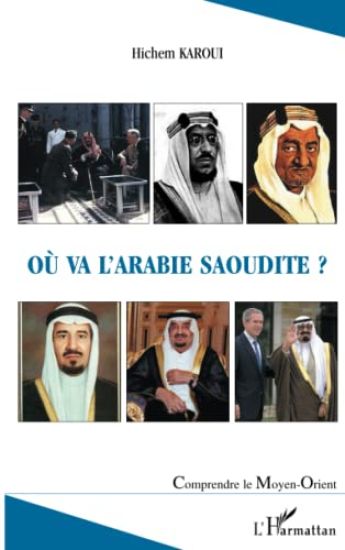
L'administration Bush au Moyen-Orient: A travers les conceptions et les réseaux des hommes politiques, des entrepreneurs, et des militaires.
Pendant huit ans (de 2000 2008), on nous a dit et r p t que tout ce que l'administration Bush a pr tendu et fait (de la lutte contre l'axe du mal la campagne anti-terroriste internationale, et de la guerre pr emptive ou pr ventive la d mocratisation du Moyen-Orient par tous les moyens...etc., ) trouve sa source dans l'id ologie morale des n oconservateurs qui cherchent rendre le monde meilleur, et moraliser la vie politique nationale et internationale, notamment par une r novation des valeurs (conservatrices) am ricaines et par un engagement plus actif vis- -vis des probl mes internationaux. Mais la lumi re des constats que nous avons t amen s faire lors de notre investigation, il devient clair que: contrairement ce qui est largement r pandu, ce n'est ni l'id ologie morale des n oconservateurs ni le bloc religieux et messianique alli du Pr sident Bush qui guident son action au Moyen-Orient et ailleurs, mais l' conomie. En effet, les cl s de la politique Bush au Moyen-Orient ne sont id ologiques qu'en apparence. En r alit , elles sont d couvrir dans les int r ts conomiques et financiers que cette administration a cherch d fendre, prot ger, et acqu rir. Ces cl s sont trouver dans l'argent des contributions qui financent les campagnes lectorales. Elles sont galement celles du grand Capital, de l'Am rique des corporations industrielles et financi res, des multinationales, des lobbies et autres groupes de pression qui dominent la vie politique aux Etats-Unis et influencent sa politique au Moyen-Orient jusqu' la colorer de leurs propres couleurs.