
Kirjailija
Horace
Kirjat ja teokset yhdessä paikassa: 276 kirjaa, julkaisuja vuosilta 1926–2026, suosituimpiin kuuluu Odi, Epodi e Sermoni di Orazio. Vertaile teosten hintoja ja tarkista saatavuus suomalaisista kirjakaupoista.
276 kirjaa
Kirjojen julkaisuvuodet: 1926–2026.

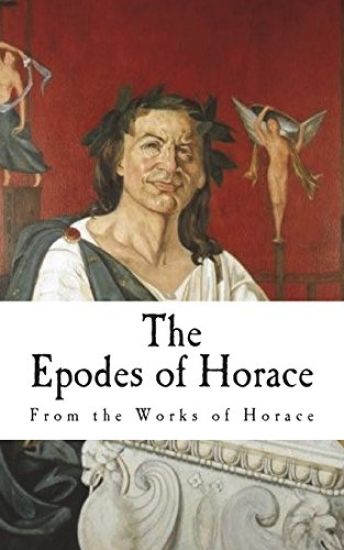
The Epodes of Horace. From the Works of Horace. Translated literally into English prose by C. Smart, A. M. Epodes of Horace, Epodes, the word is now mainly familiar from an experiment of Horace in the second class, for he entitled his fifth book of odes Epodon liber or the Book of Epodes. He says in the course of these poems, that in composing them he was introducing a new form, at least in Latin literature, and that he was imitating the effect of the iambic distichs invented by Archilochus. This group of poems belongs mostly to the early youth of the poet, and displays a truculence and a controversial heat which are absent from his more mature writings. As he was imitating Archilochus in form, he believed himself justified, no doubt, in repeating the sarcastic violence of his fierce model. The curious thing is that these particular poems of Horace, which are really short lyrical satires, have appropriated almost exclusively the name of epodes, although they bear little enough resemblance to the epode of early Greek literature.
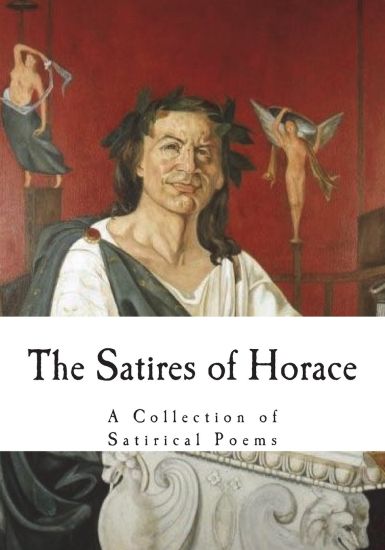
The Satires of Horace: A Collection of Satirical Poems
Horace
Createspace Independent Publishing Platform
2018
nidottu
The Satires of Horace: Books 1 & 2. From the Works of Horace. Translated literally into English prose by C. Smart, A. M. The Satires is a collection of satirical poems written by the Roman poet, Horace. Composed in dactylic hexameters, the Satires explore the secrets of human happiness and literary perfection. Published probably in 35 BCE and at the latest, by 33 BCE, the first book of Satires represents Horace's first published work. It established him as one of the great poetic talents of the Augustan Age. The second book was published in 30 BCE as a sequel. In his Sermones or Satires, Horace combines Epicurean, that is, originally Greek philosophy with Roman good sense to convince his readers of the futility and silliness of their ambitions and desires. As an alternative, he proposes a life that is based on the Greek philosophical ideals of autarkeia (Greek for "inner self-sufficiency") and metriotes (Greek for "moderation" or sticking to the Just Mean). In S. 1.6.110-131, Horace illustrates what he means by describing a typical day in his own simple, but contented life.
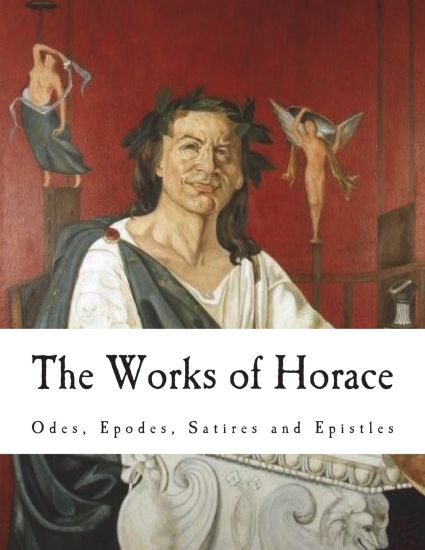
The Works of Horace: Odes, Epodes, Satires and Epistles
Horace
Createspace Independent Publishing Platform
2018
nidottu
The Works of Horace: The Complete 9 Books of Odes, Epodes, Satires and Epistles. Translated literally into English prose by C. Smart, A. M. Quintus Horatius Flaccus, known in the English-speaking world as Horace, was the leading Roman lyric poet during the time of Augustus (also known as Octavian). The rhetorician Quintilian regarded his Odes as just about the only Latin lyrics worth reading: "He can be lofty sometimes, yet he is also full of charm and grace, versatile in his figures, and felicitously daring in his choice of words." Horace also crafted elegant hexameter verses (Satires and Epistles) and caustic iambic poetry (Epodes). The hexameters are amusing yet serious works, friendly in tone, leading the ancient satirist Persius to comment: "as his friend laughs, Horace slyly puts his finger on his every fault; once let in, he plays about the heartstrings". His career coincided with Rome's momentous change from a republic to an empire. An officer in the republican army defeated at the Battle of Philippi in 42 BC, he was befriended by Octavian's right-hand man in civil affairs, Maecenas, and became a spokesman for the new regime. For some commentators, his association with the regime was a delicate balance in which he maintained a strong measure of independence (he was "a master of the graceful sidestep") but for others he was, in John Dryden's phrase, "a well-mannered court slave".
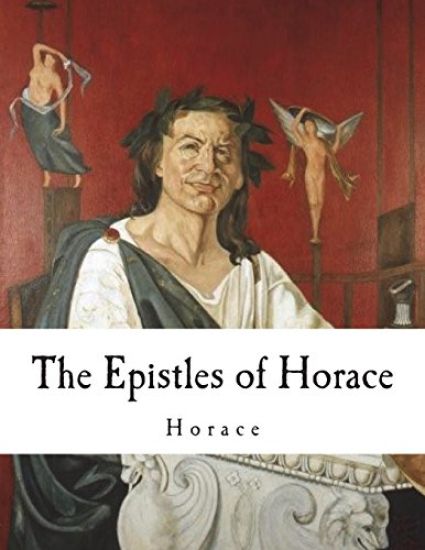
The Epistles of Horace from The Works of Horace and translated Literally into English Prose by C. Smart, A. M. The Complete 2 Books. The Epistles (or Letters) of Horace were published in two books, in 20 BCE and 14 BCE, respectively. Epistularum liber primus (First Book of Letters) is the seventh work by Horace, published in the year 20 BCE. This book consists of 20 Epistles. The phrase sapere aude ("dare to be wise") comes from this collection of poems. Epistularum liber secundus (Second Book of Letters) was published in the year 14 BC. This book consists of 3 Epistles. However, the third epistle - the Ars Poetica - is usually treated as a separate composition.
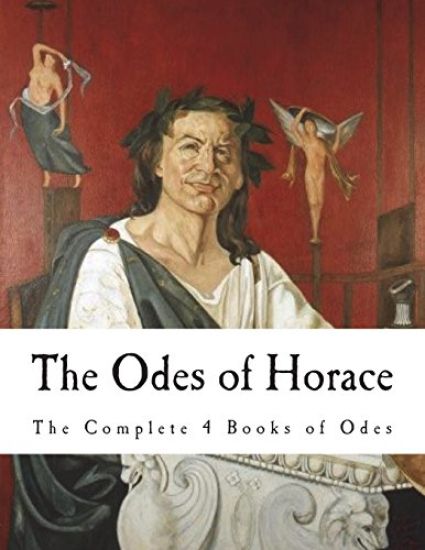
The Odes of Horace: The Complete 4 Books of Odes
Horace
Createspace Independent Publishing Platform
2018
nidottu
The Odes of Horace: From the Works of Horace. The Complete 4 Books of Odes. Translated literally into English prose by C. Smart, A. M. The Odes are a collection in four books of Latin lyric poems by Horace. The Horatian ode format and style has been emulated since by other poets. Books 1 to 3 were published in 23 BC. According to the journal Quadrant, they were "unparalleled by any collection of lyric poetry produced before or after in Latin literature". A fourth book, consisting of 15 poems, was published in 13 BC. The Odes were developed as a conscious imitation of the short lyric poetry of Greek originals - Pindar, Sappho and Alcaeus are some of Horace's models. His genius lay in applying these older forms to the social life of Rome in the age of Augustus. The Odes cover a range of subjects - Love, Friendship, Wine, Religion, Morality, Patriotism; poems of eulogy addressed to Augustus and his relations; and verses written on a miscellany of subjects and incidents, including the uncertainty of life, the cultivation of tranquility and contentment, and the observance of moderation or the "golden mean."
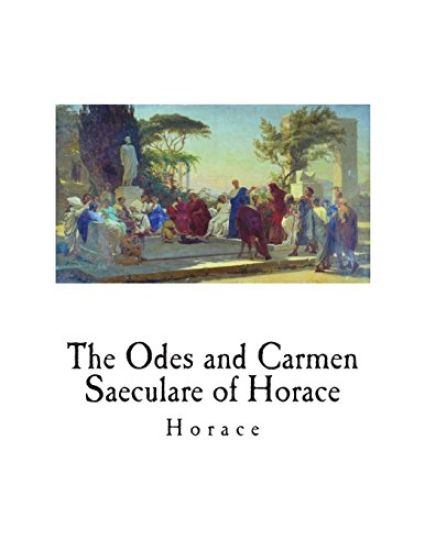
The Odes and Carmen Saeculare of Horace
Horace
Createspace Independent Publishing Platform
2018
nidottu
The Odes and Carmen Saeculare of Horace. The Odes (Latin: Carmina) are a collection in four books of Latin lyric poems by Horace. The Horatian ode format and style has been emulated since by other poets. Books 1 to 3 were published in 23 BC. According to the journal Quadrant, they were "unparalleled by any collection of lyric poetry produced before or after in Latin literature". A fourth book, consisting of 15 poems, was published in 13 BC. The Carmen Saeculare (Latin for "Secular Hymn" or "Song of the Ages") is a hymn in Sapphic meter written by the Roman poet Horace. It was commissioned by the Roman emperor Augustus in 17 BC. The hymn was sung by a chorus of twenty-seven maidens and the same number of youths on the occasion of the Ludi Saeculares (Secular Games), which celebrated the end of one saeculum (typically 110 years in length) and the beginning of another. The mythological and religious song is in the form of a prayer addressed to Phoebus (Apollo) and Diana; it especially brings to prominence Apollo, functioning as a surrogate for and patron of the princeps (Augustus), for whom a new temple on the Palatine had recently been consecrated. A marble inscription recording the ceremony and the part played by Horace still survives.
Oeuvres d'Horace. Tome 1. Accompagnées Du Commentaire de l'Abbé Galiani
Horace
Hachette Livre - BNF
2018
pokkari
Oeuvres d'Horace. Tome 2. Accompagnées Du Commentaire de l'Abbé Galiani
Horace
Hachette Livre - BNF
2018
pokkari
Poems from Horace, Catullus and Sappho
Gaius Valerius Catullus; Horace; Edward George Harman
Hansebooks
2018
nidottu
The Works of Horace, Translated Into English Prose, as Near as the Propriety of the two Languages Will Admit. Together With the Original Latin, From the Best Editions. A new Edition. of 2; Volume 2
Horace
Gale Ecco, Print Editions
2018
sidottu
The 18th century was a wealth of knowledge, exploration and rapidly growing technology and expanding record-keeping made possible by advances in the printing press. In its determination to preserve the century of revolution, Gale initiated a revolution of its own: digitization of epic proportions to preserve these invaluable works in the largest archive of its kind. Now for the first time these high-quality digital copies of original 18th century manuscripts are available in print, making them highly accessible to libraries, undergraduate students, and independent scholars. Western literary study flows out of eighteenth-century works by Alexander Pope, Daniel Defoe, Henry Fielding, Frances Burney, Denis Diderot, Johann Gottfried Herder, Johann Wolfgang von Goethe, and others. Experience the birth of the modern novel, or compare the development of language using dictionaries and grammar discourses. ++++The below data was compiled from various identification fields in the bibliographic record of this title. This data is provided as an additional tool in helping to insure edition identification: ++++British LibraryT052762London: printed for T. Longman; B. Law and Son; C. Dilly; J. Johnson; R. Baldwin and 4 others in London], 1792. 2v.; 8
The Satires, Epistles, and Art of Poetry of Horace Translated Into English Prose. with Notes, in English, from the Best Commentators Both Ancient and Modern, Especially M. Dacier and P. Sanadon
Horace
Gale Ecco, Print Editions
2018
sidottu
The 18th century was a wealth of knowledge, exploration and rapidly growing technology and expanding record-keeping made possible by advances in the printing press. In its determination to preserve the century of revolution, Gale initiated a revolution of its own: digitization of epic proportions to preserve these invaluable works in the largest archive of its kind. Now for the first time these high-quality digital copies of original 18th century manuscripts are available in print, making them highly accessible to libraries, undergraduate students, and independent scholars. Western literary study flows out of eighteenth-century works by Alexander Pope, Daniel Defoe, Henry Fielding, Frances Burney, Denis Diderot, Johann Gottfried Herder, Johann Wolfgang von Goethe, and others. Experience the birth of the modern novel, or compare the development of language using dictionaries and grammar discourses. ++++The below data was compiled from various identification fields in the bibliographic record of this title. This data is provided as an additional tool in helping to insure edition identification: ++++British LibraryT047089Titlepage in red and black. With an initial imprimatur leaf and an index. A later edition was published as Vol. II of 'The works of Horace, translated into English prose, .. The fourth edition', London, 1753. London: printed for Joseph Davidson, 1743. 2], xviii,632, 16]p.; 8
The Odes of Horace in Latin and English; With a Translation of Dr. Bentley's Notes. To Which are Added, Notes Upon Notes; ... Part IV. To be Continued
Horace
Gale Ecco, Print Editions
2018
sidottu
The 18th century was a wealth of knowledge, exploration and rapidly growing technology and expanding record-keeping made possible by advances in the printing press. In its determination to preserve the century of revolution, Gale initiated a revolution of its own: digitization of epic proportions to preserve these invaluable works in the largest archive of its kind. Now for the first time these high-quality digital copies of original 18th century manuscripts are available in print, making them highly accessible to libraries, undergraduate students, and independent scholars. Western literary study flows out of eighteenth-century works by Alexander Pope, Daniel Defoe, Henry Fielding, Frances Burney, Denis Diderot, Johann Gottfried Herder, Johann Wolfgang von Goethe, and others. Experience the birth of the modern novel, or compare the development of language using dictionaries and grammar discourses. ++++The below data was compiled from various identification fields in the bibliographic record of this title. This data is provided as an additional tool in helping to insure edition identification: ++++British LibraryT042047Parallel Latin and English texts. Contains odes 13-19 of Book 1. Part of a 24-part work consisting of the odes, epodes and carmen saeculare. Also issued as part of: 'The odes, epodes, and carmen seculare of Horace, in Latin and English', 1713. London: printed for Bernard Lintott, 1712. 34p.; 12
The Odes of Horace in Latin and English; With a Translation of Dr. Bentley's Notes. To Which are Added, Notes Upon Notes; ... Part II. To be Continued
Horace
Gale Ecco, Print Editions
2018
sidottu
The 18th century was a wealth of knowledge, exploration and rapidly growing technology and expanding record-keeping made possible by advances in the printing press. In its determination to preserve the century of revolution, Gale initiated a revolution of its own: digitization of epic proportions to preserve these invaluable works in the largest archive of its kind. Now for the first time these high-quality digital copies of original 18th century manuscripts are available in print, making them highly accessible to libraries, undergraduate students, and independent scholars. Western literary study flows out of eighteenth-century works by Alexander Pope, Daniel Defoe, Henry Fielding, Frances Burney, Denis Diderot, Johann Gottfried Herder, Johann Wolfgang von Goethe, and others. Experience the birth of the modern novel, or compare the development of language using dictionaries and grammar discourses. ++++The below data was compiled from various identification fields in the bibliographic record of this title. This data is provided as an additional tool in helping to insure edition identification: ++++British LibraryT042042Parallel Latin and English texts. Contains odes 4-7 of Book 1. Part of a 24-part work consisting of the odes, epodes and carmen saeculare. Also issued as part of: 'The odes, epodes, and carmen seculare of Horace, in Latin and English', 1713. London: printed for Bernard Lintott, 1712. 35, 1]p.; 12
The Odes of Horace in Latin and English; With a Translation of Dr. Bentley's Notes. To Which are Added, Notes Upon Notes; ... Part III. To be Continued
Horace
Gale Ecco, Print Editions
2018
sidottu
The 18th century was a wealth of knowledge, exploration and rapidly growing technology and expanding record-keeping made possible by advances in the printing press. In its determination to preserve the century of revolution, Gale initiated a revolution of its own: digitization of epic proportions to preserve these invaluable works in the largest archive of its kind. Now for the first time these high-quality digital copies of original 18th century manuscripts are available in print, making them highly accessible to libraries, undergraduate students, and independent scholars. Western literary study flows out of eighteenth-century works by Alexander Pope, Daniel Defoe, Henry Fielding, Frances Burney, Denis Diderot, Johann Gottfried Herder, Johann Wolfgang von Goethe, and others. Experience the birth of the modern novel, or compare the development of language using dictionaries and grammar discourses. ++++The below data was compiled from various identification fields in the bibliographic record of this title. This data is provided as an additional tool in helping to insure edition identification: ++++British LibraryT042046Parallel Latin and English texts. Contains odes 8-12 of Book 1. Part of a 24-part work consisting of the odes, epodes and carmen saeculare. P.36 misnumbered 30. London: printed for Bernard Lintot, 1725. 30 i.e.36]p.; 12
A new Poetical Translation of the Odes and Carmen Sæculare, or Jubilee Hymn, of Horace, in an Easy and Intelligible Style; the Second Edition. Reviewed and Improved by the Author, W. Green, M.D
Horace
Gale Ecco, Print Editions
2018
sidottu
The 18th century was a wealth of knowledge, exploration and rapidly growing technology and expanding record-keeping made possible by advances in the printing press. In its determination to preserve the century of revolution, Gale initiated a revolution of its own: digitization of epic proportions to preserve these invaluable works in the largest archive of its kind. Now for the first time these high-quality digital copies of original 18th century manuscripts are available in print, making them highly accessible to libraries, undergraduate students, and independent scholars. Western literary study flows out of eighteenth-century works by Alexander Pope, Daniel Defoe, Henry Fielding, Frances Burney, Denis Diderot, Johann Gottfried Herder, Johann Wolfgang von Goethe, and others. Experience the birth of the modern novel, or compare the development of language using dictionaries and grammar discourses. ++++The below data was compiled from various identification fields in the bibliographic record of this title. This data is provided as an additional tool in helping to insure edition identification: ++++British LibraryT039916Verse. Each book is followed by an unpaginated insertion giving notes and alterations. Liverpool: printed by G. Woods, 1783. 2],1-52, 4],53-82, 2],83-144, 4],145-184, 6]p.; 8
The Odes of Horace in Latin and English; With a Translation of Dr. Bentley's Notes. To Which are Added, Notes Upon Notes; ... Part V. To be Continued
Horace
Gale Ecco, Print Editions
2018
sidottu
The 18th century was a wealth of knowledge, exploration and rapidly growing technology and expanding record-keeping made possible by advances in the printing press. In its determination to preserve the century of revolution, Gale initiated a revolution of its own: digitization of epic proportions to preserve these invaluable works in the largest archive of its kind. Now for the first time these high-quality digital copies of original 18th century manuscripts are available in print, making them highly accessible to libraries, undergraduate students, and independent scholars. Western literary study flows out of eighteenth-century works by Alexander Pope, Daniel Defoe, Henry Fielding, Frances Burney, Denis Diderot, Johann Gottfried Herder, Johann Wolfgang von Goethe, and others. Experience the birth of the modern novel, or compare the development of language using dictionaries and grammar discourses. ++++The below data was compiled from various identification fields in the bibliographic record of this title. This data is provided as an additional tool in helping to insure edition identification: ++++British LibraryT042049Parallel Latin and English texts. Contains odes 20-25 of Book 1. Part of a 24-part work consisting of the odes, epodes and carmen saeculare. Also issued as part of: 'The odes, epodes, and carmen seculare of Horace, in Latin and English', 1713. London: printed for Bernard Lintott, 1712. 36p.; 12
The Odes, Epodes, and Carmen Seculare of Horace, in Latin and English; With a Translation of Dr. Ben-ley's Notes. To Which are Added Notes Upon Notes. In 24 Parts Complete. By Several Hands. of 2; Volume 1
Horace
Gale Ecco, Print Editions
2018
sidottu
The 18th century was a wealth of knowledge, exploration and rapidly growing technology and expanding record-keeping made possible by advances in the printing press. In its determination to preserve the century of revolution, Gale initiated a revolution of its own: digitization of epic proportions to preserve these invaluable works in the largest archive of its kind. Now for the first time these high-quality digital copies of original 18th century manuscripts are available in print, making them highly accessible to libraries, undergraduate students, and independent scholars. Western literary study flows out of eighteenth-century works by Alexander Pope, Daniel Defoe, Henry Fielding, Frances Burney, Denis Diderot, Johann Gottfried Herder, Johann Wolfgang von Goethe, and others. Experience the birth of the modern novel, or compare the development of language using dictionaries and grammar discourses. ++++The below data was compiled from various identification fields in the bibliographic record of this title. This data is provided as an additional tool in helping to insure edition identification: ++++British LibraryT042032Sets are made up of different editions of the parts and some also include in addition: 'Dr. Bentley's dedication of Horace ...' and 'The life of Horace, with Dr. Bentley's preface ...'. The English translation is by William Oldisworth. Titlepage in red London: printed for Bernard Lintott, 1713. 24 parts, plate: port.; 12
Horace's Satires, Epistles, and Art of Poetry, Done Into English, with Notes. by S. Dunster, ... the Fourth Edition, Corrected
Horace
Gale Ecco, Print Editions
2018
sidottu
The 18th century was a wealth of knowledge, exploration and rapidly growing technology and expanding record-keeping made possible by advances in the printing press. In its determination to preserve the century of revolution, Gale initiated a revolution of its own: digitization of epic proportions to preserve these invaluable works in the largest archive of its kind. Now for the first time these high-quality digital copies of original 18th century manuscripts are available in print, making them highly accessible to libraries, undergraduate students, and independent scholars. Western literary study flows out of eighteenth-century works by Alexander Pope, Daniel Defoe, Henry Fielding, Frances Burney, Denis Diderot, Johann Gottfried Herder, Johann Wolfgang von Goethe, and others. Experience the birth of the modern novel, or compare the development of language using dictionaries and grammar discourses. ++++The below data was compiled from various identification fields in the bibliographic record of this title. This data is provided as an additional tool in helping to insure edition identification: ++++British LibraryT036663Parallel Latin and English texts. Titlepage in red and black. With an index. London: printed by T. W. for W. Mears, F. Clay, and D. Browne, 1729. 2], iv, 6],477, 7]p.; 8