Kirjojen hintavertailu – 12 903 724 kirjaa ja 27 kauppaa
Kirjailija
Ian D. Clark
Kirjat ja teokset yhdessä paikassa: 25 kirjaa, julkaisuja vuosilta 1997–2026, suosituimpiin kuuluu Ella Fitzgerald in Australia - a History. Vertaile teosten hintoja ja tarkista saatavuus suomalaisista kirjakaupoista.
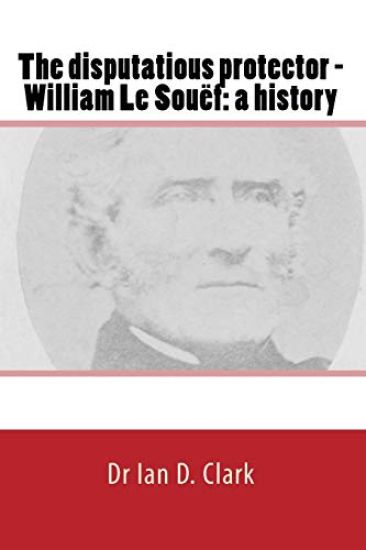
William Le Sou f was the fifth and final person to be appointed an assistant protector in the Port Phillip Aboriginal Protectorate when he replaced James Dredge in the Goulburn River District in July 1840. Despite some procrastination by the Chief Protector, George Augustus Robinson, but with the urging of the Superintendent of the Port Phillip District, Charles Joseph La Trobe, Le Sou f filled the vacancy created by Dredge's resignation. Yet by the end of the year, Le Sou f's superordinates were in agreement that he was unfit for service. This book is the first detailed biography of William Le Sou f and, amongst other things, explores his relationships with Aboriginal people and with his superiors - Robinson and La Trobe - when he was employed as assistant protector. It does this using the qualitative research methodologies of interpretive biography and thick description. It makes use of contemporary publications, protectorate records, personal diaries, family records, and newspaper articles. Michael Christie's assessment of Le Sou f is that he was a failed protector, who had been poorly chosen, whose lack of expertise, and personal failings adversely affected his work and led to friction within the Protectorate. He considered that Le Sou f did not share Dredge's missionary zeal, and saw his job more as that of protecting settler interests than caring for Aboriginal people. Susan Priestley, in her history of South Melbourne, noted that 'William Le Souef was always uneasy in his role of Assistant Protector, his fear giving rise to unwarranted harshness'. In attempting to understand William Le Sou f, as a person, it is difficult to avoid the conclusion that he had a tendency towards superciliousness and arrogance, and that he had lordly pretensions, as seen in his quip that he should have been the superintendent of the Port Phillip District, and not La Trobe. Some contemporary observers suggested he suffered from some kind of mental illness, with the Goulburn protectorate station's medical officer, Neil Campbell, considering that on one occasion he was 'unfit to have charge of his own affairs'. Le Sou f's behaviours and interpersonal relationships reveal that he was a difficult man to get along with - one newspaper editor described him as 'peculiarly minded'. Descriptions such as disputatious, bellicose, and truculent, seem to be fitting epithets of his character and personality. Yet, when his application to manage the Victorian Industrial Society was successful, one contemporary, Edward Wilson, the editor of the Argus, lauded the appointment and described Le Sou f as 'a gentleman of great natural ability, of very considerable attainments, of an active and energetic temperament, and of gentlemanly manners'. These strengths were best demonstrated in his public commitment to animal welfare, ornithology, and zoology. Nevertheless, a consideration of his statements and those of his superior officers and his employees, about his attitudes towards and treatment of Aboriginal people, William Le Sou f's unsuitability for the role of Assistant Protector is starkly obvious. Le Sou f would certainly have been better suited to a different part of the public service, where his aggressive behaviour and lack of interpersonal skills would not have been called into play - perhaps in the office of births, deaths, and marriages, given his earlier interest in civil registration. Perhaps he ought to have pursued a career in journalism, as he regularly demonstrated a penchant for writing. William Le Sou f never achieved the social recognition in Victoria that he desired - indeed, it was his youngest son, Albert Le Sou f, who was feted in Melbourne's scientific community as an authority on Aboriginal people based on his personal experiences in the Protectorate and the pastoral frontier.
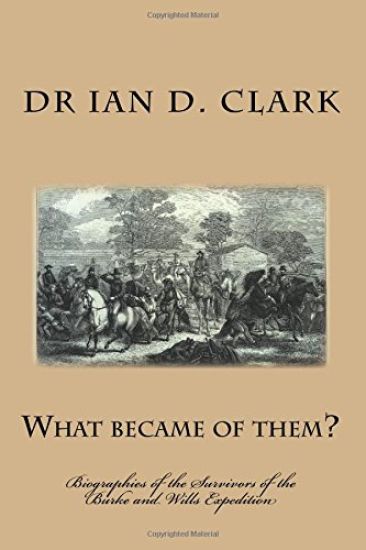
This book is concerned to document, where possible, what became of the men who participated in and survived the Burke and Wills expedition (see Table 1.1). These biographical sketches do not consider the personal histories of John King (see Villiers 2012), William Hodgkinson (see Stoodley n.d.), Charles Darius Ferguson (see Ferguson 1888, 1924; Potts & Potts 1979), or Dr Hermann Beckler (see Dodd 2016), as their stories are relatively well-known and are already the subject of some biographical study. Rather they concentrate on the other 25 survivors. As each decade passed from the departure of the expedition in 1860, awareness in Australia of the identities of the last survivors became confused and with the emigration of some expeditioners (such as Beckler, Ferguson, Macpherson, and Price) to other countries, they became out of sight and out of mind. To confuse the issue even further, my research has identified a significant number of men and women who falsely claimed an association with the expedition. Membership of the expedition is interpreted broadly to include the three men who were selected but dismissed on or before the day of departure - that is, Owen Cowen, Henry Creber, and Robert Fletcher; however, it does not include Professor Georg Neumayer, who travelled with the expedition from Swan Hill to Bilbarka; or Police Superintendent Henry Foster who accompanied the party from Swan Hill to Balranald. Of the 29 survivors, a year of death is known for only half of them. Of those known, the first to die was Landells in India (1871), followed by King in Melbourne (1872), Creber died at sea off New Zealand in 1874, Dost Mahomet died in 1881, and Cowen in New Zealand in 1885. Macpherson died in New Zealand in 1896 and Lyons died in Melbourne in 1899. Four members died in the first decade of the 20th century - Hodgkinson in Brisbane in 1900, Price in New Zealand in 1904, McDonogh in Melbourne in 1904, and Lane in Melbourne in 1907. Only four men are known to have lived to see the golden jubilee of the expedition in 1910: Brahe who died in Melbourne in 1912; Beckler in Germany in 1914; Prolongeau in Mildura in 1915; and Ferguson in the United States in 1925. As far as we know, Ferguson was the last expedition member to die, and the longest lived - at 93 years of age. At least three members - King, Lane, and McDonogh - were receiving assistance from the Victorian Government at the time of their deaths. The study began with 29 survivors, and excluded four men (John King, Herman Beckler, William Hodgkinson, and Charles Ferguson) because they have been the subject of some biographical study, leaving 25 subjects. Of these, biographical details have been found for the following 15 men - George Landells, John Prolongeau, Owen Cowen, Robert Fletcher, Alexander Macpherson, Thomas McDonogh, William Brahe, William Wright, Henry Creber, Alfred Price, James Lane, Myles Lyons, Esau Khan, Dost Mahomet, and Belooch Khan. The other 10 men remain the subject of further research: Robert Bowman, Thomas Brooks, John Drakeford, Patrick Langan, James McIlwaine, John Smith, Samla, William Cole, Frederick Morrison, and M. O'Brien.
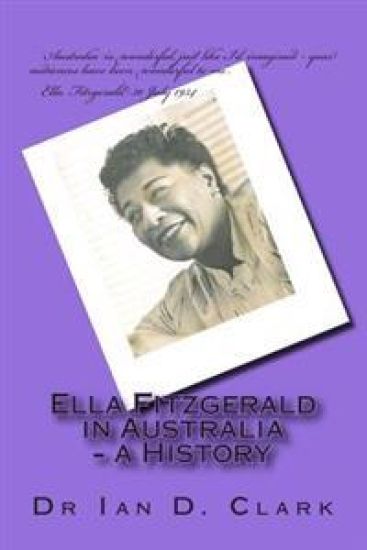
Jazz icon Ella Fitzgerald visited Australia four times in her long career that spanned six decades. This work presents a history of Ella Fitzgerald's Australian tours, and analyses how her concert appearances were received and reviewed in Australian and international media. She first toured in July 1954 as part of Lee Gordon's inaugural 'The Big Show'. Her second tour in December 1960 included Verve stable mate Mel Torm , who was her supporting act. This tour was arranged by Melbourne night club owner Jim Noall and extended to the capital cities of the eastern seaboard and Adelaide. After completing her Australian commitments in early December 1960, Fitzgerald flew to New Zealand for her first tour there - this leg of the tour was promoted by Harry M. Miller. Her next visit came in November 1970, according to an article in The TV Times, but very little has been discovered about this tour. Her final visit to Australia came in November - December 1978 when she performed in Sydney, Melbourne, Brisbane, and Adelaide, and in Perth for the first and only time in her career. In 1978 all the epithets used in the Australian print media to refer to Ella acclaimed her musicianship - gone was the earlier fixation on her colour and weight. Now she was 'Jazz Queen', 'Ella the great', 'First lady of song', 'world's greatest popular/jazz singer', 'grand lady of jazz', 'majestic', and 'singing legend'. Ella Fitzgerald's 1978 Australian tour was a no-holds-barred celebration of her music and of her life. Australian audiences adulated Ella Fitzgerald. In the major biographies of Ella Fitzgerald, Australia does not feature prominently - in fact it barely rates a mention. The 1954 tour was overshadowed by the racist event that occurred in Honolulu, Hawaii, en route to Australia from California that saw her 'bumped' from her first class airline seat. The 1960 Australian tour received scant attention in Fitzgerald biographies, and only one mentioned it in the context of her appearance at the inaugural gala for president-elect John F. Kennedy. The 1970 and 1978 visits do not receive any mention in leading biographies. The work contains rare photographs, many of which have never been published before.
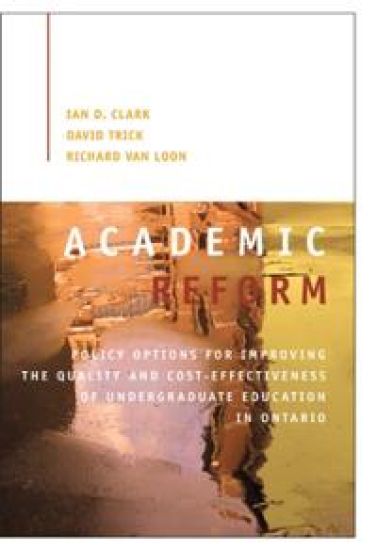
Academic Reform explores ways to sharpen the universities' focus on undergraduate teaching and increase the number of students without diminishing Ontario's ability to attract and retain university researchers of the highest calibre.
The large scale publicly funded system of postsecondary education in Ontario developed in the 1960s has been largely successful in fulfilling important societal needs in the areas of education, human resource development, and research. Existing approaches, however, are unlikely to be sufficient to address the challenges of the coming decade. Academic Transformation: The Forces Reshaping Higher Education in Ontario examines the developments that are re-shaping the province's post-secondary system, including higher enrollment, further development of a knowledge-based economy, increased demands for research focused on competitiveness and productivity, and Ontario's transition to a multicultural, internationally connected, urban, and aged society. Universities and colleges are also adjusting to internal changes in the composition of the student body and staff, faculty work profiles, and funding arrangements. The authors consider possible changes in the system's structure, policy, and governance that may be helpful in dealing with the anticipated changes in societal needs, and expectations related to post-secondary education.
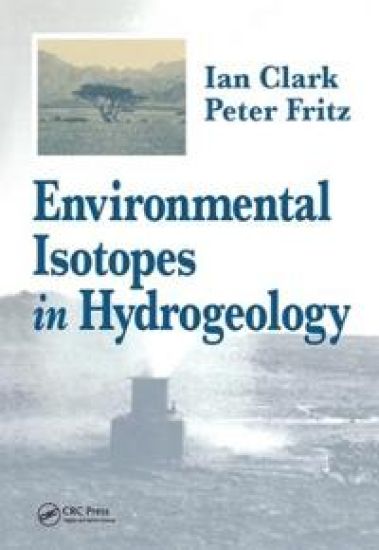
Groundwater is an increasingly important resource to human populations around the world, and the study and protection of groundwater is an essential part of hydrogeology - the subset of hydrology that concentrates on the subsurface. Environmental isotopes, naturally occurring nuclides in water and solutes, have become fundamental tools for tracing the recharge, history, and contamination of groundwater.