
Kirjailija
Ian Morris
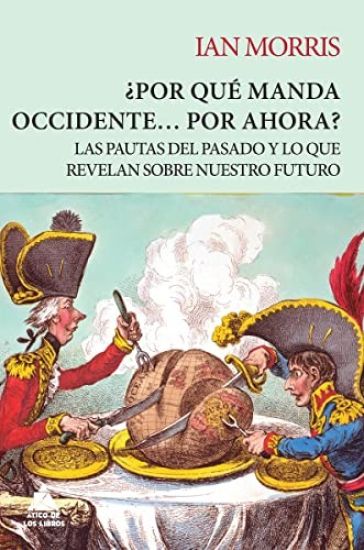
Kirjat ja teokset yhdessä paikassa: 33 kirjaa, julkaisuja vuosilta 1899–2025, suosituimpiin kuuluu Por Que Manda Occidente... Por Ahora?. Vertaile teosten hintoja ja tarkista saatavuus suomalaisista kirjakaupoista.
33 kirjaa
Kirjojen julkaisuvuodet: 1899–2025.

Discover the science behind microdosing and explore its potential therapeutic benefits as well as the controversies and risks associated with this practice in Microdosing: The Science and Controversy of Psychedelic Therapy by Ian Morris. SEO-optimized keywords:
Geography Is Destiny: Britain and the World: A 10,000-Year History
Ian Morris
Picador USA
2023
nidottu
In the wake of Brexit, Ian Morris chronicles the ten-thousand-year history of Britain's relationship to Europe as it has changed in the context of a globalizing world. When Britain voted to leave the European Union in 2016, the 48 percent who wanted to stay and the 52 percent who wanted to go each accused the other of stupidity, fraud, and treason. In reality, the Brexit debate merely reran a script written ten thousand years earlier, when the rising seas physically separated the British Isles from the European continent. Ever since, geography has been destiny--yet it is humans who get to decide what that destiny means. Ian Morris, the critically acclaimed author of Why the West Rules--for Now, describes how technology and organization have steadily enlarged Britain's arena, and how its people have tried to turn this to their advantage. For the first seventy-five hundred years, the British were never more than bit players at the western edge of a European stage, struggling to find a role among bigger, richer, and more sophisticated continental rivals. By 1500 CE, however, new kinds of ships and governments had turned the European stage into an Atlantic one; with the English Channel now functioning as a barrier, England transformed the British Isles into a United Kingdom that created a worldwide empire. Since 1900, thanks to rapid globalization, Britain has been overshadowed by American, European, and--increasingly--Chinese actors. In trying to find its place in a global economy, Britain has been looking in all the wrong places. The ten-thousand-year story bracingly chronicled by Geography Is Destiny shows that the great question for the current century is not what to do about Brussels; it's what to do about Beijing.
The story of Britain, from its first moments as an island to its possible future

'Ian Morris has established himself as a leader in making big history interesting and understandable' Jared Diamond, author of Guns, Germs and Steel 'Morris succeeds triumphantly at cramming 10,000 years of history into a single book' Robert Colvile, Times Geography is Destiny tells the history of Britain and its changing relationships with Europe and the wider world, from its physical separation at the end of the Ice Age to the first flickers of a United Kingdom, struggles for the Atlantic, and rise of the Pacific Rim. Applying the latest archaeological evidence, Ian Morris explores how geography, migration, government and new technologies interacted to produce regional inequalities that still affect us today. He charts Britain's geopolitical fortunes over thousands of years, revealing its transformation from a European satellite into a state at the centre of global power, commerce, and culture. But as power and wealth shift from West to East, does Britain's future lie with Europe or the wider world?

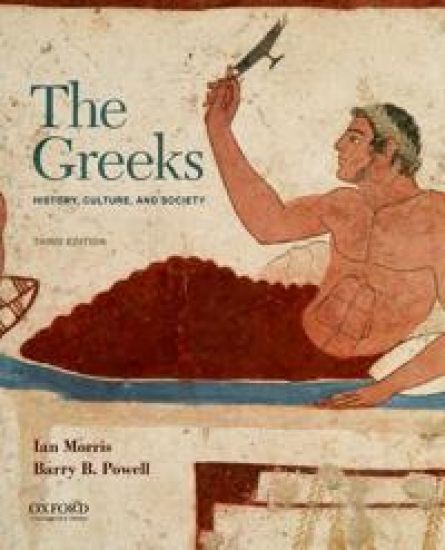
The Greeks
Ian Morris; Barry B. Powell
OXFORD UNIVERSITY PRESS INC
2022
nidottu
Halvin toimitettuna 109,10 €
In The Greeks, Ian Morris and Barry B. Powell try to see ancient Greece as a whole: not just a narrative of events or an overview of culture, but history and culture taken together. From ancient Greece comes the modern conviction that through open discussion and the exercise of reason a society of free citizens can solve the problems that challenge it. In one period of Greek history, a society just so governed produced timeless masterpieces of literature, art, and rational thought at the same time that it waged terrible wars and committed countless cruelties. If we understand the past, we can live better in the present, but the past is hard to understand. In The Greeks, Morris and Powell offer new ways of thinking about old problems.

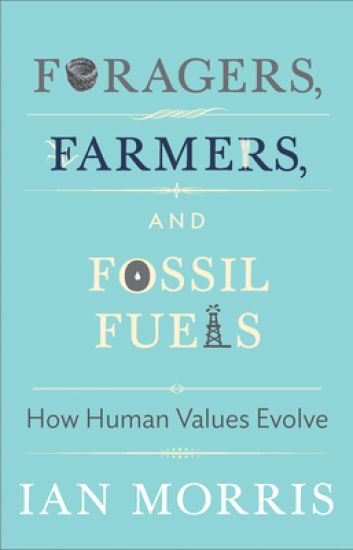
Foragers, Farmers, and Fossil Fuels
Ian Morris
Princeton University Press
2017
pokkari
Halvin toimitettuna 31,70 €
Most people in the world today think democracy and gender equality are good, and that violence and wealth inequality are bad. But most people who lived during the 10,000 years before the nineteenth century thought just the opposite. Drawing on archaeology, anthropology, biology, and history, Ian Morris explains why. Fundamental long-term changes in values, Morris argues, are driven by the most basic force of all: energy. Humans have found three main ways to get the energy they need--from foraging, farming, and fossil fuels. Each energy source sets strict limits on what kinds of societies can succeed, and each kind of society rewards specific values. But if our fossil-fuel world favors democratic, open societies, the ongoing revolution in energy capture means that our most cherished values are very likely to turn out not to be useful any more. Foragers, Farmers, and Fossil Fuels offers a compelling new argument about the evolution of human values, one that has far-reaching implications for how we understand the past--and for what might happen next. Originating as the Tanner Lectures delivered at Princeton University, the book includes challenging responses by classicist Richard Seaford, historian of China Jonathan Spence, philosopher Christine Korsgaard, and novelist Margaret Atwood.



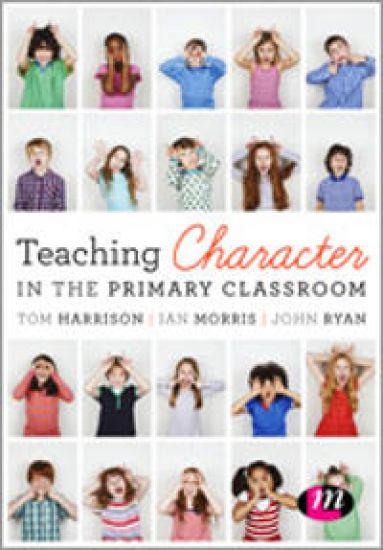
Teaching Character in the Primary Classroom
Tom Harrison; Ian Morris; John Ryan
Learning Matters Ltd
2016
nidottu
"Teaching Character in the Primary Classroom provides an excellent and very accessible overview of the emerging field of character education. It covers, in detail, the theory of character education as well as advice and guidance about how this should be applied in practice in primary schools." Professor James Arthur, University of Birmingham Character matters. As more and more schools are choosing to teach Character Education, trainee and beginning teachers need to know more. What is Character Education? Can it really be 'taught'? How does children's learning benefit from discussions around character in the classroom? How do I teach it? What does good teaching of Character Education look like in the classroom? Teaching Character Education in Primary schools tackles these questions, and many more. This is a practical guide to why and how we can teach character in primary schools. It begins by exploring why character matters and considers what 'character' is and (importantly) what it is not. It goes on to discuss the place for teaching character in primary education and includes practical guidance on how it can be taught. The text also looks at character beyond the classroom, how parents and the wider community can be included in the teaching of character and how outdoor learning and education can contribute. This book is written for all those who are new to teaching character.
Teaching Character in the Primary Classroom
Tom Harrison; Ian Morris; John Ryan
Learning Matters Ltd
2016
sidottu
"Teaching Character in the Primary Classroom provides an excellent and very accessible overview of the emerging field of character education. It covers, in detail, the theory of character education as well as advice and guidance about how this should be applied in practice in primary schools." Professor James Arthur, University of Birmingham Character matters. As more and more schools are choosing to teach Character Education, trainee and beginning teachers need to know more. What is Character Education? Can it really be 'taught'? How does children's learning benefit from discussions around character in the classroom? How do I teach it? What does good teaching of Character Education look like in the classroom? Teaching Character Education in Primary schools tackles these questions, and many more. This is a practical guide to why and how we can teach character in primary schools. It begins by exploring why character matters and considers what 'character' is and (importantly) what it is not. It goes on to discuss the place for teaching character in primary education and includes practical guidance on how it can be taught. The text also looks at character beyond the classroom, how parents and the wider community can be included in the teaching of character and how outdoor learning and education can contribute. This book is written for all those who are new to teaching character.
Teaching Happiness and Well-Being in Schools, Second edition
Ian Morris
Bloomsbury Education
2015
nidottu
This updated edition is a theoretical and practical guide to implementing a well-being programme in your school. The book covers three areas: well-being as a philosophy of education, the teaching approach to well-being and the content that might form a well-being programme in a school. It is also a manifesto for a meaningful aim to education. There has recently been an explosion of interest in positive psychology and the teaching of well-being and 'happiness' in the PSHE world in schools and many teachers are looking for clear information on how to implement these potentially life-changing ideas in the classroom. This book provides an introduction to the theory of positive psychology and a practical guide on how to implement the theory in (primarily secondary) schools. It is written by Ian Morris who worked under Anthony Seldon at Wellington College which is well-known for its well-being and happiness curriculum.
War is one of the greatest human evils. It has ruined livelihoods, provoked unspeakable atrocities and left countless millions dead. It has caused economic chaos and widespread deprivation. And the misery it causes poisons foreign policy for future generations. But, argues bestselling historian Ian Morris, in the very long term, war has in fact been a good thing. In his trademark style combining inter-disciplinary insights, scientific methods and fascinating stories, Morris shows that, paradoxically, war is the only human invention that has allowed us to construct peaceful societies. Without war, we would never have built the huge nation-states which now keep us relatively safe from random acts of violence, and which have given us previously unimaginable wealth. It is thanks to war that we live longer and more comfortable lives than ever before. And yet, if we continue waging war with ever-more deadly weaponry, we will destroy everything we have achieved; so our struggles to manage warfare make the coming decades the most decisive in the history of our civilisation. In War: What Is It Good For? Morris brilliantly dissects humanity's history of warfare to draw startling conclusions about our future.
Most people in the world today think democracy and gender equality are good, and that violence and wealth inequality are bad. But most people who lived during the 10,000 years before the nineteenth century thought just the opposite. Drawing on archaeology, anthropology, biology, and history, Ian Morris explains why. Fundamental long-term changes in values, Morris argues, are driven by the most basic force of all: energy. Humans have found three main ways to get the energy they need--from foraging, farming, and fossil fuels. Each energy source sets strict limits on what kinds of societies can succeed, and each kind of society rewards specific values. But if our fossil-fuel world favors democratic, open societies, the ongoing revolution in energy capture means that our most cherished values are very likely to turn out not to be useful any more. Foragers, Farmers, and Fossil Fuels offers a compelling new argument about the evolution of human values, one that has far-reaching implications for how we understand the past--and for what might happen next. Originating as the Tanner Lectures delivered at Princeton University, the book includes challenging responses by classicist Richard Seaford, historian of China Jonathan Spence, philosopher Christine Korsgaard, and novelist Margaret Atwood.
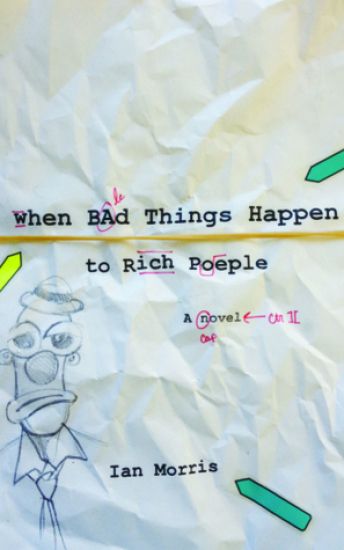
When Bad Things Happen to Rich People is a novel of social satire, a black comedy set in Chicago in the summer of 1995. The novel's protagonist, Nix Walters, is an adjunct instructor of English at a communications college in the loop with few prospects for advancement. He had become a literary punch line when his novel, touted as the next big literary phenomenon, was universally panned by critics. He and his pregnant wife, Flora, are struggling financially; however, their fortunes change when Nix is asked to ghostwrite the memoirs of publishing magnate Zira Fontaine. While grateful for a lavish author fee, Nix quickly finds his marriage, his career, and his sense of identity threatened as he struggles with a difficult subject, navigates office intrigue of Fontaine's corporation, and faces impending fatherhood. These tensions come to a turbulent climax when a brutal heat wave hits the city. Written in the spirit of great naturalist novelists of the previous century, such as Dreiser, Norris, and Crane, with a black comic twist, Morris's first novel is a study in aspiration and self-deception in the face of unforeseen adversity. Set among the broad lawns of Lake Forest where the domestic staff skim leaves from the pool and the sweltering streets of Chicago's pre-gentrified Wicker Park neighborhood, where children plunge into the raging stream of open fire hydrants, When Bad Things Happen to Rich People is a broad panorama of our current social reality.