Kirjojen hintavertailu – 12 903 725 kirjaa ja 27 kauppaa

Kirjailija

Ilan Stavans

Kirjat ja teokset yhdessä paikassa: 73 kirjaa, julkaisuja vuosilta 1997–2028, suosituimpiin kuuluu José Vasconcelos. Vertaile teosten hintoja ja tarkista saatavuus suomalaisista kirjakaupoista.

73 kirjaa

Kirjojen julkaisuvuodet: 1997–2028.

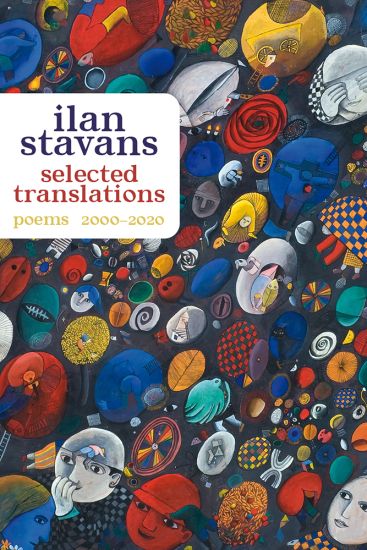
Selected Translations

Selected Translations

Ilan Stavans

University of Pittsburgh Press
2021
nidottu
For twenty years, Ilan Stavans has been translating poetry from Spanish, Yiddish, Hebrew, French, Portuguese, Russian, German, Georgian, and other languages. His versions of Borges, Neruda, Sor Juana Inés de la Cruz, Ferreira Gullar, Raúl Zurita, and dozens of others have become classics. This volume, which includes poems from more than forty poets from all over the world, is testimony to a life dedicated to the pursuit of beauty through poetry in different languages.
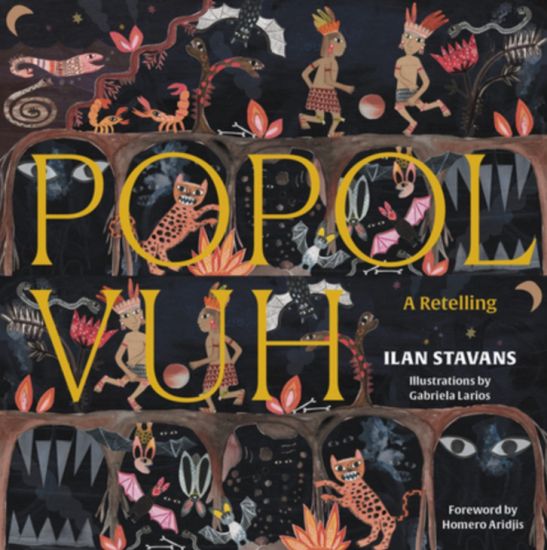
Popol Vuh

Popol Vuh

Ilan Stavans; Homero Aridjis

Restless Books
2020
sidottu
An inspired and urgent prose retelling of the Maya myth of creation by acclaimed Latin American author and scholar Ilan Stavans, gorgeously illustrated by Salvadoran folk artist Gabriela Larios and introduced by renowned author, diplomat, and environmental activist Homero Aridjis. The archetypal creation story of Latin America, the Popol Vuh began as a Maya oral tradition millennia ago. In the mid-sixteenth century, as indigenous cultures across the continent were being threatened with destruction by European conquest and Christianity, it was written down in verse by members of the K’iche’ nobility in what is today Guatemala. In 1701, that text was translated into Spanish by a Dominican friar and ethnographer before vanishing mysteriously. Cosmic in scope and yet intimately human, the Popol Vuh offers invaluable insight into the Maya way of life before being decimated by colonization—their code of ethics, their views on death and the afterlife, and their devotion to passion, courage, and the natural world. It tells the story of how the world was created in a series of rehearsals that included wooden dummies, demi-gods, and eventually humans. It describes the underworld, Xibalba—a place as harrowing as Dante’s hell—and relates the legend of the ultimate king, who, in the face of tragedy, became a spirit that accompanies his people in their struggle for survival. Popol Vuh: A Retelling is a one-of-a-kind prose rendition of this sacred text that is as seminal as the Bible and the Qur'an, the Ramayana and the Odyssey. Award-winning scholar of Latin American literature Ilan Stavans brings a fresh creative energy to the Popol Vuh, giving a new generation of readers the opportunity to connect with this timeless story and with the plight of the indigenous people of the Americas.
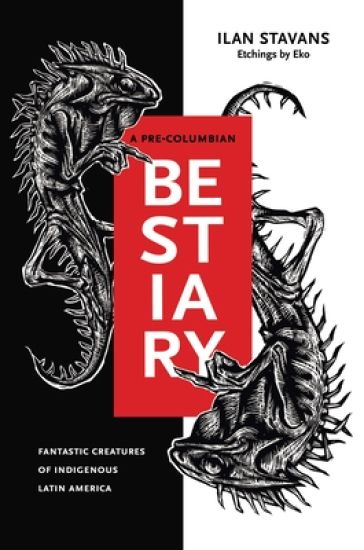
A Pre-Columbian Bestiary

A Pre-Columbian Bestiary

Ilan Stavans

Pennsylvania State University Press
2020
sidottu
An encyclopedic collaboration between award-winning Mexican American scholar Ilan Stavans and illustrator Eko, A Pre-Columbian Bestiary features lively and informative descriptions of forty-six religious, mythical, and imaginary creatures from the Nahua, Aztec, Maya, Tabasco, Inca, Aymara, and other cultures of Latin America. From the siren-like Acuecuéyotl and the water animal Chaac to the class-conscious Oc and the god of light and darkness Xólotl, the magnificent entities in this volume belong to the same family of real and invented creatures imagined by Dante, Franz Kafka, C. S. Lewis, Jorge Luis Borges, Umberto Eco, and J. K. Rowling. They are mined from indigenous religious texts, like the Popol Vuh, and from chronicles, both real and fictional, of the Spanish conquest by Diego Durán, Bernal Díaz del Castillo, and Fernando de Zarzamora, among others. In this playful compilation, Stavans distills imagery from the work of magic realist masters such as Juan Rulfo and Gabriel García Márquez; from songs of protest in Mexico, Guatemala, and Peru; and from aboriginal beasts in Jewish, Muslim, European, British, and other traditions. In the spirit of imaginative invention, even the bibliography is a mixture of authentic and concocted material. An inspiring record of resistance and memory from a civilization whose superb pantheon of myths never ceases to amaze, A Pre-Columbian Bestiary will delight anyone interested in the history and culture of Latin America.

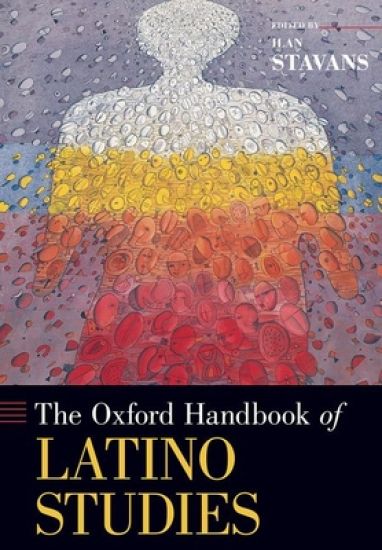
The Oxford Handbook of Latino Studies

The Oxford Handbook of Latino Studies

Ilan Stavans

Oxford University Press Inc
2020
sidottu
At the beginning of the third decade of the 21st century, the Latino minority, the biggest and fastest growing in the United States, is at a crossroads. Is assimilation taking place in comparable ways to previous immigrant groups? Are the links to the countries of origin being redefined in the age of contested globalism? How are Latinos changing America and how is America changing Latinos? The Oxford Handbook of Latino Studies reflects on these questions, offering a sweeping exploration of Latinas and Latinos' complex experiences in the United States. Edited by leading expert Ilan Stavans, the handbook traces the emergence of Latino studies as a vibrant and interdisciplinary field of research starting in the 1980s, assessing the current state of the discipline while suggesting new paths for exploration. With its twenty-three essays and a conversation by established and emerging scholars, the book discusses various aspects of Latino life and history, from literature, popular culture, and music, to religion, philosophy, and language identity. The articles present new interpretations of important themes such as the Chicano Movement, gender and race relations, the changes in demographics, the tension between rural and urban communities, immigration and the US/Mexico border, the legacy of colonialism, and the controversy surrounding Spanglish. The first handbook on Latino Studies, this collection offers a multifaceted and thought-provoking look at how Latinos are redefining the American identity.
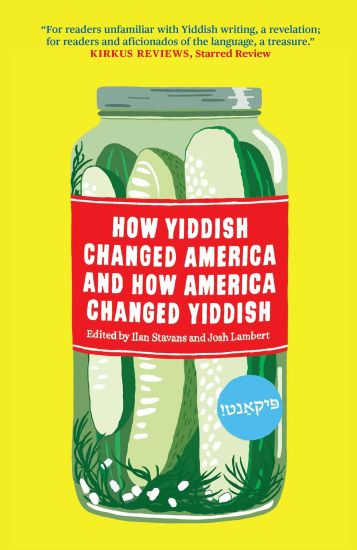
How Yiddish Changed America And How America Changed Yiddish

How Yiddish Changed America And How America Changed Yiddish

Ilan Stavans

Restless Books
2020
sidottu

Halvin toimitettuna 27,20 €

Is it possible to conceive of the American diet without bagels? Or Star Trek without Mr. Spock? Are the creatures in Maurice Sendak's Where the Wild Things Are based on Holocaust survivors? And how has Yiddish, a language without a country, influenced Hollywood? These and other questions are explored in this stunning and rich anthology of the interplay of Yiddish and American culture, edited by award-winning authors and scholars Ilan Stavans and Josh Lambert. Includes work by Isaac Bashevis Singer, Grace Paley, Cynthia Ozick, Chaim Grade, Michael Chabon, Abraham Cahan, Sophie Tucker, Blume Lempel, Irving Howe, and many more.
The Seventh Heaven

The Seventh Heaven

Ilan Stavans

University of Pittsburgh Press
2020
nidottu
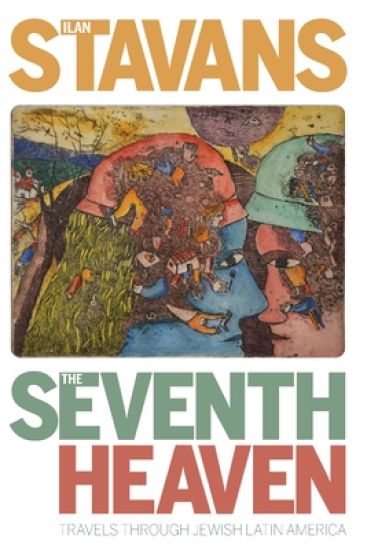
Internationally renowned essayist and cultural commentator Ilan Stavans spent five years traveling from across a dozen countries in Latin America, in search of what defines the Jewish communities in the region, whose roots date back to Christopher Columbus’s arrival. In the tradition of V. S. Naipaul’s explorations of India, the Caribbean, and the Arab World, he came back with an extraordinarily vivid travelogue. Stavans talks to families of the desaparecidos in Buenos Aires, to “Indian Jews,” and to people affiliated with neo-Nazi groups in Patagonia. He also visits Spain to understand the long-term effects of the Inquisition, the American Southwest habitat of “secret Jews,” and Israel, where immigrants from Latin America have reshaped the Jewish state. Along the way, he looks for the proverbial “seventh heaven,” which, according to the Talmud, out of proximity with the divine, the meaning of life in general, and Jewish life in particular, becomes clearer. The Seventh Heaven is a masterful work in Stavans’s ongoing quest to find a convergence between the personal and the historical.
The Return of Carvajal

The Return of Carvajal

Ilan Stavans

Pennsylvania State University Press
2019
sidottu
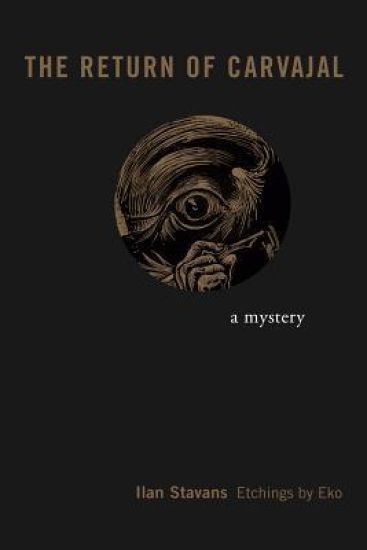
In 2017, the New York Times announced that the long-lost memoir of Luis de Carvajal the Younger had been rediscovered. Considered the first autobiography by a Jew in the Americas, the book had been stolen decades earlier from Mexico’s National Archives. Here, Ilan Stavans recounts the extraordinary and entertaining story of the reappearance of this precious object and how its discovery opened up new vistas onto the world of secret Jews escaping the Spanish Inquisition. Called el Mozo (the Younger) to distinguish him from an uncle of the same name who was governor of Nuevo León, Luis de Carvajal learned of his Jewishness after being raised a Catholic. He came to recognize himself as a messiah for fellow crypto-Jews, and he was burned at the stake on December 8, 1596, in the biggest auto-da-fé in all of Latin America. His memoir—a 180-page manuscript written by a crypto-Jew targeted by the Holy Office of the Inquisition for unlawful proselytizing activities—was not only distinct but of enormous value. With characters such as conniving academics embroiled in a scholarly feud, a magnanimous philanthropist, naïve booksellers, and a secondary cast that could be taken from a David Lynch film, The Return of Carvajal recounts the global intrigue that placed crypto-Jewish culture at the heart of contemporary debates on religion and identity.
On Self-Translation

On Self-Translation

Ilan Stavans

State University of New York Press
2018
pokkari
A fascinating collection of essays and conversations on the changing nature of language. Finalist for the 2018 Foreword INDIES Book of the Year Awards in the Essay category From award-winning, internationally known scholar and translator Ilan Stavans comes On Self-Translation, a collection of essays and conversations on language in its multifaceted forms. Stavans discusses the way syntax is being restructured by texting and other technologies. He examines how the alphabet itself is being forgotten by the young, how finger snapping has taken on a new meaning, how the use of ellipses has lapsed, and how autocorrect is shaping the way we communicate. In an incisive meditation, he shows how translating one's own work reinvents oneself in another tongue. The volume includes tête-à-têtes with Pulitzer Prize–winner Richard Wilbur and short-fiction master Lydia Davis, as well as dialogues on silence, multilingualism, poetry, and the durability of the classics. Stavans's explorations cover Spanish, English, Hebrew, Yiddish, and the hybrid lexicon of Spanglish. He muses on the meaning of foreignness and on living and dying in different languages. Among his primary concerns are the role and history of dictionaries and the extent to which the authority of language academies is less a reality than a delusion. He concludes with renditions into Spanglish of portions of Hamlet, Don Quixote, and The Little Prince. The wide range of themes and engaging yet informed style confirm Stavans's status, in the words of the Washington Post, as "Latin America's liveliest and boldest critic and most innovative cultural enthusiast." This book is freely available in an open access edition thanks to Knowledge Unlatched-an initiative that provides libraries and institutions with a centralized platform to support OA collections and from leading publishing houses and OA initiatives. Learn more at the Knowledge Unlatched website at https://www.knowledgeunlatched.org/.
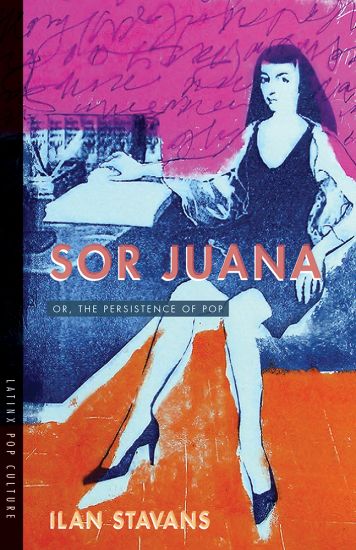
Sor Juana

Sor Juana

Ilan Stavans

University of Arizona Press
2018
nidottu
A sixteenth-century Mexican nun, Sor Juana Inés de la Cruz, has become one of the most rebellious and lasting icons in modern times, on par with Mahatma Gandhi, Ernesto ""Che"" Guevara, and Nelson Mandela. Referenced in ranchera, tejana, and hip-hop lyrics, and celebrated in popular art as a guerrillera with rifle and bullet belts, Sor Juana has become ubiquitous. The conduits keep multiplying: statues, lotería cards, key chains, recipe books, coffee mugs, Día de los Muertos costumes. Ironically, Juana Inés de Asbaje—alias Sor Juana Inés de la Cruz—died in anonymity. Her grave was unmarked until the 1970s. Sor Juana: Or, the Persistence of Pop encapsulates the life, times, and legacy of Sor Juana. In this immersive work, essayist Ilan Stavans provides a biographical and meditative picture of the ways in which popular perceptions of her life and body of work both shape and reflect modern Latinx culture.
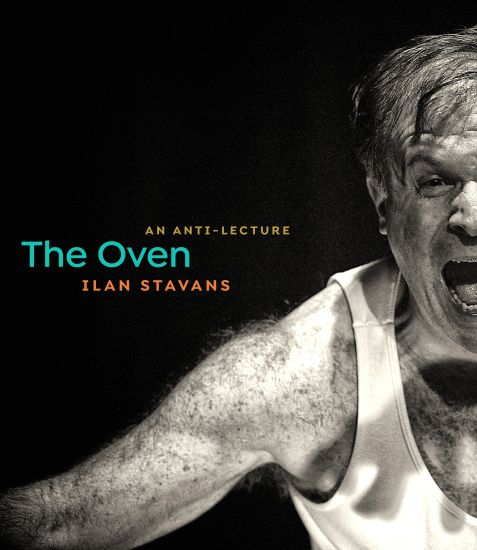
The Oven

The Oven

Ilan Stavans

University of Massachusetts Press
2018
nidottu
After a chance meeting with a shaman in Colombia, Ilan Stavans, the highly regarded literary scholar, found himself in the Amazon rainforest. He had reluctantly agreed to participate in a religious ceremony that involved taking the hallucinogen ayahuasca. Even though he considered himself a skeptic and a rational intellectual, as someone whose worldview was defined by his education and his heritage as a Mexican Jew, Stavans found that the ritual pushed him to reconsider many of his basic understandings, including his perceptions of indigenous cultures in Latin America, as well as his career as teacher, thinker, and artist. This one-act play is delivered in the form of a lecture that mimics the author's startling spiritual journey. The book includes twenty-five bold images, in color and black and white, which capture the author's performance of the play.
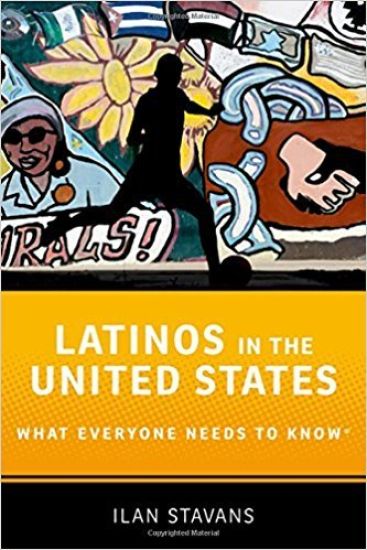
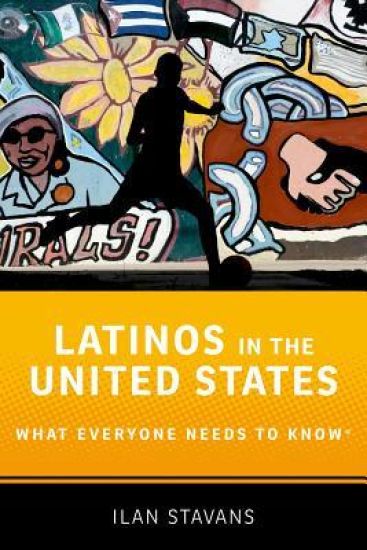
Latinos in the United States

Latinos in the United States

Ilan Stavans

Oxford University Press Inc
2018
nidottu
As the largest and youngest minority group in the United States, the 60 million Latinos living in the U. S. represent the second-largest concentration of Hispanic people in the entire world, after Mexico. Needless to say, the population of Latinos in the U. S. is causing a shift, not only changing the demographic landscape of the country, but also impacting national culture, politics, and spoken language. While Latinos comprise a diverse minority group--with various religious beliefs, political ideologies, and social values--commentators on both sides of the political divide have lumped Latino Americans into a homogenous group that is often misunderstood. Latinos in the United States: What Everyone Need to Know® provides a comprehensive, multifaceted exploration of Latino American history and culture and the forces shaping this minority group in the U. S. From exploring the origins of the term "latino" and examining what constitutes Latin America, to tracing topical issues like DREAMers, the mass incarceration of Latino males, and the controversial relationship between Latin America and the United States, Ilan Stavans seeks to understand the complexities and unique position of Latino Americans. Throughout he breaks down the various subgroups within the Latino minority (Mexican-Americans, Dominican-Americans, Cuban-Americans, Puerto Ricans on the mainland, and so on), and the degree to which these groups constitute--or don't--a homogenous community, their history, and where their future challenges lay. He sees Latino culture as undergoing dramatic changes as a result of acculturation--changes that are fostering a new "mestizo" identity that is part Hispanic and part American. However, Latinos living in the United States are also impacting American culture. As Ilan Stavans argues, no other minority group will have a more decisive impact on the future of the United States.
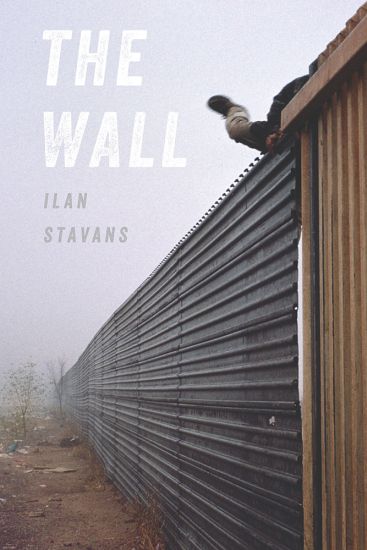
Wall, The

Wall, The

Ilan Stavans

University of Pittsburgh Press
2018
nidottu
Winner of the Massachusetts Book Award for PoetryThe Wall is a poetic exploration—across time, space, and language, real as well as metaphorical—of the U. S.-Mexican wall dividing the two civilizations, of similar walls (Jerusalem, China, Berlin, Warsaw, etc.) in history, and of the act of separating people by ideology, class, race, and other subterfuges. It is an indictment of hateful political rhetoric. In the spirit of Virgil’s Aeneid and Spoon River Anthology by Edgar Lee Master, it gives voice in symphonic fashion to an assortment of participants (immigrants, border patrol, soldiers, activists, presidents, people dead and alive) involved in the debate on walls. It brings in elements of literature and pop culture, fashion and cuisine. Poetry becomes a tool to explore raw human emotions in all its extremes.
Latinos in the United States

Latinos in the United States

Ilan Stavans

Oxford University Press Inc
2018
sidottu
As the largest and youngest minority group in the United States, the 60 million Latinos living in the U. S. represent the second-largest concentration of Hispanic people in the entire world, after Mexico. Needless to say, the population of Latinos in the U. S. is causing a shift, not only changing the demographic landscape of the country, but also impacting national culture, politics, and spoken language. While Latinos comprise a diverse minority group--with various religious beliefs, political ideologies, and social values--commentators on both sides of the political divide have lumped Latino Americans into a homogenous group that is often misunderstood. Latinos in the United States: What Everyone Need to Know® provides a comprehensive, multifaceted exploration of Latino American history and culture and the forces shaping this minority group in the U. S. From exploring the origins of the term "latino" and examining what constitutes Latin America, to tracing topical issues like DREAMers, the mass incarceration of Latino males, and the controversial relationship between Latin America and the United States, Ilan Stavans seeks to understand the complexities and unique position of Latino Americans. Throughout he breaks down the various subgroups within the Latino minority (Mexican-Americans, Dominican-Americans, Cuban-Americans, Puerto Ricans on the mainland, and so on), and the degree to which these groups constitute--or don't--a homogenous community, their history, and where their future challenges lay. He sees Latino culture as undergoing dramatic changes as a result of acculturation--changes that are fostering a new "mestizo" identity that is part Hispanic and part American. However, Latinos living in the United States are also impacting American culture. As Ilan Stavans argues, no other minority group will have a more decisive impact on the future of the United States.
Quixote

Quixote

Ilan Stavans

WW Norton Co
2017
nidottu
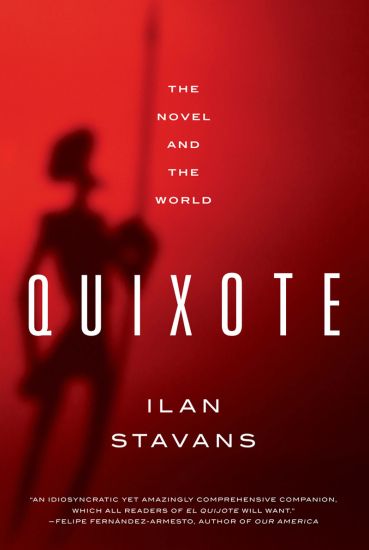
2015 marks the four hundredth anniversary of the publication of the complete Don Quixote of La Mancha—an ageless masterpiece that is unusually fertile and endlessly adaptable. Flaubert was inspired to turn Emma Bovary into “a knight in skirts”. Freud studied Quixote’s psyche. Twain was fascinated by it, as were Kafka, Picasso, Nabokov, Borges and Welles. The novel has spawned ballets and operas, poems and plays, films and video games, and even shapes the identities of nations. In Quixote, Ilan Stavans, one of today’s pre-eminent cultural commentators, explores these many manifestations. Training his eye on the tumultuous struggle between logic and dreams, he reveals the ways in which a work of literature is a living thing that influences and is influenced by the world around it.
I Love My Selfie

I Love My Selfie

Ilan Stavans

Duke University Press
2017
sidottu
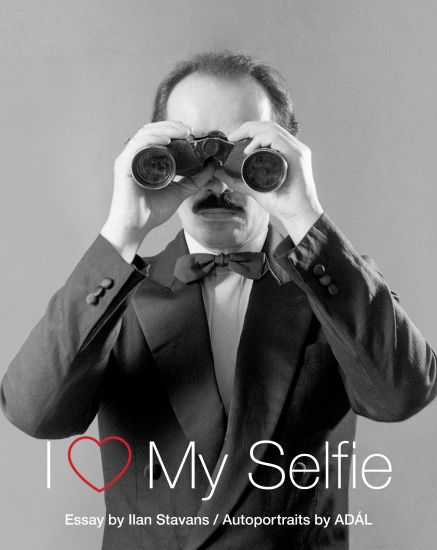
What explains our current obsession with selfies? In I Love My Selfie noted cultural critic Ilan Stavans explores the selfie's historical and cultural roots by discussing everything from Greek mythology and Shakespeare to Andy Warhol, James Franco, and Pope Francis. He sees selfies as tools people use to disguise or present themselves as spontaneous and casual. This collaboration includes a portfolio of fifty autoportraits by the artist ADÁL; he and Stavans use them as a way to question the notion of the self and to engage with artists, celebrities, technology, identity, and politics. Provocative and engaging, I Love My Selfie will change the way readers think about this unavoidable phenomenon of twenty-first-century life.
I Love My Selfie

I Love My Selfie

Ilan Stavans

Duke University Press
2017
pokkari
What explains our current obsession with selfies? In I Love My Selfie noted cultural critic Ilan Stavans explores the selfie's historical and cultural roots by discussing everything from Greek mythology and Shakespeare to Andy Warhol, James Franco, and Pope Francis. He sees selfies as tools people use to disguise or present themselves as spontaneous and casual. This collaboration includes a portfolio of fifty autoportraits by the artist ADÁL; he and Stavans use them as a way to question the notion of the self and to engage with artists, celebrities, technology, identity, and politics. Provocative and engaging, I Love My Selfie will change the way readers think about this unavoidable phenomenon of twenty-first-century life.
Chicano Movement for Beginners

Chicano Movement for Beginners

Maceo Montoya; Ilan Stavans

For Beginners
2016
nidottu
As the heyday of the Chicano Movement of the late 1960s to early 70s fades further into history and as more and more of its important figures pass on, so too does knowledge of its significance. Thus, "Chicano Movement For Beginners" is an important attempt to stave off historical amnesia. It seeks to shed light on the multifaceted civil rights struggle known as "El Movimiento" that galvanized the Mexican American community, from laborers to student activists, giving them not only a political voice to combat prejudice and inequality, but also a new sense of cultural awareness and ethnic pride. Beyond commemorating the past, "Chicano Movement For Beginners" seeks to reaffirm the goals and spirit of the Chicano Movement for the simple reason that many of the critical issues Mexican American activists first brought to the nation's attention then--educational disadvantage, endemic poverty, political exclusion, and social bias--remain as pervasive as ever almost half a century later."
Once@9:53am

Once@9:53am

Ilan Stavans

Pennsylvania State University Press
2016
pokkari
At 9:53 on the morning of July 18, 1994, a suicide bomber drove a Renault Trafic van loaded with explosives into the Asociación Mutual Israelita Argentina, a Jewish community center in the bustling commercial neighborhood of Once, Buenos Aires. The explosion left eighty-five people dead and over three hundred wounded. Originally published amid widespread controversy, Once@9:53am: Terror en Buenos Aires imagines the two hours before the attack through the popular format of the fotonovela. Part documentary, part fiction, this vivid retelling of Argentina’s deadliest bombing depicts a vibrant, complex urban community in the hours before its identity was forever changed. This expanded English edition includes a new essay by Ilan Stavans detailing the aftermath of the attack and the faulty investigations that have yet to yield any arrests or reach resolution. A unique and powerful visual experience, Once@9:53am is both a commemoration of an atrocity that shifted Latin American Jewish identity in innumerable ways and an ingenious use of a popular format to explore the dangerous intersection of politics and religion in Latin America.
Once@9:53am

Once@9:53am

Ilan Stavans

Pennsylvania State University Press
2016
pokkari
At 9:53 on the morning of July 18, 1994, a suicide bomber drove a Renault Trafic van loaded with explosives into the Asociación Mutual Israelita Argentina, a Jewish community center in the bustling commercial neighborhood of Once, Buenos Aires. The explosion left eighty-five people dead and over three hundred wounded. Originally published in Spanish amid widespread controversy, Once@9:53am: Terror in Buenos Aires imagines the two hours before the attack through the popular format of the fotonovela. Part documentary, part fiction, this vivid retelling of Argentina’s deadliest bombing depicts a vibrant, complex urban community in the hours before its identity was forever changed. This expanded English edition includes a new essay by Ilan Stavans detailing the aftermath of the attack and the faulty investigations that have yet to yield any arrests or reach resolution. A unique and powerful visual experience, Once@9:53am is both a commemoration of an atrocity that shifted Latin American Jewish identity in innumerable ways and an ingenious use of a popular format to explore the dangerous intersection of politics and religion in Latin America.