Kirjojen hintavertailu – 12 903 725 kirjaa ja 27 kauppaa

Kirjailija

Ilan Stavans

Kirjat ja teokset yhdessä paikassa: 73 kirjaa, julkaisuja vuosilta 1997–2028, suosituimpiin kuuluu José Vasconcelos. Vertaile teosten hintoja ja tarkista saatavuus suomalaisista kirjakaupoista.

73 kirjaa

Kirjojen julkaisuvuodet: 1997–2028.

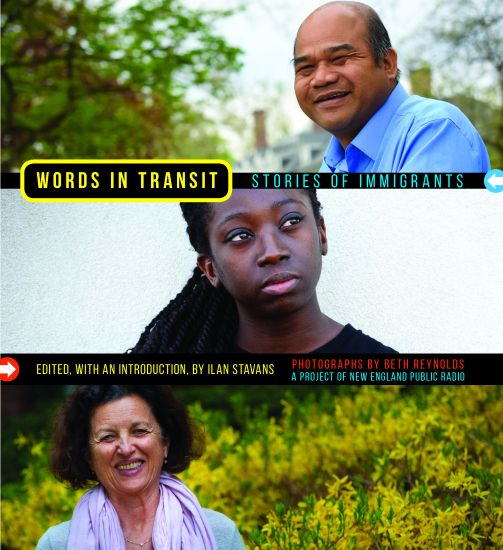
Words In Transit

Words In Transit

Ilan Stavans

University of Massachusetts Press
2016
sidottu
The Pioneer Valley of western Massachusetts is home to immigrants and refugees from around the globe, and their presence revitalizes the region and redefines its culture. Their journeys have involved fear, uprootedness, and isolation as well as perseverance, creativity, and hope. Words in Transit collects the personal stories of nearly thirty people who have made this area their new home. These stories were recorded by New England Public Radio in collaboration with the Copeland Colloquium at Amherst College and produced by Tema Silk and Cathleen O’Keefe under the direction of John Voci. Gathered together in a beautifully designed book that showcases Beth Reynolds’s photographic portraits of each immigrant, these oral histories illuminate the many paths leading to the Pioneer Valley and demonstrate the shared experience among those seeking a new life in a foreign land. Storytellers include a massage therapist from Ireland, a Fulbright scholar from Palestine, a health educator from Taiwan, a literature professor from Spain, and a yoga teacher from Romania. Other participants hail from far-flung places including Haiti, Jamaica, El Salvador, Côte d’Ivoire, the Dominican Republic, Bhutan, Laos, Syria, Cambodia, Sri Lanka, Nepal, Congo, Slovenia, Iraq, and Ukraine. Introduced by the renowned scholar of translation and global literature Ilan Stavans, these stories testify to the resilience, bravery, and hopefulness of western New England émigrés. Proceeds from this book go to scholarships for immigrants at Holyoke Community College.
Borges, the Jew

Borges, the Jew

Ilan Stavans

State University of New York Press
2016
sidottu
Explores Borges' infatuation with Jewish history and culture. Finalist for the 2016 Foreword INDIES Book of the Year Award in the Religion category A Seminary Co-op Notable Book of 2016 In this volume, award-winning cultural critic and controversial public intellectual Ilan Stavans focuses his attention on Jorge Luis Borges's fascination with Jewish culture. Despite not being Jewish himself, Borges wrote essays, poems, and stories dealing with various aspects of Jewish history and culture-from the Holocaust to Kabbalah and from Franz Kafka to the creation of the State of Israel. In periods when anti-Semitism in Argentina was on the rise, Borges was clear in his refutation of such xenophobia, and when Jewish writers were hardly available in Spanish, he was among the first to translate them. Throughout Stavans's discussion of these topics he weaves in personal anecdotes on reading Borges for the first time, hearing him read in Mexico, and looking for him in Buenos Aires. No fan of Borges's classic oeuvre will ever see his legacy in the same way after reading this book.
Reclaiming Travel

Reclaiming Travel

Ilan Stavans; Joshua Ellison

Duke University Press
2015
sidottu
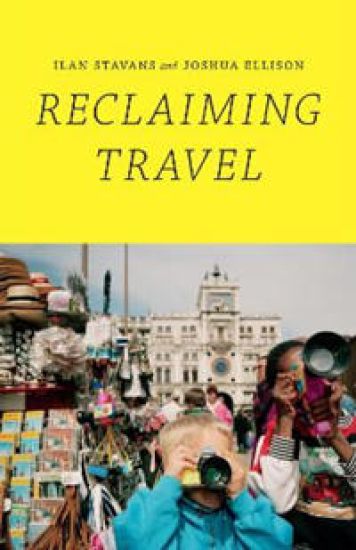
Based on a controversial opinion piece originally published in the New York Times, Reclaiming Travel is a provocative meditation on the meaning of travel from ancient times to the twenty-first century. Ilan Stavans and Joshua Ellison seek to understand why we travel and what has come to be missing from our contemporary understanding of travel. Engaging with canonical and contemporary texts, they explore the differences between travel and tourism, the relationship between travel and memory, the genre of travel writing, and the power of mapmaking, Stavans and Ellison call for a rethinking of the art of travel, which they define as a transformative quest that gives us deeper access to ourselves. Tourism, Stavans and Ellison argue, is inauthentic, choreographed, sterile, shallow, and rooted in colonialism. They critique theme parks and kitsch tourism, such as the shantytown hotels in South Africa where guests stay in shacks made of corrugated metal and cardboard yet have plenty of food, water and space. Tourists, they assert, are merely content with escapism, thrill seeking, or obsessively snapping photographs. Resisting simple moralizing, the authors also remind us that people don’t divide neatly into crude categories like travelers and tourists. They provoke us to reflect on the opportunities and perils in our own habits. In this powerful manifesto, Stavans and Ellison argue that travel should be an art through which our restlessness finds expression-a search for meaning not only in our own lives but also in the lives of others. It is not about the destination; rather, travel is about loss, disorientation, and discovering our place in the universe.
Thirteen Ways of Looking at Latino Art

Thirteen Ways of Looking at Latino Art

Ilan Stavans; Jorge J. E. Gracia

Duke University Press
2014
pokkari
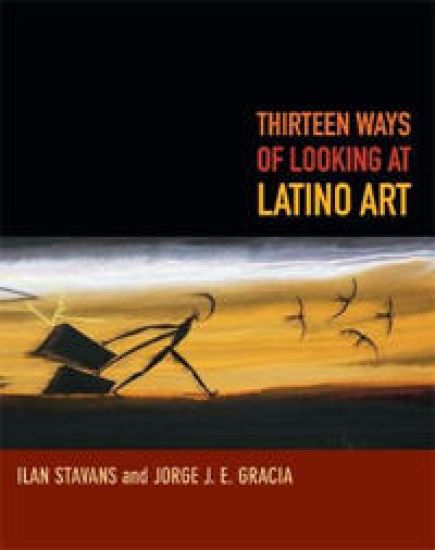
The essayist and cultural commentator Ilan Stavans and the analytic philosopher Jorge J. E. Gracia share long-standing interests in the intersection of art and ideas. Here they take thirteen pieces of Latino art, each reproduced in color, as occasions for thematic discussions. Whether the work at the center of a particular conversation is a triptych created by the brothers Einar and Jamex de la Torre, Andres Serrano's controversial Piss Christ, a mural by the graffiti artist BEAR_TCK, or Above All Things, a photograph by MarÍa Magdalena Campos-Pons, Stavans and Gracia's exchanges inevitably open out to literature, history, ethics, politics, religion, and visual culture more broadly. Autobiographical details pepper Stavans and Gracia's conversations, as one or the other tells what he finds meaningful in a given work. Sparkling with insight, their exchanges allow the reader to eavesdrop on two celebrated intellectuals-worldly, erudite, and unafraid to disagree-as they reflect on the pleasures of seeing.
Thirteen Ways of Looking at Latino Art

Thirteen Ways of Looking at Latino Art

Ilan Stavans; Jorge J. E. Gracia

Duke University Press
2014
sidottu
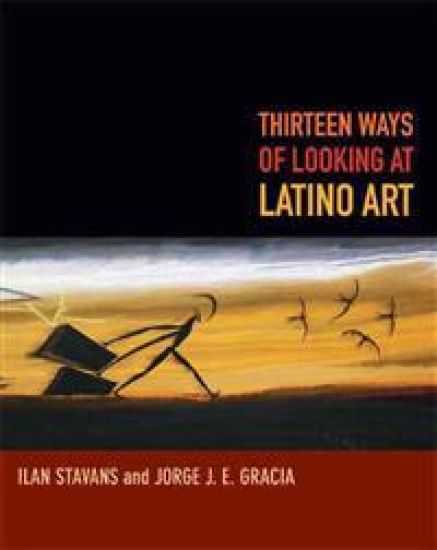
The essayist and cultural commentator Ilan Stavans and the analytic philosopher Jorge J. E. Gracia share long-standing interests in the intersection of art and ideas. Here they take thirteen pieces of Latino art, each reproduced in color, as occasions for thematic discussions. Whether the work at the center of a particular conversation is a triptych created by the brothers Einar and Jamex de la Torre, Andres Serrano's controversial Piss Christ, a mural by the graffiti artist BEAR_TCK, or Above All Things, a photograph by Maria Magdalena Campos-Pons, Stavans and Gracia's exchanges inevitably open out to literature, history, ethics, politics, religion, and visual culture more broadly. Autobiographical details pepper Stavans and Gracia's conversations, as one or the other tells what he finds meaningful in a given work. Sparkling with insight, their exchanges allow the reader to eavesdrop on two celebrated intellectuals-worldly, erudite, and unafraid to disagree-as they reflect on the pleasures of seeing.
¡Muy Pop!

¡Muy Pop!

Frederick Luis Aldama; Ilan Stavans

The University of Michigan Press
2013
sidottu
Although investigations of Hispanic popular culture were approached for decades as part of folklore studies, in recent years scholarly explorations—of lucha libre, telenovelas, comic strips, comedy, baseball, the novela rosa and the detective novel, sci-fi, even advertising—have multiplied. What has been lacking is an overarching canvas that offers context for these studies, focusing on the crucial, framing questions: What is Hispanic pop culture? How does it change over time and from region to region? What is the relationship between highbrow and popular culture in the Hispanic world? Does it make sense to approach the whole Hispanic world as homogenized when understanding Hispanic popular culture? What are the differences between nations, classes, ethnic groups, religious communities, and so on? And what distinguishes Hispanic popular culture in the United States? In ¡Muy Pop!, Ilan Stavans and Frederick Luis Aldama carry on a sustained, free-flowing, book-length conversation about these questions and more, concentrating on a wide range of pop manifestations and analyzing them at length. In addition to making Hispanic popular culture visible to the first-time reader, ¡Muy Pop! sheds new light on the making and consuming of Hispanic pop culture for academics, specialists, and mainstream critics.
¡Muy Pop!

¡Muy Pop!

Frederick Luis Aldama; Ilan Stavans

The University of Michigan Press
2013
nidottu
Although investigations of Hispanic popular culture were approached for decades as part of folklore studies, in recent years scholarly explorations—of lucha libre, telenovelas, comic strips, comedy, baseball, the novela rosa and the detective novel, sci-fi, even advertising—have multiplied. What has been lacking is an overarching canvas that offers context for these studies, focusing on the crucial, framing questions: What is Hispanic pop culture? How does it change over time and from region to region? What is the relationship between highbrow and popular culture in the Hispanic world? Does it make sense to approach the whole Hispanic world as homogenized when understanding Hispanic popular culture? What are the differences between nations, classes, ethnic groups, religious communities, and so on? And what distinguishes Hispanic popular culture in the United States? In ¡Muy Pop!, Ilan Stavans and Frederick Luis Aldama carry on a sustained, free-flowing, book-length conversation about these questions and more, concentrating on a wide range of pop manifestations and analyzing them at length. In addition to making Hispanic popular culture visible to the first-time reader, ¡Muy Pop! sheds new light on the making and consuming of Hispanic pop culture for academics, specialists, and mainstream critics.
The Riddle of Cantinflas

The Riddle of Cantinflas

Ilan Stavans

University of New Mexico Press
2012
nidottu
Ilan Stavans’s collection of essays on kitsch and high art in the Americas makes a return with thirteen new colourful conversations that deliver Stavans’s trademark wit and provocative analysis. “A Dream Act Deferred” discusses an issue that is at once and always topical in the dialogue of Hispanic popular culture: immigration. This essay generated a vociferous response when first published in The Chronicle of Higher Education as the issue of immigration was contested in states like Arizona, and is included here as a new addition that adds a rich layer to Stavans’s vibrant discourse. Fitting in this reconfiguration of his analytical conversations on Hispanic popular culture is Stavans’s “Arrival: Notes from an Interloper,” which recounts his origins as a social critic and provides the reader with interactive insight into the mind behind the matter. Once again delightfully humorous and perceptive, Stavans delivers an expanded collection that has the power to go even further beyond common assumptions and helps us understand Mexican popular culture and its counterparts in the United States.
Singer's Typewriter and Mine

Singer's Typewriter and Mine

Ilan Stavans

University of Nebraska Press
2012
pokkari
A cultural critic of extraordinary erudition, encyclopedic knowledge, and boundless curiosity, Ilan Stavans, an Ashkenazic Jew who grew up in Mexico, negotiates wildly varied topics as effortlessly and deftly as he manages the multiple perspectives of a dual national, religious, and ethnic identity. In Singer's Typewriter and Mine, a follow-up to The Inveterate Dreamer (Nebraska, 2001), Stavans interweaves his own experience with that of other Jewish writers and thinkers, past and present, to explore modern Jewish culture across the boundaries of language and nation. Juxtaposing the personal and the analytical, these essays and conversations take up the oeuvres of Isaac Bashevis Singer and Mario Vargas Llosa, translation and God's language, storytelling as midrash, anti-Semitism in Hispanic America, Yiddish and Sephardic literatures, the connection between humor and terror, impostors as cultural agents, the creators of the King James Bible, and the encounter between Jewish and Latino civilizations, to name but a few of Stavans's topics here. Funny, engaging, and provocative, this collection continues Stavans's project of opening new vistas in our cross-cultural understanding of language, literature, and life.
Return to Centro Histórico

Return to Centro Histórico

Ilan Stavans

Rutgers University Press
2012
sidottu
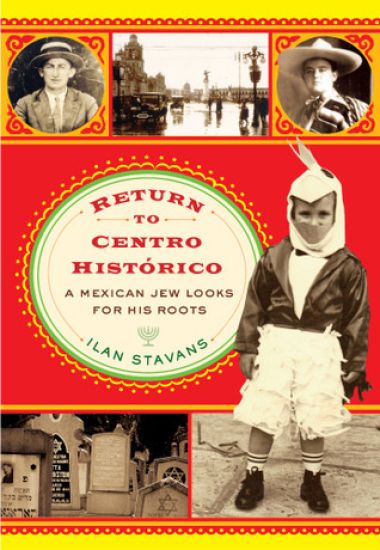
After a stirring e-mail exchange with his father, awardwinning essayist and cultural commentator Ilan Stavans decided to do something bizarre: revisit his hometown, Mexico City, accompanied by a tourist guide. But rather than seeking his roots in the neighborhood where he grew up, he headed to the Centro Histórico, the downtown area at the heart of the world’s largest metropolis. It was there that conversos, the hidden Jews escaping the might of the Holy Office of the Inquisition, were burned at the stake. And, centuries later, it was the same section where Jewish immigrants, both Yiddish-speaking Ashkenazim and Sephardim from the Ottoman Empire, made their homes as peddlers. In a sense, Centro Histórico is to Mexico what the Lower East Side is to the United States: a platform for reinventing one’s self in the New World. With the same linguistic verve and insight that has made him one of the most distinguished voices in American literature today, Ilan Stavans invites readers along for a personal journey that is not only his own, but that of an entire culture. In Return to Centro Histórico he makes it possible to understand the intimate role that Jews have played in the development of Hispanic civilization.
What is la hispanidad?

What is la hispanidad?

Ilan Stavans; Iván Jaksic

University of Texas Press
2011
pokkari
Natives of the Iberian Peninsula and the twenty countries of Latin America, as well as their kinsfolk who've immigrated to the United States and around the world, share a common quality or identity characterized as la hispanidad. Or do they? In this lively, provocative book, two distinguished intellectuals, a cultural critic and a historian, engage in a series of probing conversations in which they try to discern the nature of la hispanidad and debate whether any such shared identity binds the world's nearly half billion people who are "Hispanic." Their conversations range from La Reconquista and Spanish monarchs Ferdinand and Isabella, who united the Spanish nation while expelling its remaining Moors and Jews, to the fervor for el fútbol (soccer) that has swept much of Latin America today. Along the way, they discuss a series of intriguing topics, including the complicated relationship between Latin America and the United States, Spanish language and the uses of Spanglish, complexities of race and ethnicity, nineteenth-century struggles for nationhood and twentieth-century identity politics, and popular culture from literary novels to telenovelas. Woven throughout are the authors' own enlightening experiences of crossing borders and cultures in Mexico and Chile and the United States. Sure to provoke animated conversations among its readers, What is la hispanidad? makes a convincing case that "our hispanidad is rooted in a changing tradition, flexible enough to persist beyond boundaries and circumstances. Let us not fix it with a definition, but allow it instead to travel, always."
With All Thine Heart

With All Thine Heart

Ilan Stavans; Mordecai Drache

Rutgers University Press
2010
sidottu
Is the Bible actually a love story between a deity and a people? And what does this love story have to do with the modern world? In With All Thine Heart distinguished cultural critic Ilan Stavans speaks to freelance writer Mordecai Drache about love in the Bible. Presented in an engaging, conversational format and touched with striking artwork, the textured dialogue between Stavans and Drache is meant to show how the Bible is a multidimensional text and one that, when considered over the course of history, still has the power to shape our world. The theme of love provides the connective tissue that binds this work. Addressing a wide range of topics, from biblical archaeology and fundamentalism to Hollywood movies, lexicography, and the act of praying, With All Thine Heart suggests that the Hebrew Bible is a novel worth decoding patiently, such as one does with classics like Don Quixote de la Mancha, In Search of Lost Time, and Anna Karenina. Similar to the protagonists in these tales, biblical characters, although not shaped with the artistic nuance of modern literature, allow for astonishing insight. This exploration of love through the pages of the Bible—organized chronologically from Genesis to Exodus and followed by insightful meditations on the Song of Songs and the Book of Job—is a delightful intellectual and spiritual treat . . . Shema Ysrael!
Gabriel Garcia Marquez

Gabriel Garcia Marquez

Ilan Stavans

St Martin's Press
2010
sidottu
This long-awaited biography provides a fascinating and comprehensive picture of Garcia Marquez's life up to the publication of his classic 100 Years of Solitude. Based on nearly a decade of research, this biographical study sheds new light on the life and works of the Nobel Laureate, father of magical realism, and bestselling author in the history of the Spanish language. As Garcia Marquez's impact endures on well into his ninth decade, Stavans's keen insights constitute the definitive re-appraisal of the literary giant's life and corpus. The later part of his life will be covered in a second book.
A Critic's Journey

A Critic's Journey

Ilan Stavans

The University of Michigan Press
2009
sidottu
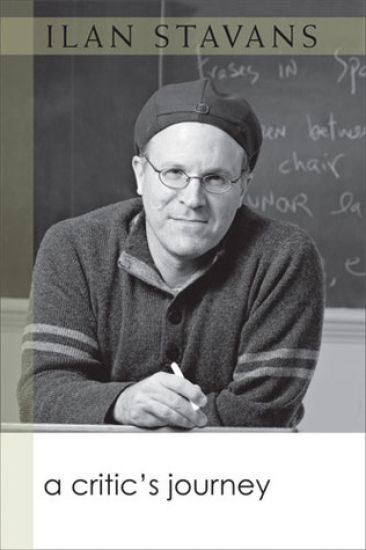
Ilan Stavans has been a lightning rod for cultural discussion and criticism his entire career. In A Critic's Journey, he takes on his own Jewish and Hispanic upbringing with an autobiographical focus and his typical flair with words, exploring the relationship between the two cultures from his own and also from others' experiences. Stavans has been hailed as a voice for Latino culture thanks to his Hispanic upbringing, but as a Jew and a Caucasian, he's also an outsider to that culture---something that's sharpened his perspective (and some of his critics' swords). In this book of essays, he looks at the creative process from that point of view, exploring everything from the translation of Don Quixote to the Hispanic anti-Semitism and the Holocaust in Latin America. Ilan Stavans is Lewis-Sebring Professor in Latin American and Latino Culture and Five College Fortieth Anniversary Professor at Amherst College. A native of Mexico, he received his doctorate in Latin American Literature from Columbia University. Stavans's books include The Hispanic Condition, On Borrowed Words, Spanglish, Dictionary Days, The Disappearance, Love & Language (with Verónica Albin), Resurrecting Hebrew, and Mr. Spic Goes to Washington, and he has edited books including The Oxford Book of Jewish Stories and the upcoming Norton Anthology of Latino Literature. His story "Morirse está en Hebreo" was made into the award-winning movie My Mexican Shivah. Stavans has received numerous awards, among them a Guggenheim Fellowship, the National Jewish Book Award, an Emmy nomination, the Latino Book Award, Chile's Presidential Medal, the Rubén Darío Distinction, and the Cátedra Roberto Bolaño. His work has been translated into a dozen languages.
A Critic's Journey

A Critic's Journey

Ilan Stavans

The University of Michigan Press
2009
nidottu
Ilan Stavans has been a lightning rod for cultural discussion and criticism his entire career. In A Critic's Journey, he takes on his own Jewish and Hispanic upbringing with an autobiographical focus and his typical flair with words, exploring the relationship between the two cultures from his own and also from others' experiences. Stavans has been hailed as a voice for Latino culture thanks to his Hispanic upbringing, but as a Jew and a Caucasian, he's also an outsider to that culture---something that's sharpened his perspective (and some of his critics' swords). In this book of essays, he looks at the creative process from that point of view, exploring everything from the translation of Don Quixote to the Hispanic anti-Semitism and the Holocaust in Latin America. Ilan Stavans is Lewis-Sebring Professor in Latin American and Latino Culture and Five College Fortieth Anniversary Professor at Amherst College. A native of Mexico, he received his doctorate in Latin American Literature from Columbia University. Stavans's books include The Hispanic Condition, On Borrowed Words, Spanglish, Dictionary Days, The Disappearance, Love & Language (with Verónica Albin), Resurrecting Hebrew, and Mr. Spic Goes to Washington, and he has edited books including The Oxford Book of Jewish Stories and the upcoming Norton Anthology of Latino Literature. His story "Morirse está en Hebreo" was made into the award-winning movie My Mexican Shivah. Stavans has received numerous awards, among them a Guggenheim Fellowship, the National Jewish Book Award, an Emmy nomination, the Latino Book Award, Chile's Presidential Medal, the Rubén Darío Distinction, and the Cátedra Roberto Bolaño. His work has been translated into a dozen languages.
My Sax Life

My Sax Life

Paquito D'Rivera; Ilan Stavans

Northwestern University Press
2008
nidottu
D'Rivera is a best-selling jazz artist with more than thirty solo albums to his credit. He has performed at the White House and the Blue Note. ""My Sax Life"" is the English-language edition of D'Rivera's memoirs, published to acclaim in 1998. D'Rivera recalls his early nightclub appearances as a child, performing with clowns and exotic dancers, as well as his search for artistic freedom in communist Cuba and his hungry explorations of world music after his defection.
Mr. Spic Goes To Washington

Mr. Spic Goes To Washington

Ilan Stavans

Soft Skull Press
2008
nidottu
In the face of social inequalities, sometimes strength for mobilization can be found through laughter. It is this ethos that Ilan Stavans employs in this politically minded graphic novel. Weaving humor with social commentary, Stavans tells a tale of a Latino man taking Los Angeles' mayoral office by storm and refusing to stop there. Illustrated throughout by Roberto Weil, the story follows the life and political development of Mr. Spic Samuel Patricio Inocencio Cardenas as he upends the political machine by owning up to and embracing his rough-and-tumble past, refusing to bend to corporate pressures, and using his influence to promote pacifism and tolerance. Progressive politics has always moved forward with the help of dedicated, singular individuals, and Mr. Spic light-hearted as his story may be hilariously exemplifies that model."
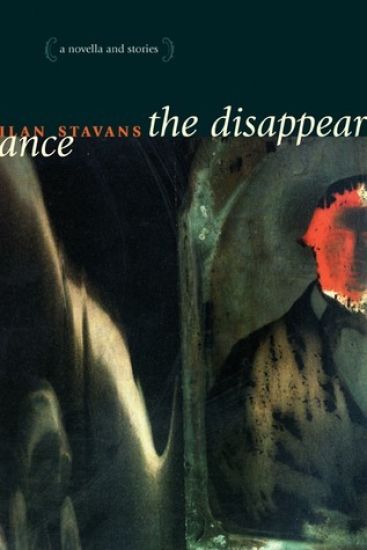
The Disappearance

The Disappearance

Ilan Stavans

Northwestern University Press
2008
nidottu
Hailed as one of the most important Hispanic writers of his generation, Ilan Stavans is a celebrated storyteller whose work has been translated into a dozen languages and has garnered numerous international awards. ""The Disappearance: A Novella and Stories"" contains three masterful gems. The novella, ""Morirse esta en hebreo,"" is a thought-provoking meditation on continuity and tradition among Mexican Jews; ""Xerox Man"" is an intriguing story about a book thief with a bizarre theological obsession; and the title story, ""The Disappearance,"" is the resonant tale of a Belgian actor who kidnaps himself in an attempt to respond to neo-Nazi groups. Together, these three pieces offer an unforeseen vista of Jewish-Hispanic relations and confirm Stavans' reputation as an original literary voice.
Translation and the Rise of Inter-American Literature

Translation and the Rise of Inter-American Literature

Elizabeth Lowe; Earl E. Fitz; Ilan Stavans

University Press of Florida
2007
sidottu
The past few years have seen an explosion of interest among U. S. readers for Latin American literature. Yet rarely do they experience such work in the original Spanish or Portuguese. Elizabeth Lowe and Earl Fitz argue that the role of the translator is an essential - and an often ignored - part of the reception process among English-language readers. Both accomplished translators in their own right, Lowe and Fitz explain how stylistic and linguistic choices made by the translator can have a profound effect on how literary works are perceived by readers unfamiliar with a foreign language. They also point out ways in which the act of translation is critical to the discipline of comparative literature. Touching on issues of language, culture, and national identity, ""Translation and the Rise of Inter-American Literature"" is one of the first book-length works in this newly emerging field. Combining theories and histories of literature, translation, reception, and cultural studies, it offers a broad comparative perspective rarely found in traditional scholarship.