Kirjojen hintavertailu – 12 859 819 kirjaa ja 27 kauppaa

Kirjailija

Immanuel Kant

Kirjat ja teokset yhdessä paikassa: 1 083 kirjaa, julkaisuja vuosilta 1785–2026, suosituimpiin kuuluu Politz, K: Immanuel Kants Vorlesungen Uber Die Philosophisch. Vertaile teosten hintoja ja tarkista saatavuus suomalaisista kirjakaupoista.

1 083 kirjaa

Kirjojen julkaisuvuodet: 1785–2026.

Kant's Introduction to logic

Kant's Introduction to logic

Immanuel Kant

Alpha Edition
2020
pokkari
Kant's Introduction to Logic - and his Essay on the mistaken subtilty of the four figures is an unchanged, high-quality reprint of the original edition of 1885. Hansebooks is editor of the literature on different topic areas such as research and science, travel and expeditions, cooking and nutrition, medicine, and other genres. As a publisher we focus on the preservation of historical literature. Many works of historical writers and scientists are available today as antiques only. Hansebooks newly publishes these books and contributes to the preservation of literature which has become rare and historical knowledge for the future.
Kant's Introduction to Logic

Kant's Introduction to Logic

Immanuel Kant

Hansebooks
2020
pokkari
Kant's Introduction to Logic - and his Essay on the mistaken subtilty of the four figures is an unchanged, high-quality reprint of the original edition of 1885. Hansebooks is editor of the literature on different topic areas such as research and science, travel and expeditions, cooking and nutrition, medicine, and other genres. As a publisher we focus on the preservation of historical literature. Many works of historical writers and scientists are available today as antiques only. Hansebooks newly publishes these books and contributes to the preservation of literature which has become rare and historical knowledge for the future.
Baumgarten's Elements of First Practical Philosophy

Baumgarten's Elements of First Practical Philosophy

Alexander Gottlieb Baumgarten; Immanuel Kant

Bloomsbury Academic
2020
sidottu

Halvin toimitettuna 312,40 €

This book presents the first English translation of Alexander Baumgarten’s Initia Philosophiae Practicae Primae, the textbook Kant used in his lectures on moral philosophy. Originally published in Latin in 1760, the Initia contains a systematic, but original version of the universal practical philosophy first articulated by Christian Wolff. In his personal copy, Kant penned hundreds of pages of notes and sketches that document his relation to this earlier tradition. Translating these extensive elucidations into English, together with Kant’s notes on the text, this translation offers a complete resource to Kant’s reading of the Initia. To facilitate further study, first-time translations of elucidatory passages from G. F. Meier and Wolff are also included, alongside a German-English-Latin glossary. The translators’ introduction provides a biography of Baumgarten, a discussion of the importance of the Initia, its relation to Wolff’s and Meier’s universal practical philosophy and its role in Kant’s lectures. By shedding new light on the arguments of Kant’s mature works and offering insights into his pre-Critical moral thought, Elements of First Practical Philosophy reveals why Baumgarten's work is essential for understanding the background to Kant’s philosophy.
Axplock ur idéhistorien 2, Kant till Loytard

Axplock ur idéhistorien 2, Kant till Loytard

Frantz Fanon; Fredrika Bremer; Charles Darwin; John Stuart Mill; Immanuel Kant

Vertigo förlag
2019
nidottu
Kant, Svaret på frågan: Vad är upplysningen? Hegel, Förnuftet i historien Feuerbach, Kristendomens väsen Kierkegaard, Begreppet ångest Marx & Engels, Kommunistiska manifestet Gobineau, Människorasernas ojämlikhet Bremer, Hertha Darwin, Om arternas uppkomst Mill, Förtrycket av kvinnorna Spencer, Individen mot staten Nietzsche, Moralens härstamning Freud, Orientering i psykoanalys Nationalsocialistiska tyska arbetarpartiets program Mussolini, Fascismens fundamentala idéer Beauvoir, Det andra könet Fanon, Jordens fördömda Lyotard, Det postmoderna tillståndet
Critique of Judgment

Critique of Judgment

Immanuel Kant

Digireads.com
2019
pokkari
German philosopher and influential 18th century late Enlightenment thinker Immanuel Kant wrote "Critique of Judgment" in 1790 to solidify his ideas on aesthetics. Often referred to as the "third critique", it follows Kant's "Critique of Pure Reason," published in 1781, and "Critique of Practical Reason", published in 1788 and completes his "Critical" project. Divided into two sections, one on aesthetic judgment and the other on teleological judgment, "Critique of Judgment" proceeds to analyze the human experience of the beautiful and the sublime. Kant explores a myriad of factors that determine aesthetics: from the effect of art and nature, to the role that human imagination plays, from the objectivity of taste, to the limits of representation. He continues with the connection of aesthetic with morality, disinterestedness, and originality. In the second section, he explores teleological judgments, or judging things according to their ends, and posits that man is the ultimate end, and all forms of nature and beauty exist for the purpose of their connection to mankind. Kant had a profound impact on the artists, authors, and other philosophers of both the classical and romantic periods, establishing in his final "Critique" a milestone in critical theory and philosophy. This edition is printed on premium acid-free paper.
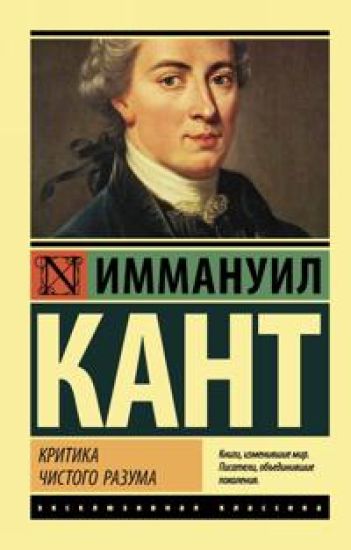
Kritika chistogo razuma

Kritika chistogo razuma

Immanuel Kant

Ast
2019
nidottu

Halvin toimitettuna 17,10 €

"Kritika chistogo razuma" - kniga, kotoruju kazhdaja epokha zanovo otsenivaet i po-svoemu pereosmyslivaet. Kniga, kotoraja ostaetsja aktualnoj vot uzhe bolee dvukh stoletij. Kniga, kotoruju izuchali i pytalis interpretirovat absoljutno vse znachitelnye filosofy, tvorivshie posle Kanta, i kotoraja po sej den zanimaet umy uchenykh i pisatelej, moralistov i politikov. Eto opus magnum Kanta, on obdumyval etot trud desjat let - a napisal za neskolko mesjatsev. Tschatelno strukturirovannoe, sovershennoe po forme proizvedenie, posvjaschennoe voprosam, volnovavshim luchshie umy chelovechestva s drevnejshikh vremen, - kakovy istochniki i granitsy znanij i kakuju rol v poznanii mira igrajut chuvstva, rassudok i razum.
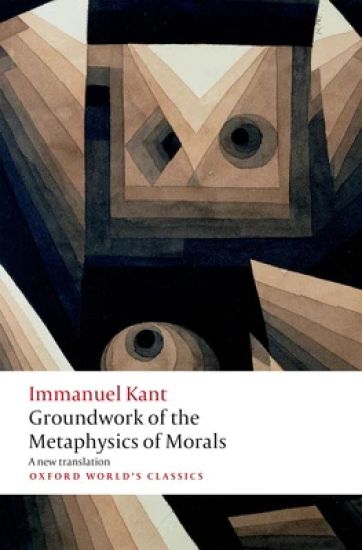
Groundwork for the Metaphysics of Morals

Groundwork for the Metaphysics of Morals

Immanuel Kant

Oxford University Press
2019
nidottu

Halvin toimitettuna 19,90 €

[T]he present groundwork is nothing more than the identification and vindication of the supreme principle of morality.' In the Groundwork for the Metaphysics of Morals (1785), Immanuel Kant makes clear his two central intentions: first, to uncover the principle that underpins morality, and secondly to defend its applicability to human beings. The result is one of the most significant texts in the history of ethics, and a masterpiece of Enlightenment thinking. Kant argues that moral law tells us to act only in ways that others could also act, thereby treating them as ends in themselves and not merely as means. Kant contends that despite apparent threats to our freedom from science, and to ethics from our self-interest, we can nonetheless take ourselves to be free rational agents, who as such have a motivation to act on this moral law, and thus the ability to act as moral beings. One of the most studied works of moral philosophy, this new translation by Robert Stern, Joe Saunders, and Christopher Bennett illuminates this famous text for modern readers.
Om pedagogik

Om pedagogik

Immanuel Kant

Bokförlaget Daidalos
2019
nidottu
"Om pedagogik" är inte nedtecknad av Kant själv utan baserad på föreläsningsanteckningar. Skriften utkom 1803, ett år före Kants död. Uppfostran är för Kant uppfostran till myndighet, till en frihet som utövas med hänsyn till andras lika frihet. Målet är att lära barnet att tänka, det ska upplysas och inte drillas – och om undervisningen ska utveckla förnuftet måste den vara sokratisk. "Genom uppfostran måste människan för det första disciplineras. Att disciplinera innebär att försöka förhindra att det djuriska skadar mänskligheten, hos såväl den enskilda som den samhälleliga människan. Disciplin är alltså blott ett tämjande av vildheten. För det andra måste människan kultiveras. Kultur innefattar råd och undervisning. Den går ut på att göra människan skicklig. Skicklighet är besittning av en förmåga som räcker till för alla möjliga syften. Den anger alltså inte alls några syften, utan överlåter detta att bestämmas alltefter omständigheterna. Vissa skickligheter är av godo i alla sammanhang, till exempel att läsa och skriva; andra bara för vissa syften, till exempel musiken, för att bli omtyckt. Genom syftenas mångfald blir skickligheten på sätt och vis oändlig. För det tredje måste man se till att människan också blir klok, passar in i det mänskliga samhället, att hon blir omtyckt och får inflytande. Till detta hör en viss form av kultur som man kallar civilisering. För denna krävs belevenhet, artighet och en viss klokhet, som gör att man förmår använda alla människor för sina syften. Civiliseringen följer varje tidsålders föränderliga smak. Så var man ännu för några få årtionden sedan förtjust i ceremonier i sällskapslivet. För det fjärde måste man ge akt på moraliseringen. Människan skall inte bara vara skickad för allehanda syften, utan också få ett sådant sinnelag att hon enbart väljer idel goda syften. Goda syften är de som med nödvändighet godtas av alla, och som också samtidigt kan vara alla människors syfte." Till boken har Lars Løvlie skrivit ett förord som placerar texten i sitt historiska sammanhang och relaterar den till Kants moralfilosofi. Løvlie är professor i pedagogisk filosofi vid Universitetet i Oslo och adjungerad professor vid Örebro universitet.