Kirjojen hintavertailu – 12 859 819 kirjaa ja 27 kauppaa

Kirjailija

Immanuel Kant

Kirjat ja teokset yhdessä paikassa: 1 083 kirjaa, julkaisuja vuosilta 1785–2026, suosituimpiin kuuluu Politz, K: Immanuel Kants Vorlesungen Uber Die Philosophisch. Vertaile teosten hintoja ja tarkista saatavuus suomalaisista kirjakaupoista.

1 083 kirjaa

Kirjojen julkaisuvuodet: 1785–2026.

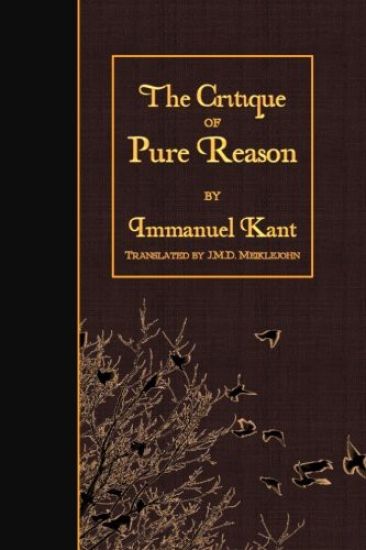
The Critique of Pure Reason

The Critique of Pure Reason

Immanuel Kant

Createspace Independent Publishing Platform
2016
nidottu
The Critique of Pure Reason is one of the most influential works in the history of philosophy. Also referred to as Kant's First Critique, it was followed in 1788 by the Critique of Practical Reason and in 1790 by the Critique of Judgment. In the preface to the first edition Kant explains what he means by a critique of pure reason: "I do not mean by this a critique of books and systems, but of the faculty of reason in general, in respect of all knowledge after which it may strive independently of all experience." Dealing with questions concerning the foundations and extent of human knowledge, Kant builds on the work of empiricist philosophers such as John Locke and David Hume, as well as taking into account the theories of rationalist philosophers such as Gottfried Wilhelm Leibniz and Christian Wolff. Kant expounds new ideas on the nature of space and time, and claims to solve the problem which Hume posed regarding human knowledge of the relation of cause and effect, and to have assessed the ability of the human mind to engage in metaphysics. Knowledge independent of experience is referred to by Kant as "a priori" knowledge, while knowledge obtained through experience is termed "a posteriori". According to Kant, "a priori" knowledge expresses necessary truths. Statements which are necessarily true cannot be negated without becoming false. Examples provided by Kant include the propositions of mathematics, propositions "from the understanding in its quite ordinary employment", such as "Every alteration must have a cause", as well as propositions from "natural science (physics)", such as "in all changes in the material world the quantity of matter remains unchanged". Kant believed that he had discovered another attribute of propositions, which allowed him to frame the problem of a priori knowledge in a new way: the distinction between "analytic" and "synthetic" judgments. According to Kant, to say that a sentence is "analytic" is to say that what is stated in the predicate-concept of the sentence is already contained (albeit covertly) in the subject-concept of that sentence. The example he provides is the sentence, "All bodies are extended", which is "analytic" since the predicate-concept ("extended") is already contained in - or "thought in" - the subject-concept of the sentence ("bodies"). Kant considered the judgment, "All bodies are heavy" synthetic, since "I do not include in the concept of body in general the predicate 'weight'". Synthetic judgments therefore add something to a concept, whereas analytic judgments only explain what is already contained in the concept. The distinctive character of "analytic" judgments was therefore that they can be known to be true simply by an analysis of the concepts contained in them - or, alternatively, are true by definition. Prior to Kant, it was thought that all necessary truth had the character of being "analytic". Kant argued that not all necessary truths are analytic, but that some of them are synthetic. Having explained that the basis of analytic judgments lies in the principle of contradiction, (or the principle of identity), the task he set out to achieve in the Critique of Pure Reason was to explain the grounds of those judgments which are necessary and synthetic - and these he termed "a priori synthetic judgments".

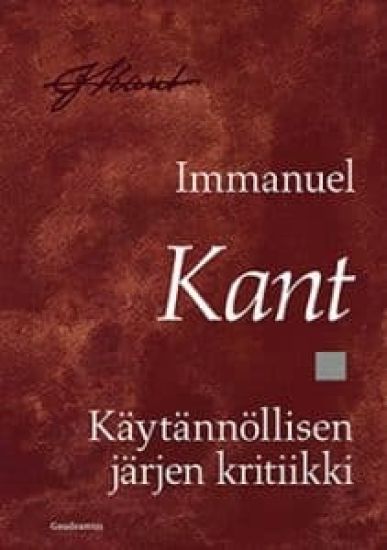
Käytännöllisen järjen kritiikki

Käytännöllisen järjen kritiikki

Immanuel Kant

Gaudeamus
2016
sidottu

Halvin toimitettuna 24,90 €

Käytännöllisen järjen kritiikki (1788) on valistusfilosofi Immanuel Kantin (1725-1804) moraaliopillinen pääteos: tutkimus moraaliperiaatteista ja moraalikäsitteistä. Siinä Kant käsittelee ihmisyyden perimmäisiä kysymyksiä tahdonvapaudesta, Jumalan olemassaolosta ja ikuisen elämän mahdollisuudesta sekä selvittää, mitä ihmisen on järkevää tavoitella elämässä. Kantin näkökulma moraaliin oli täysin uusi: moraali ei perustu sen enempää Jumalan tahtoon kuin luonnossa tavattaviin ominaisuuksiinkaan vaan oman järkemme käskyyn. Toiminnan moraalisuutta eivät mittaa sen enempää toiminnan hyödyllisyys kuin sen tuottama onnellisuuskaan. Sen sijaan kaiken moraalisen sivistyksen todellinen päämäärä on, että ihminen toimisi velvollisuudesta. Käytännöllisen järjen kritiikki tunnetaan myös ”Toisena kritiikkinä”, ja Puhtaan järjen kritiikki on ”Ensimmäinen kritiikki”.
Fundamentos de la Metafisica de las Costumbres (Spanish Edition)

Fundamentos de la Metafisica de las Costumbres (Spanish Edition)

Immanuel Kant

Createspace Independent Publishing Platform
2015
nidottu
La Fundamentaci n de la metaf sica de las costumbres tambi n conocido como los Fundamentos de la metaf sicas de la moral, es el primero de los trabajos maduros de Immanuel Kant en la filosof a de la moral y sigue siendo uno de los m s influyentes en su campo. Publicado en 1785, Kant concibe su investigaci n como un trabajo de ticas fundamentales, una que despeja el camino para futuras investigaciones al explicar los conceptos centrales y los principios de una teor a moral y mostrando que stos son normativos para agentes racionales. Kant aspira a no menos que esto: revelar los principios fundamentales de la moralidad y mostrar que son aplicables para nosotros. En el texto, Kant provee de un argumento innovador que lo correcto de una acci n est determinado por el car cter del principio por el cual una persona decida actuar. La tica kantiana entonces toma una postura con marcado contraste de la Teor a del Sentido Moral y teor as teleol gicas morales que dominaban la filosof a moral en la poca que escrib a. En esta obra Kant busca desarrollar el sistema de toda la moralidad, pudi ndosele considerar como el edificio de la moralidad La base de la obra es lograr el estudio de la moralidad pura, dejando de lado cualquier principio emp rico y asentando la moralidad en la buena voluntad, que ser a lo nico bueno sin restricciones.
La Paz Perpetua (Spanish Edition)

La Paz Perpetua (Spanish Edition)

Immanuel Kant

Createspace Independent Publishing Platform
2015
nidottu
Es una obra pol tica escrita por Immanuel Kant en 1795. Como se intuye por el t tulo (tambi n traducible por Para la paz perpetua), el objetivo de este tratado es encontrar una estructura mundial y una perspectiva de gobierno para cada uno de los estados en particular que favorezca la paz. El proyecto kantiano es un proyecto jur dico y no tico: Kant no espera que los hombres puedan volverse m s buenos, sino que cree posible construir un orden jur dico tal, que coloque la guerra como algo ilegal, como ocurre dentro de los estados federales. La obra se compone de 6 art culos preliminares y 3 art culos definitivos y 2 suplementos alrededor de los cuales se desarrolla la reflexi n.
Lo Bello y lo Sublime (Spanish Edition)

Lo Bello y lo Sublime (Spanish Edition)

Immanuel Kant

Createspace Independent Publishing Platform
2015
nidottu
Este bello texto del gran fil sofo y pensador Immanuel Kant es quiz s uno de esos imprescindibles para aquel que afirme ser arquitecto o artista, aquel que en alg n momento le eche un pulso a la belleza. Con el t tulo de Observaciones sobre el sentimiento de lo bello y lo sublime public Kant en Komgsbey (1764) este ensayo de vario y atrayente contenido. Numerosas ediciones sueltas se han hecho de este encantador tratadito, sin contar las varias ediciones de las obras completas del autor. M s que de est tica, en el sentido estricto de la palabra, tratan las Observaciones sobre el sentimiento de lo bello y lo sublime de asuntos varios, moral, psicolog a, descripci n de los caracteres individuales y nacionales; en suma, de toda suerte de temas interesantes que pueden ocurrirse alrededor del asunto principal. Est escrito en estilo f cil y c modo -extra a excepci n en la obra de Kant-, lleno de ingenio, alegr a, penetraci n, con una sencillez encantadora. Se comprende f cilmente que un cr tico haya podido comparar a Kant -refiri ndose a esta obra- con La Bruy re, el autor de los Caracteres. En este ensayo es donde Kant ataca por primera vez el problema est tico, y aunque sus ideas fundamentales acerca del arte y la belleza se hallan sistem ticamente expuestas en su obra posterior, la Cr tica del Juicio, tienen, sin embargo, las Observaciones sobre el sentimiento de lo bello y lo sublimecierto inter s para el conocimiento de los or genes de la est tica kantiana. Pero sobre todo constituyen, como hemos dicho, una serie de delicadas ocurrencias, de certeras observaciones, de agudas cr ticas, sin el aparato solemne de la exposici n did ctica.
Logica (Spanish Edition)

Logica (Spanish Edition)

Immanuel Kant

Createspace Independent Publishing Platform
2015
nidottu
Se trata de una indagaci n trascendental (acerca de las condiciones epist micas del conocer humano) cuyo objetivo central es lograr una respuesta definitiva sobre si la metaf sica puede ser considerada una ciencia, as como fundamentar la validez tanto de la experiencia ordinaria como de las ciencias matem ticas y f sicas. Tanto la fundamentaci n de la metaf sica como la del resto de los conocimientos exige, para que sea decidida su posibilidad, que se determine en cada caso si son posibles juicios que sean a priori (es decir, independientes de la experiencia, lo que implica para Kant que sean necesarios y universales, absolutamente ciertos) y a la vez sint ticos (que no sean, como los anal ticos, meras tautolog as, sino que a adan informaci n no contenida ya de antemano en el concepto que se considera). En este sentido, es fundamental el intento de Kant de superar la cr tica al principio de causalidad (y por lo tanto al saber cient fico) que hab a hecho David Hume, cr tica que no ten a una respuesta satisfactoria hasta su poca y que implicaba que tanto aquel principio como el saber cient fico sobre el mundo eran meramente a posteriori, esto es, dependientes de la experiencia y por ende carentes de necesidad, universalidad y certeza.
Critica de la Razon Pura (Spanish Edition)

Critica de la Razon Pura (Spanish Edition)

Immanuel Kant

Createspace Independent Publishing Platform
2015
nidottu
Se trata de una indagaci n trascendental (acerca de las condiciones epist micas del conocer humano) cuyo objetivo central es lograr una respuesta definitiva sobre si la metaf sica puede ser considerada una ciencia, as como fundamentar la validez tanto de la experiencia ordinaria como de las ciencias matem ticas y f sicas. Tanto la fundamentaci n de la metaf sica como la del resto de los conocimientos exige, para que sea decidida su posibilidad, que se determine en cada caso si son posibles juicios que sean a priori (es decir, independientes de la experiencia, lo que implica para Kant que sean necesarios y universales, absolutamente ciertos) y a la vez sint ticos (que no sean, como los anal ticos, meras tautolog as, sino que a adan informaci n no contenida ya de antemano en el concepto que se considera). En este sentido, es fundamental el intento de Kant de superar la cr tica al principio de causalidad (y por lo tanto al saber cient fico) que hab a hecho David Hume, cr tica que no ten a una respuesta satisfactoria hasta su poca y que implicaba que tanto aquel principio como el saber cient fico sobre el mundo eran meramente a posteriori, esto es, dependientes de la experiencia y por ende carentes de necesidad, universalidad y certeza
Lectures on Anthropology

Lectures on Anthropology

Immanuel Kant

Cambridge University Press
2015
pokkari
Kant was one of the inventors of anthropology, and his lectures on anthropology were the most popular and among the most frequently given of his lecture courses. This volume contains the first translation of selections from student transcriptions of the lectures between 1772 and 1789, prior to the published version, Anthropology from a Pragmatic Point of View (1798), which Kant edited himself at the end of his teaching career. The two most extensive texts, Anthropology Friedländer (1772) and Anthropology Mrongovius (1786), are presented here in their entirety, along with selections from all the other lecture transcriptions published in the Academy edition, together with sizeable portions of the Menschenkunde (1781–2), first published in 1831. These lectures show that Kant had a coherent and well-developed empirical theory of human nature bearing on many other aspects of his philosophy, including cognition, moral psychology, politics and philosophy of history.
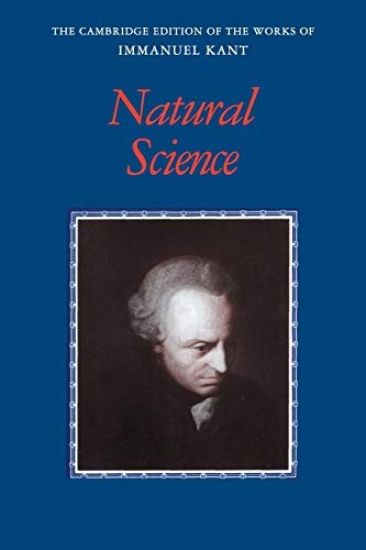
Kant: Natural Science

Kant: Natural Science

Immanuel Kant

Cambridge University Press
2015
pokkari
Though Kant is best known for his strictly philosophical works in the 1780s, many of his early publications in particular were devoted to what we would call 'natural science'. Kant's Universal Natural History and Theory of the Heavens (1755) made a significant advance in cosmology, and he was also instrumental in establishing the newly emerging discipline of physical geography, lecturing on it for almost his entire career. In this volume Eric Watkins brings together new English translations of Kant's first publication, Thoughts on the True Estimation of Living Forces (1746–9), the entirety of Physical Geography (1802), a series of shorter essays, along with many of Kant's most important publications in natural science. The volume is rich in material for the student and the scholar, with extensive linguistic and explanatory notes, editorial introductions and a glossary of key terms.
The Moral Law

The Moral Law

Immanuel Kant

Routledge
2015
sidottu
Few books have had as great an impact on intellectual history as Kant's The Moral Law. In its short compass one of the greatest minds in the history of philosophy attempts to identify the fundamental principle 'morality' that governs human action. Supported by a clear introduction and detailed summary of the argument, this is not only an essential text for students but also the perfect introduction for any reader who wishes to encounter at first hand the mind of one of the finest and most influential thinkers of all time.