Kirjojen hintavertailu – 12 859 818 kirjaa ja 27 kauppaa

Kirjailija

Immanuel Kant

Kirjat ja teokset yhdessä paikassa: 1 083 kirjaa, julkaisuja vuosilta 1785–2026, suosituimpiin kuuluu Politz, K: Immanuel Kants Vorlesungen Uber Die Philosophisch. Vertaile teosten hintoja ja tarkista saatavuus suomalaisista kirjakaupoista.

1 083 kirjaa

Kirjojen julkaisuvuodet: 1785–2026.

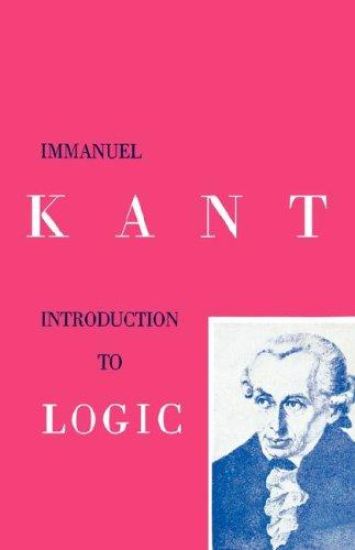
Introduction to Logic

Introduction to Logic

Immanuel Kant

Philosophical Library
1963
pokkari
Written during the height of the Enlightenment, Kant's Introduction to Logic is an essential primer for anyone interested in the study of Kantian views on logic, aesthetics, and moral reasoning. More accessible than his other books, Introduction to Logic lays the foundation for his writings with a clear discussion of each of his philosophical pursuits. For more advanced Kantian scholars, this book can bring to light some of the enduring issues in Kant's repertoire, and for the beginner, it can open up the philosophical ideas of one of most influential thinkers on modern philosophy. This edition comprises two parts, including the first Introduction to Logic and the second an essay titled The False Subtlety of the Four Syllogistic Figures, in which Kant analyzes Aristotelian logic. Immanuel Kant was a Prussian philosopher, physicist, and mathematician whose contributions to the study of logic, epistemology, metaphysics, aesthetics, and moral reasoning have had a lasting influence on philosophical scholarship. Born in K nigsberg, East Prussia in 1724 to a modest family, Kant was raised Pietist, and initially went to the University of K nigsberg to study theology. He later abandoned theology for mathematics and physics after becoming interested in the work of Sir Isaac Newton. He was appointed chair of logic and metaphysics at the University of K nigsberg and, at the height of the Enlightenment, began publishing his most famous philosophical texts, including his most important work, Foundations of the Metaphysics of Morals. Kant has had a tremendous impact on modern philosophy, influencing scholars throughout history, including Karl Marx and G. W. F. Hegel, and he continues to be read and studied today.

De mundi sensibilis atque intelligibilis forma et principiis / Über die Form und die Prinzipien der Sinnen- und Geisteswelt
Kants Inauguraldissertation von 1770 ist als eine Fr hform der "Kritik der reinen Vernunft" bezeichnet worden, zumal einige Abschnitte daraus sp ter in Kants theoretisches Hauptwerk eingegangen sind. Wie der Herausgeber und bersetzer, Klaus Reich, in seiner Einleitung zeigt, greift diese Auffassung jedoch zu kurz, denn die zentrale Einsicht, dass die reine Vernunft selbst einer Kritik bed rfe, findet sich in der Dissertation noch nicht. Eine wichtige Voraussetzung f r die Vernunftkritik, n mlich der Gedanke der Erkenntnis apriori durch die Sinnlichkeit (gegeben in der reinen Anschauung), wird jedoch in der Dissertation, mit der Kants "vorkritische Periode" abschlie t, zum ersten Mal formuliert.
Der Streit Der Fakultäten Anthropologie in Pragmatischer Hinsicht
Die im Jahr 1902 von der K niglich Preu ischen Akademie der Wissenschaften begonnene Ausgabe von Kants gesammelten Schriften ist bis heute die ma gebliche Kant-Edition. Die kritische Ausgabe gliedert sich in 4 Abteilungen: In Abt. I werden in 9 B nden die Werke, in Abt. II (Bd 10-13, Nachtrag Bd 23) der Briefwechsel Kants ediert. Abt. III (Bd 14-23) enth lt den Handschriftlichen Nachlass Kants. Die Edition der Vorlesungen in Abt. IV ist noch nicht abgeschlossen, bislang liegen die Bde 24-25 und 27-29 vor. Jeder Band enth lt sachliche Erl uterungen sowie einen Apparat zu den Lesarten. Ein Wortindex (Bd 16) sowie ein Personenindex (Bd 20) helfen, das Werk zu erschlie en.
Vorkritische Schriften I. 1747-1756

Vorkritische Schriften I. 1747-1756

Immanuel Kant

De Gruyter
1902
sidottu
Die im Jahr 1902 von der K niglich Preu ischen Akademie der Wissenschaften begonnene Ausgabe von Kants gesammelten Schriften ist bis heute die ma gebliche Kant-Edition. Die kritische Ausgabe gliedert sich in 4 Abteilungen: In Abt. I werden in 9 B nden die Werke, in Abt. II (Bd 10-13, Nachtrag Bd 23) der Briefwechsel Kants ediert. Abt. III (Bd 14-23) enth lt den Handschriftlichen Nachlass Kants. Die Edition der Vorlesungen in Abt. IV ist noch nicht abgeschlossen, bislang liegen die Bde 24-25 und 27-29 vor. Jeder Band enth lt sachliche Erl uterungen sowie einen Apparat zu den Lesarten. Ein Wortindex (Bd 16) sowie ein Personenindex (Bd 20) helfen, das Werk zu erschlie en.