Kirjojen hintavertailu – 12 859 819 kirjaa ja 27 kauppaa
Kirjailija
Immanuel Kant
Kirjat ja teokset yhdessä paikassa: 1 083 kirjaa, julkaisuja vuosilta 1785–2026, suosituimpiin kuuluu Politz, K: Immanuel Kants Vorlesungen Uber Die Philosophisch. Vertaile teosten hintoja ja tarkista saatavuus suomalaisista kirjakaupoista.
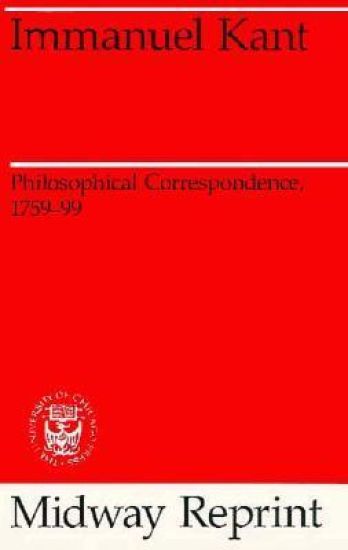
Drawn from the Prussian Academy edition of Kant's collected works, these letters make it possible to trace the development of Kant's thought from his earliest worries about the topics discussed in the Critique of Pure Reason to his attempts in later life to meet the objections of his critics and erstwhile disciples. "Perhaps the major value of these writings is their demonstration of Kant's own attitude towards his philosophical works."—Paul Arthur Schilpp, Saturday Review
Kant verfolgt mit seiner Grundlegung zur Metaphysik der Sitten zwei Ziele: Er will den obersten Grundsatz moralischen Handelns - den kategorischen Imperativ - ermitteln und begründen. Obwohl er den Anspruch erhebt, seine Theorie sei radikal anders als die seiner Vorgänger, gelangt er zu ihr durch die Analyse allgemeiner moralischer Vorstellungen. Denn moralisches Handeln kann sich nur auf praktische Vernunft gründen, die sich stets bei allen Menschen als vernünftigen Wesen mit ihren Anweisungen bemerkbar macht. Wir alle, so Kant, erkennen seit jeher den kategorischen Imperativ als oberste Norm all unserer Handlungen an. Nur eine Ethik der Vernunft kann kategorische moralische Gebote sichern - und damit die Verantwortung des Menschen für sein Handeln sich selbst wie anderen Menschen gegenüber. Die Diskussion der Frage, warum und wie weit unser Selbstverständnis eine solche Ethik begründen kann, beschließt das Buch.
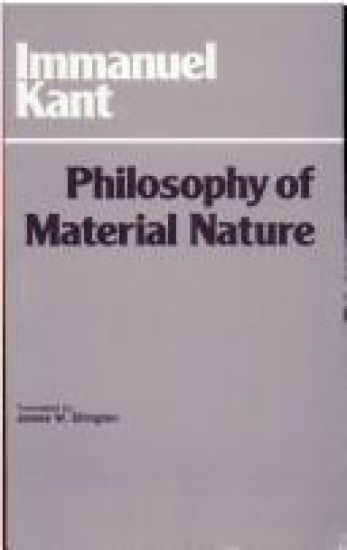
This volume combines two of Kant's key works on the metaphysics of nature--the Prolegomena to Any Future Metaphysics That Will Be Able to Come Forward as Science and Metaphysical Foundations of Natural Science --in the preeminent translations of James W. Ellington. Each work is preceded by an expert Introduction by Ellington and is followed by a German-English List of Terms and an Index.
Diese broschierte Textausgabe enthält den photomechanischen Nachdruck von Abt. 1 der Akademie Ausgabe Kants. Hier sind in der noch heute maßgeblichen kritischen Edition die Werke Kants mit sachlichen Erläuterungen und textkritischem Apparat zugänglich.
A refreshing approach to the study of major Western philosophers. Introductory essays by noted scholars enliven each volume with insights into the human side of the great thinkers, and provide authoritative discussions of the historical background, evolution, and imporace of their ideas. Highly recommended as stimulating classroom texts.
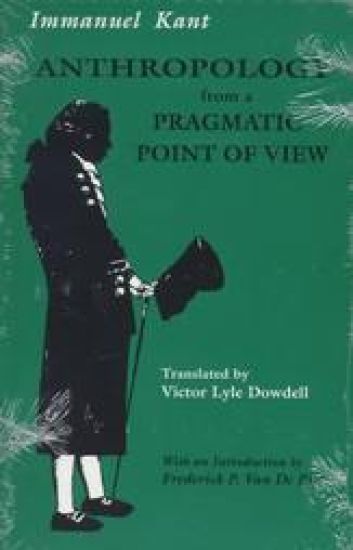
In the fall semester of 1772/73 at the Albertus University of K nigsberg, Immanuel Kant, metaphysician and professor of logic and metaphysics, began lectures on anthropology, which he continued until 1776, shortly before his retirement from public life. His lecture notes and papers were first published in 1798, eight years after the publication of the Critique of Judgment, the third of his famous Critiques. The present edition of the Anthropology is a translation of the text found in volume 7 of Kants gesammelte Schriften, edited by Oswald K lpe. Kant describes the Anthropology as a systematic doctrine of the knowledge of humankind. (He does not yet distinguish between the academic discipline of anthropology as we understand it today and the philosophical.) Kant's lectures stressed the "pragmatic" approach to the subject because he intended to establish pragmatic anthropology as a regular academic discipline. He differentiates the physiological knowledge of the human race--the investigation of "what Nature makes of man"--from the pragmatic--"what man as a free being makes of himself, what he can make of himself, and what he ought to make of himself." Kant believed that anthropology teaches the knowledge of humankind and makes us familiar with what is pragmatic, not speculative, in relation to humanity. He shows us as world citizens within the context of the cosmos. Summarizing the cloth edition of the Anthropology, Library Journal concludes: "Kant's allusions to such issues as sensation, imagination, judgment, (aesthetic) taste, emotion, passion, moral character, and the character of the human species in regard to the ideal of a cosmopolitan society make this work an important resource for English readers who seek to grasp the connections among Kant's metaphysics of nature, metaphysics of morals, and political theory. The notes of the editor and translator, which incorporate material from Ernst Cassirer's edition and from Kant's marginalia in the original manuscript, shed considerable light on the text."
Diese broschierte Textausgabe enthält den photomechanischen Nachdruck von Abt. 1 der Akademie Ausgabe Kants. Hier sind in der noch heute maßgeblichen kritischen Edition die Werke Kants mit sachlichen Erläuterungen und textkritischem Apparat zugänglich.
Diese broschierte Textausgabe enthält den photomechanischen Nachdruck von Abt. 1 der Akademie Ausgabe Kants. Hier sind in der noch heute maßgeblichen kritischen Edition die Werke Kants mit sachlichen Erläuterungen und textkritischem Apparat zugänglich.
In a footnote to the Preface of his A nthropology Kant gives, if not altogether accurately, the historical background for the publication of this work. The A nthropology is, in effect, his manual for a course of lectures which he gave "for some thirty years," in the winter semesters at the University of Konigsberg. In 1797, when old age forced him to discontinue the course and he felt that his manual would not compete with the lectures themselves, he decided to let the work be published (Ak. VII, 354, 356). The reader will readily see why these lectures were, as Kant says, popular ones, attended by people from other walks of life. In both content and style the Anthropology is far removed from the rigors of the Critiques. Yet the Anthropology presents its own special problems. The student of Kant who struggles through the Critique of Pure Reason is undoubtedly left in some perplexity regarding specific points in it, but he is quite clear as to what Kant is attempting to do in the work. On finishing the Anthropology he may well find himself in just the opposite situation. While its discussions of the functioning of man's various powers are, on the whole, quite lucid and even entertaining, the purpose of the work remains somewhat vague. The questions: what is pragmatic anthropology? what is its relation to Kant's more strictly philosophical works? have not been answered satisfactorily.
In this famous essay, first published in 1793, Kant considers the alleged conflict between theory and practice in the conduct of human affairs in three widening contexts: those of the common person faced with a moral decision, of the politician and the citizen concerned with the extent and limits of political obligation, and, finally, of the citizen of the world whose actions have a bearing on war and peace among nations. Unlike other animals, Kant reminds us, people must decide how they will live their lives. They therefore ask for a guide to action, a set of principles-a theory. From the outset, Kant rejects the ancient claim that the practical possibilities of action cannot always be reconciled with moral demands. He offers his own moral theory, a theory starting out from the principle of the right as an unequivocal guide to action. In partial disagreement with the rival theories of Hobbes and Locke, he proposes that the only condition under which the individual can achieve true destiny as a person and a member of the human race is the civil state. Such a state can be secured only by law. Although "from such crooked wood as man is made of, nothing perfectly straight can be built," only the rule of law can bring about a stable society. Last, Kant turns to the relation between theory and practice in international relations. "Nowhere," he writes, "does human nature appear less lovable than in the relation of whole nations to each other." But to hope for world peace on the basis of "the so-called balance of power is a mere chimera." There is no other remedy to international lawlessness and war than an international coercive law, and such law can grow only out of sound theory. "I put my trust in theory. At the same time, I trust in the nature of things, and also take account of human nature, which I cannot, or will not, consider so steeped in evil that in the end reason should not triumph."
Diese broschierte Textausgabe enthält den photomechanischen Nachdruck von Abt. 1 der Akademie Ausgabe Kants. Hier sind in der noch heute maßgeblichen kritischen Edition die Werke Kants mit sachlichen Erläuterungen und textkritischem Apparat zugänglich.
Diese broschierte Textausgabe enthält den photomechanischen Nachdruck von Abt. 1 der Akademie Ausgabe Kants. Hier sind in der noch heute maßgeblichen kritischen Edition die Werke Kants mit sachlichen Erläuterungen und textkritischem Apparat zugänglich.