Kirjojen hintavertailu – 12 859 819 kirjaa ja 27 kauppaa
Kirjailija
Immanuel Wallerstein
Kirjat ja teokset yhdessä paikassa: 57 kirjaa, julkaisuja vuosilta 1979–2026, suosituimpiin kuuluu Onko kapitalismilla tulevaisuutta?. Vertaile teosten hintoja ja tarkista saatavuus suomalaisista kirjakaupoista.
Immanuel Wallerstein's highly influential, multi-volume opus, "The Modern World-System", is one of this century's greatest works of social science. An innovative, panoramic reinterpretation of global history, it traces the emergence and development of the modern world from the sixteenth to the twentieth century.
Immanuel Wallerstein's highly influential, multi-volume opus, "The Modern World-System", is one of this century's greatest works of social science. An innovative, panoramic reinterpretation of global history, it traces the emergence and development of the modern world from the sixteenth to the twentieth century.
Immanuel Wallerstein's highly influential, multi-volume opus, "The Modern World-System", is one of this century's greatest works of social science. An innovative, panoramic reinterpretation of global history, it traces the emergence and development of the modern world from the sixteenth to the twentieth century. This new volume encompasses the nineteenth century from the revolutionary era of 1789 to the First World War. In this crucial period, three great ideologies - conservatism, liberalism, and radicalism - emerged in response to the worldwide cultural transformation that came about when the French Revolution legitimized the sovereignty of the people. Wallerstein tells how capitalists, and Great Britain, brought relative order to the world and how liberalism triumphed as the dominant ideology.
Immanuel Wallerstein's highly influential, multi-volume opus, The Modern World-System, is one of this century's greatest works of social science. An innovative, panoramic reinterpretation of global history, it traces the emergence and development of the modern world from the sixteenth to the twentieth century.
Forty years after the defeat of Nazism, and twenty years after the great wave of decolonization, how is it that racism remains a growing phenomenon? What are the special characteristics of contemporary racism? How can it be related to class divisions and to the contradictions of the nation-state? And how far, in turn, does racism today compel us to rethink the relationship between class struggles and nationalism? This book attempts to answer these fundamental questions through a remarkable dialogue between the French philosopher Etienne Balibar and the American historian and sociologist Immanuel Wallerstein. Each brings to the debate the fruits of over two decades of analytical work, greatly inspired, respectively, by Louis Althusser and Fernand Braudel. Both authors challenge the commonly held notion of racism as a continuation of, or throwback to, the xenophobias of past societies and communities. They analyze it instead as a social relation indissolubly tied to present social structures-the nation-state, the division of labor, and the division between core and periphery-which are themselves constantly being reconstructed. Despite their productive disagreements, Balibar and Wallerstein both emphasize the modernity of racism and the need to understand its relation to contemporary capitalism and class struggle. Above all, their dialogue reveals the forms of present and future social conflict, in a world where the crisis of the nation-state is accompanied by an alarming rise of nationalism and chauvinism.
A provocative survey of interdisciplinary challenges to the concept of dualism. During the last few decades, the fundamental premises of the modern view of knowledge have been increasingly called into question. Questioning Nineteenth-Century Assumptions about Knowledge III: Dualism provides an in-depth look at the debates surrounding the status of "dualism" in the sciences, social sciences, and the humanities in detailed and wide-ranging discussions among experts from across the disciplines. The extent to which the questionable necessity of a transcendent nomos; individualistic approaches versus systems ontology; rationality-material and formal-and how scholars might overcome the two cultures divide might impinge on the possibility, but not the inevitability, of progress are among the issues explored here. Weaving together in-depth articles and invigorating follow up discussions, this volume showcases debates over the status and validity of dualism. Of special interest are developing alternatives to traditional dualistic categories through an innovative, new approach based on biological naturalism; challenges to the dualism of people and things; the imperfectness and subjectivity of perception; and the overcoming the dualism of philosophy and science.
A provocative survey of interdisciplinary challenges to the concept of determinism. During the last few decades, the fundamental premises of the modern view of knowledge have been increasingly called into question. Questioning Nineteenth-Century Assumptions about Knowledge I: Determinism provides an in-depth look at the debates surrounding the status of "determinism" in the sciences, social sciences, and the humanities in detailed and wide-ranging discussions among experts from across the disciplines. A concern for the future, and how to approach it, is evident throughout. Indeed, the sense that there exists a reciprocal relationship between the structures of knowledge and human systems, including ecosystems, suggests that thinking about the possible rather than the necessary, may be a more winning strategy for our times. Weaving together in-depth articles and invigorating follow up discussions, this volume showcases debates over the status and validity of determinism. Of special interest are the impact of determinism on the perception and writing about the past; the relationship between chance and necessity in philosophy and grand opera; and the affect of determinism in mathematical modeling and economics.
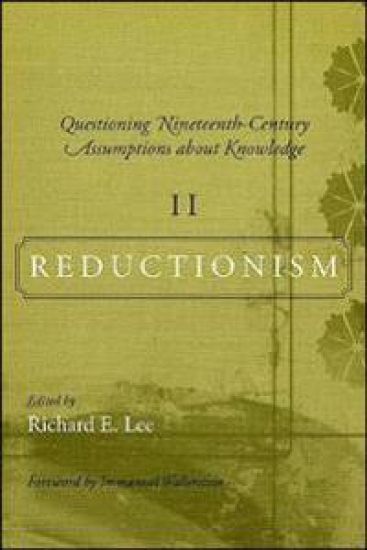
A provocative survey of interdisciplinary challenges to the concept of reductionism. During the last few decades, the fundamental premises of the modern view of knowledge have been increasingly called into question. Questioning Nineteenth-Century Assumptions about Knowledge II: Reductionism provides an in-depth look at the debates surrounding the status of "reductionism" in the sciences, social sciences, and the humanities in detailed and wide-ranging discussions among experts from across the disciplines. Whether or not there is or should be a basic epistemological stance that is different in the sciences and humanities, and whether or not such a stance as exemplified by the approach to reductionism is changing, has enormous consequences for all aspects of knowledge production. Featured are an overview and subsequent discussion of this pervasive concept in the social sciences that parses reductionism into the categories of strong social constructionism and anti-essentialism, social ontology and the apathetic actor, dualisms, and individualism. Also of interest in chapters and follow up discussions are the relations between essentialism and emergentism in complex systems theory.
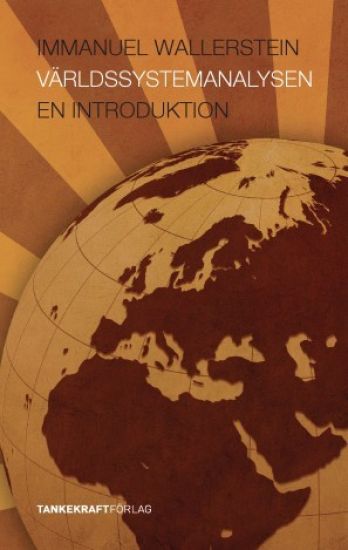
I Världssystemanalysen - en introduktion ger Immanuel Wallerstein en koncis och lättillgänglig presentation av det vittfamnande teoribygge som han lanserade för drygt trettio år sedan. Med tiden har världssystemanalysen blivit en allt vanligare metodologisk utgångspunkt inom de historiskt inriktade samhällsvetenskaperna, och även utanför universiteten växer intresset. Inte minst i globaliseringsdebatten är teorin ett ständigt återkommande diskussionsämne. För första gången i en enda volym erbjuder nu Wallerstein en koncentrerad sammanfattning av världssystemanalysens grunder. Här ges en klar beskrivning av det moderna världssystemets kunskapsstrukturer, dess funktionssätt och dess stundande utmaningar. Wallerstein lyfter fram teorins centrala beståndsdelar: valet att överge nationalstaten som analysenhet till förmån för "världssystemet", det långsiktiga perspektivet på historiska förlopp samt viljan att överskrida de akademiska barriärerna mellan discipliner som historia, statsvetenskap, ekonomi och sociologi. Därefter tecknas en fascinerande bild av den moderna världens utveckling - från den kapitalistiska världsekonomins uppkomst på 1500-talet, via franska revolutionens omvälvningar fram till 1968 års kulturella världsrevolution. I ett avslutande kapitel behandlas det nuvarande världssystemets förestående slutkris och vilka gemensamma valmöjligheter vi har inför framtiden. Boken ger en fullödig inledning till det världssystemanalytiska arbetet författad av teorins ursprungliga arkitekt, och är avsedd såväl för den intresserade allmänheten som för universitetsstudenter och forskare.
Helt fra spanjolenes erobring av Amerika til amerikanernes "frigjøring" av Irak har vestlige lands intervensjon omkring i verden blitt rettferdiggjort med begreper om sivilisasjon, utvikling og framskritt. I denne korte og skarpe boken undersøker og kritiserer den kjente samfunnsviteren Immanuel Wallerstein begrunnelsene for slike intervensjoner. Han viser at ideene de er basert på, slett ikke er universelle, men er grunnet i en vestlig tankegang som opptrådte første gang da spanjolene skulle rettferdiggjøre masseslakten av indianere på 1500-tallet. Slike "universelle" argumenter har i realiteten forsvart den sterkestes rett. I en tid da intervensjon i demokratiets og menneskerettighetenes navn igjen er blitt aktuell, er denne boken både relevant og nødvendig lesning.
Vi befinner oss i slutet av en era den europeiska universalismens era. Ända sedan 1500-talet har Europas makter urskuldat sina interventioner runtom i världen genom att hänvisa till begrepp som utveckling, civilisation och framsteg. Den outtalade premissen har varit att dessa idéer är universella, fastlagda i någonting som ofta benämnts »naturrätten«. Men som den framstående samhällsvetaren Immanuel Wallerstein visar i denna kärnfulla skrift är dessa föreställningar långt ifrån globala. Tvärtom har de sitt ursprung i en europeisk kontext där de fungerat som retoriska vapen i maktens händer. Det stora uppdrag som mänskligheten står inför idag är att skapa en »sann universalism«, en global mötesplats för ömsesidigt givande och tagande. I Europeisk universalism, som är den andra titeln i TankeKrafts bokserie »Globaliseringens ideologier«, ger Wallerstein återigen prov på det världssystemanalytiska perspektivets styrka när det gäller att belysa de strukturella omvälvningarna i dagens värld.
How ideas such as civilization and progress have been used as a smoke screen for Western dominance, by the world-renowned sociologist Ever since the Enlightenment, Western intervention around the world has been justified by appeals to notions of civilization, development, and progress. The assumption has been that such ideas are universal, encrusted in natural law. But, as Immanuel Wallerstein argues in this short and elegant philippic, these concepts are, in fact, not global. Rather, their genesis is firmly rooted in European thought and their primary function has been to provide justification for powerful states to impose their will against the weak under the smoke screen of what is supposed to be both beneficial to humankind and historically inevitable. With great acuity Wallerstein draws together discussions of the idea of orientalism, the right to intervene, and the triumph of science over the humanities to explain how strategies designed to promote particular Western interests have acquired an all-inclusive patina. Wallerstein concludes by advocating a true universalism that will allow critical appraisal of all justifications for intervention by the powerful against the weak. At a time when such intervention—in the name of democracy and human rights—has returned to the center stage of world politics, his treatise is both relevant and compelling.
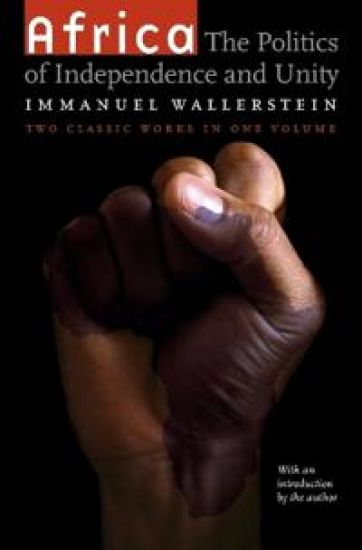
Africa: The Politics of Independence and Unity combines into one edition for the first time Africa: The Politics of Independence and Africa: The Politics of Unity. With a new introduction by the author, this edition provides some of the earliest and most valuable analysis of African politics during the period when the colonial system began to disintegrate. The influential Africa: The Politics of Independence was written as Africa was just realizing independence and still reveling in the optimism it brought. Immanuel Wallerstein was one of the few scholars who had traveled throughout Africa during the collapse of colonial rule. As a result, his interpretive essay captures the dynamism of that period of transformation and adroitly analyzes Africa's modern political developments during the nascent process of decolonization. Africa: The Politics of Unity, published six years later, examines the African unity movement that arose between 1957 and 1965 and its revolutionary core. It is often considered the first thorough analysis of the postindependence history of Africa.
In this book prominent scholars from around the world debate two major themes: the past and future of the capitalist world-economy, and the ways in which a capitalist economy shapes Western research, the academy, and broader knowledge structures. Putting the two themes together, they also analyze the relationship between scholarship and the rest of the world. The book is published to commemorate the 25th anniversary of the Fernand Braudel Center. Contributors Samir Amin, Christopher Chase-Dunn, Bart Tromp,. Claudia von Werlhof, Giovanni Arrighi, Pablo Gonzalez-Casanova, Marcel van der Linden, Randall Collins, Mahm ood Mamdani, Boaventura de Sousa Santos, Michel-Rolph Trouillot, Janet Abu-Lughod, Maurice Aymard, and Immanuel Wallerstein.
Förlagets beskrivning: Historikern och politiske tänkaren Immanuel Wallerstein använder i den här korta men omtumlande boken sin världssystemsteori för att diskutera framtiden: dess tendenser, risker och möjligheterna att skapa en bättre värld. Med sitt begrepp "utopistik" syftar således Wallerstein på något helt annat än utopism. Immanuel Wallerstein är en av samtidens mest inflytelserika politiska tänkare som skrivit en lång rad böcker översatta till en lång rad språk. Vertigo förlag har tidigare gett ut essäsamlingen Liberalismens död (2001).
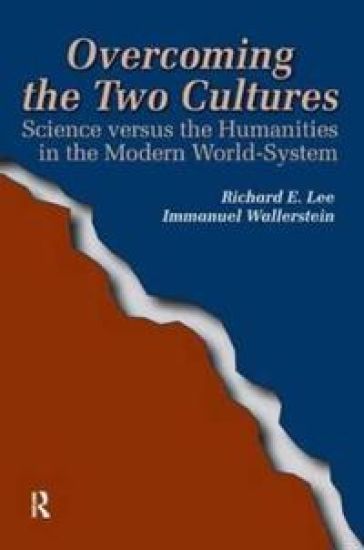
This book tells the story of how the very idea of two cultures-the so-called divorce between science and the humanities-was a creation of the modern world-system. The contributors, working from a common research framework, trace the divorce of "facts" and "values" as part of the transition from feudalism to capitalism. This led to a polarization between universalist "science" and the particularist "humanities" and finally to the creation of the social sciences as an uneasy intermediary in this epistemological debate. The book addresses the contemporary attempts to overcome the division between the two cultures that emerge from science, feminism, race and ethnic studies, cultural studies, and ecology, ending with an analysis of the culture wars and the science wars. Contributors: Volkan Aytar, Ay,se Betul Celik, Mauro Di Meglio, Mark Frezzo, Ho-fung Hung, Biray Kolloupglu K3/4rl3/4, Agustin Lao- Montes, Eric Mielants, Boris Stremlin, Sunaryo, Norihisa Yamashita, Deniz Yukeseker.
This book tells the story of how the very idea of two cultures-the so-called divorce between science and the humanities-was a creation of the modern world-system. The contributors, working from a common research framework, trace the divorce of "facts" and "values" as part of the transition from feudalism to capitalism. This led to a polarization between universalist "science" and the particularist "humanities" and finally to the creation of the social sciences as an uneasy intermediary in this epistemological debate. The book addresses the contemporary attempts to overcome the division between the two cultures that emerge from science, feminism, race and ethnic studies, cultural studies, and ecology, ending with an analysis of the culture wars and the science wars. Contributors: Volkan Aytar, Ay,se Betul Celik, Mauro Di Meglio, Mark Frezzo, Ho-fung Hung, Biray Kolloupglu K3/4rl3/4, Agustin Lao- Montes, Eric Mielants, Boris Stremlin, Sunaryo, Norihisa Yamashita, Deniz Yukeseker.
In this book prominent scholars from around the world debate two major themes: the past and future of the capitalist world-economy, and the ways in which a capitalist economy shapes Western research, the academy, and broader knowledge structures. Putting the two themes together, they also analyze the relationship between scholarship and the rest of the world. The book is published to commemorate the 25th anniversary of the Fernand Braudel Center. Contributors Samir Amin, Christopher Chase-Dunn, Bart Tromp,. Claudia von Werlhof, Giovanni Arrighi, Pablo Gonzalez-Casanova, Marcel van der Linden, Randall Collins, Mahm ood Mamdani, Boaventura de Sousa Santos, Michel-Rolph Trouillot, Janet Abu-Lughod, Maurice Aymard, and Immanuel Wallerstein.
In World-Systems Analysis, Immanuel Wallerstein provides a concise and accessible introduction to the comprehensive approach that he pioneered thirty years ago to understanding the history and development of the modern world. Since Wallerstein first developed world-systems analysis, it has become a widely utilized methodology within the historical social sciences and a common point of reference in discussions of globalization. Now, for the first time in one volume, Wallerstein offers a succinct summary of world-systems analysis and a clear outline of the modern world-system, describing the structures of knowledge upon which it is based, its mechanisms, and its future. Wallerstein explains the defining characteristics of world-systems analysis: its emphasis on world-systems rather than nation-states, on the need to consider historical processes as they unfold over long periods of time, and on combining within a single analytical framework bodies of knowledge usually viewed as distinct from one another-such as history, political science, economics, and sociology. He describes the world-system as a social reality comprised of interconnected nations, firms, households, classes, and identity groups of all kinds. He identifies and highlights the significance of the key moments in the evolution of the modern world-system: the development of a capitalist world-economy in the sixteenth-century, the beginning of two centuries of liberal centrism in the French Revolution of 1789, and the undermining of that centrism in the global revolts of 1968. Intended for general readers, students, and experienced practitioners alike, this book presents a complete overview of world-systems analysis by its original architect.
In World-Systems Analysis, Immanuel Wallerstein provides a concise and accessible introduction to the comprehensive approach that he pioneered thirty years ago to understanding the history and development of the modern world. Since Wallerstein first developed world-systems analysis, it has become a widely utilized methodology within the historical social sciences and a common point of reference in discussions of globalization. Now, for the first time in one volume, Wallerstein offers a succinct summary of world-systems analysis and a clear outline of the modern world-system, describing the structures of knowledge upon which it is based, its mechanisms, and its future. Wallerstein explains the defining characteristics of world-systems analysis: its emphasis on world-systems rather than nation-states, on the need to consider historical processes as they unfold over long periods of time, and on combining within a single analytical framework bodies of knowledge usually viewed as distinct from one another-such as history, political science, economics, and sociology. He describes the world-system as a social reality comprised of interconnected nations, firms, households, classes, and identity groups of all kinds. He identifies and highlights the significance of the key moments in the evolution of the modern world-system: the development of a capitalist world-economy in the sixteenth-century, the beginning of two centuries of liberal centrism in the French Revolution of 1789, and the undermining of that centrism in the global revolts of 1968. Intended for general readers, students, and experienced practitioners alike, this book presents a complete overview of world-systems analysis by its original architect.