Kirjojen hintavertailu – 12 903 732 kirjaa ja 27 kauppaa
Kirjailija
J. M. Coetzee
Kirjat ja teokset yhdessä paikassa: 101 kirjaa, julkaisuja vuosilta 1982–2026, suosituimpiin kuuluu Leben und Zeit des Michael K.. Vertaile teosten hintoja ja tarkista saatavuus suomalaisista kirjakaupoista.
Nimi esiintyy myös muodoissa: J.M. Coetzee, J M Coetzee
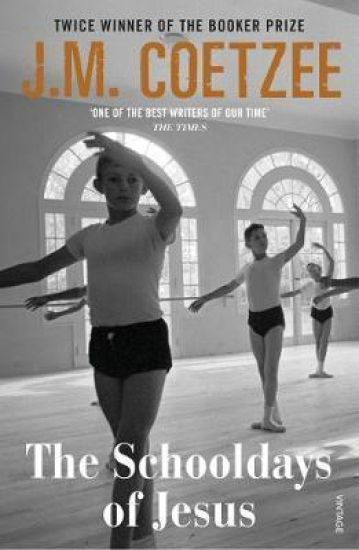
Jesu skoledager er en fascinerende og stilsikker ny roman fra nobelprisvinner J. M. Coetzee, og oppfølger til Jesu barndom, som kom på norsk i 2014. I Jesu skoledager fortsetter Coetzee fortellingen om den lille gutten Davíd, som sammen med Simón og Inés har flyttet til den lille byen Estrella. Davíd er en gutt som stiller spørsmål ved alt og ikke liker å innordne seg. Nå begynner han på det lille, private Akademiet for dans og ser ut til å finne seg godt til rette. Men kanskje viktigere enn plott er dette en bok som forholder seg til filosofiske spørsmål: Hva er kjærlighet? Frihet? Begjær? Å være et menneske? Som i sine tidligere bøker skriver Coetzee knapt og sterkt og med en suveren kjennskap til litteraturen og kulturhistorien, på en måte som få andre kan måle seg med i dag. Han drar opp grunnleggende universelle problemstillinger rundt hvordan det er å vokse opp og utvikle seg som menneske, og å stadig bli dratt mellom følelser og intellekt.
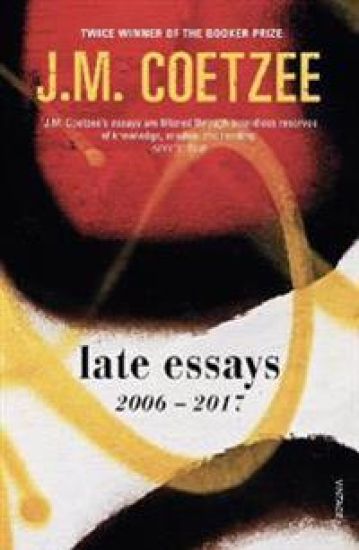
A fascinating collection of essays on literary subjects ranging from Daniel Defoe to Samuel Beckett by a Nobel and Booker Prize-winning writerLate Essays gathers together J. M.
LONGLISTED FOR THE MAN BOOKER PRIZE 2016Selected as a Book of the Year 2016 in the Observer and Daily TelegraphWhen you travel across the ocean on a boat, all your memories are washed away and you start a completely new life.
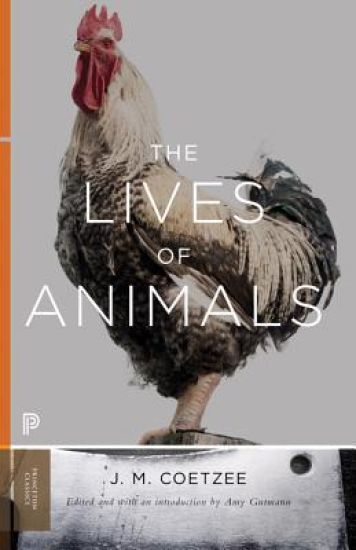
The idea of human cruelty to animals so consumes novelist Elizabeth Costello in her later years that she can no longer look another person in the eye: humans, especially meat-eating ones, seem to her to be conspirators in a crime of stupefying magnitude taking place on farms and in slaughterhouses, factories, and laboratories across the world. Costello's son, a physics professor, admires her literary achievements, but dreads his mother's lecturing on animal rights at the college where he teaches. His colleagues resist her argument that human reason is overrated and that the inability to reason does not diminish the value of life; his wife denounces his mother's vegetarianism as a form of moral superiority. At the dinner that follows her first lecture, the guests confront Costello with a range of sympathetic and skeptical reactions to issues of animal rights, touching on broad philosophical, anthropological, and religious perspectives. Painfully for her son, Elizabeth Costello seems offensive and flaky, but--dare he admit it?--strangely on target. In this landmark book, Nobel Prize-winning writer J. M. Coetzee uses fiction to present a powerfully moving discussion of animal rights in all their complexity. He draws us into Elizabeth Costello's own sense of mortality, her compassion for animals, and her alienation from humans, even from her own family. In his fable, presented as a Tanner Lecture sponsored by the University Center for Human Values at Princeton University, Coetzee immerses us in a drama reflecting the real-life situation at hand: a writer delivering a lecture on an emotionally charged issue at a prestigious university. Literature, philosophy, performance, and deep human conviction--Coetzee brings all these elements into play. As in the story of Elizabeth Costello, the Tanner Lecture is followed by responses treating the reader to a variety of perspectives, delivered by leading thinkers in different fields. Coetzee's text is accompanied by an introduction by political philosopher Amy Gutmann and responsive essays by religion scholar Wendy Doniger, primatologist Barbara Smuts, literary theorist Marjorie Garber, and moral philosopher Peter Singer, author of Animal Liberation. Together the lecture-fable and the essays explore the palpable social consequences of uncompromising moral conflict and confrontation.
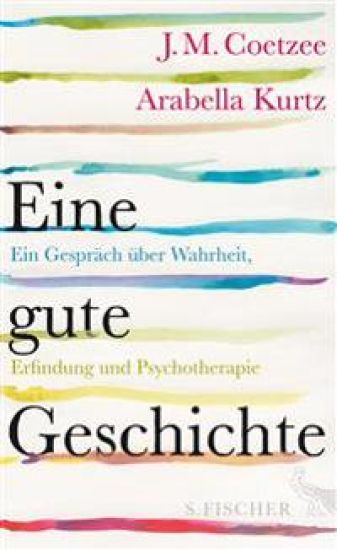
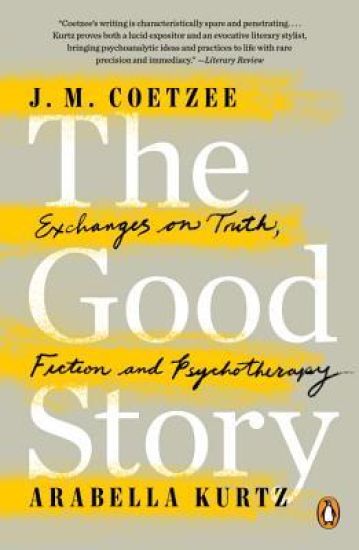
J. M. Coetzee's latest novel, The Schooldays of Jesus, is now available from Viking. Late Essays: 2006-2016 will be available January 2018. J. M. Coetzee: What relationship do I have with my life history? Am I its conscious author, or should I think of myself as simply a voice uttering with as little interference as possible a stream of words welling up from my interior? Arabella Kurtz: One way of thinking about psychoanalysis is to say that it is aimed at setting free the narrative or autobiographical imagination. The Good Story is a fascinating dialogue about psychotherapy and the art of storytelling between a writer with a long-standing interest in moral psychology and a psychotherapist with training in literary studies. Coetzee and Kurtz consider psychotherapy and its wider social context from different perspectives, but at the heart of both of their approaches is a concern with narrative. Working alone, the writer is in control of the story he or she tells. The therapist, on the other hand, collaborates with the patient in developing an account of the patient's life and identity that is both meaningful and true. In a meeting of minds that is illuminating and thought-provoking, the authors discuss both individual psychology and the psychology of the group: the school classroom, gangs and the settler nation, in which the brutal deeds of ancestors are accommodated into a national story. Drawing on great writers like Cervantes and Dostoevsky and psychoanalysts like Freud and Melanie Klein, Coetzee and Kurtz explore the human capacity for self-examination, our wish to tell our own life stories and the resistances we encounter along the way.
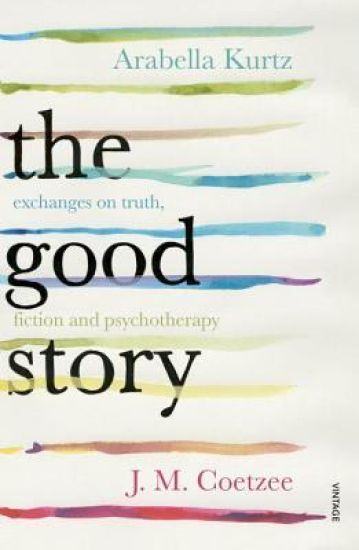
The Good Story is an exchange between a writer with a longstanding interest in moral psychology and a psychotherapist with a training in literary studies.
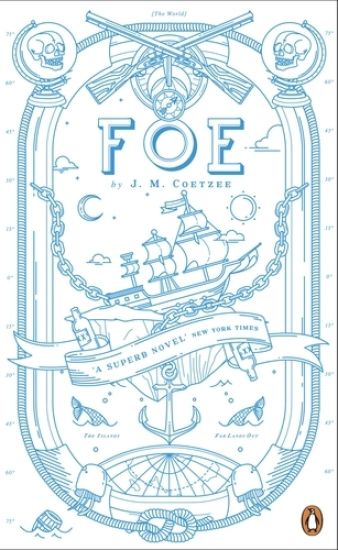
Nobel Laureate and two-time Booker prize-winning author of Disgrace and The Life and Times of Michael K, J. M. Coetzee reimagines Daniel DeFoe's classic novel Robinson Crusoe in Foe. Published as a Penguin Essential for the first time. In an act of breathtaking imagination, J. M Coetzee radically reinvents the story of Robinson Crusoe. In the early eighteenth century, Susan Barton finds herself adrift from a mutinous ship and cast ashore on a remote desert island. There she finds shelter with its only other inhabitants: a man named Cruso and his tongueless slave, Friday. In time, she builds a life for herself as Cruso's companion and, eventually, his lover. At last they are rescued by a passing ship, but only she and Friday survive the journey back to London. Determined to have her story told, she pursues the eminent man of letters Daniel Foe in the hope that he will relate truthfully her memories to the world. But with Cruso dead, Friday incapable of speech and Foe himself intent on reshaping her narrative, Barton struggles to maintain her grip on the past, only to fall victim to the seduction of storytelling itself. Treacherous, elegant and unexpectedly moving, Foe remains one of the most exquisitely composed of this pre-eminent author's works.'A small miracle of a book. . . of marvellous intricacy and overwhelming power' Washington Post'A superb novel' The New York Times
En mann og en gutt har krysset havet og kommer til et nytt land. Her blir de tildelt et navn, alder og losji mens de lærer seg spansk. Som Simón og David navigerer de seg fram til relokaliseringssenteret i sentrum av Novilla, hvor byråkratene behandler dem høflig, om enn ikke nødvendigvis hjelpsomt. Simón finner seg en jobb ved kornmottaket på havnen. Arbeidet er uvant og slitsomt, men snart blir han kjent med de andre havnearbeiderne. I pausene har de filosofiske samtaler om arbeidets verdighet og ser ut til å trives. Nå må han gjøre det han kan for å finne guttens mor. Han har i likhet med alle andre som kommer til dette nye landet, fått hukommelsen hvisket ut.
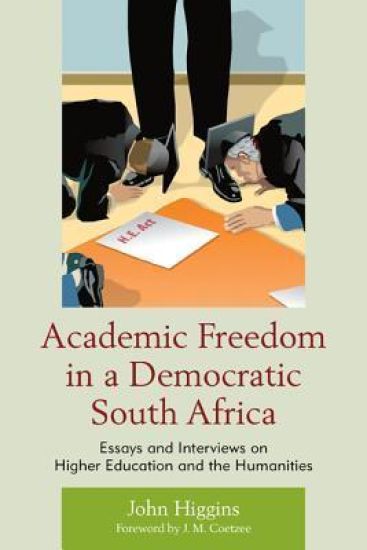
How do we understand academic freedom today? Does it still have relevance in a global reconfiguring of higher education in the interests of the economy, rather than the public good? And locally, is academic freedom no more than an inconvenient ideal, paid lip service to South Africa’s Constitution as an individual right, but neglected in institutional practice? This book argues that the core content of academic freedom—the principle of supporting and extending open intellectual enquiry—is essential to realizing the full public value of higher education. John Higgins emphasizes the central role that the humanities, and the particular forms of argument and analysis they embody, bring to this task. Each chapter embodies the particular force of a critical literacy in action, one which brings into play the combined force of historical inquiry, theoretical analysis, and precise attention to the textual dynamics of all statement so as to challenge and confront the received ideas of the day. These provocative analyses are complemented by probing interviews with three key figures from the Critical Humanities: Terry Eagleton, who discusses the deforming effects of managerialism in British universities; Edward W. Said, who argues for increased recognition of the democratizing force of the humanities; and Jakes Gerwel, who presents some of the most recent challenges for the realization of a humanist politics in South Africa.
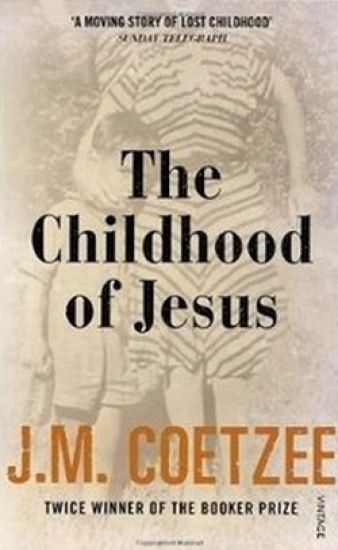
From the Nobel Prize-winning author of Waiting for the Barbarians, The Life & Times of Michael K and Disgrace. Nobel laureate and two-time Booker Prize winner J. M. Coetzee returns with a haunting and surprising novel about childhood and destiny that is sure to rank with his classic novels. Separated from his mother as a passenger on a boat bound for a new land, David is a boy who is quite literally adrift. The piece of paper explaining his situation is lost, but a fellow passenger, Sim n, vows to look after the boy. When the boat docks, David and Sim n are issued new names, new birthdays, and virtually a whole new life. Strangers in a strange land, knowing nothing of their surroundings, nor the language or customs, they are determined to find David's mother. Though the boy has no memory of her, Sim n is certain he will recognize her at first sight. "But after we find her," David asks, "what are we here for?" An eerie allegorical tale told largely through dialogue, The Childhood of Jesus is a literary feat--a novel of ideas that is also a tender, compelling narrative. Coetzee's many fans will celebrate his return while new readers will find The Childhood of Jesus an intriguing introduction to the work of a true master.
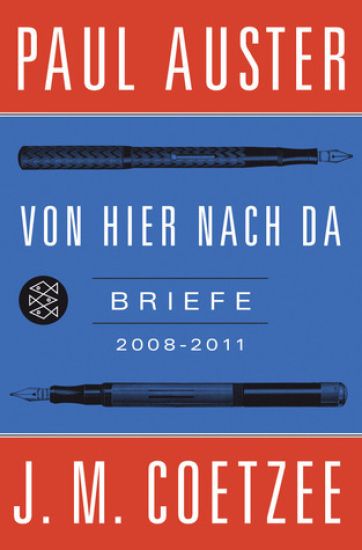
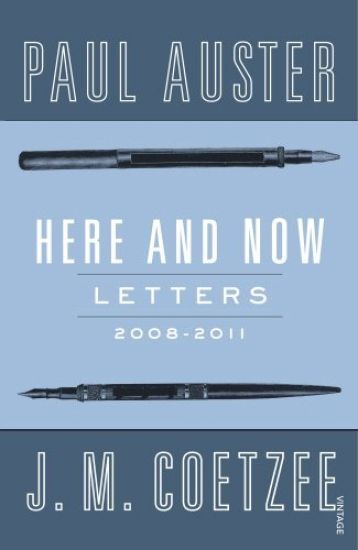
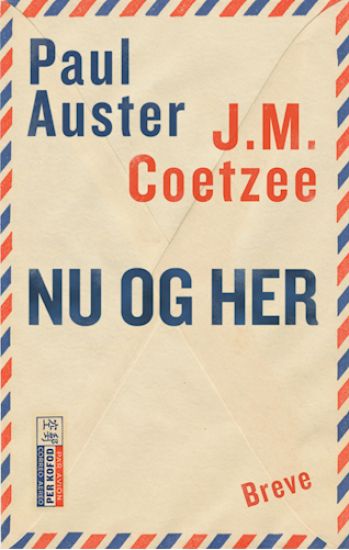
Offers an epistolary dialogue between two great writers who became great friends. This book includes letters that touched on nearly every subject, from sports to fatherhood, film festivals to incest, philosophy to politics, from the financial crisis to art, family, marriage, friendship, and love.
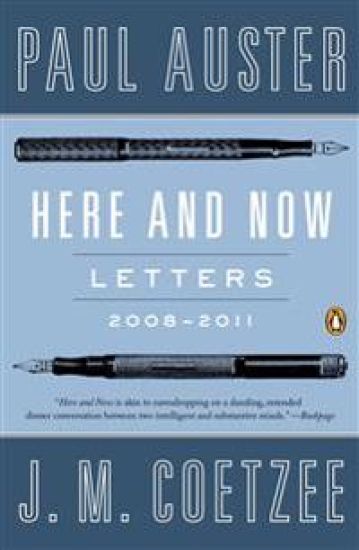
" A] civilized discourse between two cultivated and sophisticated men. . . . It's a pleasure to be in their company."--Michael Dirda, The Washington Post"An extended meditation on the processes of friendship, Here and Now] has something substantive to offer."--The New York Times Book Review After a meeting at an Australian literary festival brought them together in 2008, novelists Paul Auster and J. M. Coetzee began exchanging letters on a regular basis with the hope they might "strike sparks off each other." Here and Now is the result: a three-year epistolary dialogue that touches on nearly every subject from sports to fatherhood, literature to film, philosophy to politics, from the financial crisis to art, death, marriage, friendship, and love. Their high-spirited and luminous correspondence offers an intimate and often amusing portrait of these two men as they explore the complexities of the here and now and reveal their delight in each other's friendship on every page.
Though like everyone else who arrives in this new country he seems to be washed clean of all traces of memory, he is convinced he will know her when he sees her. And indeed, while walking with the boy in the countryside Simon catches sight of a woman he is certain is the mother, and persuades her to assume the role.
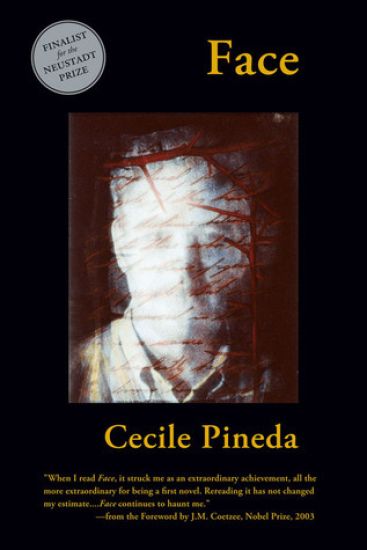
When it was first published in 1985, Face met with critical acclaim and established Cecile Pineda among the very first Latina writers in the United States to be published by a major New York house. This new expanded edition, which marks the announcement of Face as a 2013 Neustadt Prize finalist, features a foreword by Nobel Prize–winning author J. M. Coetzee and a never-before-published interview with the author conducted by Dr. Francisco Lomelí. The novel—based on an actual event—tracks the fortunes of Helio Cara, a poor but brilliant Brazilian man. When he hears that his mother is dying, Helio rushes from his shack in one of Rio de Janeiro’s favelas to the local telegraph office, only to fall down a steep hillside and literally lose his face, and in turn his identity. He rapidly loses his job, his lover, and his friends—his neighbour’s go so far as to burn down his shack—and flees to the Brazilian interior to live as an outcast in his mother’s tiny house. Pineda deftly, hauntingly records Helio Cara’s decision to perform self-surgery, using only novocaine, to reconstruct his face and identity. This compelling metaphor for identity, already taught in American and Latino literature courses in numerous universities, stands ready to engross a new generation of readers.
Each issue of the quarterly is completely redesigned. There have been hardcovers and paperbacks, an issue with two spines, an issue with a magnetic binding, an issue that looked like a bundle of junk mail, and an issue that looked like a sweaty human head. McSweeney's has won multiple literary awards, including two National Magazine Awards for fiction, and has had numerous stories appear in The Best American Magazine Writing, the "O", Henry Awards anthologies, and "The Best American Short Stories". Design awards given to the quarterly include the AIGA 50 Books Award, the AIGA 365 Illustration Award, and the Print Design Regional Award.
De to forfattere Paul Auster (USA) og J. M. Coetzee (Sydafrika) mødtes ved et litterært arrangement i Australien og har hen over tre år ført en brevveksling på tværs af kontinenter. Det er blevet til en særdeles indholdsrig 'samtale' spækket med interessante synspunkter omkring valg af livsform, nødvendigheden af at skrive, kærlighedens og venskabets natur, hvad god litteratur kan . Brevvekslingen giver et vigtigt indblik i de to vægtige forfatteres måde at tænke og skrive på.