Kirjailija
J.M.G. Le Clézio
Kirjat ja teokset yhdessä paikassa: 46 kirjaa, julkaisuja vuosilta 1984–2026, suosituimpiin kuuluu Alma. Vertaile teosten hintoja ja tarkista saatavuus suomalaisista kirjakaupoista.
Nimi esiintyy myös muodoissa: J. M. G. Le Clézio, J M G Le Clezio, J. M. G. Le Clezio, J.M.G. Le Clezio, J.M.G Le Clézio, J M G Le Clézio, J. M. G Le Clezio
46 kirjaa
Kirjojen julkaisuvuodet: 1984–2026.
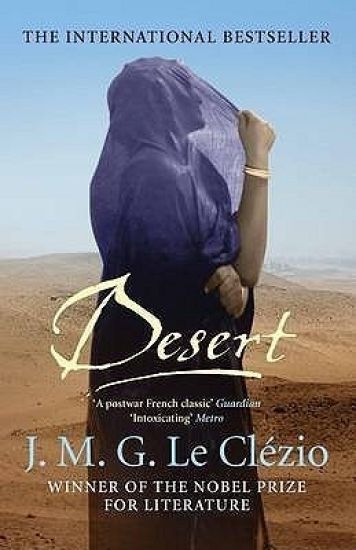
Young Nour is a North African desert tribesman. It is 1909, and as the First World War looms Nour's tribe - the Blue Men - are forced from their lands by French colonial invaders. Spurred on by thirst, hunger, suffering, they seek guidance from a great spiritual leader. The holy man sends them even further from home, on an epic journey northward, in the hope of finding a land in which they can again be free. Decades later, an orphaned descendant of the Blue Men - a girl called Lalla - is living in a shantytown on the coast of Morocco. Lalla has inherited both the pride and the resilience of her tribe - and she will need them, as she makes a bid to escape her forced marriage to a wealthy older man. She flees to Marseilles, where she experiences both the hardships of immigrant life - as a hotel maid - and the material prosperity of those who succeed - when she becomes a successful model. And yet Lalla does not betray the legacy of her ancestors. In these two narratives set in counterpoint, Nobel Prize-winning novelist J. M. G. Le Clézio tells - powerfully and movingly - the story of the 'last free men' and of Europe's colonial legacy - a story of war and exile and of the endurance of the human spirit.
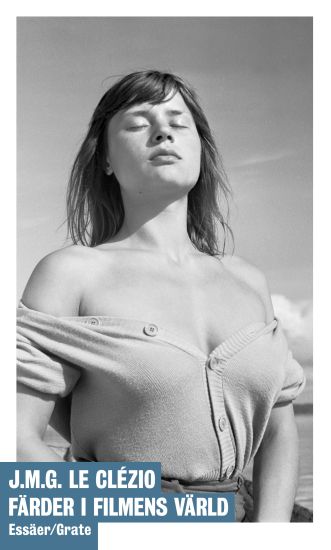
J. M. G. Le Clézio är en passionerad filmälskare. I Färder i filmens värld, 2007, berättar han lustfyllt om sina starka filmupplevelser, alltifrån 1940-talets seanser i mormoderns våning i Nice med en Pathé Babyprojektor och ett lakan som filmduk till möten med dagens unga koreanska filmskapare. Färden går via tidiga mästare som Jean Vigo och Yasujiro Ozu och Marcel Carné till Antonioni, Godard och Bergman, vars Somma ren med Monika Le Clézio skriver om med särskild värme. J. M. G Le Clézio föddes i Nice 1940. Han har skrivit ett fyrtiotal böcker: romaner, noveller, essäer, m.m. Le Clézio tilldelades 2008 Nobelpriset i litteratur. "När han använder sitt Nobelprisartilleri, sitt magnifika språk. Då blir texterna nästan bländande starka." DN
Vuoden 2008 nobelistin romaani on nuoren tytön aistivoimainen kasvutarina 1930- ja 1940-luvun Pariisissa Ethel Brun elää lapsuuttaan 1930-luvun Pariisissa ympärillään porvariston mukava elämä. Vanhempien salongissa aikuiset puhuvat ajan ilmiöistä, Hitlerin ja Mussolinin noususta ja talouden lamasta. Kasvaessaan Ethel alkaa ymmärtää, miten uhkaavia voimia ajassa liikkuu. Pian historian kiihtyvä rytmi tempaa mukaansa myös Ethelin perheen ja hän saa kokea, mitä ovat köyhyys, nälkä ja sota.
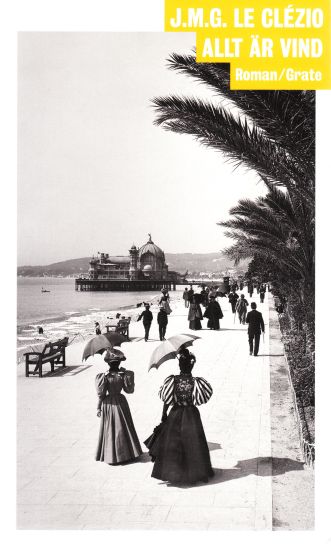
I Hungerns visa berättar den franske författaren och 2008 års Nobelpristagare i litteratur Jean-Marie Gustave Le Clézio, född 1940, i fiktiv form om moderns erfarenheter under andra världskriget. Hungern i olika bemärkelser utgör mittpunkten i romanen. Med träffsäker hand skildrar Le Clézio en värld i upplösning under krigsåren. Samtidigt tecknar han inlevelsefullt ett varmt, oförglömligt kvinnoporträtt. Av J. M. G. Le Clézio har förlaget även gett ut Afrikanen (2005), Allt är vind (2007) samt Raga (2008). Pressröster: "Ett storslaget kvinnoporträtt har vi fått genom Hungerns visa och bevis nog för att inte släppa greppet om fjolårets nobelpristagare när nu en ny träder till." Västerbottens-Kuriren"Hungerns visa är en vacker men osentimental historia om livets självt." Smålandsposten
“This is Nobel-quality writing, an international author with a mature style telling a story to the peak of his capacity. The English language needs more of it.”—The Telegraph From the winner of the 2008 Nobel Prize for Literature, Wandering Star is the story of two young women, one uprooted by the Holocaust and the other by the founding of the state of Israel. Bearing witness to the boundless strength of the spirit, and based on his own experience as a child in World War II, J. M. G. Le Clézio chronicles the saga of a young girl, Esther, who, in a small mountain village north of Nice occupied by Italian forces, learns what it means to be Jewish in wartime Europe. A quiet young teenager, she suffers the loss of her beloved father and, with her mother, is forced to flee advancing German troops. At war’s end, Esther and her mother make an arduous journey to Jerusalem, where their path crosses with a group of displaced refugees, including Nejma, a Palestinian girl whose story of life in the camps balances Esther’s own tale of suffering and survival. Esther and Nejma never meet again, but in their respective exiles, they are forever haunted by the memory of one another. Wandering Star is a powerful coming-of-age story and, as Le Figaro notes, truly “a luminous lesson in humanity.”
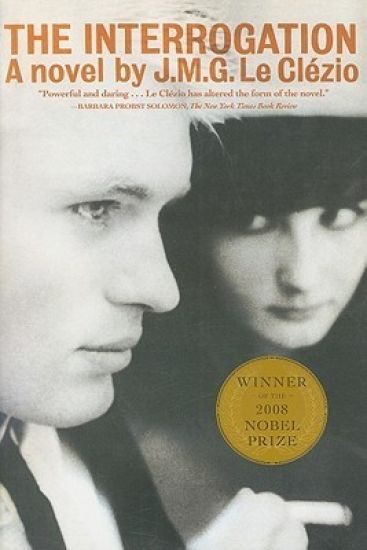
From the original Atheneum edition jacket, 1964. "J. M. G. Le Cl zio, revelation of the literary year" ran the headline of the Paris Express after last year's prizes had been awarded. The Goncourt jury was locked five to five until its president used his double vote to give the prize to the older candidate. Ten minutes later the Renaudot jury elected the candidate they thought they might lose to the other prize. Most of the literary sections ran their prize news putting the Renaudot first, in order to feature the twenty-three-year-old discovery that was rocking Paris literary circles. What is The Interrogation? Most likely a myth without distinct delineations. A very solitary young man, Adam Pollo, perhaps the first man, perhaps the last, has a very remarkable interior adventure. He concentrates and he discovers ways of being, ways of seeing. He enters into animals, into a tree.... He has no business, no distractions; he is at the complete disposal of life. All of life, that is, except the society of his own species -- and so the story ends. "This is the next phase after the 'the new novel, '" wrote the critics. Kafka they said; a direct descendant of Joyce, they said. Beckett they said. Like nothing else, they said. One hundred thousand Frenchmen bought it. They said it was strange and beautiful. Finally the real voice of the young, said the critics. "I like J. D. Salinger," said Mr. Le Cl zio, and that was all he said. His remarkable first book will soon be published all over the world and much more will be said.
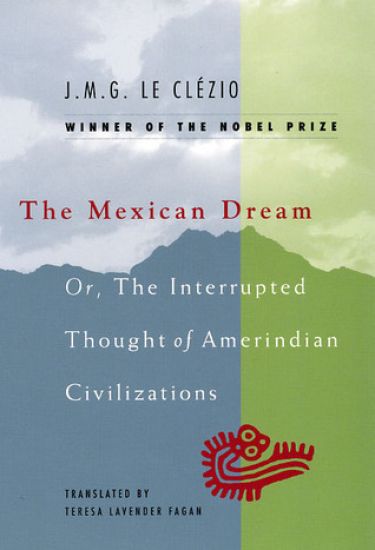
Winner of the 2008 Nobel Prize in Literature J. M. G. Le Clezio here conjures the consciousness of Mexico, powerfully evoking the dreams that made and unmade an ancient culture. Le Clezio's haunting book takes us into the dream that was the religion of the Aztecs, a religion whose own apocalyptic visions anticipated the coming of the Spanish conquerors. Here the dream of the conquistadores rises before us, too, the glimmering idea of gold drawing Europe into the Mexican dream. Against the religion and thought of the Aztecs and the Tarascans and the Europeans in Mexico, Le Clezio also shows us those of the 'barbarians' of the north, the nomadic Indians beyond the pale of the Aztec frontier. Finally, Le Clezio's book is a dream of the present, a meditation on what in Amerindian civilizations - in their language, in their way of telling tales, of wanting to survive their own destruction - moved the poet, playwright, and actor Antonin Artaud and motivates Le Clezio in this book. His own deep identification with pre-Columbian cultures, whose faith told them the wheel of time would bring their gods and their beliefs back to them, finds fitting expression in this extraordinary book, which brings the dream around.
War - in the mind of the fragile Bea B., in the infinite icy landscape she journeys through, in Vietnam, in 10,000 years of human history. The war of the title is not merely a war of arms but a generalised state of violence permeating every atom of Le Clézio's creation. Bea B. searches for clues for the origin of the evil. Under her searching gaze the most everyday objects - advertisements, cars, light bulbs - reveal extraordinary dimensions, as the earth trembles on the brink of cataclysmic explosion.
François Besson listens to a tape recording of a girl contemplating suicide. Drifting through the days in a provincial city, he thoughtlessly starts a fire in his apartment, attends confession, and examines, with great intentness but without affection, a naked woman he wakes beside. And, as Besson moves through an ugly and threatening rain, his thoughts eventually lead to violence, first turned outward and then directed languidly against himself.
For Chancelade, the world is teeming with beauty, wonder and possibilities. From a small boy playing on the beach, through his adolescence and his first love, to the death of his father and on to the end of his own life, he relishes the most minute details of his physical surroundings - whether a grain of sand, an insect or a blade of grass - as he journeys on a sensory adventure from cradle to grave. Filled with cosmic ruminations, lyrical description and virtuoso games of language and the imagination, Terra Amata brilliantly explores humankind's place in the universe, the relationship between us and the Earth we inhabit and, ultimately, how to live.
In these nine unforgettable and impressionistic 'tales of little madness', the Nobel Prize-winning author Le Clézio explores how the physical sensations we experience every day can be as strong as feelings of love or hate, with their power to bring chaos to our lives. In 'The Day that Beaumont became Acquainted with his Pain', a man with toothache spends the night seeking ways to disown his throbbing jaw; in 'Fever', Roch finds his mind transported by sunstroke; while in 'A Day of Old Age' little Joseph tries to comprehend the physical suffering of a dying old woman. Set in a timeless, spaceless universe, these experimental and haunting works portray the landscape of the human consciousness with dazzling verbal dexterity and power.
Upon an immense stretch of flat ground at the mouth of a river bathed in sunlight rises Hyperpolis. Each of us will see ourselves reflected in the characters who move mindlessly about Hyperpolis, but The Giants is a call to rebellion.
Nobelpreis für Literatur an JMG Le Cl?zio. Auf der Insel Mauritius im Indischen Ozean verbringt Alexis, der Ich-Erzähler von J. M. G. Le Cl?zios Roman, seine Kindheit in einer zauberhaften tropischen Landschaft nicht weit vom Meer. Die Mutter unterrichtet die Kinder zu Hause, der Vater, ein Träumer, erklärt ihnen den Sternenhimmel. Doch was so paradiesisch schien, bricht jäh zusammen, als der Vater 1892 mit seinen dilettantischen Geschäften Konkurs macht und ein Zyklon das Land verwüstet. Verarmt lebt die Familie in der Stadt Forest Side, wo der Vater stirbt. Um Unglück und Armut zu überwinden, bricht Alexis 1910 mit einem Segelschoner zu einer phantastischen Reise übers Meer auf. Er will nach alten Plänen und Karten seines Vaters einen sagenhaften Schatz heben, das Gold des Korsaren, dessen Versteck ihm sein Vater, bevor er starb, noch verraten hat - in einer Bucht auf Rodriguez, einer kleinen Insel im Indischen Ozean. Doch das Gold, nach dem Alexis immer verzweifelter sucht, bleibt unauffindbar. Uma, eine junge Schwarze, rettet ihn, und er glaubt für einige Zeit bei ihr das Glück gefunden zu haben. Der erste Weltkrieg bricht aus, und Alexis meldet sich freiwillig, er kämpft in der englischen Armee in Frankreich, an der Somme. Es sind für ihn 'tote Jahre', und als er nach Mauritius zurückkehrt, ist er erwachsen geworden. Seiner Familie hat er sich entfremdet, Uma ist nur noch ein Traum, die Kindheit eine Erinnerung und den Goldschatz von Rodriguez gibt es nicht. Was er auf seiner abenteuerlichen Fahrt gesucht hat, findet er in sich selbst
Årets Nobelpristagare 2008 I berättelsen Raga väver J. M. G. Le Clézio poetiskt samman fantasi och verklighet och skildrar hur den gamla kulturen på ögruppen Vanuatu i Stilla havet varit nära att ödeläggas av seklers kolonialism och våra dagars globalisering. J. M. G. Le Clézio, född i Nice 1940, slog 1963 igenom med debutromanen Le Procès verbal (Rapport om Adam, 1964). Han har sedan dess givit ut ett fyrtiotal böcker: romaner, essäer och noveller. Förlaget har tidigare utgivit den självbiografiska berättelsen Afrikanen (2005) och romanen Allt är vind (2007). J. M. G. Le Clézio har tilldelats Nobelpriset i litteratur och Stig Dagermanpriset 2008." Här finns några av de mest poetiska sidor jag läst av honom. Till omfånget är Ragaen tunn bok, men fascinerande innehållsrik." / Östgöta Correspondenten "ett vackert prisma över en epok och en värld som gnistrar av grymhet, skönhet och hopp. Och denna fjäderprosa som Le Clézio skriver, den är precis i varje mening och samtidigt nästan osynligt vacker." / Norra Skåne"Raga är ett kraftprov på lysande berättarkonst. Än en gång visar Le Clézio att han har en exceptionell förmåga att fånga läsaren i sitt magiska universum där mytens poetiska språk genomsyrar verklighetens laddade inslag." / Svenska Dagbladet
Årets Nobelpristagare 2008 Minnet är inte abstrakt, tänkte Jean. Det är ett stoff, en lång fiber som rullas kring verkligheten, fäster den vid avlägsna bilder, förlänger vibrationerna och fortplantar dem till kroppens nervsystem. Då var Catherines röst inte kylig, ironisk eller bitter längre. När Jean lyssnade kände han igen Charles Marros tonfall och ännu längre tillbaka Jean Eudes, den man som hade kämpat för revolutionen och haft mod att reda till andra änden av världen, för att börja ett nytt liv med kvinnan han älskade. "I Allt är vind sammanflätas två parallella skeenden: författarens alter ego Jeans ungdomsår i Nice, London och Mexiko, och hans förfäders liv efter utvandringen till ön Mauritius under Franska revolutionen. Kanske har han aldrig lyckats så väl som i den lysande storslagna romanen Allt är vind /.../ Så vackert som Le Clézio skriver ingen." / Norrtälje Tidning "Det är en mäktig läsupplevelse." / Göteborgs-Posten "Utan tvekan är Allt är vind något av det mest lysande i Le Clézios författarskap - egentligen kan endast ordet mästerverk göra den rättvisa." /Svenska Dagbladet
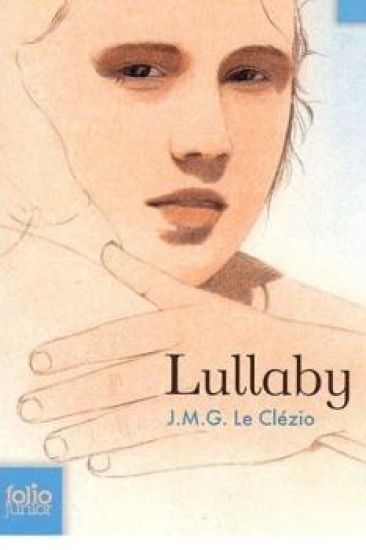
Un matin du mois d'octobre, Lullaby décide de ne plus aller en cours. Elle écrit à son père, glisse dans un sac quelques objets et, empruntant le chemin des contrebandiers, part en direction de la plage. Un petit garçon qui revient de la peche, une jolie maison grecque, mais surtout le soleil et la mer remplissent ses journées d'ivresse et de liberté. Un jour, pourtant, il faut revenir à l'école. Qui donc voudra croire à son étrange voyage ? Une reverie adolescente lumineuse et poétique, une héroine en quete de liberté. Retrouvez l'immense talent d'écrivain de J. M. G. Le Clézio, auteur contemporain majeur.