Kirjojen hintavertailu – 12 859 827 kirjaa ja 27 kauppaa
Kirjailija
Jack London
Kirjat ja teokset yhdessä paikassa: 4 103 kirjaa, julkaisuja vuosilta 1903–2026, suosituimpiin kuuluu Il richiamo della foresta / Erämaan kutsu. Vertaile teosten hintoja ja tarkista saatavuus suomalaisista kirjakaupoista.
The story follows the unnamed protagonist and his irrational hatred of John Claverhouse, a man with a "moon-face". The protagonist clearly states that his hatred of him is irrational, saying: "Why do we not like him? Ah, we do not know why; we know only that we do not. We have taken a dislike, that is all. And so I with John Claverhouse." The protagonist becomes obsessed with Claverhouse, hating his face, his laugh, his entire life. The protagonist observes that Claverhouse engages in illegal fishing with dynamite and hatches a scheme to kill Claverhouse...
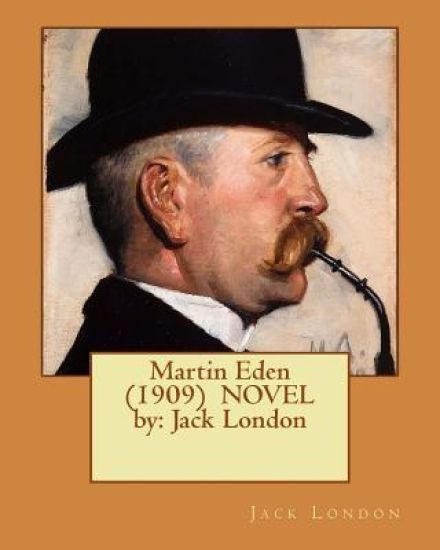
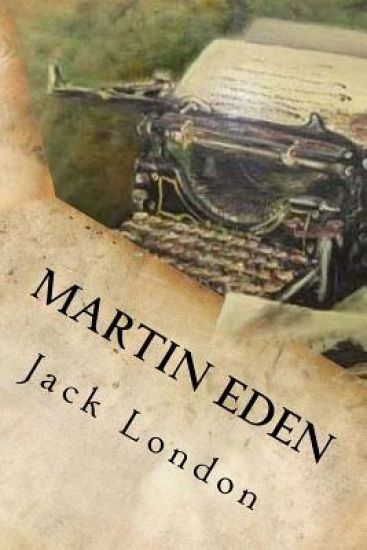
Martin Eden is a 1909 novel by American author Jack London about a young proletarian autodidact struggling to become a writer. It was first serialized in The Pacific Monthly magazine from September 1908 to September 1909 and published in book form by Macmillan in September 1909. Eden represents writers' frustration with publishers by speculating that when he mails off a manuscript, a "cunning arrangement of cogs" immediately puts it in a new envelope and returns it automatically with a rejection slip. citation needed] The central theme of Eden's developing artistic sensibilities places the novel in the tradition of the K nstlerroman, in which is narrated the formation and development of an artist.
Theft - By Jack London is a play by one of America's most respected authors of all time, this is a great addition to the collection. John Griffith "Jack" London (born John Griffith Chaney, January 12, 1876 - November 22, 1916)was an American novelist, journalist, and social activist. John Griffith "Jack" London (born John Griffith Chaney, January 12, 1876 - November 22, 1916)was an American novelist, journalist, and social activist. A pioneer in the then-burgeoning world of commercial magazine fiction, he was one of the first fiction writers to obtain worldwide celebrity and a large fortune from his fiction alone, including science fiction. Some of his most famous works include The Call of the Wild and White Fang, both set in the Klondike Gold Rush, as well as the short stories "To Build a Fire", "An Odyssey of the North", and "Love of Life". He also wrote of the South Pacific in such stories as "The Pearls of Parlay" and "The Heathen", and of the San Francisco Bay area in The Sea Wolf. London was part of the radical literary group "The Crowd" in San Francisco and a passionate advocate of unionization, socialism, and the rights of workers. He wrote several powerful works dealing with these topics, such as his dystopian novel The Iron Heel, his non-fiction expos The People of the Abyss, and The War of the Classes.
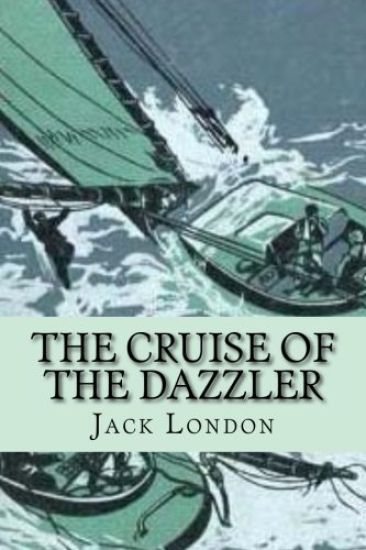
Story summary Joe Bronson, instead of studying for a school exam, goes out kite-flying with his school friends; on their way back he gets involved in fights with gang members in a poor part of the city. After he fails the exam the next day, he walks out of school and takes a ferry across the bay to Oakland. Looking at the boats on the wharf, he imagines the exciting life on a boat. His father, a businessman, has a liberal attitude to his son; but, critical of his recent behavior and poor school report, tells him that he might send him to a military academy. Joe later leaves a farewell note for his family; returning to Oakland, he joins the crew of a sloop, the Dazzler. The captain Pete Le Maire is known as "French Pete", and the one other crew member is 'Frisco Kid, a boy of about Joe's age. He soon realizes that French Pete is involved in criminal activity. They take scrap iron from a factory; the job is abandoned when shots are fired. Later, they work as oyster pirates. Joe, not wanting to be involved in crime, tries to escape, but each time is thwarted. French Pete tolerates Joe's opinion of him that he is a criminal. 'Frisco Kid tells Joe that he hates his life at sea; he had no family, and once worked for Red Nelson on another sloop, the Reindeer, but ran away. Arrested as a tramp, he was sent to a "boy's refuge", where conditions were intolerable; he escaped and joined French Pete. Joe resolves to leave and take 'Frisco Kid with him. French Pete and his associate Red Nelson steal a safe. Joe sees that it belongs to his father's company. The Dazzler and Reindeer sail into the Pacific, pursued for a time by a yacht; they intend to sail to Mexico. There is soon a storm and the Dazzler's mast breaks. The Reindeer gets close enough for French Pete to jump onto it but, before the boys can follow, the Reindeer disappears under the waves. The Dazzler drifts ashore at Santa Cruz, finding a small wharf on the lower San Lorenzo River. Joe goes to his father's office. His father makes him "feel at once as if not the slightest thing uncommon had occurred. It seemed as if he had just returned from a vacation, or, man-grown, had come back from some business trip." 4] His father, after hearing his story, says that the $5000 reward for the return of the safe would be shared, 'Frisco Kid's half being held in trust for his future.
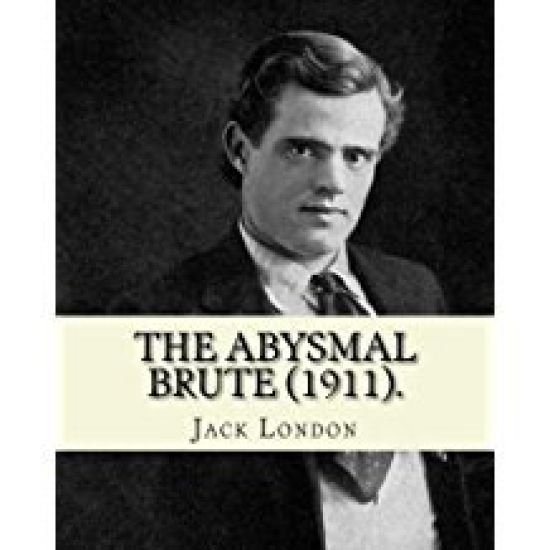
The Abysmal Brute is a novel by American writer Jack London, first published in book form in 1913. It is a short novel, and could be regarded as a novelette. It first appeared in September 1911 in Popular Magazine. In the story, a successful boxer, who was brought up in a log cabin and knows little of the real world, begins to realize the corrupt practices in the game of boxing. Sam Stubener, a boxing manager in San Francisco, travels to a remote log cabin in northern California on getting a letter from retired boxer Pat Glendon, who lives there with his son, Pat Glendon Jr, a promising young boxer. Pat Jr fights well; otherwise, he knows little of city life; he hunts and fishes in the forest, he reads poetry and avoids women. Sam brings Pat Jr back to San Francisco. Although Sam and Pat both know he could win a fight with a top boxer, the conventions of boxing require that Pat has to start with a boxer of lower rank. In his first three fights, he knocks out his opponent immediately with one punch. Sam tells Pat to make his fights last longer; since Pat says that he is master of his opponent "at any inch or second of the fight", they agree on which round the knockout will happen. Pat's career takes off, winning fights worldwide. The newspapers, who interpret his detachment from the real world as unsociability, call him "The Abysmal Brute." Sam protects him from the corruption in boxing. Pat is not aware that Sam is using his knowledge of the timing of the knockout in a betting syndicate. Pat is interviewed by Maud Sangster, a journalist from a family of millionaires, at the Cliff House, San Francisco. They immediately fall in love. Maud tells him she has heard in which round he will knock out his opponent in his next fight, and Pat wonders how his agreement with Sam became known. He tells her the knockout will be in a later round; this is to be a secret. When his opponent is knocked out in the round originally agreed with Sam, Maud is angry with Pat. He tells her his opponent faked the knockout; he is beginning to realize the corruption in the game, and says he is quitting boxing, although Sam has arranged a fight against top boxer Tom Cannam. Pat and Maud get married; their honeymoon is spent in the forest and mountains. He decides to return for the fight with Cannam. The event, promoted as an important occasion, starts with speeches from boxing legends to which, unexpectedly, he adds his own, describing the corruption in boxing. This has a sensational effect; he then knocks out Cannam in the first round, and the event ends in uproar..... John Griffith "Jack" London (born John Griffith Chaney, 1] January 12, 1876 - November 22, 1916) 2] 3] 4] 5] was an American novelist, journalist, and social activist. A pioneer in the then-burgeoning world of commercial magazine fiction, he was one of the first fiction writers to obtain worldwide celebrity and a large fortune from his fiction alone, including science fiction. Some of his most famous works include The Call of the Wild and White Fang, both set in the Klondike Gold Rush, as well as the short stories "To Build a Fire", "An Odyssey of the North", and "Love of Life". He also wrote of the South Pacific in such stories as "The Pearls of Parlay" and "The Heathen", and of the San Francisco Bay area in The Sea Wolf. London was part of the radical literary group "The Crowd" in San Francisco and a passionate advocate of unionization, socialism, and the rights of workers. He wrote several powerful works dealing with these topics, such as his dystopian novel The Iron Heel, his non-fiction expos The People of the Abyss, and The War of the Classes.
Short story collections Includes: - The Strength of the Strong - South of the Slot - The Unparalleled Invasion - The Enemy of All the World - The Dream of Debs - The Sea-Farmer - Samuel John Griffith "Jack" London (born John Griffith Chaney, January 12, 1876 - November 22, 1916)was an American novelist, journalist, and social activist. John Griffith "Jack" London (born John Griffith Chaney, January 12, 1876 - November 22, 1916)was an American novelist, journalist, and social activist. A pioneer in the then-burgeoning world of commercial magazine fiction, he was one of the first fiction writers to obtain worldwide celebrity and a large fortune from his fiction alone, including science fiction. Some of his most famous works include The Call of the Wild and White Fang, both set in the Klondike Gold Rush, as well as the short stories "To Build a Fire", "An Odyssey of the North", and "Love of Life". He also wrote of the South Pacific in such stories as "The Pearls of Parlay" and "The Heathen", and of the San Francisco Bay area in The Sea Wolf. London was part of the radical literary group "The Crowd" in San Francisco and a passionate advocate of unionization, socialism, and the rights of workers. He wrote several powerful works dealing with these topics, such as his dystopian novel The Iron Heel, his non-fiction expos The People of the Abyss, and The War of the Classes.
THE GOD OF HIS FATHERS I On every hand stretched the forest primeval, -the home of noisy comedy and silent tragedy. Here the struggle for survival continued to wage with all its ancient brutality. Briton and Russian were still to overlap in the Land of the Rainbow's End-and this was the very heart of it-nor had Yankee gold yet purchased its vast domain. The wolf-pack still clung to the flank of the cariboo-herd, singling out the weak and the big with calf, and pulling them down as remorselessly as were it a thousand, thousand generations into the past. The sparse aborigines still acknowledged the rule of their chiefs and medicine men, drove out bad spirits, burned their witches, fought their neighbors, and ate their enemies with a relish which spoke well of their bellies. But it was at the moment when the stone age was drawing to a close. Already, over unknown trails and chartless wildernesses, were the harbingers of the steel arriving, -fair-faced, blue-eyed, indomitable men, incarnations of the unrest of their race. By accident or design, single-handed and in twos and threes, they came from no one knew whither, and fought, or died, or passed on, no one knew whence. The priests raged against them, the chiefs called forth their fighting men, and stone clashed with steel; but to little purpose. Like water seeping from some mighty reservoir, they trickled through the dark forests and mountain passes, threading the highways in bark canoes, or with their moccasined feet breaking trail for the wolf-dogs. They came of a great breed, and their mothers were many; but the fur-clad denizens of the Northland had this yet to learn. So many an unsung wanderer fought his last and died under the cold fire of the aurora, as did his brothers in burning sands and reeking jungles, and as they shall continue to do till in the fulness of time the destiny of their race be achieved.
The Star Rover is a novel by American writer Jack London published in 1915 (published in the United Kingdom as The Jacket). It is a story of reincarnation. Plot summary: A framing story is told in the first person by Darrell Standing, a university professor serving life imprisonment in San Quentin State Prison for murder. Prison officials try to break his spirit by means of a torture device called "the jacket," a canvas jacket which can be tightly laced so as to compress the whole body, inducing angina. Standing discovers how to withstand the torture by entering a kind of trance state, in which he walks among the stars and experiences portions of past lives. I trod interstellar space, exalted by the knowledge that I was bound on vast adventure, where, at the end, I would find all the cosmic formulae and have made clear to me the ultimate secret of the universe. In my hand I carried a long glass wand. It was borne in upon me that with the tip of this wand I must touch each star in passing. And I knew, in all absoluteness, that did I but miss one star I should be precipitated into some unplummeted abyss of unthinkable and eternal punishment and guilt. Background: The accounts of these past lives form the body of the work. They are a series of powerfully written, but disconnected and unresolved, vignettes set in different ages and cultures. The writing is uneven, sometimes sinking to the level of purple prose. According to Kevin Starr, London planned a historical novel about the American West and used some of this material in The Star Rover. The jacket was actually used at San Quentin at the time; Jack London's descriptions of it were based on interviews with a former convict named Ed Morrell, which London used as a name for a character in the novel. For his role in the Sontag and Evans gang which robbed the Southern Pacific Railroad in the 1890s, Morrell spent fourteen years in California prisons (1894-1908), five of them in solitary confinement. London championed his pardon. After his release, Morrell was a frequent guest at London's Beauty Ranch... John Griffith "Jack" London (born John Griffith Chaney, January 12, 1876 - November 22, 1916)was an American novelist, journalist, and social activist. John Griffith "Jack" London (born John Griffith Chaney, January 12, 1876 - November 22, 1916)was an American novelist, journalist, and social activist. A pioneer in the then-burgeoning world of commercial magazine fiction, he was one of the first fiction writers to obtain worldwide celebrity and a large fortune from his fiction alone, including science fiction. Some of his most famous works include The Call of the Wild and White Fang, both set in the Klondike Gold Rush, as well as the short stories "To Build a Fire", "An Odyssey of the North", and "Love of Life". He also wrote of the South Pacific in such stories as "The Pearls of Parlay" and "The Heathen", and of the San Francisco Bay area in The Sea Wolf. London was part of the radical literary group "The Crowd" in San Francisco and a passionate advocate of unionization, socialism, and the rights of workers. He wrote several powerful works dealing with these topics, such as his dystopian novel The Iron Heel, his non-fiction expos The People of the Abyss, and The War of the Classes.
Jack London was an American novelist, journalist, and social activist. A pioneer in the then-burgeoning world of commercial magazine fiction, he was one of the first fiction writers to obtain worldwide celebrity and a large fortune from his fiction alone, including science fiction. When God Laughs is a story about a couple that tries in vain to uphold an intensely idealistic romance against the erosions of time and the inconstancy of human nature... This outstanding collection includes, The Apostate, A Wicked Woman, Just Meat, Created He Them, The Chinago, Make Westing, Semper Idem, A Nose For the King, The "Francis Spaight", A Curious Fragment and A Piece of Steak.
John Griffith "Jack" London (born John Griffith Chaney, January 12, 1876 - November 22, 1916) was an American novelist, journalist, and social activist. A pioneer in the then-burgeoning world of commercial magazine fiction, he was one of the first fiction writers to obtain worldwide celebrity and a large fortune from his fiction alone, including science fiction. 6] Some of his most famous works include The Call of the Wild and White Fang, both set in the Klondike Gold Rush, as well as the short stories "To Build a Fire", "An Odyssey of the North", and "Love of Life". He also wrote of the South Pacific in such stories as "The Pearls of Parlay" and "The Heathen", and of the San Francisco Bay area in The Sea Wolf. London was part of the radical literary group "The Crowd" in San Francisco and a passionate advocate of unionization, socialism, and the rights of workers. He wrote several powerful works dealing with these topics, such as his dystopian novel The Iron Heel, his non-fiction expos The People of the Abyss, and The War of the Classes.
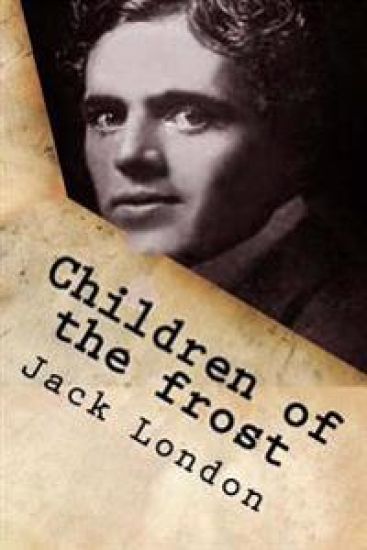
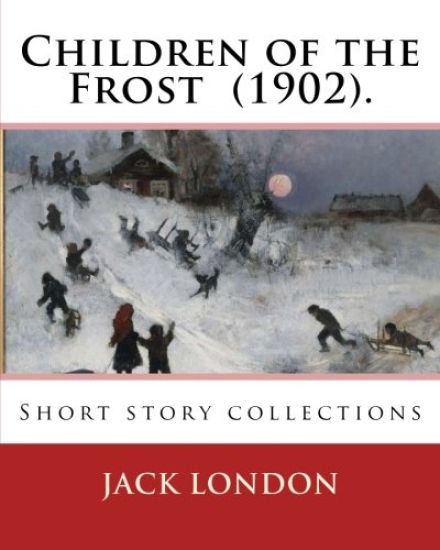
Children of the Frost is a collection of short stories first published in 1902. Includes: - The League of the Old Men - In the Forests of the North - The Law of Life - Nam-Bok the Unveracious - The Master of Mystery - The Sunlanders - The Sickness of Lone Chief - Keesh, the Son of Keesh - The Death of Ligoun - Li Wan, the Fair John Griffith "Jack" London (born John Griffith Chaney, January 12, 1876 - November 22, 1916)was an American novelist, journalist, and social activist. A pioneer in the then-burgeoning world of commercial magazine fiction, he was one of the first fiction writers to obtain worldwide celebrity and a large fortune from his fiction alone, including science fiction. Some of his most famous works include The Call of the Wild and White Fang, both set in the Klondike Gold Rush, as well as the short stories "To Build a Fire", "An Odyssey of the North", and "Love of Life". He also wrote of the South Pacific in such stories as "The Pearls of Parlay" and "The Heathen", and of the San Francisco Bay area in The Sea Wolf. London was part of the radical literary group "The Crowd" in San Francisco and a passionate advocate of unionization, socialism, and the rights of workers. He wrote several powerful works dealing with these topics, such as his dystopian novel The Iron Heel, his non-fiction expos The People of the Abyss, and The War of the Classes.
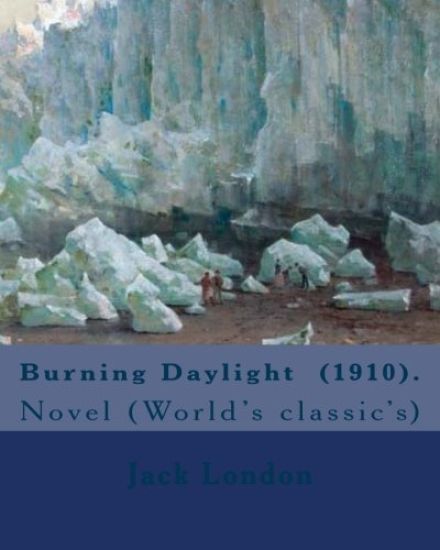
Burning Daylight takes place in the Yukon Territory in 1893. The main character, Elam Harnish, nicknamed "Burning Daylight" was the most successful entrepreneur of the Alaskan Gold Rush. The story of the main character was partially based upon the life of Oakland entrepreneur "Borax" Smith. Bringing his fortunes to the States he is cheated out of it by a crowd of money kings, and recovers it only at the muzzle of his gun. Embarking on a new life in California, he makes another fortune by underhanded means . . . only to find his corrupt life suddenly turned around by the love of a woman.... John Griffith "Jack" London (born John Griffith Chaney, January 12, 1876 - November 22, 1916)was an American novelist, journalist, and social activist. A pioneer in the then-burgeoning world of commercial magazine fiction, he was one of the first fiction writers to obtain worldwide celebrity and a large fortune from his fiction alone, including science fiction. Some of his most famous works include The Call of the Wild and White Fang, both set in the Klondike Gold Rush, as well as the short stories "To Build a Fire", "An Odyssey of the North", and "Love of Life". He also wrote of the South Pacific in such stories as "The Pearls of Parlay" and "The Heathen", and of the San Francisco Bay area in The Sea Wolf. London was part of the radical literary group "The Crowd" in San Francisco and a passionate advocate of unionization, socialism, and the rights of workers. He wrote several powerful works dealing with these topics, such as his dystopian novel The Iron Heel, his non-fiction expos The People of the Abyss, and The War of the Classes.