
Kirjailija
Jack London
Kirjat ja teokset yhdessä paikassa: 4 103 kirjaa, julkaisuja vuosilta 1903–2026, suosituimpiin kuuluu Il richiamo della foresta / Erämaan kutsu. Vertaile teosten hintoja ja tarkista saatavuus suomalaisista kirjakaupoista.
4 103 kirjaa
Kirjojen julkaisuvuodet: 1903–2026.
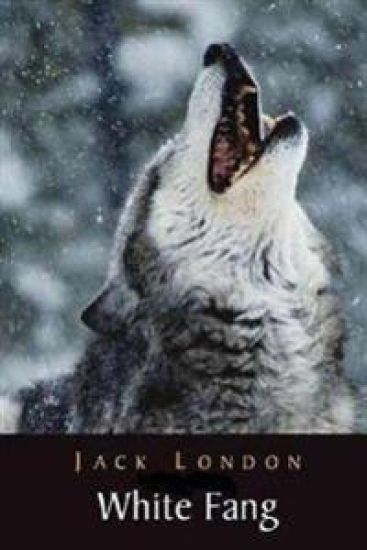
Summary The story begins with the birth of White-Fang, a wolf-dog. The novel follows the pack from which it comes and its first weeks of wild life, its struggle for life: eating or being eaten. Then he experiences life among the Indians; His master is called Castor-Gray. He meets other dogs and becomes an enemy with them, Lip-lip being his rival. But White Fang, proud and powerful, undergoes the wickedness of white men; In reaction, he becomes a fierce fighter. The story then becomes darker when it is exchanged at Beauty Smith against alcohol to become a beast of combat. Despite his many attempts, Castor-Gris refuses to take him back. He wins every fierce duel until the day he has to fight with a bulldog named Cherokee. While he is seriously wounded, two men stop the fight: Weedon Scott, a mining engineer, and his friend Matt. White Fang is thus gathered and saved from the ill-treatment of this "crazy man". Thanks to the patience of his new masters, he discovers "love" and "friendship" between a wolf and his master. One day, an intruder named Jim Hall wants to attack Judge Scott, the father of Weedon, and Croc-Blanc defends him despite his many injuries. He is cared for and ends his days in the company of Collie the bitch Scott and their numerous family.
FOREWORD It is a misfortune to some fiction-writers that fiction and unveracity in the average person's mind mean one and the same thing. Several years ago I published a South Sea novel. The action was placed in the Solomon Islands. The action was praised by the critics and reviewers as a highly creditable effort of the imagination. As regards reality-they said there wasn't any. Of course, as every one knew, kinky-haired cannibals no longer obtained on the earth's surface, much less ran around with nothing on, chopping off one another's heads, and, on occasion, a white man's head as well. Now listen. I am writing these lines in Honolulu, Hawaii. Yesterday, on the beach at Waikiki, a stranger spoke to me. He mentioned a mutual friend, Captain Kellar. When I was wrecked in the Solomons on the blackbirder, the Minota, it was Captain Kellar, master of the blackbirder, the Eug nie, who rescued me. The blacks had taken Captain Kellar's head, the stranger told me. He knew. He had represented Captain Kellar's mother in settling up the estate. Listen. I received a letter the other day from Mr. C. M. Woodford, Resident Commissioner of the British Solomons. He was back at his post, after a long furlough to England, where he had entered his son into Oxford. A search of the shelves of almost any public library will bring to light a book entitled, "A Naturalist Among the Head Hunters." Mr. C. M. Woodford is the naturalist. He wrote the book.
The House of Pride (1919), by: Jack London: Originally published in 1912, this collection contains six stories: - The House of Pride - Koolau the Lep
Jack London
Createspace Independent Publishing Platform
2017
nidottu
Originally published in 1912, this collection contains six stories: - The House of Pride - Koolau the Leper - Good-bye, Jack - Aloha Oe - Chun Ah Chun - The Sheriff of Kona John Griffith "Jack" London (born John Griffith Chaney, January 12, 1876 - November 22, 1916)was an American novelist, journalist, and social activist. John Griffith "Jack" London (born John Griffith Chaney, January 12, 1876 - November 22, 1916)was an American novelist, journalist, and social activist. A pioneer in the then-burgeoning world of commercial magazine fiction, he was one of the first fiction writers to obtain worldwide celebrity and a large fortune from his fiction alone, including science fiction. Some of his most famous works include The Call of the Wild and White Fang, both set in the Klondike Gold Rush, as well as the short stories "To Build a Fire", "An Odyssey of the North", and "Love of Life". He also wrote of the South Pacific in such stories as "The Pearls of Parlay" and "The Heathen", and of the San Francisco Bay area in The Sea Wolf. London was part of the radical literary group "The Crowd" in San Francisco and a passionate advocate of unionization, socialism, and the rights of workers. He wrote several powerful works dealing with these topics, such as his dystopian novel The Iron Heel, his non-fiction expos The People of the Abyss, and The War of the Classes.
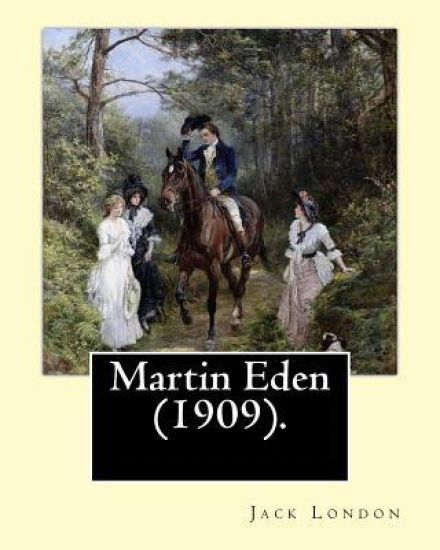
Martin Eden (1909). By: Jack London: Novel
Jack London
Createspace Independent Publishing Platform
2017
nidottu
Martin Eden is a 1909 novel by American author Jack London about a young proletarian autodidact struggling to become a writer. It was first serialized in The Pacific Monthly magazine from September 1908 to September 1909 and published in book form by Macmillan in September 1909. Eden represents writers' frustration with publishers by speculating that when he mails off a manuscript, a "cunning arrangement of cogs" immediately puts it in a new envelope and returns it automatically with a rejection slip. citation needed] The central theme of Eden's developing artistic sensibilities places the novel in the tradition of the K nstlerroman, in which is narrated the formation and development of an artist. Eden differs from London in that Eden rejects socialism, attacking it as "slave morality", and relies on a Nietzschean individualism. In a note to Upton Sinclair, London wrote, "One of my motifs, in this book, was an attack on individualism (in the person of the hero). I must have bungled, for not a single reviewer has discovered it." Plot: Living in Oakland at the beginning of the 20th century, Martin Eden struggles to rise above his destitute, proletarian circumstances through an intense and passionate pursuit of self-education, hoping to achieve a place among the literary elite. His principal motivation is his love for Ruth Morse. Because Eden is a rough, uneducated sailor from a working-class background 4] and the Morses are a bourgeois family, a union between them would be impossible unless and until he reached their level of wealth and refinement. Over a period of two years, Eden promises Ruth that success will come, but just before it does, Ruth loses her patience and rejects him in a letter, saying, "if only you had settled down ... and attempted to make something of yourself". By the time Eden attains the favour of the publishers and the bourgeoisie who had shunned him, he has already developed a grudge against them and become jaded by toil and unrequited love. Instead of enjoying his success, he retreats into a quiet indifference, interrupted only to rail mentally against the genteelness of bourgeois society or to donate his new wealth to working-class friends and family. He felt that people did not value him for himself or for his work but only for his fame. The novel ends with Eden's committing suicide by drowning, which contributed to what researcher Clarice Stasz calls the "biographical myth" that Jack London's own death was a suicide. citation needed] London's oldest daughter Joan commented that in spite of its tragic ending, the book is often regarded as "a 'success' story ... which inspired not only a whole generation of young writers but other different fields who, without aid or encouragement, attained their objectives through great struggle"... John Griffith "Jack" London (born John Griffith Chaney, January 12, 1876 - November 22, 1916)was an American novelist, journalist, and social activist. John Griffith "Jack" London (born John Griffith Chaney, January 12, 1876 - November 22, 1916)was an American novelist, journalist, and social activist. A pioneer in the then-burgeoning world of commercial magazine fiction, he was one of the first fiction writers to obtain worldwide celebrity and a large fortune from his fiction alone, including science fiction. Some of his most famous works include The Call of the Wild and White Fang, both set in the Klondike Gold Rush, as well as the short stories "To Build a Fire", "An Odyssey of the North", and "Love of Life". He also wrote of the South Pacific in such stories as "The Pearls of Parlay" and "The Heathen", and of the San Francisco Bay area in The Sea Wolf. London was part of the radical literary group "The Crowd" in San Francisco and a passionate advocate of unionization, socialism, and the rights of workers. He wrote several powerful works dealing with these topics, such as his dystopian novel The Iron Heel....
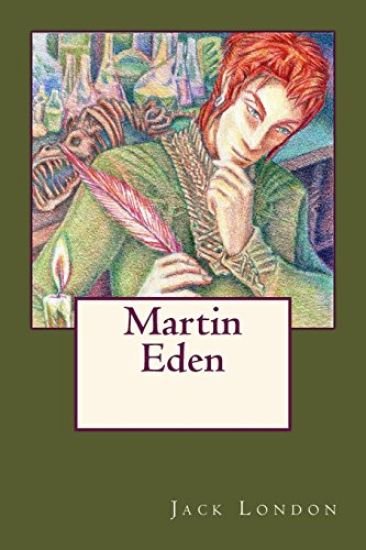
Living in Oakland at the beginning of the 20th century, Martin Eden struggles to rise above his destitute, proletarian circumstances through an intense and passionate pursuit of self-education, hoping to achieve a place among the literary elite. His principal motivation is his love for Ruth Morse. Because Eden is a rough, uneducated sailor from a working-class background and the Morses are a bourgeois family, a union between them would be impossible unless and until he reached their level of wealth and refinement.
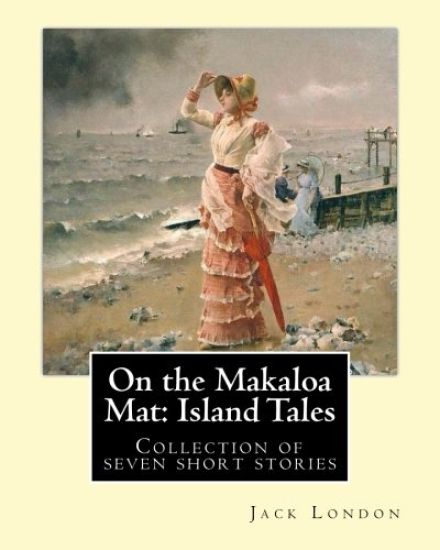
On the Makaloa Mat: Island Tales. By: Jack London: On the Makaloa Mat is a collection of seven short stories by Jack London, all of which
Jack London
Createspace Independent Publishing Platform
2017
nidottu
On the Makaloa Mat is a collection of seven short stories by Jack London, all of which are set in Hawaii. On the Makaloa Mat The Bones of Kahekili When Alice Told her Soul Shin-Bones The Water Baby The Tears of Ah Kim The Kanaka Surf John Griffith "Jack" London (born John Griffith Chaney, January 12, 1876 - November 22, 1916)was an American novelist, journalist, and social activist. John Griffith "Jack" London (born John Griffith Chaney, January 12, 1876 - November 22, 1916)was an American novelist, journalist, and social activist. A pioneer in the then-burgeoning world of commercial magazine fiction, he was one of the first fiction writers to obtain worldwide celebrity and a large fortune from his fiction alone, including science fiction. Some of his most famous works include The Call of the Wild and White Fang, both set in the Klondike Gold Rush, as well as the short stories "To Build a Fire", "An Odyssey of the North", and "Love of Life". He also wrote of the South Pacific in such stories as "The Pearls of Parlay" and "The Heathen", and of the San Francisco Bay area in The Sea Wolf. London was part of the radical literary group "The Crowd" in San Francisco and a passionate advocate of unionization, socialism, and the rights of workers. He wrote several powerful works dealing with these topics, such as his dystopian novel The Iron Heel, his non-fiction expos The People of the Abyss, and The War of the Classes.
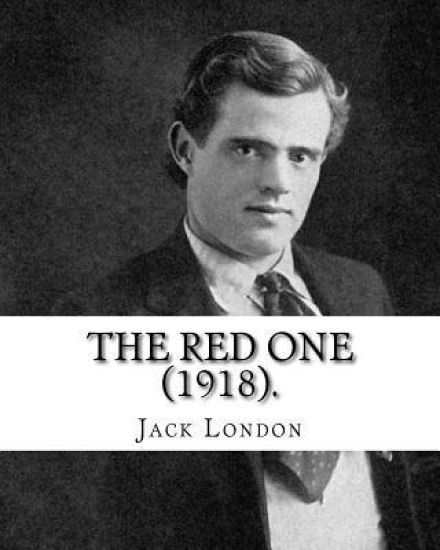
The Red One (1918). By: Jack London: "The Red One" is a short story by Jack London. It was first published in the October 1918 issue of The Co
Jack London
Createspace Independent Publishing Platform
2017
nidottu
"The Red One" is a short story by Jack London. It was first published in the October 1918 issue of The Cosmopolitan, two years after London's death. The story was reprinted in the same year by MacMillan, in a collection of London's stories of the same name. John Griffith "Jack" London (born John Griffith Chaney, January 12, 1876 - November 22, 1916)was an American novelist, journalist, and social activist. John Griffith "Jack" London (born John Griffith Chaney, January 12, 1876 - November 22, 1916)was an American novelist, journalist, and social activist. A pioneer in the then-burgeoning world of commercial magazine fiction, he was one of the first fiction writers to obtain worldwide celebrity and a large fortune from his fiction alone, including science fiction. Some of his most famous works include The Call of the Wild and White Fang, both set in the Klondike Gold Rush, as well as the short stories "To Build a Fire", "An Odyssey of the North", and "Love of Life". He also wrote of the South Pacific in such stories as "The Pearls of Parlay" and "The Heathen", and of the San Francisco Bay area in The Sea Wolf. London was part of the radical literary group "The Crowd" in San Francisco and a passionate advocate of unionization, socialism, and the rights of workers. He wrote several powerful works dealing with these topics, such as his dystopian novel The Iron Heel, his non-fiction expos The People of the Abyss, and The War of the Classes.
Revolution and Other Essays (1909). By: Jack London: Although best known for his adult fiction, Jack London wrote in almost every corner available fro
Jack London
Createspace Independent Publishing Platform
2017
nidottu
Although best known for his adult fiction, Jack London wrote in almost every corner available from verse to first person investigations of the plight of the poor to biographies to essays. Table of Contents: Revolution - The Somnambulists - The Dignity of Dollars - Goliah - The Golden Poppy - The Shrinkage of the Planet - The House Beautiful - The Gold Hunters of the North - Foma Gordyeeff - These Bones Shall Rise Again - The Other Animals - The Yellow Peril - What Life Means to Me John Griffith "Jack" London (born John Griffith Chaney, January 12, 1876 - November 22, 1916)was an American novelist, journalist, and social activist. John Griffith "Jack" London (born John Griffith Chaney, January 12, 1876 - November 22, 1916)was an American novelist, journalist, and social activist. A pioneer in the then-burgeoning world of commercial magazine fiction, he was one of the first fiction writers to obtain worldwide celebrity and a large fortune from his fiction alone, including science fiction. Some of his most famous works include The Call of the Wild and White Fang, both set in the Klondike Gold Rush, as well as the short stories "To Build a Fire", "An Odyssey of the North", and "Love of Life". He also wrote of the South Pacific in such stories as "The Pearls of Parlay" and "The Heathen", and of the San Francisco Bay area in The Sea Wolf. London was part of the radical literary group "The Crowd" in San Francisco and a passionate advocate of unionization, socialism, and the rights of workers. He wrote several powerful works dealing with these topics, such as his dystopian novel The Iron Heel, his non-fiction expos The People of the Abyss, and The War of the Classes.
A Son of the Sun (1912). by: Jack London: Novel
Jack London
Createspace Independent Publishing Platform
2017
nidottu
A Son of the Sun is a 1912 novel by Jack London. It is set in the South Pacific at the beginning of the 20th century and consists of eight separate stories. David Grief is a forty-year-old English adventurer who came to the South seas years ago and became rich. As a businessman he owns offices in Sydney, but he is rarely there. Since his wealth spreads over a lot of islands, Grief has some adventures while going among these islands. London depicts the striking panorama of the South seas with adventurers, scoundrels, swindlers, pirates, and cannibals. Contents edit] A Son of the Sun The Proud Goat of Aloysius Pankburn The Devils of Fuatino The Jokers of New Gibbon A Little Account With Swithin Hall A Goboto Night The Feathers of the Sun The Pearls of Parlay John Griffith "Jack" London (born John Griffith Chaney, January 12, 1876 - November 22, 1916)was an American novelist, journalist, and social activist. John Griffith "Jack" London (born John Griffith Chaney, January 12, 1876 - November 22, 1916)was an American novelist, journalist, and social activist. A pioneer in the then-burgeoning world of commercial magazine fiction, he was one of the first fiction writers to obtain worldwide celebrity and a large fortune from his fiction alone, including science fiction. Some of his most famous works include The Call of the Wild and White Fang, both set in the Klondike Gold Rush, as well as the short stories "To Build a Fire", "An Odyssey of the North", and "Love of Life". He also wrote of the South Pacific in such stories as "The Pearls of Parlay" and "The Heathen", and of the San Francisco Bay area in The Sea Wolf. London was part of the radical literary group "The Crowd" in San Francisco and a passionate advocate of unionization, socialism, and the rights of workers. He wrote several powerful works dealing with these topics, such as his dystopian novel The Iron Heel, his non-fiction expos The People of the Abyss, and The War of the Classes.
The Valley of the Moon (1913). By: Jack London: The Valley of the Moon (1913) is a novel by American writer Jack London (as well as the mythic and rom
Jack London
Createspace Independent Publishing Platform
2017
nidottu
The Valley of the Moon (1913) is a novel by American writer Jack London (as well as the mythic and romantic name for the wine-growing Sonoma Valley of California). The valley where it is set is located north of the San Francisco Bay Area in Sonoma County, California where Jack London was a resident; he built his ranch in Glen Ellen. The novel The Valley of the Moon is a story of a working-class couple, Billy and Saxon Roberts, struggling laborers in Oakland at the Turn-of-the-Century, who left city life behind and searched Central and Northern California for suitable farmland to own. The book is notable for its scenes in which the proletarian hero enjoys fellowship with the artists' colony in Carmel, and he settles in the Valley of the Moon. The book begins with Billy as a Teamster and Saxon working in a laundry. Billy has also boxed professionally with some success, but decided there was no future in it. He was particularly upset by one bout in which he was fighting a friend and they had to continue fighting and making a good show of it after his friend injured a hand. Billy and Saxon's early married life is disrupted by a major wave of strikes. Billy is involved in violent attacks on strikebreakers, and goes to jail. Saxon loses her baby in the backwash of the violence. She hears socialist arguments but does not definitively accept them, later meeting an old woman with an individualist view on relationships, describing how she successfully attached herself to a series of rich men. She also meets a lad called Jack who has built his own boat and seems to be based on Jack London himself as a teenager.... John Griffith "Jack" London (born John Griffith Chaney, January 12, 1876 - November 22, 1916)was an American novelist, journalist, and social activist. John Griffith "Jack" London (born John Griffith Chaney, January 12, 1876 - November 22, 1916)was an American novelist, journalist, and social activist. A pioneer in the then-burgeoning world of commercial magazine fiction, he was one of the first fiction writers to obtain worldwide celebrity and a large fortune from his fiction alone, including science fiction. Some of his most famous works include The Call of the Wild and White Fang, both set in the Klondike Gold Rush, as well as the short stories "To Build a Fire", "An Odyssey of the North", and "Love of Life". He also wrote of the South Pacific in such stories as "The Pearls of Parlay" and "The Heathen", and of the San Francisco Bay area in The Sea Wolf. London was part of the radical literary group "The Crowd" in San Francisco and a passionate advocate of unionization, socialism, and the rights of workers. He wrote several powerful works dealing with these topics, such as his dystopian novel The Iron Heel, his non-fiction expos The People of the Abyss, and The War of the Classes.

The Road is an autobiographical memoir by Jack London, first published in 1907. It is London's account of his experiences as a hobo in the 1890s, during the worst economic depression the United States had experienced up to that time. 1] He describes his experiences hopping freight trains, "holding down" a train when the crew is trying to throw him off, begging for food and money, and making up extraordinary stories to fool the police. He also tells of the thirty days that he spent in the Erie County Penitentiary, which he described as a place of "unprintable horrors," after being "pinched" (arrested) for vagrancy. In addition, he recounts his time with Kelly's Army, which he joined up with in Wyoming and remained with until its dissolution at the Mississippi River.
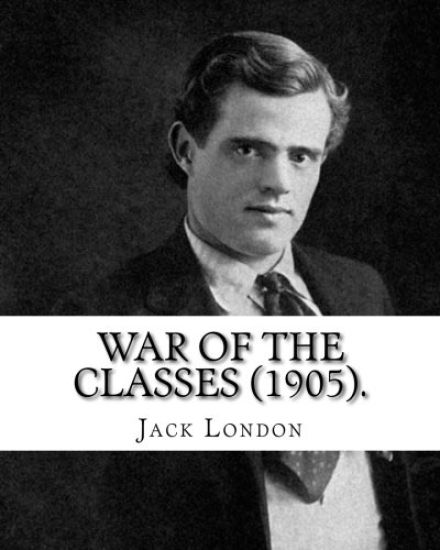
War of the Classes (1905). By: Jack London: Contents: - The Class Struggle - The Tramp - The Scab - The Question of the Maximum - A Review - Wanted:
Jack London
Createspace Independent Publishing Platform
2017
nidottu
John Griffith "Jack" London (born John Griffith Chaney, January 12, 1876 - November 22, 1916)was an American novelist, journalist, and social activist. John Griffith "Jack" London (born John Griffith Chaney, January 12, 1876 - November 22, 1916)was an American novelist, journalist, and social activist. A pioneer in the then-burgeoning world of commercial magazine fiction, he was one of the first fiction writers to obtain worldwide celebrity and a large fortune from his fiction alone, including science fiction. Some of his most famous works include The Call of the Wild and White Fang, both set in the Klondike Gold Rush, as well as the short stories "To Build a Fire", "An Odyssey of the North", and "Love of Life". He also wrote of the South Pacific in such stories as "The Pearls of Parlay" and "The Heathen", and of the San Francisco Bay area in The Sea Wolf. London was part of the radical literary group "The Crowd" in San Francisco and a passionate advocate of unionization, socialism, and the rights of workers. He wrote several powerful works dealing with these topics, such as his dystopian novel The Iron Heel, his non-fiction expos The People of the Abyss, and The War of the Classes.
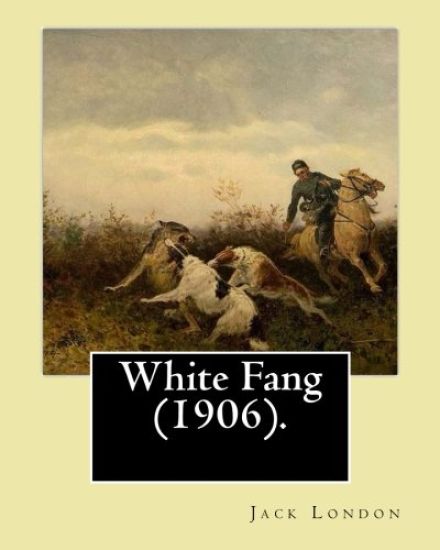
White Fang (1906). By: Jack London: Novel
Jack London
Createspace Independent Publishing Platform
2017
nidottu
White Fang is a novel by American author Jack London (1876-1916) - and the name of the book's eponymous character, a wild wolfdog. First serialized in Outing magazine, it was published in 1906. The story takes place in Yukon Territory and the Northwest Territories, Canada, during the 1890s Klondike Gold Rush and details White Fang's journey to domestication. It is a companion novel (and a thematic mirror) to London's best-known work, The Call of the Wild, which is about a kidnapped, domesticated dog embracing his wild ancestry to survive and thrive in the wild. Much of White Fang is written from the viewpoint of the titular canine character, enabling London to explore how animals view their world and how they view humans. White Fang examines the violent world of wild animals and the equally violent world of humans. The book also explores complex themes including morality and redemption. White Fang has been adapted for the screen numerous times, including a 1991 film starring Ethan Hawke. Plot: The story begins before the three-quarters wolf-dog hybrid is born, with two men and their sled dog team on a journey to deliver a coffin to a remote town named Fort McGurry in the higher area of the Yukon Territory, Canada. The men, Bill and Henry, are stalked by a large pack of starving wolves over the course of several days. Finally, after all of their dogs and Bill have been eaten, four more teams find Henry trying to escape from the wolves; the wolf pack scatters when they hear the large group of people coming. The story then follows the pack, which has been robbed of its last prey. When the pack finally brings down a moose, the famine is ended; they eventually split up, and the story now follows a she-wolf and her mate, One Eye. The she-wolf gives birth to a litter of five cubs by the Mackenzie River, and all but one die from hunger. One Eye is killed by a lynx while trying to rob her den for food for the she-wolf and her cub; his mate later discovers his remains near the lynx's den. The surviving cub and the she-wolf are left to fend for themselves. Shortly afterward (possibly as revenge), the she-wolf kills all the lynx's kittens to feed her cub, prompting the lynx to track her down, and a vicious fight breaks out. The she-wolf eventually kills the lynx but suffers severe injury; the lynx carcass is devoured over a period of seven days as the she-wolf recovers from her injuries. The cub comes across five Native Americans one day, and the she-wolf comes to his rescue. One man, Grey Beaver, recognizes the she-wolf as Kiche, his brother's wolfdog, who left during a famine. Grey Beaver's brother is dead, so he takes Kiche and her cub and christens the cub White Fang. White Fang has a harsh life in the Indian camp; the current puppy pack, seeing him as a wolf, immediately attacks him. The Indians save him, but the pups never accept him, and the leader, Lip-lip, singles him out for persecution. White Fang grows to become a savage, callous, morose, solitary, and deadly fighter, "the enemy of his kind". It is at this time that White Fang is separated from his mother who is sold off to another Indian Camp. He realizes how hard life in the wild is when he runs away from camp and earns the respect of Gray Beaver when he saves his son Mit-Sah from a gang of bullies. When a famine occurs, he runs away into the woods and reunites with his mother Kiche, only for her to chase him away for she has a new litter of Cubs. He also encounters Lip-Lip whom he fights and kills before returning to the camp............ John Griffith "Jack" London (born John Griffith Chaney, January 12, 1876 - November 22, 1916)was an American novelist, journalist, and social activist. John Griffith "Jack" London (born John Griffith Chaney, January 12, 1876 - November 22, 1916)was an American novelist, journalist, and social activist.
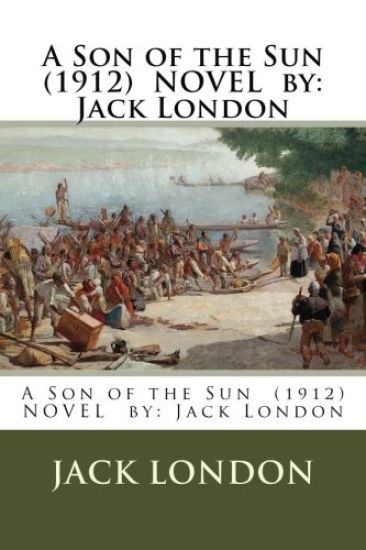
A Son of the Sun (1912) NOVEL by: Jack London
Jack London
Createspace Independent Publishing Platform
2017
nidottu
The God of His Fathers: Tales of the Klondyke. By: Jack London: Short stories collection.
Jack London
Createspace Independent Publishing Platform
2017
nidottu
Short stories collection. As a young man in the summer of 1897, Jack London joined the Klondike gold rush. From that seminal experience emerged these gripping, inimitable wilderness tales, which have endured as some of London's best and most defining work. With remarkable insight and unflinching realism, London describes the punishing adversity that awaited men in the brutal, frozen expanses of the Yukon, and the extreme tactics these adventurers and travelers adopted to survive.... John Griffith "Jack" London (born John Griffith Chaney, January 12, 1876 - November 22, 1916)was an American novelist, journalist, and social activist. John Griffith "Jack" London (born John Griffith Chaney, January 12, 1876 - November 22, 1916)was an American novelist, journalist, and social activist. A pioneer in the then-burgeoning world of commercial magazine fiction, he was one of the first fiction writers to obtain worldwide celebrity and a large fortune from his fiction alone, including science fiction. Some of his most famous works include The Call of the Wild and White Fang, both set in the Klondike Gold Rush, as well as the short stories "To Build a Fire", "An Odyssey of the North", and "Love of Life". He also wrote of the South Pacific in such stories as "The Pearls of Parlay" and "The Heathen", and of the San Francisco Bay area in The Sea Wolf. London was part of the radical literary group "The Crowd" in San Francisco and a passionate advocate of unionization, socialism, and the rights of workers. He wrote several powerful works dealing with these topics, such as his dystopian novel The Iron Heel, his non-fiction expos The People of the Abyss, and The War of the Classes.
Lost Face (1910). By: Jack London: Lost Face is a collection of seven short stories by Jack London.
Jack London
Createspace Independent Publishing Platform
2017
nidottu
Lost Face is a collection of seven short stories by Jack London. It takes its name from the first short story in the book, about a European adventurer in the Yukon who outwits his (American) Indian captors' plans to torture him. The book includes London's best-known short story, "To Build a Fire". John Griffith "Jack" London (born John Griffith Chaney, January 12, 1876 - November 22, 1916)was an American novelist, journalist, and social activist. John Griffith "Jack" London (born John Griffith Chaney, January 12, 1876 - November 22, 1916)was an American novelist, journalist, and social activist. A pioneer in the then-burgeoning world of commercial magazine fiction, he was one of the first fiction writers to obtain worldwide celebrity and a large fortune from his fiction alone, including science fiction. Some of his most famous works include The Call of the Wild and White Fang, both set in the Klondike Gold Rush, as well as the short stories "To Build a Fire", "An Odyssey of the North", and "Love of Life". He also wrote of the South Pacific in such stories as "The Pearls of Parlay" and "The Heathen", and of the San Francisco Bay area in The Sea Wolf. London was part of the radical literary group "The Crowd" in San Francisco and a passionate advocate of unionization, socialism, and the rights of workers. He wrote several powerful works dealing with these topics, such as his dystopian novel The Iron Heel, his non-fiction expos The People of the Abyss, and The War of the Classes.
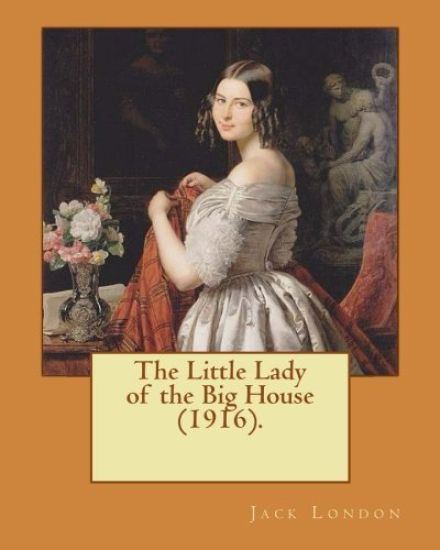
The Little Lady of the Big House (1916). By: Jack London: The Little Lady of the Big House (1915) is a novel by American writer Jack London. It was hi
Jack London
Createspace Independent Publishing Platform
2017
nidottu
The Little Lady of the Big House (1915) is a novel by American writer Jack London. It was his last novel to be published during his lifetime. The story concerns a love triangle. The protagonist, Dick Forrest, is a rancher with a poetic streak (his "acorn song" recalls London's play, "The Acorn Planters"). His wife, Paula, is a vivacious, athletic, and sexually self-aware woman, who falls in love with Evan Graham, an old friend of her husband's. Unable to choose between the two men, she wounds herself mortally with a rifle in what her husband is certain is a suicide... John Griffith "Jack" London (born John Griffith Chaney, January 12, 1876 - November 22, 1916)was an American novelist, journalist, and social activist. John Griffith "Jack" London (born John Griffith Chaney, January 12, 1876 - November 22, 1916)was an American novelist, journalist, and social activist. A pioneer in the then-burgeoning world of commercial magazine fiction, he was one of the first fiction writers to obtain worldwide celebrity and a large fortune from his fiction alone, including science fiction. Some of his most famous works include The Call of the Wild and White Fang, both set in the Klondike Gold Rush, as well as the short stories "To Build a Fire", "An Odyssey of the North", and "Love of Life". He also wrote of the South Pacific in such stories as "The Pearls of Parlay" and "The Heathen", and of the San Francisco Bay area in The Sea Wolf. London was part of the radical literary group "The Crowd" in San Francisco and a passionate advocate of unionization, socialism, and the rights of workers. He wrote several powerful works dealing with these topics, such as his dystopian novel The Iron Heel, his non-fiction expos The People of the Abyss, and The War of the Classes.
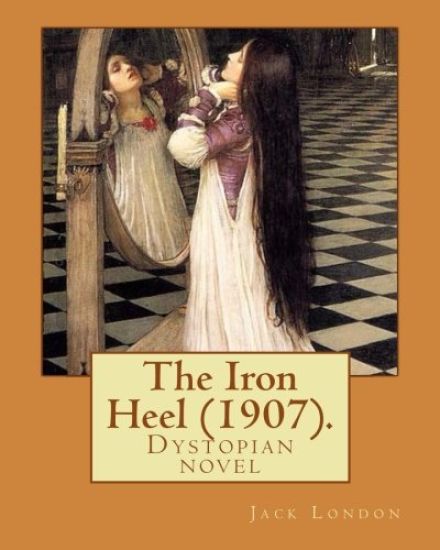
The Iron Heel (1907). By: Jack London: The Iron Heel is a dystopian novel by American writer Jack London, first published in 1908.
Jack London
Createspace Independent Publishing Platform
2017
nidottu
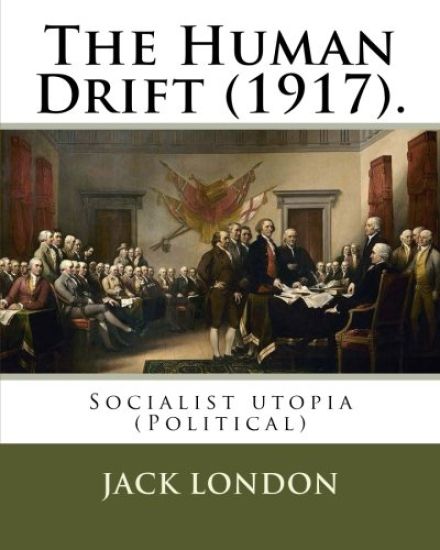
The Human Drift (1917). By: Jack London: Socialist utopia (Political)
Jack London
Createspace Independent Publishing Platform
2017
nidottu
The Human Drift is a work of Utopian social planning, written by King Camp Gillette and first published in 1894. The book details Gillette's theory that replacing competitive corporations with a single giant publicly owned trust ("the United Company") would cure virtually all social ills. One-third of the book is devoted to Gillette's plan for an immense three-level metropolis (called "Metropolis") on the site of Niagara Falls. Designed to accommodate a population of tens of millions of inhabitants, the mega-city would draw its electric power from the Falls. (A photograph of the Falls served as the book's frontispiece.) The first large electrical generating facilities at Niagara Falls, utilizing the new alternating current system of Nikola Tesla and George Westinghouse, were being constructed at the time Gillette wrote. 2] Gillette's city was to possess "a perfect economical system of production and distribution," run by the United Company; it would in fact be the only city on the North American continent. Economies of scale would mean that a single one of every necessary facility - one steel mill, one shoe factory, etc. - would exist. Advances in mechanization would generate ever-greater efficiencies, and ever-greater wealth for the whole society. Social progress would be natural and inevitable; gender equality would be the rule. Gillette gives a highly specific picture of his metropolis: it is shaped in a perfect rectangle, 135 miles on the long side and 45 on the short. Even with necessary farming and mining, most of the rest of North America outside Metropolis would be a natural environment. Gillette saw the city as containing the full population of the United States at that time, sixty million people; he also thought that the city could accept another thirty million in future population growth. Gillette wanted the buildings of Metropolis to be built of porcelain, for endurance and cleanliness. (His thinking on this point may have been influenced by the famous "White City" of the World's Columbian Exposition of 1893.) Gillette favored circular buildings, even for residences (25-floor apartment complexes), and a hexagonal street plan. (Though the details of his plan were highly specific, Gillette was not rigidly committed to them; in a future revised version he would switch to a circular shape for his city, and raise the apartment buildings to 50 stories.) The text of The Human Drift was accompanied with abundant illustrations and plans, a graph of the "Educational and Industrial Pyramid," and other features of Gillette's scheme. "His book is important for the attention it received in its time," though today it is "a curiosity."... John Griffith "Jack" London (born John Griffith Chaney, January 12, 1876 - November 22, 1916)was an American novelist, journalist, and social activist. John Griffith "Jack" London (born John Griffith Chaney, January 12, 1876 - November 22, 1916)was an American novelist, journalist, and social activist. A pioneer in the then-burgeoning world of commercial magazine fiction, he was one of the first fiction writers to obtain worldwide celebrity and a large fortune from his fiction alone, including science fiction. Some of his most famous works include The Call of the Wild and White Fang, both set in the Klondike Gold Rush, as well as the short stories "To Build a Fire", "An Odyssey of the North", and "Love of Life". He also wrote of the South Pacific in such stories as "The Pearls of Parlay" and "The Heathen", and of the San Francisco Bay area in The Sea Wolf. London was part of the radical literary group "The Crowd" in San Francisco and a passionate advocate of unionization, socialism, and the rights of workers. He wrote several powerful works dealing with these topics, such as his dystopian novel The Iron Heel, his non-fiction expos The People of the Abyss, and The War of the Classes.