Kirjailija
Jacob Abbott
Kirjat ja teokset yhdessä paikassa: 1 374 kirjaa, julkaisuja vuosilta 1834–2026, suosituimpiin kuuluu Bruno. Vertaile teosten hintoja ja tarkista saatavuus suomalaisista kirjakaupoista.
1 374 kirjaa
Kirjojen julkaisuvuodet: 1834–2026.


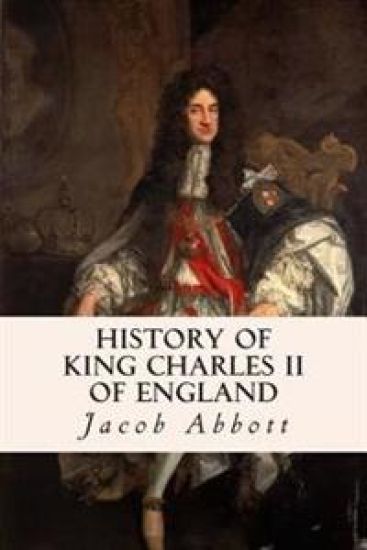
History of King Charles II of England
Jacob Abbott
Createspace Independent Publishing Platform
2015
nidottu
Makers of History: Mary Queen of Scots
Jacob Abbott
Createspace Independent Publishing Platform
2015
nidottu
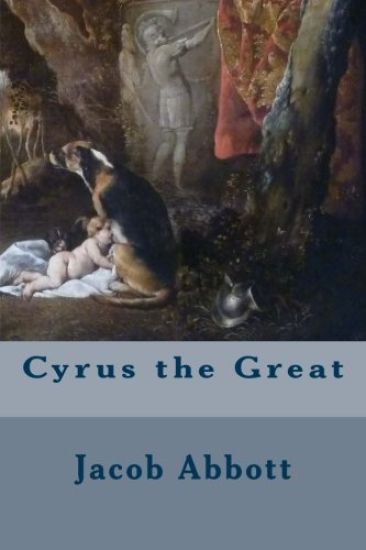
Cyrus the Great is a classic biography of the great Persian leader, Cyrus the Great, by Jacob Abbott. Cyrus the Great was the founder of the ancient Persian empire--a monarchy, perhaps, the most wealthy and magnificent which the world has ever seen.
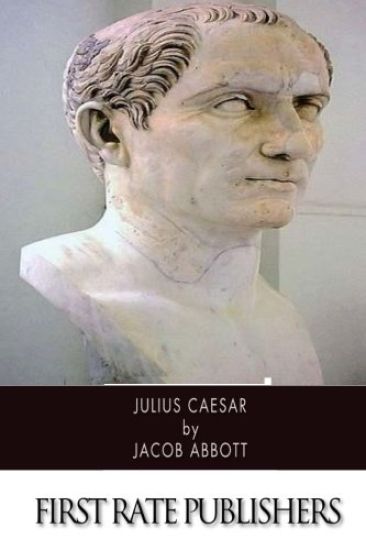
Jacob Abbott was a well-known 19th century historian who wrote biographies on various leaders and famous individuals, including this one about Julius Caesar. Possibly the most important man of antiquity, and even all of history, was Julius Caesar. Alexander Hamilton, the famous American patriot, once remarked that "the greatest man who ever lived was Julius Caesar". Such a tribute, coming from one of the Founding Fathers of the quintessential modern democracy in reference to a man who destroyed the Roman Republic, is testament to the enduring mark that Caesar left upon the world. The ultimate conqueror, statesman, dictator, visionary, and opportunist, during his time in power Caesar expanded the borders of Rome to almost twice their previous size, revolutionized the infrastructure of the Roman state, and destroyed the Roman Republic for good, leaving a line of emperors in its place. His legacy is so strong that his name has become, in many languages, synonymous with power: the Emperors of Austria and Germany bore the title Kaiser, and the Czars of Russia also owe the etymology of their title to Caesar. His name also crept further eastward out of Europe, even cropping up in Hindi and Urdu, where the term for "Emperor" is Kaisar. Even in his time, Caesar was in many ways larger than life, and because of his legacy as virtual founder of the Roman Empire, much of what was written about - and by - him during his life and immediately after his assassination was politically motivated. His successor, Octavian Augustus, had a strong interest in ensuring that Caesar's life be painted in a favorable light, while Caesar's political enemies attempted to paint him as a corrupt, undemocratic dictator who was destroying the old order of the Republic. This makes it exceedingly difficult to separate historical fact from apocryphal interjection, as the writings of Cicero (a rival of Caesar's) and the later biographies of Suetonius and Plutarch can be misleading. Nonetheless, along with Caesar's De Bello Gallico, his famous notes on his campaign against the Gauls, they remain our chief sources for Caesar's life - a life everyone agreed was nothing short of remarkable and changed the course of history forever.
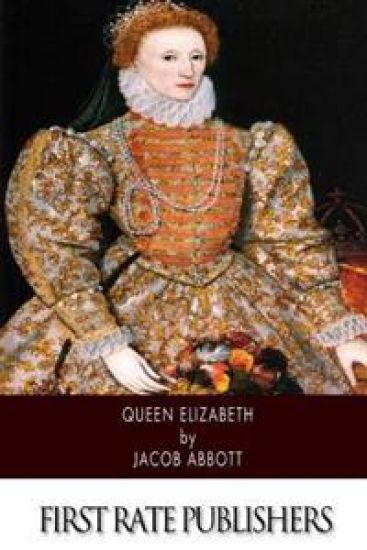
Jacob Abbott was a well-known 19th century historian who wrote biographies on various leaders and famous individuals, including this one about Queen Elizabeth I of England. When Queen Elizabeth II came to the throne in 1952, many commentators heralded the beginning of her reign as the second Elizabethan age. The first one, of course, concerned the reign of Henry VIII's second surviving daughter and middle surviving child, Queen Elizabeth I, one of England's most famous and influential rulers. It was an age when the arts, commerce and trade flourished. It was the epoch of gallantry and great, enduring literature. It was also an age of wars and military conflicts in which men were the primary drivers and women often were pawns. Elizabeth I changed the rules of the game and indeed she herself was changed by the game. She was a female monarch of England, a kingdom that had unceremoniously broken with the Catholic Church, and the Vatican and the rest of Christendom was baying for her blood. She had had commercial and militaristic enemies galore. In the end, she helped change the entire structure of female leadership. Elizabeth was the last Tudor sovereign, the daughter of the cruel and magnificent King Henry VIII and a granddaughter of the Tudor House's founder, the shrewd Henry VII. Elizabeth, hailed as "Good Queen Bess," "Gloriana" and "The Virgin Queen" to this day in the public firmament, would improve upon Henry VIII's successes and mitigate his failures, and despite her own failings would turn out to "have the heart and stomach of a king, and a king of England too". Indeed, that was the phrase she would utter in describing herself while exhorting her troops to fight for England against the Spanish Armada). Elizabeth often has been featured in biographies that were more like hagiographies, glossing over her fits of temper, impatience and other frailties. It is fair to say, however, that she had also inherited her grandfather's political acumen and her father's magnificence, thus creating not just one of the most colourful courts in Europe but also one of the most effective governments in English history. It was an age of Christopher Marlowe's and William Shakespeare's flourishing creativity that still enhances English as well as comparative literature. Elizabeth was also patroness of Sir Francis Drake, the pirate, thereby promoting English settlement of foreign colonies. The Jamestown Settlement in Virginia would come in 1607, four years after Elizabeth's passing, and the Plymouth colony in Massachusetts would come in 1620. Elizabeth had also fought for her life time and time again in an era that was already unsafe for female leaders and she probably had remembered the searing feeling of realizing that her mother Queen Anne (Anne Boleyn) had been executed by her father arguably on a trumped-up charge. Danger was pervasive; strategy was needed not just to thrive but just to survive.