Kirjojen hintavertailu – 12 903 725 kirjaa ja 27 kauppaa

Kirjailija

Jacob Abbott

Kirjat ja teokset yhdessä paikassa: 1 374 kirjaa, julkaisuja vuosilta 1834–2026, suosituimpiin kuuluu Bruno. Vertaile teosten hintoja ja tarkista saatavuus suomalaisista kirjakaupoista.

1 374 kirjaa

Kirjojen julkaisuvuodet: 1834–2026.

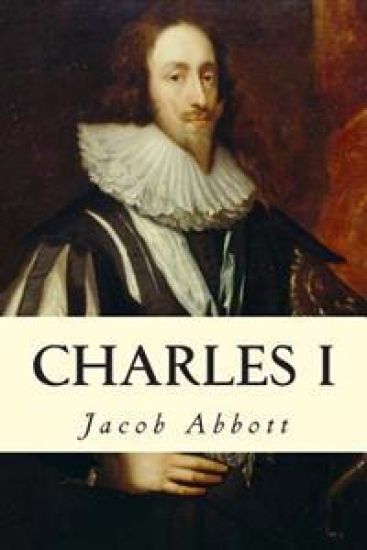
Charles I

Charles I

Jacob Abbott

Createspace Independent Publishing Platform
2014
nidottu
Charles I by Jacob Abbott is a historical biography of King Charles the First who was born in Scotland. It may perhaps surprise the reader that an English king should be born in Scotland. Charles I (19 November 1600 - 30 January 1649) a] was monarch of the three kingdoms of England, Scotland, and Ireland from 27 March 1625 until his execution in 1649. Charles was born into the House of Stuart as the second son of King James VI of Scotland, but after his father inherited the English throne in 1603, he moved to England, where he spent much of the rest of his life. He became heir apparent to the thrones of England, Scotland and Ireland on the death of his elder brother, Henry Frederick, Prince of Wales, in 1612. An unsuccessful and unpopular attempt to marry him to the Spanish Habsburg princess Maria Anna culminated in an eight-month visit to Spain in 1623 that demonstrated the futility of the marriage negotiations. Two years later, he married the Bourbon princess Henrietta Maria of France instead. After his succession, Charles quarrelled with the Parliament of England, which sought to curb his royal prerogative. Charles believed in the divine right of kings and thought he could govern according to his own conscience. Many of his subjects opposed his policies, in particular the levying of taxes without parliamentary consent, and perceived his actions as those of a tyrannical absolute monarch. His religious policies, coupled with his marriage to a Roman Catholic, generated the antipathy and mistrust of Reformed groups such as the English Puritans and Scottish Covenanters, who thought his views were too Catholic. He supported high church Anglican ecclesiastics, such as Richard Montagu and William Laud, and failed to aid Protestant forces successfully during the Thirty Years' War. His attempts to force the Church of Scotland to adopt high Anglican practices led to the Bishops' Wars, strengthened the position of the English and Scottish parliaments and helped precipitate his own downfall. From 1642, Charles fought the armies of the English and Scottish parliaments in the English Civil War. After his defeat in 1645, he surrendered to a Scottish force that eventually handed him over to the English Parliament. Charles refused to accept his captors' demands for a constitutional monarchy, and temporarily escaped captivity in November 1647. Re-imprisoned on the Isle of Wight, Charles forged an alliance with Scotland, but by the end of 1648 Oliver Cromwell's New Model Army had consolidated its control over England. Charles was tried, convicted, and executed for high treason in January 1649. The monarchy was abolished and a republic called the Commonwealth of England was declared. The monarchy was restored to Charles's son, Charles II, in 1660.
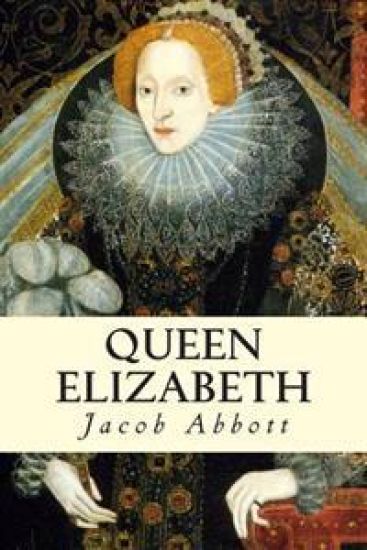
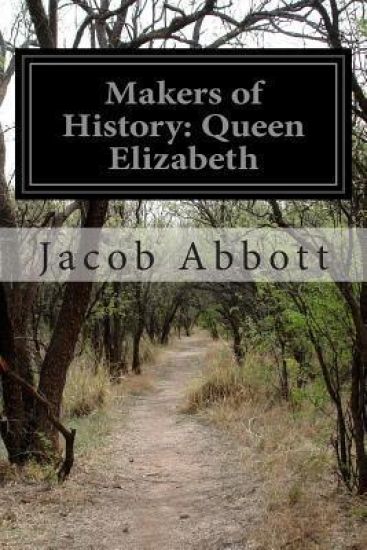
Queen Elizabeth

Queen Elizabeth

Jacob Abbott

Createspace Independent Publishing Platform
2014
nidottu
Queen Elizabeth, by Jacob Abbott, is a classic English royalty biography that details the life of Queen Elizabeth the 1st. Elizabeth I (7 September 1533 - 24 March 1603)was Queen of England and Ireland from 17 November 1558 until her death on 24 March 1603. Sometimes called The Virgin Queen, Gloriana or Good Queen Bess, Elizabeth was the last monarch of the House of Tudor. Elizabeth was the daughter of Henry VIII and Anne Boleyn, his second wife, who was executed two-and-a-half years after Elizabeth's birth. Anne's marriage to Henry VIII was annulled, and Elizabeth was declared illegitimate. Her half-brother, Edward VI, ruled until his death in 1553, bequeathing the crown to Lady Jane Grey and ignoring the claims of his two half-sisters, Elizabeth and the Roman Catholic Mary, in spite of statute law to the contrary. Edward's will was set aside and Mary became queen, deposing Lady Jane Grey. During Mary's reign, Elizabeth was imprisoned for nearly a year on suspicion of supporting Protestant rebels. In 1558, Elizabeth succeeded her half-sister to the throne and set out to rule by good counsel. She depended heavily on a group of trusted advisers, led by William Cecil, 1st Baron Burghley. One of her first actions as queen was the establishment of an English Protestant church, of which she became the Supreme Governor. This Elizabethan Religious Settlement was to evolve into the Church of England. It was expected that Elizabeth would marry and produce an heir to continue the Tudor line. She never did, despite numerous courtships. As she grew older, Queen Elizabeth became celebrated for her virginity. A cult grew around her which was celebrated in the portraits, pageants, and literature of the day. In government, Queen Elizabeth was more moderate than her father and half-siblings had been. One of her mottoes was "video et taceo" ("I see but say nothing"). In religion, she was relatively tolerant and avoided systematic persecution. After the pope declared her illegitimate in 1570 and released her subjects from obedience to her, several conspiracies threatened her life, all of which were defeated with the help of her ministers' secret service. Elizabeth was cautious in foreign affairs, manoeuvring between the major powers of France and Spain. She only half-heartedly supported a number of ineffective, poorly resourced military campaigns in the Netherlands, France, and Ireland. By the mid-1580s, England could no longer avoid war with Spain. England's defeat of the Spanish Armada in 1588 associated Elizabeth with one of the greatest military victories in English history. Elizabeth's reign is known as the Elizabethan era. The period is famous for the flourishing of English drama, led by playwrights such as William Shakespeare and Christopher Marlowe, and for the seafaring prowess of English adventurers such as Francis Drake. Some historians depict Elizabeth as a short-tempered, sometimes indecisive ruler, who enjoyed more than her share of luck. Towards the end of her reign, a series of economic and military problems weakened her popularity. Elizabeth is acknowledged as a charismatic performer and a dogged survivor in an era when government was ramshackle and limited, and when monarchs in neighbouring countries faced internal problems that jeopardised their thrones. Such was the case with Queen Elizabeth's rival, Mary, Queen of Scots, whom she imprisoned in 1568 and had executed in 1587. After the short reigns of Elizabeth's half-siblings, her 44 years on the throne provided welcome stability for the kingdom and helped forge a sense of national identity.
Aboriginal America

Aboriginal America

Jacob Abbott

Createspace Independent Publishing Platform
2014
nidottu
Aboriginal America is a classic Native American history text by Jacob Abbott. The condition America's native peoples anterior to its occupation by white men, and the character and condition of the native tribes which then inhabited it, will be the subject of this volume of Native American history.
War of the Revolution

War of the Revolution

Jacob Abbott

Createspace Independent Publishing Platform
2014
pokkari
Part seven of an eight part series on the history of America from its earliest times through to the age of George Washington, told by master storyteller Jacob Abbott. Abbott recounts in gripping style not merely the main facts of the American Revolution, but also fascinating personal details, and little-known twists and turns of this tumultuous, world history-changing event. Read in detail the course of events, starting with the First Continental Congress, the opening shots at the battles of Lexington and Concord, the early British successes, the imported Hessian mercenaries, the daring bravado of General George Washington, and the great battles of the war, ending with the surrender of Cornwallis and the treaty of peace." The new ministry immediately took measures for negotiating a treaty of peace, and the news was received in the American camps by the war-worn and exhausted soldiers, and among all the towns and villages throughout the country, by the whole population, with unbounded joy." The people had indeed great occasion to rejoice, for the means and resources of the government for carrying on the war, and even for keeping their armies in the field, were almost entirely gone, and the soldiers in all the camps were reduced nearly to the last stages of destitution and suffering. Still, if the end had not been thus received, the country would have aroused itself to new efforts and continued the struggle." ContentsCHAPTER I: The Continental CongressCHAPTER II: Expulsion of the British from BostonCHAPTER III: The Declaration of IndependenceCHAPTER IV: The Contest at New YorkCHAPTER V: Campaign in the JerseysCHAPTER VI: The Expedition of BurgoyneCHAPTER VII: The Surrender of BurgoyneCHAPTER VIII: Occupation of PhiladelphiaCHAPTER IX: The War at the SouthCHAPTER X: PeaceThe American History Series by Jacob Abbott: Volume I: Aboriginal AmericaVolume II: Discovery of AmericaVolume III: The Southern ColoniesVolume IV: The Northern ColoniesVolume V: Wars of the ColoniesVolume VI: Revolt of the ColoniesVolume VII: War of the RevolutionVolume VIII: George Washington
The Revolt of the Colonies

The Revolt of the Colonies

Jacob Abbott

Createspace Independent Publishing Platform
2014
pokkari
Part six of an eight part series on the history of America from its earliest times through to the age of George Washington, told by master storyteller Jacob Abbott. This volume provides a fascinating and detailed account of all the events that led up to the opening military engagements of what became the American Revolution. Starting with a discussion of how the concept of government, independence, and liberty took root in the thirteen colonies because of their unique social makeup, the author moves on to contrast this with the commercial and economic demands of England. The introduction of the Stamp Act and its effect upon the colonies is treated with objectivity and the author fairly reviews both sides of the argument-and discusses many of the excesses committed by individuals on both sides. As events sped up, the clock was set in motion for a military clash. The exploits of, among others, John Hancock, Samuel Adams, James Otis, and the other major players are revealed in gripping detail, along with the heavy-handed Boston Massacre, the burning of HMS Gaspee, the Boston Tea Party, and the Battle of Lexington-when the British finally realized that they were no longer dealing with unhappy colonists, but a full-fledged rebellion." The news of what had taken place at Lexington and Concord spread like wildfire among all the neighboring towns, and the people everywhere seized their arms, organized themselves into companies, and hastened to the line of the road which the troops must take in returning, to intercept and harass them on their march. They fired at them from behind trees and stone walls, and lay in ambush for them at every turn. They followed them up so closely as not to allow them a moment's rest, and worried them with so galling and incessant a fire that they became in the end almost entirely exhausted; and indeed, it was thought that they would have been entirely cut off and the whole body captured if General Gage had not sent out a strong force to meet and rescue them. By the assistance of this force they succeeded in getting back to Charlestown, though with a loss of nearly a quarter of their number." ContentsCHAPTER I: Principles of GovernmentCHAPTER II: The Mother Country and the ColoniesCHAPTER III: The Stamp ActCHAPTER IV: Progress of the QuarrelCHAPTER V: Military PreparationsCHAPTER VI: The Middle and Southern ColoniesCHAPTER VII: The Boston MassacreCHAPTER VIII: Popular OutbreaksCHAPTER IX: The Boston Port BillCHAPTER X: War
Wars of the Colonies

Wars of the Colonies

Jacob Abbott

Createspace Independent Publishing Platform
2014
pokkari
Part five of an eight part series on the history of America from its earliest times through to the age of George Washington, told by master storyteller Jacob Abbott. Starting with a brief recapitulation of the establishment of the thirteen colonies along the Atlantic seaboard of North America, this volume then details the interactions-in war and peace-of the early European settlers with the Indians and with each other. The major early Indian wars-with the Pequot and King Philip-are discussed in little-known but fascinating detail. Included are many action-packed anecdotes of life on the frontier, the hardships of pioneer life-and duplicity and strife between Indian and European. Read also of the clashes between the English and the French in Canada and in the interior, and the effect of the War of the Spanish Succession in North America." The French and the English seem determined to hate each other everywhere and at all times, and the hardships and sufferings which these different representatives of a common civilization endured, and which we might have supposed would have formed a bond of interest and sympathy to link them indissolubly together, in reality seemed to have no such effect. The dividing zone of mutual repulsion and animosity, which has for so many centuries extended along the Straits of Dover and the English Channel, now crossed the Atlantic, and spread itself along the line of the Lakes and of the Mississippi, forming an unbroken wall of aversion and hate, for a distance of two thousand miles." After many bloodcurdling clashes involving Indians, Europeans, and varying alliances on both sides of the racial divide, the build-up to, and the progress of, the French and Indian War is discussed. The British conquest of Canada from the French is then dealt with, ending with the deaths of both French and English commanding generals at the battle for Quebec. Finally the war with the famous Indian chief Pontiac is reviewed, along with dramatic events such as the Deerfield Massacre and the cunning strategies employed by Pontiac to exact many victories over the Europeans until his final-and inevitable-defeat. ContentsCHAPTER I: The Thirteen ColoniesCHAPTER II: The Pequot WarCHAPTER III: End of the Pequot WarCHAPTER IV: War with King PhilipCHAPTER V: The Lakes and the Mississippi CHAPTER VI: King William's WarCHAPTER VII: Queen Anne's WarCHAPTER VIII: George WashingtonCHAPTER IX: The Conquest of CanadaCHAPTER X: PontiacThe American History Series by Jacob Abbott: Volume I: Aboriginal AmericaVolume II: Discovery of AmericaVolume III: The Southern ColoniesVolume IV: The Northern ColoniesVolume V: Wars of the ColoniesVolume VI: Revolt of the ColoniesVolume VII: War of the RevolutionVolume VIII: George Washington
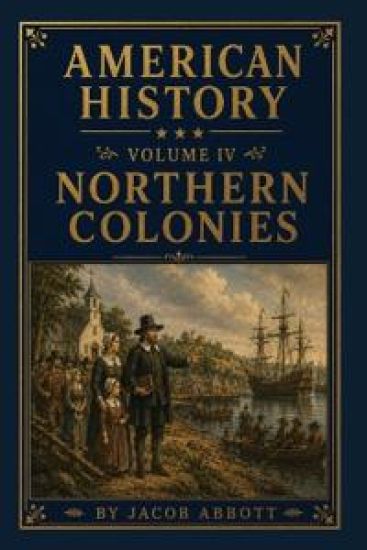
The Northern Colonies

The Northern Colonies

Jacob Abbott

Createspace Independent Publishing Platform
2014
pokkari
Part four of an eight part series on the history of America from its earliest times through to the age of George Washington, told by master storyteller Jacob Abbott. This volume starts with the 1602 expedition by Bartholomew Gosnold which created the first settlement in what became Massachusetts. Facing immense difficulties, the project struggled for many years before the advent of the religious refugees known as the Puritans, who settled in the Massachusetts Bay Colony and other areas. The importance of this migration is dwelt on at length by Abbott, who provides many hidden but fascinating details of the trials and tribulations of this highly celebrated group of settlers. The voyage of the Mayflower, the early interactions with the Indians, and the prospering of the colony are recounted in vivid detail. Next the book moves on to discuss the Dutch founding of the settlement of New Amsterdam-and of its seizure by the English and renaming into New York. It then concludes by recounting the expansion of settlements along the Connecticut River, and the founding of the first colonies in New Haven and Rhode Island. The overriding theme which the modern reader draws from this work is that of the incredible ingenuity and self-reliance of these early pioneers-cut off from Europe, they had to provide completely for themselves in every facet of life. The story of their survival-and eventual prosperity-is inspiring. Contents: CHAPTER IGosnoldCHAPTER IIThe PuritansCHAPTER IIIThe Voyage of the MayflowerCHAPTER IVLanding at PlymouthCHAPTER VFirst Winter at PlymouthCHAPTER VIMassasoit and the IndiansCHAPTER VIIMassachusetts BayCHAPTER VIIIThe Dutch on the HudsonCHAPTER IXThe Conquest of New NetherlandCHAPTER XGrowth and Extension of the Colonie
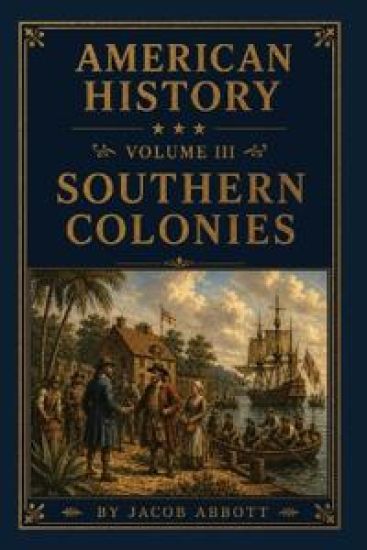
The Southern Colonies

The Southern Colonies

Jacob Abbott

Createspace Independent Publishing Platform
2014
pokkari
Part three of an eight part series on the history of America from its earliest times through to the age of George Washington, told by master storyteller Jacob Abbott. This volume starts with the very first sixteenth century colonization attempts in what is today the southern United States. It provides fascinating details of the early French settlers, who predated even the Spanish-and of how the religious strife in Europe between Catholic and Protestant, from which they had fled, followed them to the New World. The book then moves on to describe the Spanish settlement of Florida, and then the intervention of the English settlers. Drawing upon original sources, manuscripts and diaries, Abbott weaves a gripping tale of the failure of the first English colonial attempts, including the famous "lost colony" of Roanoke, the second colony, the birth of the first European child on American shores, and of the incredible deprivations suffered by these early pioneers. Next, Abbot describes the amazing adventures of John Smith and the settlement of Virginia, revealing the truth about the Indian Pocahontas on the way. The settlement of the Carolinas is then reviewed, including the internal tribulations which nearly wrecked the entire colonial effort, and the struggle to establish a European settlement in the face of staggering natural obstacles and hostile Indian natives. Finally, the book discusses the creation of the colony of Georgia-first established as an anti-slavery settlement area in which Negroes were not allowed to be present. Abbott caps off this astonishing story with the sad tale of the origin of Negro slavery in the New World. If you thought you knew the story of pre-Pilgrim American colonization, think again-this book will reveal the true history of a time period now hidden. Jacob Abbott (1803-1879) was a native of the state of Maine who was a professor of mathematics and natural philosophy, a minister, and founder of two schools (the Mount Vernon School for Young Ladies in Boston and the Mount Vernon School for Boys, in New York City). He wrote more than 180 books and became famous for his easy-to-read style of historical storytelling, stripped of the dry dustiness which characterized other texts. ContentsCHAPTER I: First Attempts at ColonizationCHAPTER II: The French and the SpaniardsCHAPTER III: The First Colony of Roanoke CHAPTER IV: The Second Colony of Roanoke CHAPTER V: The Settlement of Virginia CHAPTER VI: Captain Smith's CaptivityCHAPTER VII: Permanent Establishment of the Colony CHAPTER VIII: Settlement of North Carolina CHAPTER IX: Settlement of South Carolina CHAPTER X: The Settlement of Georgia
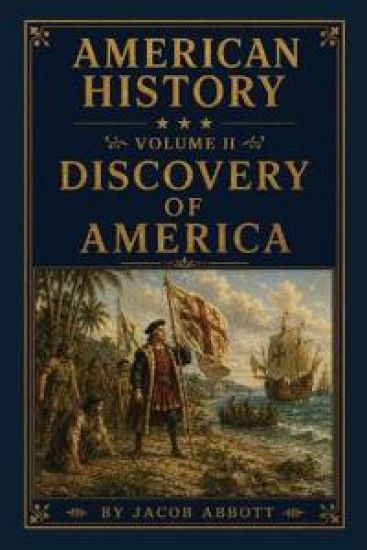
Discovery of America

Discovery of America

Jacob Abbott

Createspace Independent Publishing Platform
2014
pokkari
Part two of an eight part series on the history of America from its earliest times through to the age of George Washington, told by master storyteller Jacob Abbott. This volume starts with the epic voyages of the Vikings to the east coast of North America some 500 years before Christopher Columbus. The author reveals many little-known details of this adventure, and the many traces these intrepid explorers left behind. The book then goes on to provide a full account of each of the most famous European explorers who opened up the New World: Christopher Columbus, Sebastian Cabot, Americus Vespucius, John Ponce de Leon, Narvaez, Fernando De Soto, James Cartier, and Henry Hudson. Drawing upon original journals and accounts of eyewitnesses and sometimes sole survivors, this volume weaves a gripping story which includes accounts of the first meeting of the different races, the first use of tobacco, and much more. Read in detail of the astonishing adventures, the sometimes friendly and oftentimes bloody encounters with the Indians, and the ingenuity and daring of these early pioneers who laid the foundations for further European immigration which changed North America from untamed wilderness into what would become one of the mightiest nations in history. Abbott deals objectively with the explorers' treatment of the Indians, and also the behavior of the Indians toward the Europeans, revealing without prejudice the inequities perpetrated by both sides. Running throughout this volume is the theme of the stunning European technological advantage over the Indians, and how this enabled a relatively tiny number of adventurers to overcome seemingly impossible odds to map out the territory of North America. ContentsCHAPTER 1: GREENLAND CHAPTER II: COLUMBUSCHAPTER III: JOURNAL OF THE FIRST VOYAGE OF COLUMBUSCHAPTER IV: SEQUEL OF THE VOYAGECHAPTER V: DISCOVERY OF NORTH AMERICACHAPTER VI: THE DISCOVERY OF FLORIDACHAPTER VII: FERNANDO DE SOTOCHAPTER VIII: DISCOVERY OF THE MISSISSIPPI RIVERCHAPTER IX: THE RIVER ST. LAWRENCECHAPTER X: THE HUDSON RIVERThe American History Series by Jacob Abbott: Volume I: Aboriginal AmericaVolume II: Discovery of AmericaVolume III: The Southern ColoniesVolume IV: The Northern ColoniesVolume V: Wars of the ColoniesVolume VI: Revolt of the ColoniesVolume VII: War of the RevolutionVolume VIII: George Washingto
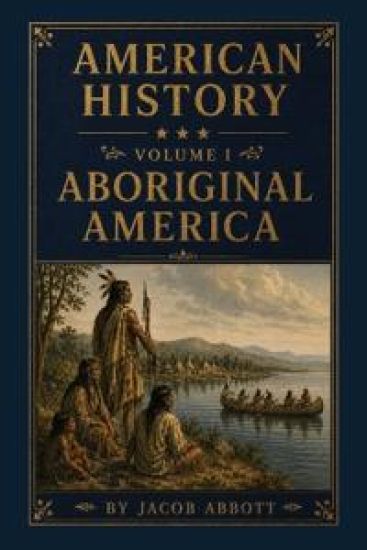
Aboriginal America

Aboriginal America

Jacob Abbott

Createspace Independent Publishing Platform
2014
pokkari
Part one of an eight part series on the history of America from its earliest times through to the age of George Washington, told by master storyteller Jacob Abbott. Starting with a physical description of the geography and natural life of North America, Abbott moves on to forthrightly address the origins, customs, traditions, and lifestyle of the Indian tribes living in North America. His conclusions-once common knowledge, but now suppressed in the name of political correctness-deal with many of the critical issues which surrounded the original settling of America-and the concepts of race and racial differences. "We are surprised sometimes, it is true, at the ingenuity which the Indians exhibited in some of their inventions, and it is, indeed, in some sense wonderful that with materials and implements so imperfect they could manufacture such efficient weapons and carry out such curious contrivances. But, after all, when we come to compare a bark canoe, perfect as it is in its way, with one of the ocean steam-ships of the Caucasian race, or the best made stone-tipped arrow ever shot at a moose or a buffalo, with the double-barreled rifled carbines carrying an explosive bullet, with which a French hunter lies in wait for an African lion, we learn the immense distance which separates the powers and attainments of the two races from each other." Abbott also points out the fact that archaeological excavations conducted in the nineteenth century had already conclusively proven that the Indians were not the original inhabitants of the continent, and an advanced and different people created much of what is today incorrectly regarded as Indian culture. "There are remnants of many of the ancient tribes existing at the present day in various parts of our country, but they live by themselves, a marked and separate race, with nothing changed except the external circumstances by which they are surrounded. They live in huts still, as their ancestors did three hundred years ago. It is only the covering that is changed-the birch bark, which has failed, being replaced with canvass, or with slabs obtained from the white men. They sit upon the ground around their wigwam fire, just as of old, and are occupied in the same species of employment, only that they make baskets instead of canoes, and bows and arrows to sell us toys, or to be used by children in shooting at coppers for a prize, instead of for the service of hunters in the chase.""There are descendants from Indians residing in certain portions of the Southern States that have adopted a settled mode of life, and have attained to a considerable degree of refinement and civilization, but in general, even among these, the degree in which they manifest the capacities of the Caucasian race corresponds very nearly to the proportion of Caucasian blood that flows in their veins." ContentsCHAPTER I: Types of Life in America. CHAPTER II: Face of the Country. CHAPTER III: Remarkable PlantsCHAPTER IV: Remarkable Animals CHAPTER V: The Indian RacesCHAPTER VI: The Indian FamilyCHAPTER VII: Mechanic ArtsCHAPTER VIII: Indian Legends and TalesCHAPTER IX: Constitution and Character of the Indian MindCHAPTER X: The Coming of the EuropeansThe American History Series by Jacob Abbott: Volume I: Aboriginal AmericaVolume II: Discovery of AmericaVolume III: The Southern ColoniesVolume IV: The Northern ColoniesVolume V: Wars of the ColoniesVolume VI: Revolt of the ColoniesVolume VII: War of the RevolutionVolume VIII: George Washington