
Kirjailija
Jacob Abbott
Kirjat ja teokset yhdessä paikassa: 1 374 kirjaa, julkaisuja vuosilta 1834–2026, suosituimpiin kuuluu Bruno. Vertaile teosten hintoja ja tarkista saatavuus suomalaisista kirjakaupoista.
1 374 kirjaa
Kirjojen julkaisuvuodet: 1834–2026.

""The History of William the Conqueror"" by Abbott, Jacob is a comprehensive account of the life and reign of William the Conqueror, the Norman king who conquered England in 1066. The book begins with William's birth in Normandy and follows his journey to become one of the most powerful rulers of his time. The author delves into William's military campaigns, including his famous victory at the Battle of Hastings, and explores his impact on English society and culture. The book also examines William's personal life, including his relationships with his family and his struggles to maintain his power in the face of political opposition. With vivid descriptions and engaging storytelling, ""The History of William the Conqueror"" offers readers a fascinating glimpse into one of the most influential figures in European history. This Is A New Release Of The Original 1922 Edition. This scarce antiquarian book is a facsimile reprint of the old original and may contain some imperfections such as library marks and notations. Because we believe this work is culturally important, we have made it available as part of our commitment for protecting, preserving, and promoting the world's literature in affordable, high quality, modern editions, that are true to their original work.




The Young Christian: Or a Familiar Illustration of the Principles of Christian Duty
Jacob Abbott
Literary Licensing, LLC
2014
nidottu





The Histories Of Cyrus The Great And Alexander The Great
Jacob Abbott
Literary Licensing, LLC
2014
nidottu

The History Of Margaret Of Anjou, Queen Of Henry VI Of England
Jacob Abbott
Literary Licensing, LLC
2014
nidottu
The ascension of Charles II to the British throne in 1660 marked the end of the English republican era-and the start of a period of unparalleled hedonism amongst the English ruling elite. The reader is first given the astonishing-and often shocking-details of Charles II's youth, including his parent's desperate but ultimately fruitless attempts to retain the throne. That sad tale ends with Charles I's public execution, and the imprisonment or exile in France of his family. Charles II's reign was marked by a series of major foreign and domestic political upheavals, which, despite their gravity, amazingly do nothing to shake the monarchy's position in society. This was the time of the Great Fire of London, the worst outbreak ever of the plague, and of the Second Anglo-Dutch war-and of continuing religious conflict between Catholics and Protestants. Charles II navigated his way through all these crises, often with an impish sense of humor: For example, he would often drive his counsellors to exasperation when, at major political meetings, he would prefer to play with his own breed of dog-the now famous King Charles Spaniel-under the table, while supposedly making great decisions of state. Charles's personal life inspired his nickname of the "Merry Monarch"-an understated reference to the debauchery of the court, where mistresses were openly paraded, and endless late-night carousing, drunkenness and all manner of excesses appeared to be the norm. The author shows how Charles II's popularity was unaffected by his overtly sham marriage to the Portuguese Catholic princess Catherine of Braganza-who the king described as a "bat, not a woman," his alleged sympathies for the Catholic Church (suspicions which turned out to be justified), and even his scandalous personal life. The Queen produced no living heirs, but Charles II's endless list of mistresses-whom he openly acknowledged and which included at least one self-confessed prostitute-produced at least twelve illegitimate offspring, many of whom were married off into the aristocracy. A remarkable story which provides a fascinating glimpse into the seamier side of the British royal house. ContentsChapter I: InfancyChapter II: Prince Charles's MotherChapter III: Queen Henrietta's FlightChapter IV: Escape of the ChildrenChapter V: The Prince's Reception at ParisChapter VI: Negotiations with Anne MariaChapter VII: The Royal Oak of BoscobelChapter VIII: The King's Escape to FranceChapter IX: The RestorationChapter X: The MarriageChapter XI: Character and ReignChapter XII: The Conclusion

A dramatic and sweeping account from master storyteller Jacob Abbott, detailing the trials, tribulations, errors, and ultimate tragedy of Charles I (1600-1649), who achieved fame by becoming the only monarch of Britain to be executed after his country was plunged into a devastating civil war. After detailing his early life's adventures, including his unsuccessful attempt to marry a Spanish Habsburg princess, and his later marriage to the French Bourbon princess Henrietta Maria, Abbot provides the reader with a concise background to the origin of the English Civil War. This work adeptly pinpoints the causes of Charles's ultimate downfall: the odious influence of George Villiers, first Duke of Buckingham; his marriage to a Roman Catholic, which alienated many Protestants; his failure to successfully support the Protestant forces during the Thirty Years' War; his attempt to force the Church of Scotland to adopt high Anglican practices (which led to the Bishops' Wars); his quarrels with the Parliament of England over his royal prerogative, and the popular resentment against excessive taxes and his increasingly autocratic style of rule. From 1642 onward, the increasing disturbances saw Charles plunged into the English Civil War, which pitted Royalists against Parliamentarians. For three years the battles raged back and forth across the land, and only ended with Charles's defeat and surrender in 1645. Even then, the drama was not at an end: Charles refused to agree to a constitutional monarchy, and escaped captivity in 1647. Re-captured, his increasingly diminished forces were finally overcome by Oliver Cromwell's New Model Army, and Charles was put on trial for treason and executed in public in the center of London in January 1649. His death marked the abolition of the monarchy in Britain and the creation of a republic called the Commonwealth of England. The monarchy would only be restored in 1660, when Charles's son was made king. This is without doubt the most readable account of Charles I's life and the backdrop to the Civil War ever written. ContentsChapter I: His Childhood and YouthChapter II: The Expedition into SpainChapter III: Accession to the ThroneChapter IV: BuckinghamChapter V: The King and His PrerogativeChapter VI: Archbishop LaudChapter VII: The Earl of StraffordChapter VIII: Downfall of Strafford and LaudChapter IX: Civil WarChapter X: The CaptivityChapter XI: Trial and Death
The name of Julius Caesar reverberates through history, not only as the most famous Roman ever, but as a symbol of imperial might, even reaching down through the centuries to give his name to the "Kaisers" and "Tsars" of Germany and Russia. This retelling of the story of Caesar, as recounted by master storyteller Jacob Abbott, starts with his childhood and then sketches the background to the beginning of the Roman leader's civil and military career in the service of Rome. From the time of his appointment to Consul (60 BC), through to the dramatic military victories in Gaul (51 BC), Caesar quickly progressed to one of the most popular political figures in Rome. These military victories and his subsequent growth in stature were correctly perceived as a direct threat to the political order back home, and Caesar was ordered by the Senate to lay down his military command and return to Rome. Famously, Caesar refused, and with his legions, crossed the Rubicon River-which marked Roman territory-in 49 BC, hereby formally declaring his intention to seize power in Rome. Civil war resulted, and after a period of strife which saw his erstwhile ally but now archenemy Pompey dead, Caesar emerged as the unrivaled leader of Rome. His adventures in Egypt-and his relationship with the famous Queen Cleopatra, combined with his increasingly authoritarian style of government caused further dissent in Rome, and he was assassinated by a group of senators led by Brutus on the Ides of March (15 March) 44 BC. His death did not result in the restoration of the Republic, as his assassins had hoped, but rather in the formalization of the Imperial system when his adopted heir Octavian, later known as Augustus, rose to sole power in his wake. Another masterpiece from Jacob Abbott which tells one of history's greatest stories in an easy-to-read and nonstop-action manner. ContentsChapter I: Marius and SyllaChapter II: C sar's Early YearsChapter III: Advancement to the ConsulshipChapter IV: The Conquest of GaulChapter V: PompeyChapter VI: Crossing the RubiconChapter VII: The Battle of PharsaliaChapter VIII: Flight and Death of PompeyChapter IX: C sar in EgyptChapter X: C sar ImperatorChapter XI: The ConspiracyChapter XII: The Assassination
King Richard III of England (1452-1485) only occupied the throne for two years, but his death at the Battle of Bosworth Field marked the end of the thirty-year long Wars of the Roses and symbolized the end of the Middle Ages in that country. His life and death became entwined with intrigue and myth, spurred on by William Shakespeare's dramatization of his life in one of the Bard's most famous plays. This enthralling account of Richard III's life, retold by master storyteller Jacob Abbott, starts with his family background and the build-up to the Wars of the Roses, which saw the Houses of York and Lancaster lock horns over the succession to the throne. When Edward IV died in 1483, Richard, as his younger brother, was named Lord Protector of the realm on behalf of Edward's son and successor, the 12-year-old King Edward V. This young boy-king, and his brother, however, disappeared under mysterious circumstances, allegedly murdered in the Tower of London, and Richard was declared king in terms of the rules of royal succession. Linked by common gossip to the disappearance of the two princes, Richard's reign was marked by continued civil unrest, culminating in the landing of Henry Tudor on the coast of Wales. Henry, who claimed the throne for himself, met Richard's army in battle at Bosworth Field, where Richard was slain, making him the last English king to die in battle. Henry Tudor was crowned king, and the Wars of the Roses were at an end. ContentsChapter I: Richard's Mother Chapter II: Richard's FatherChapter III: The Childhood of Richard III Chapter IV: Accession of Edward IV, Richard's Elder Brother Chapter V: Warwick, the King-MakerChapter VI: The Downfall of YorkChapter VII: The Downfall of LancasterChapter VIII: Richard's MarriageChapter IX: End of the Reign of Edward Chapter X: Richard and Edward VChapter XI: Taking SanctuaryChapter XII: Richard Lord ProtectorChapter XIII: Proclaimed KingChapter XIV: The CoronationChapter XV: The Fate of the PrincesChapter XVI: Domestic TroublesChapter XVII: The Field of Bosworth
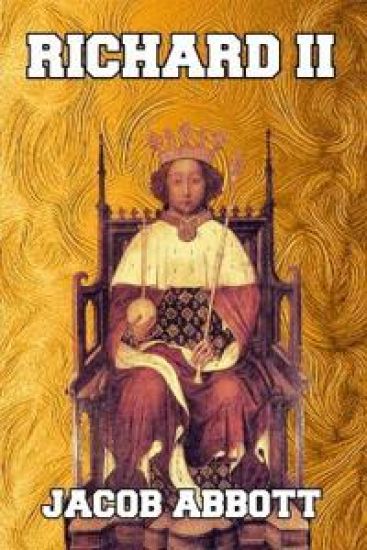
The story of King Richard II of England (1367-1400, reigned 1377 to 1399), as told by master storyteller Jacob Abbott. A son of the famous Edward, the Black Prince, he came to the throne at just ten years of age. During his first years as king, government was in the hands of a series of councils whose leading member was his uncle, John of Gaunt. The first major event of the young king's rule was the suppression of Wat Tyler's Peasants' Revolt of 1381. However, courtiers prevented the young king from fully exercising power, and by 1387, government of the realm had been taken over by a council known as the Lords Appellant. By 1397, Richard had overthrown this council as well, but had acquired numerous internal enemies. In 1399, one of these enemies, the exiled son of John of Gaunt, Henry of Bolingbroke, invaded England and seized the throne, imprisoning the hapless Richard II who was murdered a year later. Richard's posthumous commonly-held reputation has largely been shaped by Shakespeare, whose play Richard II portrayed Richard as a scoundrel whose overthrow by Bolingbroke was responsible for the later Wars of the Roses. This book delves into the real Richard II's personality, upbringing and actions, and provides a satisfying understanding of this tumultuous period of English history. ContentsRichard's Predecessors Quarrels The Black Prince The Battle of Poitiers Childhood of Richard Accession to the Throne The Coronation Chivalry Wat Tyler's Insurrection The End of the Insurrection Good Queen Anne Incidents of the Reign The Little Queen Richard's Deposition and Death
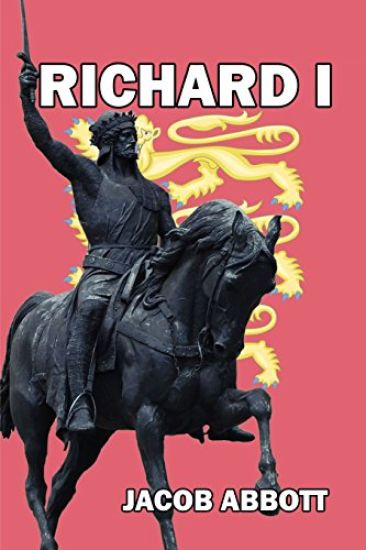
One of the greatest kings of England who hardly ever set foot in that country, Richard I is remembered in history by his epithet Richard Lionheart, mainly for his incredible series of wars and military victories, both within Europe and in the European counterattack (known as the Crusades) which opposed Islamic aggression against Christian lands in the Middle East. Made king of England in 1189, Richard was actually French, and also ruled in Normandy as Richard IV, as well as holding supreme leadership in many other parts of France. His Muslim foes, however, just called him Malek al-Inkitar-"King of England." This astonishing story starts with the fascinating tale of his mother, and how by the age of 16, Richard had taken command of his own army, putting down rebellions in Poitou against his father, King Henry II. His greatest military feats came however as a commander during the Third Crusade, where he led the Christian counterattack against his Muslim counterpart, Saladin. Dramatic events covered in this work include his campaigns in Sicily and Cyprus, the siege of Acre, and the monumental Battle of Jaffa, which brought an end to the Third Crusade and forced Saladin to grant access to Jerusalem to the Christians once again. By this time, Richard had generated many enemies at home as well, and this book ends with the story of his capture and ransom in Germany, before his return to England and death in 1199. This is a riveting story of personal bravery, courage, betrayal and intrigue, set against the bloody backdrop of the Third Crusade. ContentsChapter I: King Richard's MotherChapter II: Richard's Early LifeChapter III: Fair RosamondChapter IV: Accession of Richard to the ThroneChapter V: The CoronationChapter VI: Preparations for the CrusadeChapter VII: The EmbarkationChapter VIII: King Richard at MessinaChapter IX: BerengariaChapter X: The Campaign in CyprusChapter XI: Voyage to AcreChapter XII: The Arrival at AcreChapter XIII: DifficultiesChapter XIV: The Fall of AcreChapter XV: Progress of the CrusadeChapter XVI: ReversesChapter XVII: The Old Man of the MountainsChapter XVIII: The Battle of JaffaChapter XIX: The TruceChapter XX: The Departure from PalestineChapter XXI: Richard Made CaptiveChapter XXII: The Return to England