Kirjailija
Jacob Neusner
Kirjat ja teokset yhdessä paikassa: 291 kirjaa, julkaisuja vuosilta 1970–2023, suosituimpiin kuuluu The Mishnah. Vertaile teosten hintoja ja tarkista saatavuus suomalaisista kirjakaupoista.
291 kirjaa
Kirjojen julkaisuvuodet: 1970–2023.
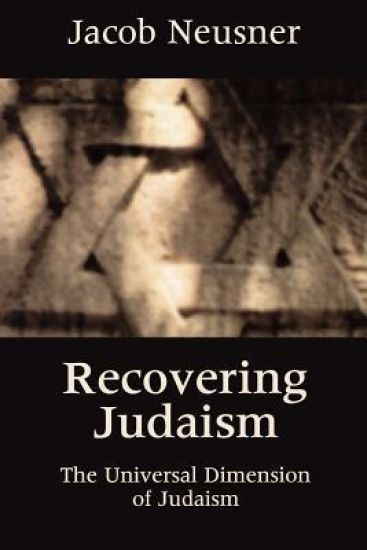
The renewed perception of Judaism's influence Judaism today is too often thought to represent a religious backwater, a highly particularistic, religion with its own esoteric tales and traditions, practices and norms. First Christians, then Jews themselves, have succumbed to this characterization, resulting in dismissal of Judaism's universal religious significance. Bereft of its religious import, Judaism is increasingly thought merely an ethnic designation-and a quickly dissipating one at that. Neusner pleas for vindication of "the universal character and appeal of Judaic monotheism in the mainstream of humanity." Of the three great monotheistic religions, only Judaism has survived without political power, military might, or great numbers of adherents and has done so because its method and message aim to persuade the world of God's dominion and the marks of God's rule.
72.95
Concludes Neusner's translation of the whole of Tosefta. The fourth division is based on M. S. Zuckermandel's 1881 reproduction of the Vienna manuscript. A vine to the trellis of the Mishnah, he says, it explains, elaborates, augments, cites, glosses, and adds relevant cases and examples. The 1981 e
Comparing Spiritualities
Bruce D. Chilton; Jacob Neusner
Continuum International Publishing Group - Trinity
2000
nidottu
In this book, Jacob Neusner and Bruce Chilton ask simply, "What are experiences both distinctive to the spiritual life of Torah and Christ, respectively, and also accessible to our common humanity?" They examine the experiences of "birth in the faith, death in the faith, and bearing witness to the faith." Each writer explores the ways in which classical statements of Torah and Christ represent critical moments in a person's life of faith, and offers a comparison of the spiritual piety that each religion teaches and nurtures.
39.95
The Components of the Rabbinic Documents, From the Whole to the Parts
Jacob Neusner
Scholars Press
2000
sidottu
A major new novel about sex and the citizen by the award-winning author of Being Dead The timid life of actor Felix Dern is uncorrupted by Hollywood, where his success has not yet been shackled with any intrusive fame. But in the theaters and the restaurants of his own city, "Lix" is celebrated and admired for his looks, for his voice, and for his unblemished private life. He has succeeded in courting popularity everywhere, this handsome hero of the left, this charming darling of the right, this ever-twisting weather vane. A perfect life? No, he is blighted. He has been blighted since his teens, for every woman he sleeps with bears his child. So now it is Mouetta's turn. Their baby's due in May. Lix wants to say he feels besieged. Another child? To be so fertile is a curse... In" Genesis, Jim Crace, winner of the National Book Critics' Circle Award and the Whitbread Novel of the Year, charts the sexual history of a loving, baffled man, the sexual emancipation of a city, and the sexual ambiguities of humankind.
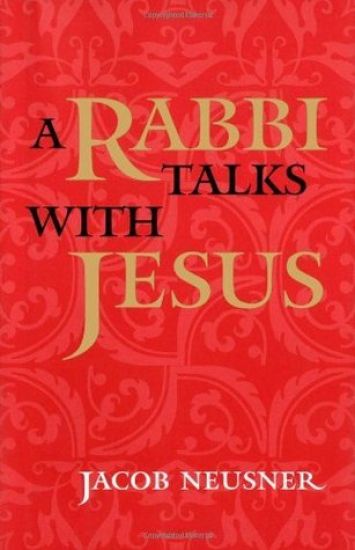
Placing himself within the context of the Gospel of Matthew, Neusner imagines himself in a dialogue with Jesus of Nazareth and pays him the supreme Judaic gesture of respect: making a connection with him through an honest debate about the nature of God's One Truth. Neusner explains why the Sermon on the Mount would not have convinced him to follow Jesus and why, by the criterion of the Torah of Moses, he would have continued to follow the teachings of Moses. He explores the reasons Christians believe in Jesus Christ and the Kingdom of Heaven, while Jews continue to believe in the Torah of Moses and a kingdom of priests and holy people on earth. This revised and expanded edition, with a foreword by Donald Akenson, creates a thoughtful and accessible context for discussion of the most fundamental question of why Christians and Jews believe what they believe.
Judaism and Islam in Practice
Jonathan E. Brockopp; Jacob Neusner; Tamara Sonn
Routledge
1999
nidottu
Judaism and Islam compare because they concur that God cares deeply not only about attitudes but actions, not only about what one says to God but how one conducts affairs at home and in the village. In this sourcebook, the authors have selected key passages from the laws of Judaism and Islam which allow a close examination of their mode of expression and medium of thought as well as the substance of the laws themselves. The selected passages concentrate on areas critical to the life of piety and faith as actually practised within the two faith-communities - the relationship between the believer and God, between and among believers, at home in marriage, outside the home in the community and between the faithful and the infidels (for Islam) or idolaters (for Judaism). Judaism and Islam in Practice presents an invaluable collection of sources of Jewish and Islamic law and provides a unique analysis of the similarities and contrasts between the two faiths.
Judaism and Islam in Practice
Jonathan E. Brockopp; Jacob Neusner; Tamara Sonn
Routledge
1999
sidottu
Judaism and Islam compare because they concur that God cares deeply not only about attitudes but actions, not only about what one says to God but how one conducts affairs at home and in the village. In this sourcebook, the authors have selected key passages from the laws of Judaism and Islam which allow a close examination of their mode of expression and medium of thought as well as the substance of the laws themselves. The selected passages concentrate on areas critical to the life of piety and faith as actually practised within the two faith-communities - the relationship between the believer and God, between and among believers, at home in marriage, outside the home in the community and between the faithful and the infidels (for Islam) or idolaters (for Judaism). Judaism and Islam in Practice presents an invaluable collection of sources of Jewish and Islamic law and provides a unique analysis of the similarities and contrasts between the two faiths.
Jewish and Christian Doctrines presents a concise and lucid introduction to the foundations of Judaism and Christianity. The authors explore key documents ofJudaism and Christianity to elucidate and illuminate the doctrinal issues which the documents raise and to examine the similarities and differences between the two faiths.
What, Exactly, Did the Rabbinic Sages Mean by "the Oral Torah"?
Jacob Neusner
Univ of South Florida
1999
sidottu
Comparing Religions Through Law offers a ground- breaking study which compares these two religions through shared dominant structures. In the case of Judaism and Islam the dominant structure is law. Comparing Religions Through Law presents an innovative and sometimes controversial study of the comparisons and contrasts between the two religions and offers an example of how comparative religious studies can provide grounds for mutual understanding.
The Mishnah - the second-century law code that lays the foundation, after Scripture, of normative Judaism - encompasses all subjects that pertain to the life of the Jewish nation and as such provides a systematic basis for Israel's social order and world view. Any social program has its own politics, economics, and philosophy which together define a given social entity rather than any other. And any system defining the structure of a society strives to establish a set of harmonised and coherent fundamental principles, viewpoints and attitudes in treating the components of its theory of the community. It has been long shown that the Mishnah is such a well-composed theory of world-construction. It is demonstrated here how its specific message concerning the politics and economics that define the social order recapitulate those of Aristotle. This publication has also been published in paperback, please click here for details.
In The Theology of the Oral Torah Neusner crafts the central conceptions of rabbinic Judaism into a rigorous, coherent argument by setting forth four cogent principles: that God formed creation in accord with a plan which the Torah reveals; that the perfection of creation is signified by the conformity of human affairs to a few enduring paradigms that transcend change; that Israel's condition, public and personal, is indicative of flaws in creation; and that God will ultimately restore the perfection embodied in his plan for creation. A masterful and original construction of theology of rabbinic Judaism, Neusner's story of the Oral Torah is also remarkably familiar - the emphasis is still on man's sin and God's response, God's justice and mercy, and the human mirroring of God through the possession of the power of will. The Theology of the Oral Torah is part of Neusner's ongoing major project - the construction of theology of rabbinic Judaism - a project which rivals in its scope that of the great Maimonides or, in Christian theology, that of Thomas Aquinas's Summa.
Types of Authority in Formative Christianity and Judaism
Bruce Chilton; Jacob Neusner
Routledge
1999
sidottu
Bruce Chilton and Jacob Neusner study the points of comparisons and contrast between formative Christianity and Judaism. By identifying three categories of authority in each of the two religious worlds, they show how they have both worked in compelling or failing to get someone to do a given action. The arguments are introduced by a general discussion of the founding figures of the two religions, Moses and Jesus, and how their inherent authority distilled itself through the structure of their religious institutions and intellectual thoughts.
49.95