Kirjojen hintavertailu – 12 859 828 kirjaa ja 27 kauppaa
Kirjailija
Jacques Lacan
Kirjat ja teokset yhdessä paikassa: 69 kirjaa, julkaisuja vuosilta 1980–2026, suosituimpiin kuuluu The Seminar of Jacques Lacan: The Ethics of Psychoanalysis. Vertaile teosten hintoja ja tarkista saatavuus suomalaisista kirjakaupoista.
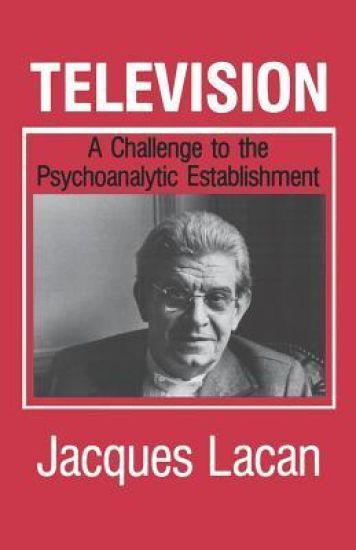
The second half of this illuminating volume, A Challenge to the Psychoanalytic Establishment, includes the "dossier on the institutional debate." The papers it comprises--such as the July 1953 report from the president of the International Psychanalytic Association, Heinz Hartmann--document some of the controversy that swirled around Lacan for the last thirty years of his teaching, including his expulsion from the IPA in 1953, his "excommunication" in 1963, and his key responses in the form of letters and talk. For anyone hoping to understand the institutionalization of Freudian thought and the challenge Lacan represents, this is an essential work.
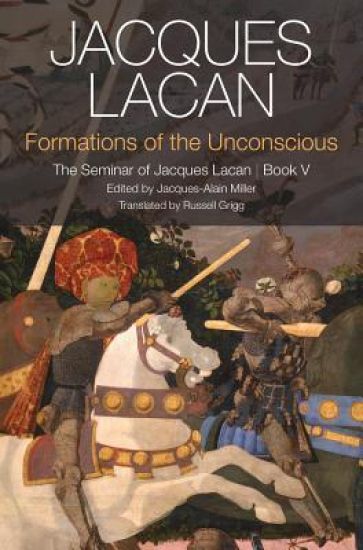
The author's writings, and especially the seminars for which he has become famous, have provoked intense controversies in French analytic circles, requiring as they do a radical reappraisal of the legacy bequeathed by Freud. This volume is based on a year's seminar, which is of particular importance because he was addressing a larger, less speci
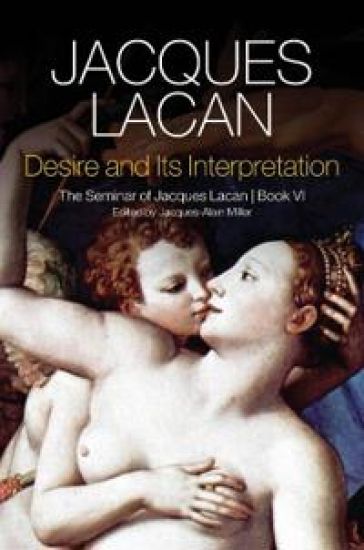
What does Lacan show us? He shows us that desire is not a biological function; that it is not correlated with a natural object; and that its object is fantasized. Because of this, desire is extravagant. It cannot be grasped by those who might try to master it. It plays tricks on them. Yet if it is not recognized, it produces symptoms. In psychoanalysis, the goal is to interpret—that is, to read—the message regarding desire that is harbored within the symptom. Although desire upsets us, it also inspires us to invent artifices that can serve us as a compass. An animal species has a single natural compass. Human beings, on the other hand, have multiple compasses: signifying montages and discourses. They tell you what to do: how to think, how to enjoy, and how to reproduce. Yet each person's fantasy remains irreducible to shared ideals. Up until recently, all of our compasses, no matter how varied, pointed in the same direction: toward the Father. We considered the patriarch to be an anthropological invariant. His decline accelerated owing to increasing equality, the growth of capitalism, and the ever-greater domination of technology. We have reached the end of the Father Age. Another discourse is in the process of taking the former's place. It champions innovation over tradition; networks over hierarchies; the draw of the future over the weight of the past; femininity over virility. Where there had previously been a fixed order, transformational flows constantly push back any and all limits. Freud was a product of the Father Age. He did a great deal to save it. The Catholic Church finally realized this. Lacan followed the way paved by Freud, but it led him to posit that the father is a symptom. He demonstrates that here using Hamlet as an example. What people have latched onto about Lacan's work—his formalization of the Oedipus complex and his emphasis on the Name-of-the-Father—was merely his point of departure. Seminar VI already revises this: the Oedipus complex is not the only solution to desire, it is merely a normalized form thereof; it is, moreover, a pathogenic form; it does not exhaustively explain desire’s course. Hence the eulogy of perversion with which this seminar ends: Lacan views perversion here as a rebellion against the identifications that assure the maintenance of social routines. This Seminar predicted “the revamping of formally established conformisms and even their explosion.” We have reached that point. Lacan is talking about us.
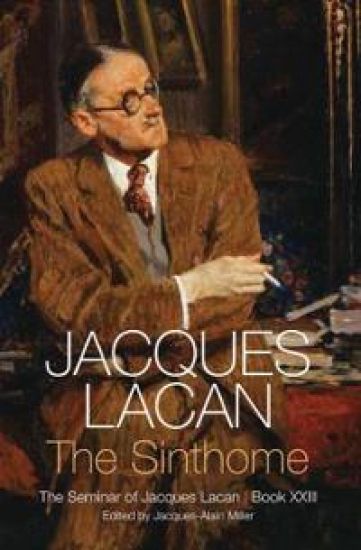
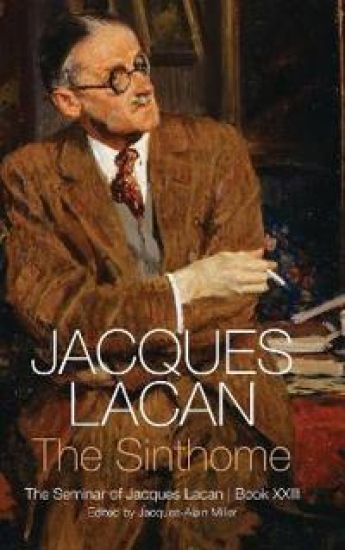
"Ten times, an elderly grey-haired man gets up on the stage. Ten times puffing and sighing. Ten times slowly tracing out strange multi-coloured arabesques that interweave, curling with the meanders of his speech, by turns fluid and uneasy. A whole crowd looks on, transfixed by this enigma-made-man, absorbing the ipse dixit and anticipating some illumination that is taking its time to appear. Non lucet. It’s shady in here, and the Théodores go hunting for their matches. Still, they say, cuicumque in sua arte perito credendum est, whosoever is expert in his art is to be lent credence. At what point is a person mad? The master himself poses the question. That was back in the day. Those were the mysteries of Paris forty years hence. A Dante clasping Virgil’s hand to be led through the circles of the Inferno, Lacan took the hand of James Joyce, the unreadable Irishman, and, in the wake of this slender Commander of the Faithless, made with heavy and faltering step onto the incandescent zone where symptomatic women and ravaging men burn and writhe. An equivocal troupe was in the struggling audience: his son-in-law; a dishevelled writer, young and just as unreadable back then; two dialoguing mathematicians; and a professor from Lyon vouching for the seriousness of the whole affair. A discreet Pasiphaë was being put to work backstage. Smirk then, my good fellows! Be my guest. Make fun of it all! That’s what our comic illusion is for. That way, you shall know nothing of what is happening right before your very eyes: the most carefully considered, the most lucid, and the most intrepid calling into question of the art that Freud invented, better known under its pseudonym: psychoanalysis."—Jacques-Alain Miller
'I've been talking to brick walls' says Lacan, meaning: 'Neither to you, nor to the Big Other. I'm speaking by myself. And this is precisely what interests you. It's up to you to interpret me.' These brick walls are those of the chapel at Sainte-Anne hospital. Getting back in touch with his younger years as a junior doctor, Lacan amuses himself, improvises, and lets himself go. The intention is a polemical one: the best of his pupils, captivated by the idea that analysis evacuates all prior knowledge, have been raising the banner of non-knowledge, borrowed from Bataille. No, says Lacan, psychoanalysis proceeds from a supposed knowledge, that of the unconscious. One gains access to it by the path of truth (the analysand ventures to say what comes to mind, frankly and with no frills) when it comes to an end in jouissance (the analyst interprets what the analysand says in terms of libido). However, two further paths bar access to this one: ignorance (to devote oneself to it with passion is always to consolidate established knowledge), and power (the passion for might obliterates what is revealed by parapraxes). Psychoanalysis teaches the virtues of powerlessness: this, at least, respects the real. A wise lesson for an era, this era of ours, that has seen bureaucracy, arm in arm with science, dreaming of changing humankind in its deepest reaches - through propaganda, through direct manipulation of the brain, through biotechnology, and even through social engineering. Admittedly things were no better before, but tomorrow they could be far worse. Jacques-Alain Miller
When I decided to explore the question of Witz, or wit, with you this year, I undertook a small enquiry. It will come as no surprise at all that I began by questioning a poet. This is a poet who introduces the dimension of an especially playful wit that runs through his work, as much in his prose as in more poetic forms, and which he brings into play even when he happens to be talking about mathematics, for he is also a mathematician. I am referring to Raymond Queneau. While we were exchanging our first remarks on the matter he told me a joke. It’s a joke about exams, about the university entrance exams, if you like. We have a candidate and we have an examiner. – “Tell me”, says the examiner, “about the battle of Marengo.” The candidate pauses for a moment, with a dreamy air. “The battle of Marengo...? Bodies everywhere! It’s terrible... Wounded everywhere! It’s horrible...” “But”, says the examiner, “Can’t you tell me anything more precise about this battle?” The candidate thinks for a moment, then replies, “A horse rears up on its hind legs and whinnies.” The examiner, surprised, seeks to test him a little further and says, “In that case, can you tell me about the battle of Fontenoy?” “Oh!” says the candidate, “a horse rears up on its hind legs and whinnies.” The examiner, strategically, asked the candidate to talk about the battle of Trafalgar. The candidate replies, “Dead everywhere! A blood bath.... Wounded everywhere! Hundreds of them....” “But my good man, can’t you tell me anything more precise about this battle?” “A horse...” “Excuse me, I would have you note that the battle of Trafalgar is a naval battle.” “Whoah! Whoah!” says the candidate. “Back up, Neddy!” The value of this joke is, to my mind, that it enables us to decompose, I believe, what is at stake in a witticism. (Extract from Chapter VI)
"Ten times, an elderly grey-haired man gets up on the stage. Ten times puffing and sighing. Ten times slowly tracing out strange multi-coloured arabesques that interweave, curling with the meanders of his speech, by turns fluid and uneasy. A whole crowd looks on, transfixed by this enigma-made-man, absorbing the ipse dixit and anticipating some illumination that is taking its time to appear. Non lucet. It’s shady in here, and the Théodores go hunting for their matches. Still, they say, cuicumque in sua arte perito credendum est, whosoever is expert in his art is to be lent credence. At what point is a person mad? The master himself poses the question. That was back in the day. Those were the mysteries of Paris forty years hence. A Dante clasping Virgil’s hand to be led through the circles of the Inferno, Lacan took the hand of James Joyce, the unreadable Irishman, and, in the wake of this slender Commander of the Faithless, made with heavy and faltering step onto the incandescent zone where symptomatic women and ravaging men burn and writhe. An equivocal troupe was in the struggling audience: his son-in-law; a dishevelled writer, young and just as unreadable back then; two dialoguing mathematicians; and a professor from Lyon vouching for the seriousness of the whole affair. A discreet Pasiphaë was being put to work backstage. Smirk then, my good fellows! Be my guest. Make fun of it all! That’s what our comic illusion is for. That way, you shall know nothing of what is happening right before your very eyes: the most carefully considered, the most lucid, and the most intrepid calling into question of the art that Freud invented, better known under its pseudonym: psychoanalysis."—Jacques-Alain Miller
In his famous seminar on ethics, Jacques Lacan uses this question as his departure point for a re-examination of Freud's work and the experience of psychoanalysis in relation to ethics. Delving into the psychoanalyst's inevitable involvement with ethical questions, Lacan clarifies many of his key concepts. During the seminar he discusses the problem of sublimation, the paradox of jouissance, the essence of tragedy, and the tragic dimension of analytical experience. One of the most influential French intellectuals of this century, Lacan is seen here at the height of his powers.
During the third year of his famous seminar, Jacques Lacan gives a concise definition of psychoanalysis: 'Psychoanalysis should be the science of language inhabited by the subject. From the Freudian point of view man is the subject captured and tortured by language.' Since psychosis is a special but emblematic case of language entrapment, Lacan devotes much of this year to grappling with distinctions between the neuroses and the psychoses. As he compared the two, relationships, symmetries, and contrasts emerge that enable him to erect a structure for psychosis. Freud's famous case of Daniel Paul Schreber is central to Lacan's analysis. In demonstrating the many ways that the psychotic is `inhabited, possessed by language', Lacan draws upon Schreber's own account of his psychosis and upon Freud's notes on this 'case of paranoia'. The analysis of language is both fascinating and enlightening.
Jacques Lacan is widely recognized as a key figure in the history of psychoanalysis and one of the most influential thinkers of the 20th Century. In Anxiety, now available for the first time in English, he explores the nature of anxiety, suggesting that it is not nostalgia for the object that causes anxiety but rather its imminence. In what was to be the last of his year-long seminars at Saint-Anne hospital, Lacan's 1962-63 lessons form the keystone to this classic phase of his teaching. Here we meet for the first time the notorious a in its oral, anal, scopic and vociferated guises, alongside Lacan’s exploration of the question of the 'analyst's desire'. Arriving at these concepts from a multitude of angles, Lacan leads his audience with great care through a range of recurring themes such as anxiety between jouissance and desire, counter-transference and interpretation, and the fantasy and its frame. This important volume, which forms Book X of The Seminar of Jacques Lacan, will be of great interest to students and practitioners of psychoanalysis and to students and scholars throughout the humanities and social sciences, from literature and critical theory to sociology, psychology and gender studies.