Kirjojen hintavertailu – 12 859 828 kirjaa ja 27 kauppaa

Kirjailija

Jacques Lacan

Kirjat ja teokset yhdessä paikassa: 69 kirjaa, julkaisuja vuosilta 1980–2026, suosituimpiin kuuluu The Seminar of Jacques Lacan: The Ethics of Psychoanalysis. Vertaile teosten hintoja ja tarkista saatavuus suomalaisista kirjakaupoista.

69 kirjaa

Kirjojen julkaisuvuodet: 1980–2026.

The Triumph of Religion

The Triumph of Religion

Jacques Lacan

Polity Press
2015
nidottu
"I am the product of priests", Lacan once said of himself. Educated by the Marist Brothers (or Little Brothers of Mary), he was a pious child and acquired considerable, personal knowledge of the torments and cunning of Christian spirituality. He was wonderfully able to speak to Catholics and to bring them around to psychoanalysis. Jesuits flocked to his school. Freud, an old-style Enlightenment optimist, believed religion was merely an illusion that the progress of the scientific spirit would dissipate in the future. Lacan did not share this belief in the slightest: he thought, on the contrary, that the true religion, Roman Catholicism, would take in everyone in the end, pouring bucketsful of meaning over the ever more insistent and unbearable real that we, in our times, owe to science.—Jacques-Alain Miller
On the Names-of-the-Father

On the Names-of-the-Father

Jacques Lacan

Polity Press
2015
nidottu
What astonishing success the Name-of-the-Father has had! Everyone finds something in it. Who one's father is isn't immediately obvious, hardly being visible to the naked eye. Paternity is first and foremost determined by one's culture. As Lacan said, "The Name-of-the-Father creates the function of the father." But then where does the plural stem from? It isn't pagan, for it is found in the Bible. He who speaks from the burning bush says of Himself that He doesn't have just one Name. In other words, the Father has no proper Name. It is not a figure of speech, but rather a function. The Father has as many names as the function has props. What is its function? The religious function par excellence, that of tying things together. What things? The signifier and the signified, law and desire, thought and the body. In short, the symbolic and the imaginary. Yet if these two become tied to the real in a three-part knot, the Name-of-the-Father is no longer anything but mere semblance. On the other hand, if without it everything falls apart, it is the symptom of a failed knotting.- Jacques-Alain Miller
Transference

Transference

Jacques Lacan

Polity Press
2015
sidottu
“Alcibiades attempted to seduce Socrates, he wanted to make him, and in the most openly avowed way possible, into someone instrumental and subordinate to what? To the object of Alcibiades’ desire – ágalma, the good object. I would go even further. How can we analysts fail to recognize what is involved? He says quite clearly: Socrates has the good object in his stomach. Here Socrates is nothing but the envelope in which the object of desire is found. It is in order to clearly emphasize that he is nothing but this envelope that Alcibiades tries to show that Socrates is desire’s serf in his relations with Alcibiades, that Socrates is enslaved to Alcibiades by his desire. Although Alcibiades was aware that Socrates desired him, he wanted to see Socrates’ desire manifest itself in a sign, in order to know that the other – the object, ágalma – was at his mercy. Now, it is precisely because he failed in this undertaking that Alcibiades disgraces himself, and makes of his confession something that is so affectively laden. The daemon of ??d?? (Aidós), Shame, about which I spoke to you before in this context, is what intervenes here. This is what is violated here. The most shocking secret is unveiled before everyone; the ultimate mainspring of desire, which in love relations must always be more or less dissimulated, is revealed – its aim is the fall of the Other, A, into the other, a.” Jacques Lacan
Psykoanalysens fyra grundbegrepp: Föreläsningarna, bok XI
Jacques Lacans seminarium om psykoanalysens fyra grundbegrepp utspelade sig vid en kritisk punkt i hans karriär, läsåret 1964-65, då han hade förlorat sin plats som föreläsare vid sjukhuset Sainte-Anne och uteslutits från den internationella psykoanalytiska associationen (IPA). Sina föreläsningar får han istället hålla på École normale supérieure på rue d’Ulm. Här framträder han också för en delvis annan och bredare publik med ett budskap som sammanfattar och följer upp resultaten av hans då mer än tioåriga seminarium ägnat åt vad han kallade en “bokstavlig kommentar av Freuds text”. Via sin analys av begreppen det omedvetna, upprepningen, överföringen och driften lämnar Jacques Lacan i detta elfte seminarium ett outplånligt bidrag till psykoanalysens teori och praktik. “Analytikerns begär är inte ett rent begär. Det är ett begär efter att uppnå den absoluta skillnaden, den som griper in när subjektet konfronteras med det ursprungliga betecknande elementet och för första gången kommer i läget att underkasta sig det. Bara där kan betydelsen av en gränslös kärlek uppstå, därför att den är utanför lagens gränser, bara där kan den leva.”
The Ethics of Psychoanalysis

The Ethics of Psychoanalysis

Jacques Lacan

Routledge
2015
sidottu
A charismatic and controversial figure, Lacan is one of the most important thinkers of the twentieth century and his work has revolutionized linguistics, philosophy, literature, psychology, cultural and media studies. He gained his reputation as a lecturer, disseminating his ideas to audiences that included Jean-Paul Sartre and Luce Irigaray amongst other hugely influential names. The Ethics of Psychoanalysis is a transcript of his most important lecture series. Including influential readings of Sophocles’ Antigone and Elizabethan courtly love poetry in relation to female sexuality, The Ethics of Psychoanalysis remains a powerful and controversial work that is still argued over today by the likes of Judith Butler and Slavoj Žižek.
Anxiety

Anxiety

Jacques Lacan

Polity Press
2014
sidottu
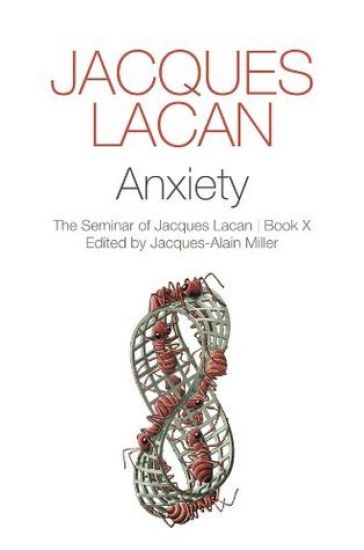
Jacques Lacan is widely recognized as a key figure in the history of psychoanalysis and one of the most influential thinkers of the 20th Century. In Anxiety, now available for the first time in English, he explores the nature of anxiety, suggesting that it is not nostalgia for the object that causes anxiety but rather its imminence. In what was to be the last of his year-long seminars at Saint-Anne hospital, Lacan's 1962-63 lessons form the keystone to this classic phase of his teaching. Here we meet for the first time the notorious a in its oral, anal, scopic and vociferated guises, alongside Lacan’s exploration of the question of the 'analyst's desire'. Arriving at these concepts from a multitude of angles, Lacan leads his audience with great care through a range of recurring themes such as anxiety between jouissance and desire, counter-transference and interpretation, and the fantasy and its frame. This important volume, which forms Book X of The Seminar of Jacques Lacan, will be of great interest to students and practitioners of psychoanalysis and to students and scholars throughout the humanities and social sciences, from literature and critical theory to sociology, psychology and gender studies.
The Triumph of Religion

The Triumph of Religion

Jacques Lacan

Polity Press
2013
sidottu
"I am the product of priests", Lacan once said of himself. Educated by the Marist Brothers (or Little Brothers of Mary), he was a pious child and acquired considerable, personal knowledge of the torments and cunning of Christian spirituality. He was wonderfully able to speak to Catholics and to bring them around to psychoanalysis. Jesuits flocked to his school. Freud, an old-style Enlightenment optimist, believed religion was merely an illusion that the progress of the scientific spirit would dissipate in the future. Lacan did not share this belief in the slightest: he thought, on the contrary, that the true religion, Roman Catholicism, would take in everyone in the end, pouring bucketsful of meaning over the ever more insistent and unbearable real that we, in our times, owe to science.—Jacques-Alain Miller
On the Names-of-the-Father

On the Names-of-the-Father

Jacques Lacan

Polity Press
2013
sidottu
What astonishing success the Name-of-the-Father has had! Everyone finds something in it. Who one's father is isn't immediately obvious, hardly being visible to the naked eye. Paternity is first and foremost determined by one's culture. As Lacan said, "The Name-of-the-Father creates the function of the father." But then where does the plural stem from? It isn't pagan, for it is found in the Bible. He who speaks from the burning bush says of Himself that He doesn't have just one Name. In other words, the Father has no proper Name. It is not a figure of speech, but rather a function. The Father has as many names as the function has props. What is its function? The religious function par excellence, that of tying things together. What things? The signifier and the signified, law and desire, thought and the body. In short, the symbolic and the imaginary. Yet if these two become tied to the real in a three-part knot, the Name-of-the-Father is no longer anything but mere semblance. On the other hand, if without it everything falls apart, it is the symptom of a failed knotting.- Jacques-Alain Miller
The Ethics of Psychoanalysis

The Ethics of Psychoanalysis

Jacques Lacan

Routledge
2007
nidottu

Halvin toimitettuna 31,20 €

A charismatic and controversial figure, Lacan is one of the most important thinkers of the twentieth century and his work has revolutionized linguistics, philosophy, literature, psychology, cultural and media studies. He gained his reputation as a lecturer, disseminating his ideas to audiences that included Jean-Paul Sartre and Luce Irigaray amongst other hugely influential names. The Ethics of Psychoanalysis is a transcript of his most important lecture series. Including influential readings of Sophocles’ Antigone and Elizabethan courtly love poetry in relation to female sexuality, The Ethics of Psychoanalysis remains a powerful and controversial work that is still argued over today by the likes of Judith Butler and Slavoj Žižek.
Ecrits

Ecrits

Jacques Lacan

WW Norton Co
2007
nidottu

Halvin toimitettuna 30,40 €

Brilliant and innovative, Jacques Lacan's work lies at the epicenter of modern thought about otherness, subjectivity, sexual difference, the drives, the law, and enjoyment. This new translation of his complete works offers welcome, readable access to Lacan's seminal thinking on diverse subjects touched upon over the course of his inimitable intellectual career.
Architecture and Psychoanalysis

Architecture and Psychoanalysis

John Shannon Hendrix; Peter Eisenman; Jacques Lacan

Peter Lang Publishing Inc
2006
nidottu
Architecture and Psychoanalysis is an analysis of the relation between psychoanalytic theory and compositional strategies in architecture. In psychoanalysis it focuses on the writing of Jacques Lacan as well as theories of the structure of the psyche, linguistics, and perception. In architecture it focuses on the writings and projects of Peter Eisenman. There are extended discussions on the thought of figures such as Sigmund Freud, Ferdinand de Saussure, and Jacques Derrida, and of the architecture of figures such as Leon Battista Alberti, Francesco Borromini, Giuseppe Terragni, and Ludwig Mies van der Rohe.
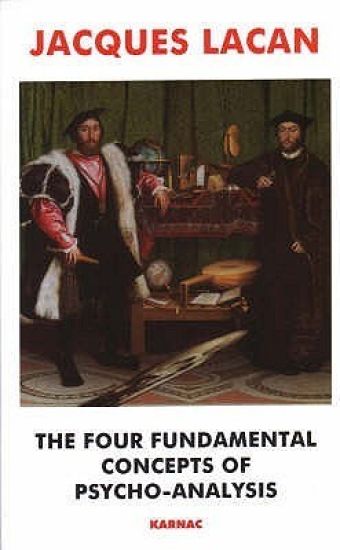
The Four Fundamental Concepts of Psycho-Analysis

The Four Fundamental Concepts of Psycho-Analysis

Jacques Lacan

Karnac Books
2004
nidottu

Halvin toimitettuna 44,00 €

The author's writings, and especially the seminars for which he has become famous, have provoked intense controversies in French analytic circles, requiring as they do a radical reappraisal of the legacy bequeathed by Freud. This volume is based on a year's seminar, which is of particular importance because he was addressing a larger, less specialist audience than ever before, amongst whom he could not assume familiarity with his work. For his listeners then, and for his readers now, he wanted "to introduce a certain coherence into the major concepts on which psycho-analysis is based", namely the unconscious, repetition, the transference and the drive. In re-defining these four concepts he explores the question that, as he puts it, moves from "Is psycho-analysis a science?" to "What is a science that includes psycho-analysis?"
Ecrits

Ecrits

Jacques Lacan

WW Norton Co
2004
nidottu

Halvin toimitettuna 29,50 €

A major new translation of one of the most influential psychoanalytic works of modern times. BRILLIANT AND INNOVATIVE, Jacques Lacan's work has had a tremendous influence on contemporary discourse. This new translation of selected writings from his most famous work offers welcome access to nine of his most significant contributions to psychoanalytic theory and technique, spanning some thirty years of his inimitable intellectual career.
Ecrits: A Selection

Ecrits: A Selection

Jacques Lacan

Routledge
2001
nidottu

Halvin toimitettuna 31,20 €

Genius and charismatic leader of a psychoanalytic movement that in the 1950s and 1960s provided a focal point for the French intelligentsia, Jacques Lacan attracted a cult following. Ecrits is his most important work, bringing together twenty-seven articles and lectures originally published between 1936 and 1966. Following its first publication in 1966, the book gained Lacan international attention and exercised a powerful influence on contemporary intellectual life. To this day, Lacan's radical, brilliant and complex ideas continue to be highly influential in everything from film theory to art history and literary criticism. Ecrits is the essential source for anyone who seeks to understand this seminal thinker and his influence on contemporary thought and culture.
Écrits: A Selection

Écrits: A Selection

Jacques Lacan

Routledge
2001
sidottu
Écrits is Lacan's most important work, bringing together twenty-seven articles and lectures originally published between 1936 and 1966. This is the essential source for anyone who seeks to understand this seminal thinker and his influence on contemporary thought and culture.