Kirjojen hintavertailu – 12 859 819 kirjaa ja 27 kauppaa

Kirjailija

Jacques Maritain

Kirjat ja teokset yhdessä paikassa: 56 kirjaa, julkaisuja vuosilta 1941–2026, suosituimpiin kuuluu Art and Faith: Letters Between Jacques Maritain and Jean Cocteau. Vertaile teosten hintoja ja tarkista saatavuus suomalaisista kirjakaupoista.

56 kirjaa

Kirjojen julkaisuvuodet: 1941–2026.

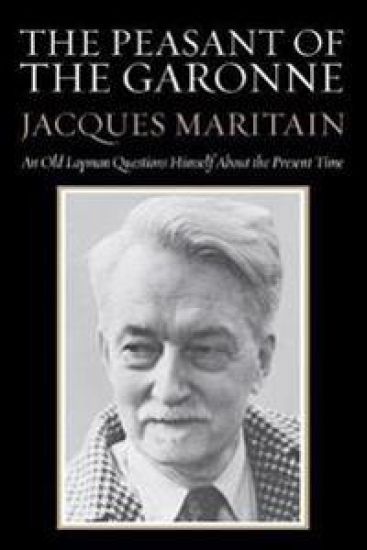
The Peasant of the Garonne

The Peasant of the Garonne

Jacques Maritain

Wipf Stock Publishers
2013
pokkari
At eighty-five, Jacques Maritain, the most distinguished Catholic philosopher of the twentieth century, has written what he offers as his last book, and it turns out to be a shocker. The "peasant," as Maritain calls himself in the title, is a man who calls a spade a spade; and a storm of controversy descended immediately on the book's publication in France, as both Right and Left reeled from the force of Maritain's criticism. The Peasant of the Garonne is a sharp attack on the "new philosophy," hoping to cool off the fever for change that Maritain believes is imperiling the church's traditional spirituality and even the substance of doctrine. There is sardonic humor in his treatment of Teilhardians, phenomenologists, existentialists, new-style biblical critics, and clerical Freudians, but Maritain is deeply serious in warning that their capitulation to fashioniable trends represents a kind of "kneeling before the world."

Christianity and Democracy

Christianity and Democracy

Jacques Maritain

Ignatius Press
2012
nidottu

Halvin toimitettuna 22,20 €

Few political philosophers have laid such stress upon the organic and dynamic characters of human rights, rooted as they are in natural law, as did the great 20th century philosopher, Jacques Maritain. Few Christian scholars have placed such emphasis upon the influence of evangelical inspiration, or of the Gospel message, upon the temporal order as has Maritain. As this important work reveals, the philosophy of Jacques Maritain on natural law and human rights is complemented by and can only be properly understood in the light of his teaching on Christianity and democracy and their relationship. Maritain takes pains to point out that Christianity cannot be made subservient to any political form or regime, that democracy is linked to Christianity and not the other way around, and that every just regime, such as the classic forms of monarchy, aristocracy and republic, is compatible with Christianity and in it a person is able to achieve some measure of fulfillment even in the temporal order. At the same time he argues his distinctive thesis that personalist or organic democracy provides a fuller measure of freedom and fulfillment and that it emerges or begins to take shape under the inspiration of the Gospel. Even the modern democracies we do in fact have, with all their weaknesses, represent an historic gain for the person and they spring, he urges, from the very Gospel they so wantonly repudiate
Scholasticism & Politics

Scholasticism & Politics

Jacques Maritain

Liberty Fund Inc
2011
nidottu
Jacques Maritain was deeply engaged in the intellectual and political life of France through the turbulent decades that included the two world wars. Accordingly, his philosophical reflections often focus on an attempt to discover man's role in sustaining a social and political order that seeks and maintains both liberty and peace. "Scholasticism and Politics", first published in 1940, is a collection of nine lectures Maritain delivered at the University of Chicago in 1938. While the lectures address a variety of diverse topics, they explore three broad topics: 1) the nature of modern culture, its relationship to Christianity, and the origins of the crisis which has engulfed it; 2) the true nature and authentic foundations of human freedom and dignity and the threats posed to them by the various materialist and naturalistic philosophies that dominate the modern cultural scene; and 3) the principles that provide the authentic foundation of a social order in accord with human dignity. Maritain championed the cause of what he called personalist democracy -- a regime committed to popular sovereignty, constitutionalism, limited government, and individual freedom. He believed a personalist democracy offered the modern world the possibility of a political order most in keeping with the demands of human dignity, Christian values, and the common good.
Scholasticism & Politics

Scholasticism & Politics

Jacques Maritain

Liberty Fund Inc
2011
sidottu
Jacques Maritain was deeply engaged in the intellectual and political life of France through the turbulent decades that included the two world wars. Accordingly, his philosophical reflections often focus on an attempt to discover man's role in sustaining a social and political order that seeks and maintains both liberty and peace. "Scholasticism and Politics", first published in 1940, is a collection of nine lectures Maritain delivered at the University of Chicago in 1938. While the lectures address a variety of diverse topics, they explore three broad topics: 1) the nature of modern culture, its relationship to Christianity, and the origins of the crisis which has engulfed it; 2) the true nature and authentic foundations of human freedom and dignity and the threats posed to them by the various materialist and naturalistic philosophies that dominate the modern cultural scene; and 3) the principles that provide the authentic foundation of a social order in accord with human dignity. Maritain championed the cause of what he called personalist democracy -- a regime committed to popular sovereignty, constitutionalism, limited government, and individual freedom. He believed a personalist democracy offered the modern world the possibility of a political order most in keeping with the demands of human dignity, Christian values, and the common good.
The Philosophy of Morality

The Philosophy of Morality

Henri Renard; Jacques Maritain

Literary Licensing, LLC
2011
sidottu
The Philosophy of Morality by Henri Renard is a comprehensive guide to the study of ethics and moral philosophy. The book explores the fundamental concepts and theories that underpin moral reasoning, including the distinction between right and wrong, the nature of moral obligations, and the role of reason and emotion in ethical decision-making. Renard provides a clear and accessible introduction to the major ethical theories, including consequentialism, deontology, and virtue ethics. He also examines the relationship between morality and religion, the nature of moral responsibility, and the challenges posed by moral relativism and subjectivism. Throughout the book, Renard engages with contemporary debates in moral philosophy, drawing on examples from literature, film, and popular culture to illustrate key concepts and theories. He also provides a range of exercises and discussion questions to help readers deepen their understanding of the material. Overall, The Philosophy of Morality is an essential resource for anyone interested in exploring the complex and fascinating field of moral philosophy. This scarce antiquarian book is a facsimile reprint of the old original and may contain some imperfections such as library marks and notations. Because we believe this work is culturally important, we have made it available as part of our commitment for protecting, preserving, and promoting the world's literature in affordable, high quality, modern editions, that are true to their original work.
On the Philosophy of History

On the Philosophy of History

Jacques Maritain; Joseph W. Evans

Literary Licensing, LLC
2011
sidottu
""On The Philosophy Of History"" by Jacques Maritain is a philosophical treatise that explores the nature and purpose of history. Maritain delves into the meaning of history, examining its role as both a record of past events and a guide for the future. He argues that history is not simply a collection of facts, but rather a reflection of the human experience and the evolution of ideas and values over time. Maritain also considers the relationship between history and philosophy, and the ways in which historical events can inform and shape philosophical thought. Throughout the book, Maritain draws on a wide range of philosophical and historical sources, including the works of Aristotle, Augustine, and Hegel. ""On The Philosophy Of History"" is a thought-provoking and insightful exploration of the meaning and significance of history, and is sure to be of interest to anyone interested in philosophy, history, or the human experience. This scarce antiquarian book is a facsimile reprint of the old original and may contain some imperfections such as library marks and notations. Because we believe this work is culturally important, we have made it available as part of our commitment for protecting, preserving, and promoting the world's literature in affordable, high quality, modern editions, that are true to their original work.
The Spirit of Love: Based on the Teachings of St. Francois de Sales

The Spirit of Love: Based on the Teachings of St. Francois de Sales

C. F. Kelley; Jacques Maritain

Literary Licensing, LLC
2011
sidottu
The Spirit of Love is a book that explores the teachings of St. Francois de Sales, a Catholic bishop and spiritual writer from the 17th century. The author, C. F. Kelley, delves into the concept of love as a spiritual force and its role in our lives. The book is divided into chapters that cover different aspects of love, such as self-love, love for others, and love for God. Each chapter includes quotes from St. Francois de Sales' writings and reflections on how these teachings can be applied in modern times. The author encourages readers to embrace love as a transformative power that can bring us closer to God and to each other. The Spirit of Love is a thoughtful and inspiring read for anyone interested in spirituality and personal growth. This scarce antiquarian book is a facsimile reprint of the old original and may contain some imperfections such as library marks and notations. Because we believe this work is culturally important, we have made it available as part of our commitment for protecting, preserving, and promoting the world's literature in affordable, high quality, modern editions, that are true to their original work.
Bergsonian Philosophy and Thomism

Bergsonian Philosophy and Thomism

Jacques Maritain

University of Notre Dame Press
2007
sidottu
Published in 1913 as La Philosophie Bergsonienne, this incisive critique of the thought of Henri Bergson was Jacques Maritain's (1882–1973) first book. In it he shows himself already to have an authoritative grasp of the thought of St. Thomas Aquinas and an uncanny ability to demonstrate its relevance to alternative philosophical systems such as that of Henri Bergson. Volume 1 in the series The Collected Works of Jacques Maritain, this edition faithfully reproduces the 1955 translation published by the Philosophical Library. It would be difficult to overestimate Bergson's role in extricating French philosophy from the deadening materialism that dominated the Sorbonne. It was that cultural milieu that brought Maritain and his wife Raïssa to the brink of suicide. They drew back for two major reasons. First were the lectures of Henri Bergson at the Collège de France, in which the Maritains found a defense of metaphysics, of the transcendent beyond the material, within which they could find meaning in life. The second reason was their conversion to Catholicism, a move they and many of their contemporaries made after being introduced to Bergson's work. Soon after his conversion, Jacques Maritain immersed himself in the thought of Thomas Aquinas and was struck by the comparative weaknesses of Bergson. This book is Maritain's relentless criticism of the philosophy of the man whose lectures had meant so much to him. Its ferocity marks it as a young man's book, written in part to exorcize the defects of Bergson's philosophy as they were understood by one now schooled in Thomism. Twenty-five years later, Maritain, while not retracting his criticisms, regretted their intemperance and, as a result, moderated his assessment of Bergson in a long preface to the second edition. In it, we find a philosopher who mastered his craft and a critic of rare perception and refinement.
An Introduction to Philosophy

An Introduction to Philosophy

Jacques Maritain; Ralph McInerny

Sheed Ward,U.S.
2005
sidottu
Jacques Maritain's An Introduction to Philosophy was first published in 1931. Since then, this book has stood the test of time as a clear guide to what philosophy is and how to philosophize. Inspired by the Thomistic Revival called for by Leo XIII, Maritain relies heavily on Aristotle and St. Thomas Aquinas to shape a philosophy that, far from sectarian theology in disguise, is driven by reason and engages the modern world. Re-released as part of the Sheed & Ward Classic series, An Introduction to Philosophy is sure to enliven the minds of students and general readers for years to come. From the new introduction by Ralph McInerny: You are about to read a magnificent introduction not only to a kind of philosophy but to philosophizing itself. Jacques Maritain was a relatively young man when he wrote this book, but his effort is one that attracts any philosopher more and more as he grows older. However odd and unusual what he says becomes, the philosopher yearns to show how even the most abstruse claims can be put into relation with what the reader already knows. That, in its essence, is what teaching is. In this book, the reader will find a wise and certain guide into philosophizing as such. And, in the end, he will find that what he reads is really only a refinement and development of what he and everybody else already knew.
An Introduction to Philosophy

An Introduction to Philosophy

Jacques Maritain; Ralph McInerny

Sheed Ward,U.S.
2005
nidottu
Jacques Maritain's An Introduction to Philosophy was first published in 1931. Since then, this book has stood the test of time as a clear guide to what philosophy is and how to philosophize. Inspired by the Thomistic Revival called for by Leo XIII, Maritain relies heavily on Aristotle and St. Thomas Aquinas to shape a philosophy that, far from sectarian theology in disguise, is driven by reason and engages the modern world. Re-released as part of the Sheed & Ward Classic series, An Introduction to Philosophy is sure to enliven the minds of students and general readers for years to come. From the new introduction by Ralph McInerny: You are about to read a magnificent introduction not only to a kind of philosophy but to philosophizing itself. Jacques Maritain was a relatively young man when he wrote this book, but his effort is one that attracts any philosopher more and more as he grows older. However odd and unusual what he says becomes, the philosopher yearns to show how even the most abstruse claims can be put into relation with what the reader already knows. That, in its essence, is what teaching is. In this book, the reader will find a wise and certain guide into philosophizing as such. And, in the end, he will find that what he reads is really only a refinement and development of what he and everybody else already knew.
An Introduction to Philosophy

An Introduction to Philosophy

Jacques Maritain

Continuum International Publishing Group Ltd.
2005
nidottu
Jacques Maritain (1882-1973) was a Neo-Thomist philosopher who taught in France and the United States and was French Ambassador to the Vatican from 1945-48. A Protestant who became a Roman Catholic through association with Leon Bloy, he devoted himself to the study of Thomism and its application to all aspects of modern life and urged Christian involvement in secular affairs. An Introduction to Philosophy is perhaps the most well-known and enduring of all Maritain's many books. It offers a clear and highly readable introduction to the philosophies of both Aristotle and St Thomas Aquinas.
Natural Law – Reflections On Theory & Practice

Natural Law – Reflections On Theory & Practice

Jacques Maritain

St Augustine's Press
2001
nidottu

Halvin toimitettuna 19,60 €

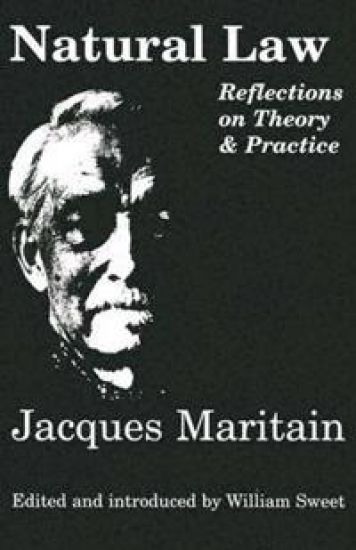
Can there be universal moral principles in a culturally and religiously diverse world? Are such principles provided by a theory of natural law? Jacques response to both questions is 'yes.' These essays, selected from the writings of one of the most influential philosophers of the past hundred years, provide a clear statement of Maritain's theory of natural law and natural rights. Maritain's ethics and political philosophy occupies a middle ground between the extremes of individualism and collectivism. Written during a period when cultural diversity and pluralism were beginning to have an impact on ethics and politics, these essays provide a defense of natural law and natural right that continues to be timely. The first essay introduces Maritain's theory of connatural knowledge - knowledge by inclination - that lies at the basis of his distinctive views on moral philosophy, aesthetics, and mystical belief. The secondgives Maritain's principal metaphysical arguments for natural law as well as his account of how that law can be naturally known and universally held. The third explains the roots of the natural law and shows how it provides a rational foundation for other kinds of law and for human rights. In the fourth essay, reflecting his personalism and integral humanism, Maritain indicates how he extends his understanding of human rights to include the rights of the civic and of the social or working person.
Man and the State

Man and the State

Jacques Maritain

The Catholic University of America Press
1998
nidottu
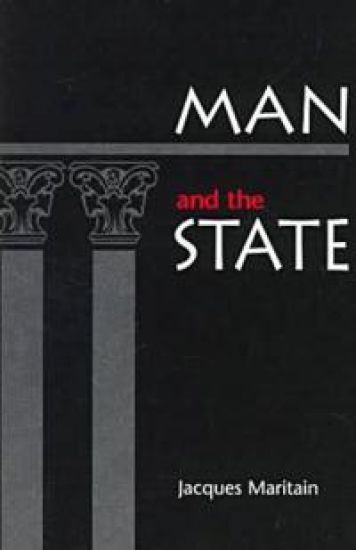
The lectures that were the basis for Man and the State were delivered at the University of Chicago at a time when Maritain was still in the first enthusiasm of his participation in the 1948 Universal Declaration of Human Rights. He devotes particular attention to the concept of rights, since, historically, rights theories were fashioned to supplant the natural law theory to which Maritain as a Thomist gives his allegiance. Maritain provides an ingenious and profound theory as to how natural law and natural rights can be complementary. For this reason alone it remains a fundamental contribution to political philosophy, but it is filled with other gems as well. Was Maritain too optimistic in his appraisal of modernity? Or have we unjustly lost the optimism that was his? Man and the State is an invitation to rethink the way we pose the basic questions of political philosophy.
Untrammeled Approaches

Untrammeled Approaches

Jacques Maritain

University of Notre Dame Press
1997
sidottu
With this volume of the Collected Works of Jacques Maritain, the University of Notre Dame Press published the first English edition of a remarkable group of essays that Maritain had prepared for publication in the year before his death. He brought together various writings that had not appeared in print or had circulated privately. The heart of the book is to be found in two groups of articles. The first consists of philosophical essays. Several deal with truth, with philosophy at the time of Vatican II, and with the divine aseity; two are on philosophy of nature, dealing with evolution and with animal instinct; and three are on moral philosophy. A second group consists of primarily theological essays. Four are contributions to what Maritain calls an existential epistemology. They are followed by a moving meditation on the Mass and essays on the Church triumphant, resurrection, and the priesthood. When he lay dying at Fossanova, Thomas Aquinas, in deference to the wishes of the Cistercians, with whom he had found refuge, wrote a commentary on the Song of Songs. How better could a lifelong Thomist round off his lifetime of writing than with his own essay on the Song of Songs? This is what Maritian does in the serenely profound meditation that closes the volume.
Untrammeled Approaches

Untrammeled Approaches

Jacques Maritain

University of Notre Dame Press
1997
nidottu
With this volume of the Collected Works of Jacques Maritain, the University of Notre Dame Press published the first English edition of a remarkable group of essays that Maritain had prepared for publication in the year before his death. He brought together various writings that had not appeared in print or had circulated privately. The heart of the book is to be found in two groups of articles. The first consists of philosophical essays. Several deal with truth, with philosophy at the time of Vatican II, and with the divine aseity; two are on philosophy of nature, dealing with evolution and with animal instinct; and three are on moral philosophy. A second group consists of primarily theological essays. Four are contributions to what Maritain calls an existential epistemology. They are followed by a moving meditation on the Mass and essays on the Church triumphant, resurrection, and the priesthood. When he lay dying at Fossanova, Thomas Aquinas, in deference to the wishes of the Cistercians, with whom he had found refuge, wrote a commentary on the Song of Songs. How better could a lifelong Thomist round off his lifetime of writing than with his own essay on the Song of Songs? This is what Maritian does in the serenely profound meditation that closes the volume.