Kirjojen hintavertailu – 12 859 819 kirjaa ja 27 kauppaa

Kirjailija

Jacques Maritain

Kirjat ja teokset yhdessä paikassa: 56 kirjaa, julkaisuja vuosilta 1941–2026, suosituimpiin kuuluu Art and Faith: Letters Between Jacques Maritain and Jean Cocteau. Vertaile teosten hintoja ja tarkista saatavuus suomalaisista kirjakaupoista.

56 kirjaa

Kirjojen julkaisuvuodet: 1941–2026.

Integral Humanism, Freedom in the Modern World, and a Letter on Independence, Revised Edition
The three books presented in this volume, Integral Humanism, Freedom in the Modern World, and A Letter on Independence, were all written in the early 1930s, a time of dire trouble for France. France was then surrounded by enemies preparing for war and was itself so violently split between parties of Left and Right that it seemed on the verge of civil war. In this collection, Jacques Maritain accepts the responsibility of a Christian philosopher to actively address the agonizing practical problems of the time. Maritain discusses major political issues such as the relation of freedom and religion, the opposition of democracy to any form of totalitarianism, the relation of the spiritual and the temporal, the need for an integral and Christian humanism, and the prospects for a new Christian civilization, all in opposition to the materialism of both communism and capitalism. Against the fierce antagonism of the parties of the political Left and Right, Maritain declares a plague on both their houses and strongly affirms the need for independence from both of them. He does so by distinguishing between two senses of the terms Left and Right, one denoting a temperamental or physiological disposition, the other a definite political position. In the latter sense, Maritain asserts that he is an independent, while acknowledging that he is, by temperament, a man of the Left.
Integral Humanism, Freedom in the Modern World, and a Letter on Independence, Revised Edition
The three books presented in this volume, Integral Humanism, Freedom in the Modern World, and A Letter on Independence, were all written in the early 1930s, a time of dire trouble for France. France was then surrounded by enemies preparing for war and was itself so violently split between parties of Left and Right that it seemed on the verge of civil war. In this collection, Jacques Maritain accepts the responsibility of a Christian philosopher to actively address the agonizing practical problems of the time. Maritain discusses major political issues such as the relation of freedom and religion, the opposition of democracy to any form of totalitarianism, the relation of the spiritual and the temporal, the need for an integral and Christian humanism, and the prospects for a new Christian civilization, all in opposition to the materialism of both communism and capitalism. Against the fierce antagonism of the parties of the political Left and Right, Maritain declares a plague on both their houses and strongly affirms the need for independence from both of them. He does so by distinguishing between two senses of the terms Left and Right, one denoting a temperamental or physiological disposition, the other a definite political position. In the latter sense, Maritain asserts that he is an independent, while acknowledging that he is, by temperament, a man of the Left.
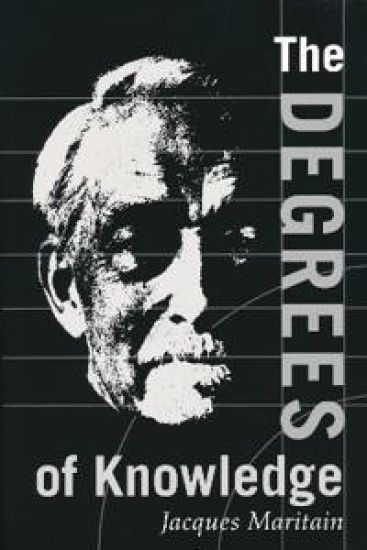
Degrees of Knowledge

Degrees of Knowledge

Jacques Maritain

UNIVERSITY OF NOTRE DAME PRESS
1995
sidottu
Maritain argues that there are different 'kinds' and 'orders' of knowledge and, within them, different 'degrees' determined by the nature of the thing to be known and the 'degree of abstraction' involved. The book is divided into two parts: Part one discusses the degrees of knowledge for science and philosophy - or 'rational knowledge, ' and part two discusses the degrees of knowledge for religious faith and mysticism - or 'super-rational knowledge.'
Degrees of Knowledge

Degrees of Knowledge

Jacques Maritain

University of Notre Dame Press
1995
nidottu

Halvin toimitettuna 43,00 €

Maritain argues that there are different 'kinds' and 'orders' of knowledge and, within them, different 'degrees' determined by the nature of the thing to be known and the 'degree of abstraction' involved. The book is divided into two parts: Part one discusses the degrees of knowledge for science and philosophy – or 'rational knowledge,' and part two discusses the degrees of knowledge for religious faith and mysticism – or 'super-rational knowledge.'
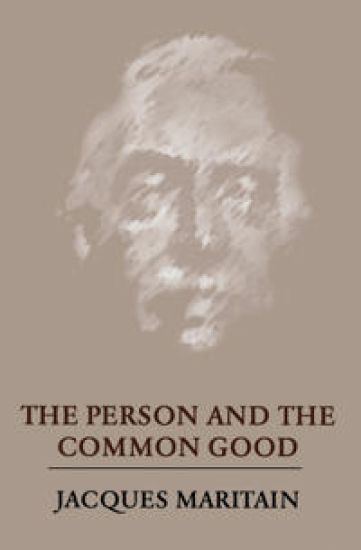
The Person and the Common Good

The Person and the Common Good

Jacques Maritain

University of Notre Dame Press
1994
sidottu
The Person and the Common Good, originally published in 1947, presents Jacques Maritain's clearest and most sustained treatment of the person. He asks whether the person is simply the self and nothing more. After more than half a century, Maritain's question still has great validity, given the current inordinate preoccupation with individualism. Presenting with moving insight the relations between man, as a person and as an individual, and the society of which he is a part, Maritain's treatment of a lasting topic speaks to this generation as well as those to come. He makes clear the personalism rooted in the doctrine of St. Thomas and separates the social philosophy centered in the dignity of the human person from every social philosophy centered in the primacy of the individual and the private good.
The Person and the Common Good

The Person and the Common Good

Jacques Maritain

University of Notre Dame Press
1994
nidottu

Halvin toimitettuna 29,80 €

The Person and the Common Good, originally published in 1947, presents Jacques Maritain's clearest and most sustained treatment of the person. He asks whether the person is simply the self and nothing more. After more than half a century, Maritain's question still has great validity, given the current inordinate preoccupation with individualism. Presenting with moving insight the relations between man, as a person and as an individual, and the society of which he is a part, Maritain's treatment of a lasting topic speaks to this generation as well as those to come. He makes clear the personalism rooted in the doctrine of St. Thomas and separates the social philosophy centered in the dignity of the human person from every social philosophy centered in the primacy of the individual and the private good.
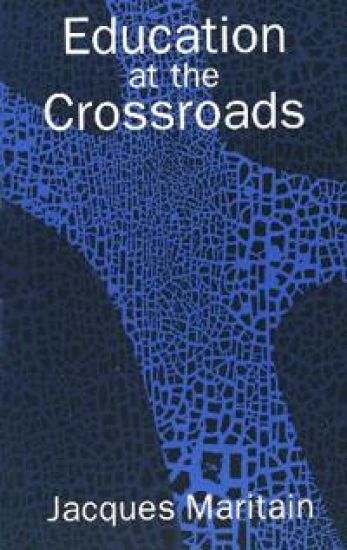
Education at the Crossroads

Education at the Crossroads

Jacques Maritain

Yale University Press
1977
pokkari
"A document of first-rate importance. . . . Sheer informed common sense. . . . This volume should be compulsory reading for all, whatever their religious beliefs or disbeliefs, who want light on the nature and place of education in our democratic society."—The Yale Review One of the most eminent Catholic philosophers of our time explores the American system of education. Jacques Maritain believes that education must be based on the Christian idea of the individual being “more a whole than a part, and more independent than servile.” In his view education is concerned with “making a man”—a person with “deep-rooted independence with regard to common opinion.” This book is devoted to discovering how that can come about.
An Essay on Christian Philosophy

An Essay on Christian Philosophy

Jacques Maritain

Philosophical Library
1955
sidottu
This original translation, by Edward H. Flannery, brings you one of Maritain's most eye-opening studies of Christianity. Although not his most famous work, Maritain's An Essay on Christian Philosophy provides readers with an in-depth analysis and careful philosophical approach to the study of theology and, at the time of original publication, was considered to be the definitive statement of the Thomistic position. Discover his theses for yourself as Maritain considers the nature of philosophy, morality, and their relations to Christianity with clarity and a scholarly attention to detail. Flannery provides English readers with a glossary of terms to bring further understanding to Maritain's original words. Jacques Maritain was a French Catholic philosopher and political thinker. He was born in Paris in 1882, where he spent most of his life. His father was a prominent lawyer and his mother the daughter of a statesman. He attended the Sorbonne to study philosophy and natural science, and after marrying, he and his wife converted to Catholicism. It was after this he became a well-known scholar of St. Thomas Aquinas and Thomistic philosophy. He published widely on philosophical and political thought, and by the 1930s, he was an established thinker in the Catholic community. After the outbreak of WWII, Maritain relocated to the United States, where he taught at Princeton University and Columbia University. Later in life, he and his wife returned to France, where he continued to write and study Catholic scholarship until his death in 1973.
Art & Faith

Art & Faith

Jacques Maritain; Jean Cocteau

Philosophical Library
1951
pokkari
The meaning of poetry and the sociological and political significance of art are dealt with in these letters. Jacques Maritain (18 November 1882-28 April 1973) was a French Catholic philosopher. Raised as a Protestant, he converted to Catholicism in 1906. An author of more than 60 books, he is responsible for reviving St. Thomas Aquinas for modern times and is a prominent drafter of the Universal Declaration of Human Rights. Pope Paul VI presented his "Message to Men of Thought and of Science" at the close of Vatican II to Maritain, his long-time friend and mentor. Jean Maurice Eug ne Cl ment Cocteau (5 July 1889 - 11 October 1963) was a French poet, novelist, dramatist, designer, boxing manager, playwright, artist and filmmaker. Along with other Surrealists of his generation (Jean Anouilh and Ren Char for example) Cocteau grappled with the "algebra" of verbal codes old and new, mise en sc ne language and technologies of modernism to create a paradox: a classical avant-garde. His circle of associates, friends and lovers included Pablo Picasso, Jean Marais, Henri Bernstein, dith Piaf, whom he cast in one of his one act plays entitled Le Bel Indifferent in 1940, and Raymond Radiguet.
Dream of Descartes

Dream of Descartes

Jacques Maritain

Philosophical Library
1944
pokkari
The Dream of Descartes by Francois Mauriac contains articles appearing in 1920 and 1922, a lecture, and other essays. This book was written to determine the value and significance of the Cartesian Reform with regard to metaphysical and theological wisdom. Descartes was also known for his work in producing the Cartesian Theory of Fallacies. This can be most easily explored using the statement: "This statement is a lie." While it is most commonly referred to as a paradox, the Cartesian Theory of Fallacies states that at any given time a statement can be both true and false simultaneously because of its contradictory nature. The statement is true in its fallacy. Thus, Descartes developed the Cartesian Theory of Fallacies, which greatly influenced the thinking of the time. Many would-be philosophers were trying to develop inexplicable statements of seeming fact, however, this laid rumors of such a proposition impossible. Many philosophers believe that when Descartes formulated his Theory of Fallacies, he intended to be lying, which in and of itself embodies the theory. Titles in this book are "The Deposition of Wisdom," "The Cartesian Proofs of God," and "The Cartesian Heritage." Mauriac, Fran ois 1885-1970, French writer. Mauriac achieved success in 1922 and 1923 with Le Baiser au l preux and Genitrix (tr. of both in The Family, 1930). Generally set in or near his native Bordeaux, his novels are imbued with his profound, though nonconformist, Roman Catholicism. His characters exist in a tortured universe; nature is evil and man eternally prone to sin. His major novels are The Desert of Love (1925, tr. 1929), Th r se (1927, tr. 1928), and Vipers' Tangle (1932, tr. 1933). Other works include The Frontenacs (1933, tr. 1961) and Woman of the Pharisees (1941, tr. 1946); a life of Racine (1928) and of Jesus (1936, tr. 1937); and plays, notably Asmod e (1938, tr. 1939). Also a distinguished essayist, Mauriac became a columnist for Figaro after World War II. Collections of his articles and essays include Journal, 1932-39 (1947, partial tr. Second Thoughts, 1961), Proust's Way (1949, tr. 1950), and Cain, Where Is Your Brother? (tr. 1962). Mauriac received the 1952 Nobel Prize in Literature.
Dream of Descartes

Dream of Descartes

Jacques Maritain

Philosophical Library
1944
sidottu
The Dream of Descartes by Francois Mauriac contains articles appearing in 1920 and 1922, a lecture, and other essays. This book was written to determine the value and significance of the Cartesian Reform with regard to metaphysical and theological wisdom. Descartes was also known for his work in producing the Cartesian Theory of Fallacies. This can be most easily explored using the statement: "This statement is a lie." While it is most commonly referred to as a paradox, the Cartesian Theory of Fallacies states that at any given time a statement can be both true and false simultaneously because of its contradictory nature. The statement is true in its fallacy. Thus, Descartes developed the Cartesian Theory of Fallacies, which greatly influenced the thinking of the time. Many would-be philosophers were trying to develop inexplicable statements of seeming fact, however, this laid rumors of such a proposition impossible. Many philosophers believe that when Descartes formulated his Theory of Fallacies, he intended to be lying, which in and of itself embodies the theory. Titles in this book are "The Deposition of Wisdom," "The Cartesian Proofs of God," and "The Cartesian Heritage." Mauriac, Fran ois 1885-1970, French writer. Mauriac achieved success in 1922 and 1923 with Le Baiser au l preux and Genitrix (tr. of both in The Family, 1930). Generally set in or near his native Bordeaux, his novels are imbued with his profound, though nonconformist, Roman Catholicism. His characters exist in a tortured universe; nature is evil and man eternally prone to sin. His major novels are The Desert of Love (1925, tr. 1929), Th r se (1927, tr. 1928), and Vipers' Tangle (1932, tr. 1933). Other works include The Frontenacs (1933, tr. 1961) and Woman of the Pharisees (1941, tr. 1946); a life of Racine (1928) and of Jesus (1936, tr. 1937); and plays, notably Asmod e (1938, tr. 1939). Also a distinguished essayist, Mauriac became a columnist for Figaro after World War II. Collections of his articles and essays include Journal, 1932-39 (1947, partial tr. Second Thoughts, 1961), Proust's Way (1949, tr. 1950), and Cain, Where Is Your Brother? (tr. 1962). Mauriac received the 1952 Nobel Prize in Literature.
Art and Poetry

Art and Poetry

Jacques Maritain

Philosophical Library
1943
sidottu
Originally titled Fronti res de la po sie (1935), This book by Jacques Maritain, whose philosophical writings read as interestingly as a novel, will be welcomed by all who are seeking a better understanding of the art of our time. The book delves into Maritain's thoughts on the nature and subjectivity of art and poetry. As a philosopher, Maritain attempts to define the two concepts, describing art and poetry as "virtues," and as primarily concerned with beauty. Rather than focus on aesthetic theory, Maritain examines the concepts at a more tangible level, including a discussion of how they are made. The principles established with such precision and brilliance in his earlier work "Art and Scholasticism," which has had such a deep influence on contemporary artists, are successfully put to the test in illuminating the creative works of such diverse artists as Rouault, Marc Chagall, Gino Sevirini, and Arthur Lourie. Jacques Maritain was a French Catholic philosopher and political thinker. He was born in Paris in 1882, where he spent most of his life. His father was a prominent lawyer and his mother the daughter of a statesman. He attended the Sorbonne to study philosophy and natural science, and after marrying, he and his wife converted to Catholicism. It was after this he became a well-known scholar of St. Thomas Aquinas and Thomistic philosophy. He published widely on philosophical and political thought, and by the 1930s, he was an established thinker in the Catholic community. After the outbreak of WWII, Maritain relocated to the United States, where he taught at Princeton University and Columbia University. Later in life, he and his wife returned to France, where he continued to write and study Catholic scholarship until his death in 1973.
Art and Poetry

Art and Poetry

Jacques Maritain

Philosophical Library
1943
pokkari
Originally titled Fronti res de la po sie (1935), This book by Jacques Maritain, whose philosophical writings read as interestingly as a novel, will be welcomed by all who are seeking a better understanding of the art of our time. The book delves into Maritain's thoughts on the nature and subjectivity of art and poetry. As a philosopher, Maritain attempts to define the two concepts, describing art and poetry as "virtues," and as primarily concerned with beauty. Rather than focus on aesthetic theory, Maritain examines the concepts at a more tangible level, including a discussion of how they are made. The principles established with such precision and brilliance in his earlier work "Art and Scholasticism," which has had such a deep influence on contemporary artists, are successfully put to the test in illuminating the creative works of such diverse artists as Rouault, Marc Chagall, Gino Sevirini, and Arthur Lourie. Jacques Maritain was a French Catholic philosopher and political thinker. He was born in Paris in 1882, where he spent most of his life. His father was a prominent lawyer and his mother the daughter of a statesman. He attended the Sorbonne to study philosophy and natural science, and after marrying, he and his wife converted to Catholicism. It was after this he became a well-known scholar of St. Thomas Aquinas and Thomistic philosophy. He published widely on philosophical and political thought, and by the 1930s, he was an established thinker in the Catholic community. After the outbreak of WWII, Maritain relocated to the United States, where he taught at Princeton University and Columbia University. Later in life, he and his wife returned to France, where he continued to write and study Catholic scholarship until his death in 1973.
Religion and the Modern World

Religion and the Modern World

Jacques Maritain; Joseph L. Hromádka; William J. McGarry

University of Pennsylvania Press
1941
sidottu
This book is a volume in the Penn Press Anniversary Collection. To mark its 125th anniversary in 2015, the University of Pennsylvania Press rereleased more than 1,100 titles from Penn Press's distinguished backlist from 1899-1999 that had fallen out of print. Spanning an entire century, the Anniversary Collection offers peer-reviewed scholarship in a wide range of subject areas.