
Kirjailija
James Allen
Kirjat ja teokset yhdessä paikassa: 895 kirjaa, julkaisuja vuosilta 1903–2026, suosituimpiin kuuluu The Wisdom of William H. Danforth, James Allen & Arnold Bennett- Including. Vertaile teosten hintoja ja tarkista saatavuus suomalaisista kirjakaupoista.
Nimi esiintyy myös muodoissa: James Allen (???? ???), James Allen ????? ????
895 kirjaa
Kirjojen julkaisuvuodet: 1903–2026.


Through the Gates of Good or Christ and Conduct (1909)
James Allen
KESSINGER PUBLISHING CO
2003
pokkari
One of the first great modern writers of motivational and inspirational books, James Allen has influenced millions of people around the world through books like As a Man Thinketh. In the same way, As a Man Does: Morning and Evening Thoughts presents beautiful and insightful meditations to feed the mind and soul. In each of the sixty-two meditations--one for each morning and each evening of the month--Allen offers both the force of truth and the blessing of comfort. Whether you are familiar with the writings of James Allen, or you have yet to read any of his stirring books, this beautiful volume is sure to move you, console you, and inspire you--every morning and every evening of your life. James Allen was born in Leicester, England in 1864. After leaving school at the age of fifteen to support his family, Allen worked, read, and carefully observed the world around him. It was not until he was thirty-eight that he wrote From Poverty to Power, one of the first motivational books. His next book, As a Man Thinketh, established his reputation as an inspirational writer. Other books on spirituality included The Eight Pillars of Wisdom and From Passion to Peace. Although his writing career lasted for only ten years, until his death in 1912, Allen produced twenty titles that influenced millions in the same manners as the words of Dale Carnegie and Norman Vincent Peale.
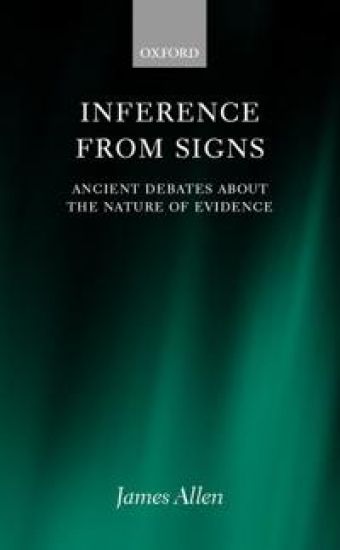
James Allen presents an original and penetrating investigation of the notion of inference from signs, which played a central role in ancient philosophical and scientific method. Inference from Signs examines an important chapter in ancient epistemology: the debates about the nature of evidence and of the inferences based on it--or signs and sign-inferences as they were called in antiquity. Special attention is paid to three main issues. Firstly, the relation between sign-inference and explanation. At a minimum, sign-inferences permit us to draw a new conclusion, and they are used in this way in every sphere of life. But inferences must do more than this if they are to play the parts assigned to them by natural philosophers and medical theorists, who appeal to signs to support the theories they put forward to explain the phenomena in their domains. Allen examines the efforts made by Aristotle, the Stoics, the Epicureans, and in medicine to discover what further conditions must be satisfied by inferences if they are to advance explanatory purposes. To speak of inference from signs presupposes that the use of signs is a form of reasoning from grounds to a conclusion. However, an alternative nonrational conception is explored, according to which the use of signs depends instead on acquired dispositions to be reminded by one thing of another. This view is traced to its probable origin in the Empirical school of medicine, whence it was taken by Pyrrhonian sceptics, who introduced it into philosophy. Evidence sometimes supports conclusive arguments, but at other times it only makes a conclusion probable. Allen investigates Aristotle's path-breaking attempt to erect standards by which to evaluate non-conclusive but--in Aristotelian terms--reputable inferences. Inference from Signs fills an important gap in the histories of science and philosophy and provides the first comprehensive treatment of this topic.
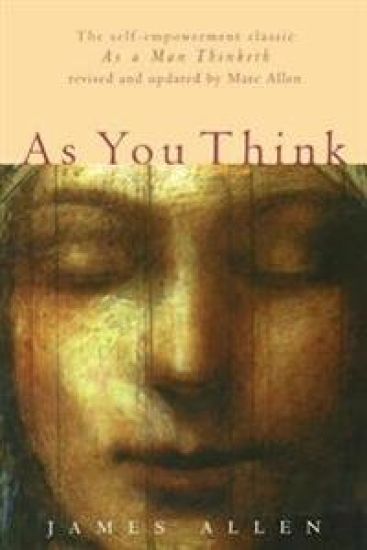
Combines personal experience with meditation to probe the power of thought and the processes by which man perceives truth
The Mastery of Destiny is a self-help book by James Allen. With his emphasis on personal responsibility and harnessing one's inner power, he covers topics such as the Science of Self-Control, Training of the Will, Cultivation of Concentration, the Power of Purpose, and the Joy of Accomplishment. In this work, he instructs readers that through discipline and mindfulness, we can create a life of unending happiness, prosperity, and most importantly self-mastery. James Allen (28 November 1864 - 24 January 1912) was a British philosophical writer known for his inspirational books, poetry and a pioneer of the self-help movement. Best known for As a Man Thinketh, he authored many other books including The Way of Peace, Eight Pillars of Prosperity, and Entering the Kingdom.

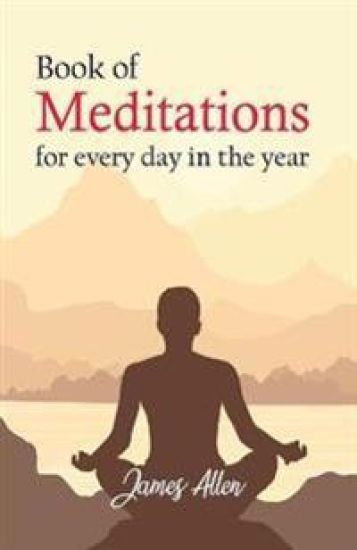
James Allen may truly be called the Prophet of Meditation. In an age of strife, hurry, religious controversy, heated arguments, ritual andceremony, he came with his message of Meditation, calling men away from the din and strife of tongues into the peaceful paths of stillness within their own souls. The meditations given in this book for each day of the year keep us company and, at intervals when we pause from our work, recharge our energies. We also acquire peace and strength to sustain us through the stressful life. James Allen (28 November 1864 - 24 January 1912) was a British philosophical writer known for his inspirational books and poetry and as a pioneer of the self-help movement. His best known work, As a Man Thinketh, has been mass-produced sinceits publication in 1903. It has been a source of inspiration to motivational and self-help authors.