
Kirjailija
James D. G. Dunn
Kirjat ja teokset yhdessä paikassa: 43 kirjaa, julkaisuja vuosilta 1977–2022, suosituimpiin kuuluu The Epistles to the Colossians and to Philemon. Vertaile teosten hintoja ja tarkista saatavuus suomalaisista kirjakaupoista.
Nimi esiintyy myös muodoissa: James D.G. Dunn, James D G Dunn
43 kirjaa
Kirjojen julkaisuvuodet: 1977–2022.
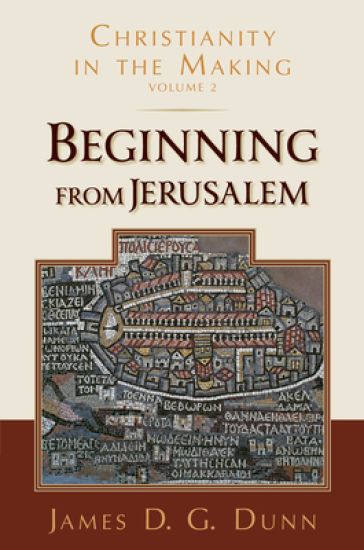
The second volume in the magisterial Christianity in the Making trilogy, Beginning from Jerusalem covers the early formation of the Christian faith from 30 to 70 CE. After outlining the quest for the historical church (parallel to the quest for the historical Jesus) and reviewing the sources, James Dunn follows the course of the movement stemming from Jesus "beginning from Jerusalem." Dunn opens with a close analysis of what can be said of the earliest Jerusalem community, the Hellenists, the mission of Peter, and the emergence of Paul. Then he focuses solely on Paul―the chronology of his life and mission, his understanding of his call as apostle, and the character of the churches that he founded. The third part traces the final days and literary legacies of the three principal figures of first-generation Christianity: Paul, Peter, and James, the brother of Jesus. Each section includes detailed interaction with the vast wealth of secondary literature on the many subjects covered.

Jesus Remembered: Christianity in the Making, Volume 1
James D. G. Dunn
William B. Eerdmans Publishing Company
2019
nidottu
James Dunn is regarded worldwide as one of today's foremost biblical scholars. Having written groundbreaking studies of the New Testament and a standard work on Paul's theology, Dunn here turns his pen to the rise of Christianity itself. Jesus Remembered is the first installment in what will be a monumental three-volume history of the first 120 years of the faith. Focusing on Jesus, this first volume has several distinct features. It garners the lessons to be learned from the "quest for the historical Jesus" and meets the hermeneutical challenges to a historical and theological assessment of the Jesus tradition. It provides a fresh perspective both on the impact made by Jesus and on the traditions about Jesus as oral tradition -- hence the title "Jesus Remembered." And it offers a fresh analysis of the details of that tradition, emphasizing its characteristic (rather than dissimilar) features. Noteworthy too are Dunn's treatments of the source question (particularly Q and the noncanonical Gospels) and of Jesus the Jew in his Galilean context. In his detailed analysis of the Baptist tradition, the kingdom motif, the call to and character of discipleship, what Jesus' audiences thought of him, what he thought of himself, why he was crucified, and how and why belief in Jesus' resurrection began, Dunn engages wholeheartedly in the contemporary debate, providing many important insights and offering a thoroughly convincing account of how Jesus was remembered from the first, and why. Written with peerless scholarly acumen yet accessible to a wide range of readers, Dunn's Jesus Remembered, together with its successor volumes, will be a sine qua non for all students of Christianity's beginnings.
Jesus according to the New Testament
James D. G. Dunn; Rowan Williams
William B Eerdmans Publishing Co
2019
nidottu
Halvin toimitettuna 30,30 €
A senior biblical scholar's concise guide to how Jesus is described across the New TestamentNew Testament scholar James D. G. Dunn has written numerous commentaries, books, and essays sharing his thought with the world. In this small, straightforward book designed for a lay audience, Dunn focuses his fifty-plus years of scholarship on the central question posed by the New Testament-who is Jesus? Dunn surveys the New Testament books from Matthew to Rev-elation, exploring and unpacking what they actually say about Jesus. Dunn's Jesus according to the New Testament points to the wonder of those first witnesses and enriches our understanding of who Jesus is to us today.
The Word Biblical Commentary delivers the best in biblical scholarship, from the leading scholars of our day who share a commitment to Scripture as divine revelation. This series emphasizes a thorough analysis of textual, linguistic, structural, and theological evidence. The result is judicious and balanced insight into the meanings of the text in the framework of biblical theology. These widely acclaimed commentaries serve as exceptional resources for the professional theologian and instructor, the seminary or university student, the working minister, and everyone concerned with building theological understanding from a solid base of biblical scholarship. Overview of Commentary Organization Introduction—covers issues pertaining to the whole book, including context, date, authorship, composition, interpretive issues, purpose, and theology. Each section of the commentary includes: Pericope Bibliography—a helpful resource containing the most important works that pertain to each particular pericope. Translation—the author’s own translation of the biblical text, reflecting the end result of exegesis and attending to Hebrew and Greek idiomatic usage of words, phrases, and tenses, yet in reasonably good English. Notes—the author’s notes to the translation that address any textual variants, grammatical forms, syntactical constructions, basic meanings of words, and problems of translation. Form/Structure/Setting—a discussion of redaction, genre, sources, and tradition as they concern the origin of the pericope, its canonical form, and its relation to the biblical and extra-biblical contexts in order to illuminate the structure and character of the pericope. Rhetorical or compositional features important to understanding the passage are also introduced here. Comment—verse-by-verse interpretation of the text and dialogue with other interpreters, engaging with current opinion and scholarly research. Explanation—brings together all the results of the discussion in previous sections to expose the meaning and intention of the text at several levels: (1) within the context of the book itself; (2) its meaning in the OT or NT; (3) its place in the entire canon; (4) theological relevance to broader OT or NT issues. General Bibliography—occurring at the end of each volume, this extensive bibliographycontains all sources used anywhere in the commentary.
- Author distills a life-time of biblical research into an easy-to-understand survey of Jesus' life, his mission, and his self-understanding - Both introduction and source of new insights Renowned New Testament scholar James Dunn investigates what is known about the historical Jesus and the reasons for his enormous impact--then and now.
Regarded by believers as the foundation stone of their faith, and as a stumbling block by those who struggle to believe, the resurrection of Jesus lies at the heart of the Christian gospel. James D. G. Dunn sets out clearly and fairly the arguments for and against Jesus' resurrection, and explains why most biblical scholars believe the weight of historical evidence points in its favour.
Jesus is the most influential person to have walked the earth. But why? And what makes his life and message so important to so many people today? James Dunn investigates what we can know for certain about the historical Jesus, and the reasons for his enormous impact - then and now.
Authored by one of the world's leading New Testament scholars, this commentary on the Acts of the Apostles was originally published in 1996. James Dunn first takes the reader through questions of authorship, audience, date, purpose, and literary structure. He then considers the kind of history writing that we find in the narrative of Acts, delineates the book's theological teaching, and offers bibliographic comments on sources and selected studies, including work published between 1996 and 2016. This commentary as a whole provides the information and perspective necessary for reading to best effect what Dunn believes is the most exciting book in the New Testament.
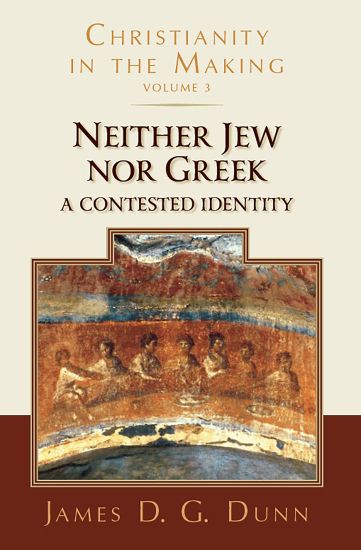
Neither Jew Nor Greek
James D G Dunn
William B. Eerdmans Publishing Company
2015
pokkari
Halvin toimitettuna 53,20 €
The third and final installment of James Dunn's magisterial history of Christian origins through 190 C. E., Neither Jew nor Greek: A Contested Identity covers the period after the destruction of Jerusalem in 70 C. E. through the second century, when the still-new Jesus movement firmed up its distinctive identity markers and the structures on which it would establish its growing appeal in the following decades and centuries. Dunn examines in depth the major factors that shaped first-generation Christianity and beyond, exploring the parting of the ways between Christianity and Judaism, the Hellenization of Christianity, and responses to Gnosticism. He mines all the first- and second-century sources, including the New Testament Gospels, New Testament apocrypha, and such church fathers as Ignatius, Justin Martyr, and Irenaeus, showing how the Jesus tradition and the figures of James, Paul, Peter, and John were still esteemed influences but were also the subject of intense controversy as the early church wrestled with its evolving identity. Comprehensively covering an important, complex era in Christianity that is often overlooked, this volume is a landmark contribution to the field.
The Word Biblical Commentary delivers the best in biblical scholarship, from the leading scholars of our day who share a commitment to Scripture as divine revelation. This series emphasizes a thorough analysis of textual, linguistic, structural, and theological evidence. The result is judicious and balanced insight into the meanings of the text in the framework of biblical theology. These widely acclaimed commentaries serve as exceptional resources for the professional theologian and instructor, the seminary or university student, the working minister, and everyone concerned with building theological understanding from a solid base of biblical scholarship. Overview of Commentary OrganizationIntroduction—covers issues pertaining to the whole book, including context, date, authorship, composition, interpretive issues, purpose, and theology. Each section of the commentary includes:Pericope Bibliography—a helpful resource containing the most important works that pertain to each particular pericope. Translation—the author’s own translation of the biblical text, reflecting the end result of exegesis and attending to Hebrew and Greek idiomatic usage of words, phrases, and tenses, yet in reasonably good English. Notes—the author’s notes to the translation that address any textual variants, grammatical forms, syntactical constructions, basic meanings of words, and problems of translation. Form/Structure/Setting—a discussion of redaction, genre, sources, and tradition as they concern the origin of the pericope, its canonical form, and its relation to the biblical and extra-biblical contexts in order to illuminate the structure and character of the pericope. Rhetorical or compositional features important to understanding the passage are also introduced here. Comment—verse-by-verse interpretation of the text and dialogue with other interpreters, engaging with current opinion and scholarly research. Explanation—brings together all the results of the discussion in previous sections to expose the meaning and intention of the text at several levels: (1) within the context of the book itself; (2) its meaning in the OT or NT; (3) its place in the entire canon; (4) theological relevance to broader OT or NT issues. General Bibliography—occurring at the end of each volume, this extensive bibliographycontains all sources used anywhere in the commentary.
The Word Biblical Commentary delivers the best in biblical scholarship, from the leading scholars of our day who share a commitment to Scripture as divine revelation. This series emphasizes a thorough analysis of textual, linguistic, structural, and theological evidence. The result is judicious and balanced insight into the meanings of the text in the framework of biblical theology. These widely acclaimed commentaries serve as exceptional resources for the professional theologian and instructor, the seminary or university student, the working minister, and everyone concerned with building theological understanding from a solid base of biblical scholarship. Overview of Commentary OrganizationIntroduction—covers issues pertaining to the whole book, including context, date, authorship, composition, interpretive issues, purpose, and theology. Each section of the commentary includes:Pericope Bibliography—a helpful resource containing the most important works that pertain to each particular pericope. Translation—the author’s own translation of the biblical text, reflecting the end result of exegesis and attending to Hebrew and Greek idiomatic usage of words, phrases, and tenses, yet in reasonably good English. Notes—the author’s notes to the translation that address any textual variants, grammatical forms, syntactical constructions, basic meanings of words, and problems of translation. Form/Structure/Setting—a discussion of redaction, genre, sources, and tradition as they concern the origin of the pericope, its canonical form, and its relation to the biblical and extra-biblical contexts in order to illuminate the structure and character of the pericope. Rhetorical or compositional features important to understanding the passage are also introduced here. Comment—verse-by-verse interpretation of the text and dialogue with other interpreters, engaging with current opinion and scholarly research. Explanation—brings together all the results of the discussion in previous sections to expose the meaning and intention of the text at several levels: (1) within the context of the book itself; (2) its meaning in the OT or NT; (3) its place in the entire canon; (4) theological relevance to broader OT or NT issues. General Bibliography—occurring at the end of each volume, this extensive bibliography contains all sources used anywhere in the commentary.
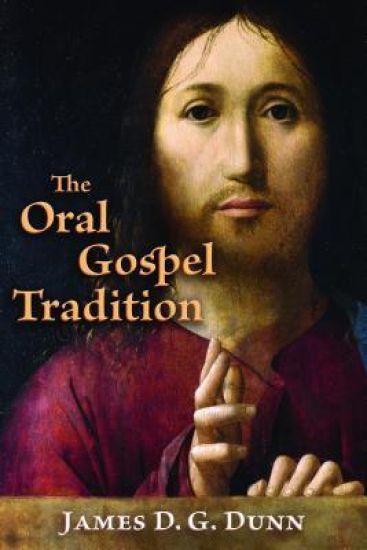
The traditions about Jesus and his teaching circulated in oral form for many years, continuing to do so for decades following the writing of the New Testament Gospels. James Dunn is one of the major voices urging that more consideration needs to be given to the oral use and transmission of the Jesus tradition as a major factor in giving the Synoptic tradition its enduring character.
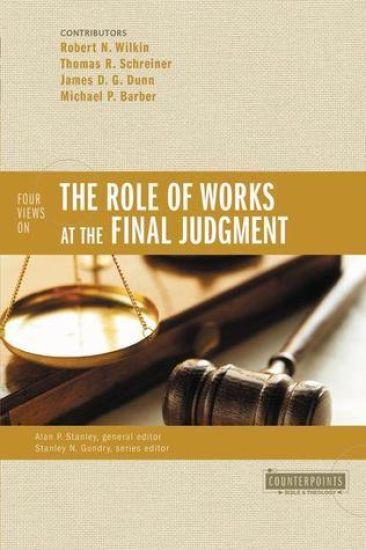
Four Views on the Role of Works at the Final Judgment
Robert N. Wilkin; Thomas R. Schreiner; James D. G. Dunn; Michael P. Barber
Zondervan
2013
nidottu
Through a discussion of Biblical texts, this book presents four perspectives on the role of works at the final judgment. The final judgment is the last and final act before God dwells with his people forever. Scripture makes that clear, but what function do our actions play in the final assessment of our souls--especially those of professing Christians? The contributors each state their case for one of four prominent views on the effect of works at the end of time:Robert N. Wilkin: Works will determine rewards but not salvationThomas R. Schreiner: Works will provide evidence that one actually has been savedJames D. G. Dunn: Works will provide the criterion by which Christ will determine eternal destiny of his peopleMichael P. Barber: Works will merit eternal lifeThis book allows each contributor to not only present the case for his view, but also to critique and respond to the critiques of the other contributors, allowing you to compare their beliefs in an open forum setting to see where they overlap and where they differ. The Counterpoints series presents a comparison and critique of scholarly views on topics important to Christians that are both fair-minded and respectful of the biblical text. Each volume is a one-stop reference that allows readers to evaluate the different positions on a specific issue and form their own, educated opinion.
In this book, which began as the Griffith Thomas Lectures delivered at Wycliffe Hall, Oxford, Professor Dunn first develops the theme of New Testament interpretation as a dialogue between the interpreter in his historical context and the biblical texts in theirs. He then goes on to explore the less familiar thesis that this dialogue was already happening within the biblical material itself, particularly within the New Testament. Other topics which he discusses are the importance of seeing the Gospels as oral tradition, and the problem of why New Testament books appear under pseudonyms. Provocatively, he asks, 'Was Jesus a liberal? Was Paul a heretic?' Included as appendices are two earlier essays which have caused considerable interest: 'The Authority of Scripture according to Scripture' and 'Levels of Canonical Authority'. The collection as a whole provides a valuable exposition of the title theme.
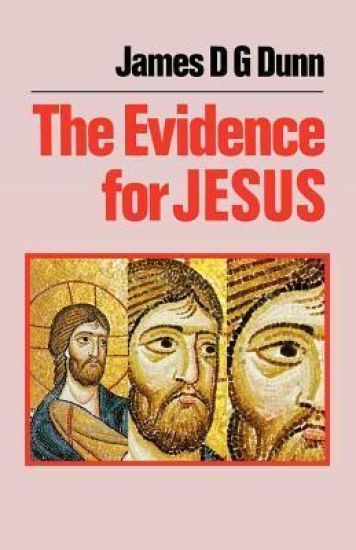
This book is an expanded version of public lectures given in Durham in 1984 in response to the London Weekend Television series broadcast that year entitled Jesus: the Evidence. The object of the series was to make a wider public aware of how New Testament scholars and historians of Christian origins have come to view the beginnings of Christianity, but even before it was screened, feelings against it in the churches ran high, and it has remained a focal point of controversy. So Professor Dunn, author of widely-used books including Christology in the Making and Unity and Diversity in the New Testament, set out both to put the record straight where he felt that the programmes had been misleading and to encourage his audience to take more seriously the critical questions that can be asked about the Gospels. His book centres on four main questions: Are the Gospels fact, fiction or what? Did Jesus claim to be the Son of God? What did the first Christians believe about the resurrection? Was earliest Christianity one church or warring sects? His answers to these questions provide an admirably lucid introduction to the present state of New Testament scholarship - and the evidence on which it is based. James D. G. Dunn was Professor of Divinity in the University of Durham.
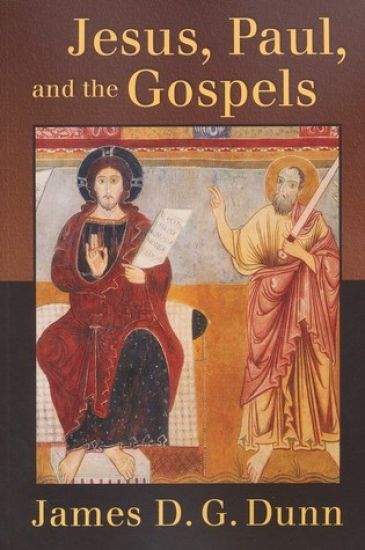
Compact, intelligent primer on the New Testament from a renowned scholar In this coherent and integrated introduction to basic issues in the study of the New Testament, James Dunn has gathered texts from three sets of lectures that he gave in 2009 to Catholic and Jewish audiences in Italy, Spain, and Israel. Each of these lectures aimed to introduce otherwise well-informed people to topics that were new or unfamiliar to them -- making this book ideal for readers and students of various theological backgrounds both within and beyond the Christian community. Some of the topics illuminated by Dunn in this volume: * Where, why, and how the Gospels were written and what we should expect from them * The reliability and historicity of the Gospels * The continuing significance of the Apostle Paul and his teaching * Points of continuity and discontinuity between the teaching of Jesus and of Paul -- and how to bridge the two
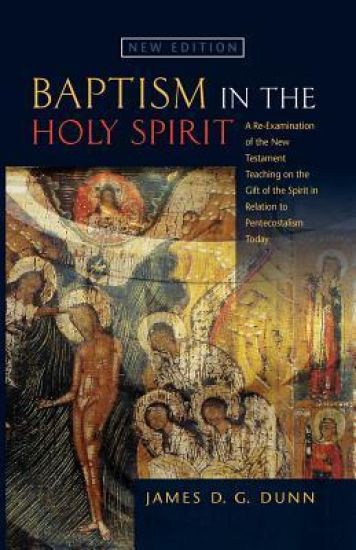
In Baptism in the Holy Spirit James Dunn argues that water baptism is only one element in the New Testament pattern of conversion and initiation. The gift of the Spirit, he believes, is the central element. For the writers of the New Testament only those who had received the Holy Spirit could be called Christians. For them, the reception of the Spirit was a very definite and often very dramatic experience - the decisive and climactic experience in conversion-initiation - to which Christians were usually recalled when reminded of their Christian faith and experience. James Dunn uncovers the place of the gift of the Holy Spirit in the total complex event of becoming a Christian.
Did the First Christians Worship Jesus?
James D. G. Dunn
Westminster/John Knox Press,U.S.
2010
pokkari
Halvin toimitettuna 40,40 €
To answer the title question effectively requires more than the citing of a few texts; we must first acknowledge that the way to the answer is more difficult than it appears and recognize that the answer may be less straightforward than many would like. The author raises some fascinating yet vexing questions: What is worship? Is the fact that worship is offered to God (or a god) what defines him (or her) as "G/god?" What does the act of worship actually involve? The conviction that God exalted Jesus to his right hand obviously is central to Christian recognition of the divine status of Jesus. But what did that mean for the first Christians as they sought to reconcile God's status and that of the human Jesus? Perhaps the worship of Jesus was not an alternative to worship of God but another way of worshiping God. The questions are challenging but readers are ably guided by James Dunn, one of the world's top New Testament scholars.
James Dunn introduces readers to the key passages that must be examined when trying to understand what the New Testament says about worshipping Jesus. Dunn, an internationally respected scholar, examines the key texts that have led Christians to believe that Jesus is God and worship him as part of the Trinity. But what did the New Testament writers say about worshipping Jesus? Did they portray him as God, someone whom we should worship? Or did they see him as a great prophet like Moses or Elijah? Here, James Dunn introduces readers to the key New Testament passages that must be examined when trying to understand this important topic. He argues that we find a clear sense that Jesus enables worship, that Jesus is in a profound way the place and means of worship. Equally, for the first Christians Jesus was seen to be not only the one by whom believers come to God, but also the one by whom God has come to believers.