Kirjojen hintavertailu – 12 859 827 kirjaa ja 27 kauppaa
Kirjailija
James Madison
Kirjat ja teokset yhdessä paikassa: 275 kirjaa, julkaisuja vuosilta 1961–2026, suosituimpiin kuuluu The Papers of James Madison, Volume 6. Vertaile teosten hintoja ja tarkista saatavuus suomalaisista kirjakaupoista.
This volume of James Madison's papers covers events in his first administration, from November 1811 to July 1812. Two important presidential decisions buttress it: his advocacy of preparedness in November 1811 and his request in June 1812 that Congress consider his case for war against Britain.
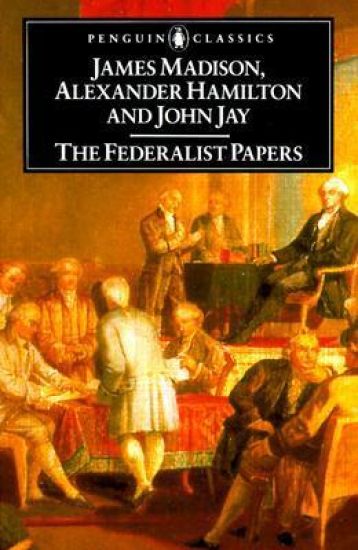
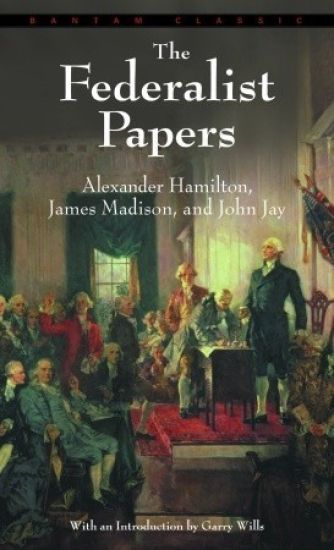
In September 1787, a series of persuasive and skillfully argued essays began appearing in New York newspapers urging approval of the newly drafted Constitution of the United States, the ratification of which was being hotly debated in state legislatures. Most of these essays bore the mysterious signature of a certain "Publius," later revealed to be the collective nom de plume of Alexander Hamilton, John Jay, and James Madison. By May 1788, a total of eighty-five articles had been published and they were then collected in a book entitled The Federalist. Through clear, logical exposition and elegant language, The Federalist essays made a forceful case for strong, representative federal government as defined by the Constitution. Hamilton, Jay, and Madison argued that to protect itself against foreign threat and domestic strife the United States needed a unifying federal government to look after the interests of the new nation as a whole. They also emphasized the importance of federal government for maintaining an efficient and healthy economic system, and they exposed the obvious inadequacies of the much weaker Articles of Confederation, which the Constitution was designed to replace. Today historians rank The Federalist among our nation's most important historical documents. These fascinating essays bring to life the political drama surrounding the ratification of the Constitution, while providing insights into the minds of some of America's greatest political thinkers and their interpretation of America's founding charter. This edition includes the complete text of the Articles of Confederation and the Constitution, along with a highly detailed index.
Gathering the writings of one of the nation's greatest political thinkers, a collection of James Madison's letters, speeches, and other writings includes two hundred documents, including all of his contributions to The Federalist, early writings on religious freedom, and correspondence with other Founding Fathers.
Beginning with Madison's return to Washington from Montpelier, this fourth volume in the ""Secretary of State"" series ends with the acquisition of Louisiana by the United States. The letters show Madison's response to the ""Louisiana Crisis"" as it happened and annotation aids understanding of events.
The twelve-month period covered in this 3rd volume of the ""Presidential Series"" was dominated by foreign policy concerns, as James Madison sought ways to compel Great Britain to respect America's neutral rights.
During the period of this third volume of the ""Secretary of State"" series, Madison was concerned with ongoing problems in foreign policy, particularly US relations with the European powers. Diplomatic letters describe his efforts to defend American commercial rights.
This volume covers developments in Europe that greatly affected the international position of the USA and its citizens. Letters to the Secretary of State, James Madison, from shipowners and from the American minister to France following the 31 July ratification of the Franco-American Convention of 1800, show both the extent of the American claims for ships seized during the Quasi-War and the reluctance of the financially embarrassed French government to pay them promptly. More ominous, however, were rumours of the retrocession of Louisiana to France, which exacerbated fears about Napolean's ambitions for territorial expansion and desire to control the western waterways. In response, Madison urged Livingston in France and Pinkney in Spain to suggest the cession or sale of the Floridas to the USA. The signing of the preliminary articles of peace between the UK and France on 1 October foreshadowed the end of the lucrative neutral carrying trade, and prices for American produce dropped as the European need for food and other supplies decreased. Madison's letters to American diplomats in France, the UK, Holland and Spain, instructing them to press for the lifting of trade restrictions, demonstrate the depth of his concern about this commercial setback, even as the correspondence from American agents abroad also brought happier reports of the Royal Navy's release of impressed American seamen. In the consular dispatches sent to the State Department, Madison followed both the progress of the war against Tripoli and the beginnings of the ill-fated French attempt to reconquer Saint-Dominique. On the domestic front, Madison's correspondence was devoted largely to reports on elections and patronage problems as the Jefferson administration continued to consolidate its position.
This second volume of the presidential papers of James Madison covers the period between October 1809 and November 1810. These 13 months were dominated by foreign policy problems as Madison laboured to protect American neutral rights from the aggressions of France and Great Britain. The published papers record the president's difficulties in negotiating with the British diplomat Francis James Jackson as well as his struggle to persuade Congress to persevere with policies of economic coercion against the European belligerents. He was not always successful, but by November 1810 Madison had been able to reimpose nonintercourse against Great Britain, thereby setting the stage for the events that led directly to the War of 1812. Equally important was Madison's response to changes in Spanish America, and the editorial annotation of the documents here casts much new light on his decision to annex parts of Spanish West Florida to the United States in October 1810. The volume also illuminates the range of Madison's executive activities on the domestic front - from dealing with congress to supervising the construction of the public buildings in Washington, DC and conducting diplomacy with increasingly restless Indians on the frontier. Of interest, too, is the material on Madison's relationships with his cabinet colleagues, particularly his controversial Secretary of State, Robert Smith. These papers show a president constantly involved in the daily business of government, and they will enable scholars to develop fresh perspectives on the growth of the executive branch.
Written at a time when furious arguments were raging about the best way to govern America, The Federalist Papers had the immediate pratical aim of persuading New Yorkers to accept the newly drafted Constitution in 1787. In this they were supremely successful, but their influence also transcended contemporary debate to win them a lasting place in discussions of American political theory. Acclaimed by Thomas Jefferson as 'the best commentary on the principles of government which ever was written', The Federalist Papers make a powerful case for power-sharing between State and Federal authorities and for a Constitution that has endured largely unchanged for two hundred years.
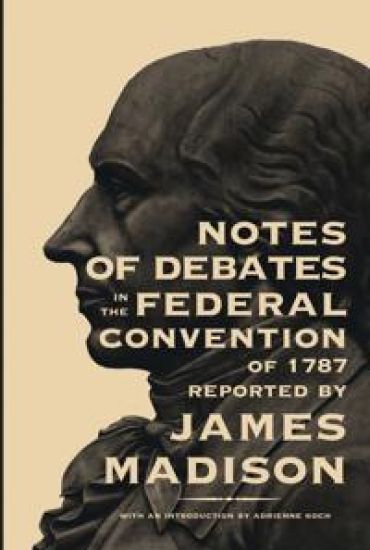
James Madison's record of the Constitutional Convention traces day by day the debates held from May to September 1787 and presents the only complete picture we have of the strategy, interests, and ideas of the Founders at the convention itself. In this indispensable primary document, Madison not only provides detailed insights into one of the great events of US history, but clearly sets forth his own position on such issues as the balance of powers, the separation of functions, and the general role of the federal government. More than in Federalist, which shows the carefully formalized conclusions of his political thought, we see in Debates his philosophy in action, evolving in daily tension with the viewpoints of the other delegates. It is for this reason that Debates is invaluable for placing in perspective the incomplete records of such well-known figures as Rufus King and Alexander Hamilton, and the constitutional plans of such men as Edmund Randolph and Charles Pinckney. Madison's contemporaries regarded him as the chief statesmen at the Philadelphia convention; in addition to this, his record outranks in importance all the other writings of the founders of the American republic. He is thus identified, as no other man is, with the making of the Constitution and the correct interpretation of the intentions of its drafters. New to this edition of Debates is a thorough, scholarly index of some two thousand entries.
The Papers of James Madison project, housed at the University of Virginia, was established in 1956 to publish annotated volumes of the correspondence and writings of James Madison, the Virginia statesman most often remembered for his public service as "Father of the Constitution" and as fourth president of the United States. The published volumes provide accurate texts of Madison's incoming and outgoing correspondence, informative notes on textual and subject matters, and comprehensive indexes. They are incomparably rich sources for students of Madison's life and valuable research tools for those interested in the general history of the period in which Madison lived (1751-1836). The project has collected more than 27,000 copies of documents related to Madison's life, including letters, essays, notes, diaries, account books, ledgers, wills, legal papers, and inventories. The project serves the public by translating into print these decaying and often nearly illegible manuscripts, thereby preserving them for future generations and making them easier to use. The published volumes also make the contents of Madison-related documents--the originals of which are housed in some 250 archives worldwide--easily accessible to libraries and interested individuals anywhere books travel. The Secretary of State Series documents Madison's diplomatic and political career in the two administrations of Thomas Jefferson, 1801-9, during which he oversaw the negotiations for the Louisiana Purchase and the integration of those territories into the United States and attempted to maintain a viable neutrality for the United States vis-a-vis warring France and Great Britain. As secretary of state, Madison presided over one of the busiest offices in Washington. He was responsible for the Patent Office, issued all federal commissions, saw that the public laws were put into print, and served as the official liaison between the president and the governors of states and territories. Most important for these volumes, Madison was the addressee of diplomatic pouches and letters from five ministers and over fifty consuls worldwide, as well as about a dozen commissioners.
Edited by Robert A. Rutland and Thomas A. MasonPresidential style is an important attribute for holders of the nation's highest office, but the first volume of James Madison's presidential papers indicate that he was a reserved and unpretentious man concerned more with the substance than the style of the office. As the 1809 letters show, President Madison was besieged by office seekers and eccentric citizens who expected the chief executive to show concern for their personal problem. Ravenous politicians sought jobs for themselves and relatives. Madison personally answered at length the many testimonials from citizens' rallies and political gatherings. The domestic side of White House life--the decorating and improvement of the President's House--also forms an important segment of the documentary record. The multiplicity of presidential concerns revealed in the volume add a new perspective to our historic view of the nation's highest office.
Originally published anonymously, The Federalist Papers first appeared in 1787 as a series of letters to New York newspapers exhorting voters to ratify the proposed Constitution of the United States. Still hotly debated, and open to often controversial interpretations, the arguments first presented here by three of America's greatest patriots and political theorists were created during a critical moment in our nation's history, providing readers with a running ideological commentary on the crucial issues facing democracy. Today The Federalist Papers are as important and vital a rallying cry for freedom as ever. This edition features the original eighteenth-century text, with James Madison's fascinating marginal notations, as well as a complete text of the Constitution.
The Papers of James Madison project, housed at the University of Virginia, was established in 1956 to publish annotated volumes of the correspondence and writings of James Madison, the Virginia statesman most often remembered for his public service as "Father of the Constitution" and as fourth president of the United States. The published volumes provide accurate texts of Madison's incoming and outgoing correspondence, informative notes on textual and subject matters, and comprehensive indexes. They are incomparably rich sources for students of Madison's life and valuable research tools for those interested in the general history of the period in which Madison lived (1751-1836). The project has collected more than 27,000 copies of documents related to Madison's life, including letters, essays, notes, diaries, account books, ledgers, wills, legal papers, and inventories. The project serves the public by translating into print these decaying and often nearly illegible manuscripts, thereby preserving them for future generations and making them easier to use. The published volumes also make the contents of Madison-related documents--the originals of which are housed in some 250 archives worldwide--easily accessible to libraries and interested individuals anywhere books travel. The Congressional Series (seventeen volumes) is devoted to the years 1751 to 1801, containing the fullest possible record of Madison's contributions to the creation of the federal government, including his service in the Continental Congress, the Virginia General Assembly, the Constitutional Convention of 1787, the Virginia Ratifying Convention of 1788, and the first four Federal Congresses.