

Kirjailija
James Phelan
Kirjat ja teokset yhdessä paikassa: 46 kirjaa, julkaisuja vuosilta 2004–2026, suosituimpiin kuuluu Narrative Knows No Boundaries. Vertaile teosten hintoja ja tarkista saatavuus suomalaisista kirjakaupoista.
46 kirjaa
Kirjojen julkaisuvuodet: 2004–2026.
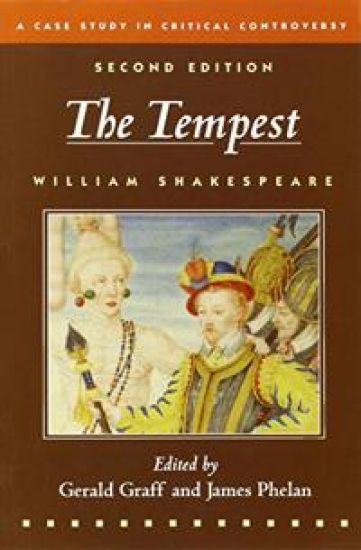
This critical edition of Shakespeare's The Tempest contains the play and 21 additional selections representing major critical and cultural controversies surrounding the work providing you with more insight into the play's critical issues and cultural debates about literature itself.
The Nature of Narrative
Robert Scholes; James Phelan; Robert Kellogg
Oxford University Press Inc
2006
nidottu
For the past forty years The Nature of Narrative has been a seminal work for literary students, teachers, writers, and scholars. Countering the tendency to view the novel as the paradigm case of literary narrative, authors Robert Scholes and Robert Kellogg in the original edition offered a compelling history of the genre narrative from antiquity to the twentieth-century, even as they carried out their main task of describing and analyzing the nature of narrative's main elements: meaning, character, plot, and point of view. Their history emphasized the broad sweep of literary narrative from ancient times to the contemporary period, and it included a chapter on the oral heritage of written narrative and an appendix on the interior monologue in ancient texts. The fortieth anniversary edition of this groundbreaking work has been revised and expanded to include a new preface and a lengthy chapter on developments in narrative theory since 1966 by James Phelan. This chapter describes the principles and practices of structuralist, cognitive, feminist, and rhetorical approaches to narrative, paying special attention to their work on plot, character, and narrative discourse. A continued leader in the field of narrative studies, The Nature of Narrative offers unique and invaluable histories of both narrative and narrative theory.
The Nature of Narrative
Robert Scholes; James Phelan; Robert Kellogg
Oxford University Press Inc
2006
sidottu
For the past forty years The Nature of Narrative has been a seminal work for literary students, teachers, writers, and scholars. Countering the tendency to view the novel as the paradigm case of literary narrative, authors Robert Scholes and Robert Kellogg in the original edition offered a compelling history of the genre narrative from antiquity to the twentieth-century, even as they carried out their main task of describing and analyzing the nature of narrative's main elements: meaning, character, plot, and point of view. Their history emphasized the broad sweep of literary narrative from ancient times to the contemporary period, and it included a chapter on the oral heritage of written narrative and an appendix on the interior monologue in ancient texts. The fortieth anniversary edition of this groundbreaking work has been revised and expanded to include a new preface and a lengthy chapter on developments in narrative theory since 1966 by James Phelan. This chapter describes the principles and practices of structuralist, cognitive, feminist, and rhetorical approaches to narrative, paying special attention to their work on plot, character, and narrative discourse. A continued leader in the field of narrative studies, The Nature of Narrative offers unique and invaluable histories of both narrative and narrative theory.
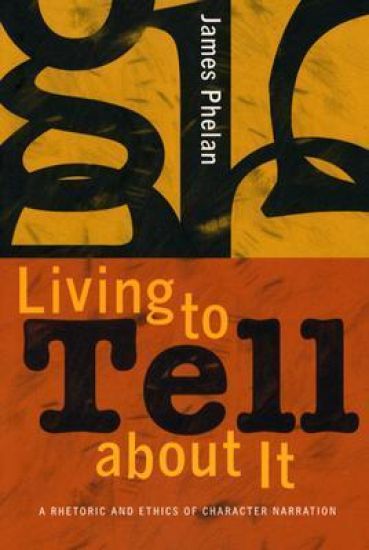
Living to Tell About It
James Phelan
Cornell University Press
2004
pokkari
Halvin toimitettuna 32,50 €
In Living to Tell about It, James Phelan takes up the challenges offered by diverse narratives including Kathryn Harrison's The Kiss, Ernest Hemingway's "Now I Lay Me," Kazuo Ishiguro's Remains of the Day, Frank McCourt's Angela's Ashes, Vladimir Nabokov's Lolita, and John Edgar Wideman's "Doc's Story." Phelan's compelling readings cover important theoretical ground by introducing a valuable distinction between disclosure functions (communications from the implied author to the authorial audience) and narrator functions (communications from the character narrator to the narratee). Phelan also identifies significant types of character narration (also known as first-person narration), including restricted, suppressed, and mask narrations. In addition, Phelan proposes new understandings of such ingrained concepts of narrative theory as unreliable narration, the implied author, focalization, and lyric narrative. Utilizing what Phelan and Peter J. Rabinowitz have called "theory practice," a critical method that aims to combine theory and interpretation in mutually illuminating ways, Living to Tell about It also makes a major contribution to ethical theory and criticism. Phelan develops the concept of "ethical position" and explores the interactions among the ethical positions of characters, narrators, authors, and audiences. This approach emphasizes not only the close connections between narrative technique and ethics but also the important interactions between the ethical positions of the authorial audience and the flesh-and-blood reader.